
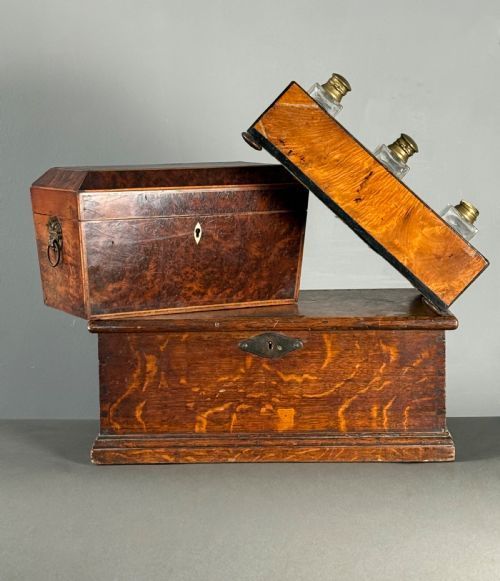
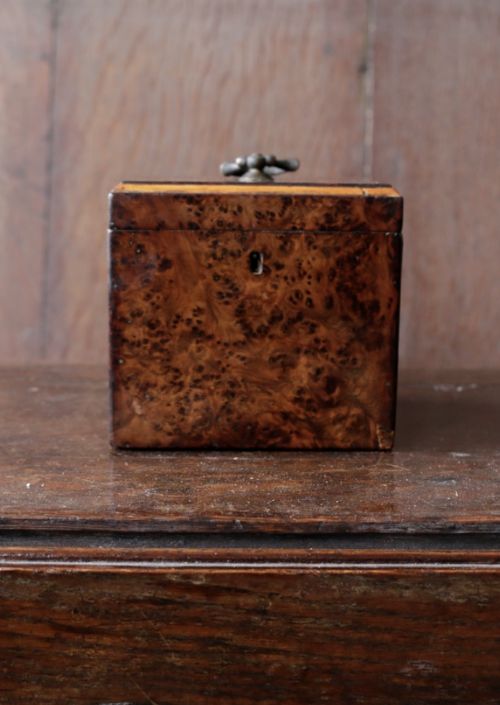


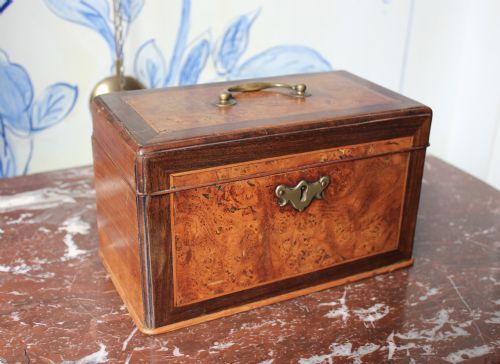


Georgian Burr Wood Caddy
These georgian burr wood caddy examples are figured wooden tea chests offering tactile warmth and period utility for collectors.
Georgian Burr Wood Caddy
A georgian burr wood caddy is a decorative tea container designed for storing precious tea leaves during the eighteenth and nineteenth centuries. These pieces appear in forms such as tea caddies, decorative boxes, and larger teapoys.
The items seen on this page span the eighteenth and nineteenth centuries, including the Georgian and Regency periods. Makers constructed these items in geometric shapes like cubes, hexagons, ovals, and semi-circular boxes.
Visitors are most likely to meet burr yew tea caddies alongside examples in burr elm, walnut, and satinwood. Many retain details such as bone, mother of pearl, and stringing in ebony and boxwood.
How they were made
Craftsmen utilised distinct timber growths, selecting burr yew, burr elm, burr maple, and burr thorn wood for their intense grain patterns. These figured veneers were applied to carcases of oak or other sturdy woods.
Makers embellished the surfaces using marquetry techniques and stringing in contrasting materials like boxwood and ebony. Hardware fittings in brass provided functional hinges, escutcheons, and locks.
Listings feature woods such as burr yew, burr elm, satinwood, and burr maple alongside brass fittings and bone details.
What varies in quality
Quality depends upon the choice and arrangement of the burr timber grain across the visible surfaces. Richly figured yew or elm veneer displays greater visual depth than plainer wood selections.
The sophistication of the geometry and decorative inlay separates standard boxes from finer items. Hexagonal, oval, and semi-circular forms combined with marquetry or stringing demonstrate higher craftsmanship.
The Georgian Burr Wood Caddy Glossary
- Burr wood
- A growth on a tree resulting in distorted grain patterns with intricate swirls and knots. This figured timber provides highly decorative surfaces for luxury furniture and small boxes.
- Teapoy
- A pedestal table fitted with a tea caddy compartment on top. These large pieces served similar storage purposes to smaller tabletop caddies.
- Marquetry
- The art of applying pieces of veneer to a structure to form decorative patterns. Craftsmen utilised different wood tones to create geometric or pictorial designs.
- Stringing
- Thin inlay lines of contrasting wood or bone used to outline panels on a box. This technique defines the edges and geometric forms of period caddies.
Georgian Burr Wood Caddy: Frequently Asked Questions
What is a tea caddy?
A tea caddy is a small box or chest originally built to store loose tea leaves securely under lock and key. Tea was an expensive commodity in the period, making these containers both functional and decorative.
Most examples feature internal compartments for different tea varieties and sometimes a glass mixing bowl in the centre.
How do I date a burr wood caddy?
Dating relies upon observing the overall form, construction methods, timber types, and decorative motifs like stringing or marquetry. Georgian and Regency pieces often display specific geometric shapes and hardware styles characteristic of their decades.
Archival records and listings show examples spanning the eighteenth and nineteenth centuries, from around seventeen fifty to eighteen sixty.
Why use burr yew for boxes?
Burr yew offers striking patterns and natural swirls that catch the light and provide strong visual texture. Cabinetmakers valued this timber for luxury items intended for prominent display in a parlour.
Listings demonstrate a strong preference for burr yew alongside burr elm, maple, and thorn wood.
Can I still store tea inside them?
Period caddies can hold dry goods, though collectors primarily use them as decorative display objects today. The original wooden interiors and foil linings may show wear from historical use.
Keeping them in stable room conditions helps preserve the delicate burr veneers and inlay work.