



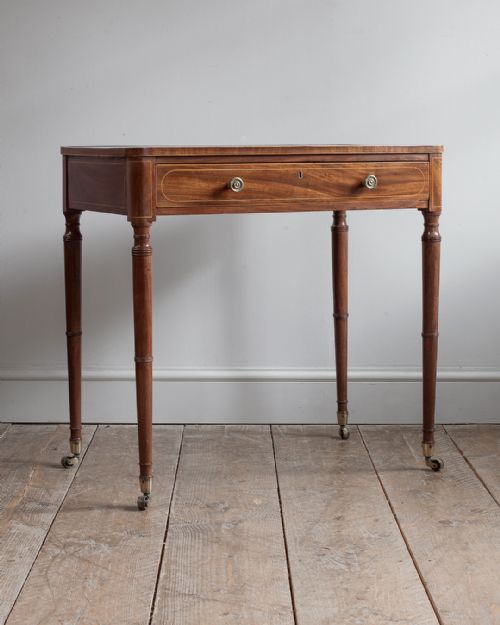
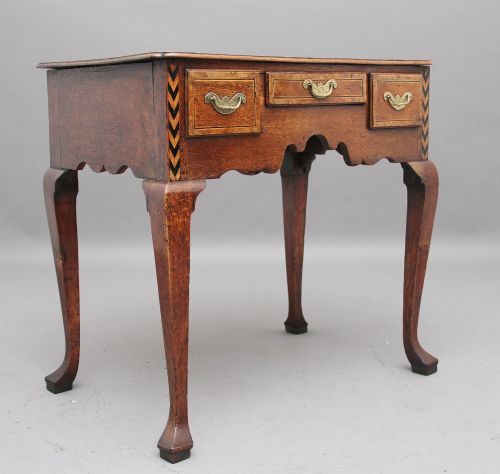
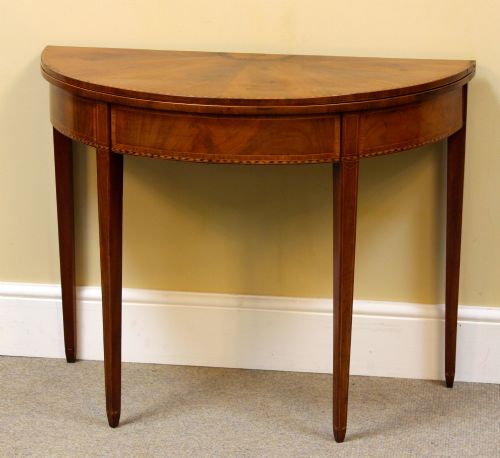
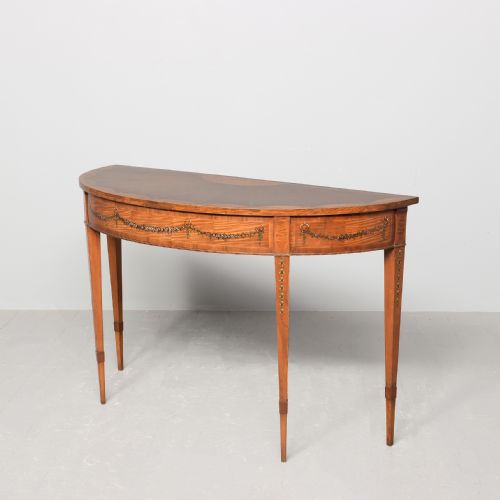

Georgian Inlaid Hall Table
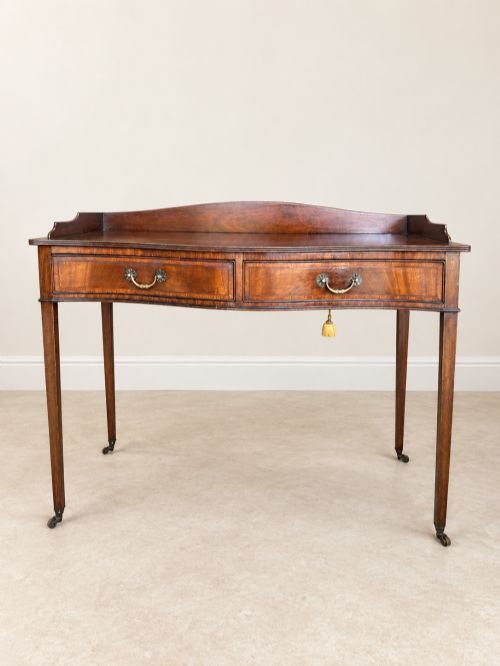
A georgian inlaid hall table brings refined timberwork and compact surface space into an entranceway.
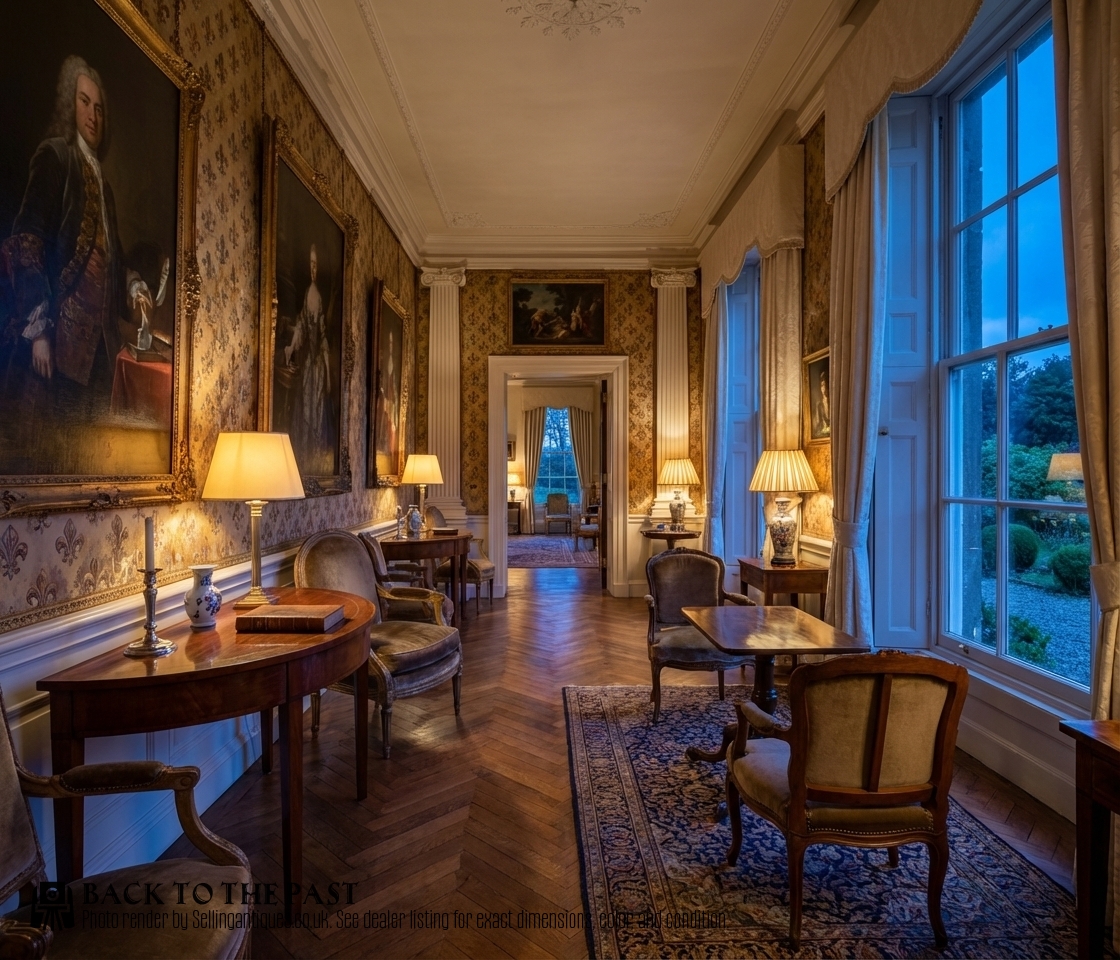
Georgian Inlaid Hall Table
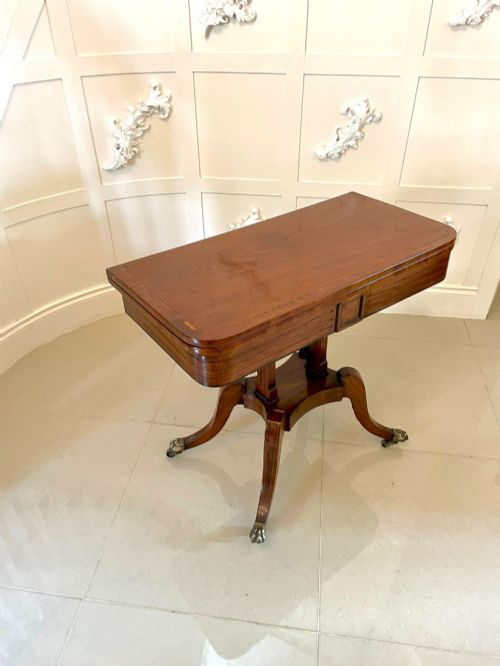
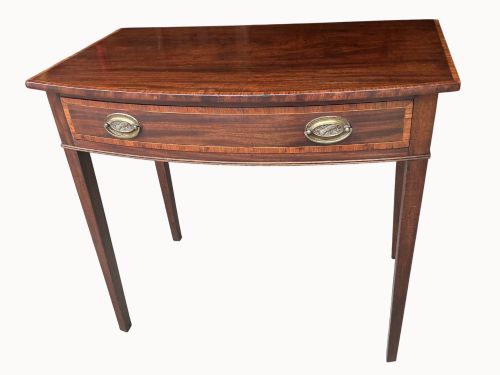
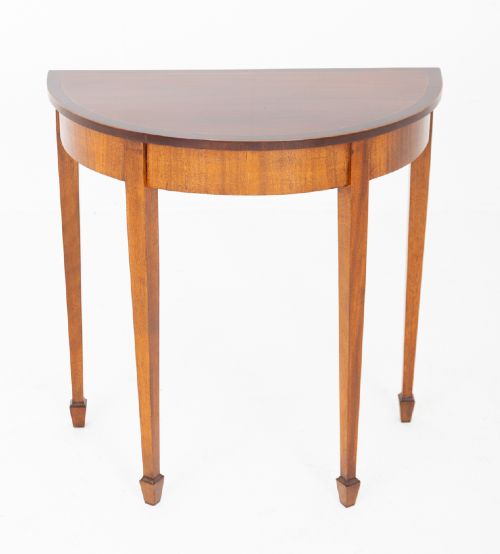
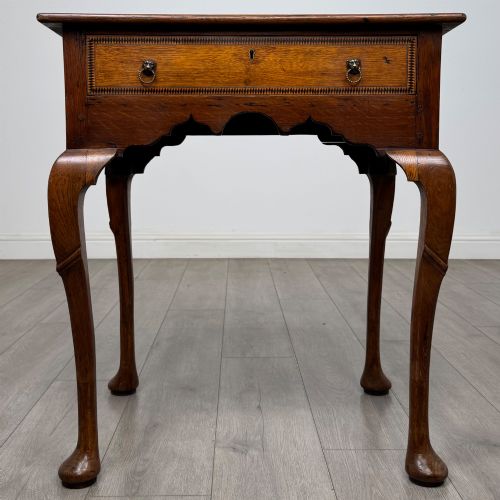
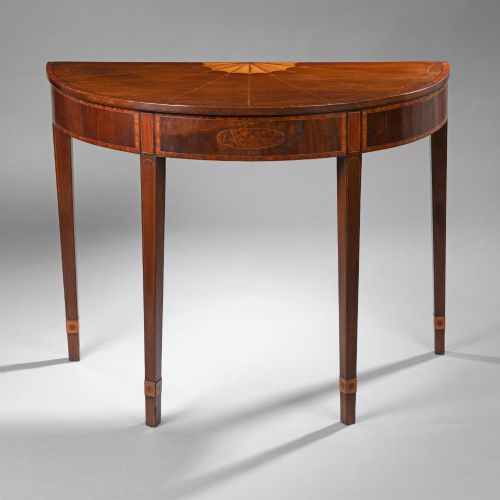
When you search for a georgian inlaid hall table, you encounter compact side tables, demi-lune console tables, and lowboys designed to stand neatly against a corridor wall. The pieces span the eighteenth century, the Regency era, and later revival periods, bringing practical surface space to narrow domestic areas.
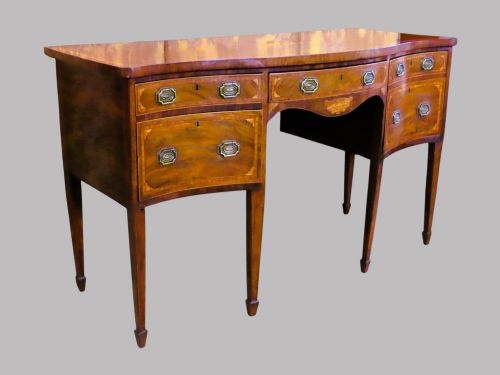
Mahogany forms the primary timber across the selection, frequently paired with walnut, fruitwood, or oak, and finished with boxwood and satinwood inlay. Makers shaped these surfaces into bow fronts, serpentine outlines, and half-moon console configurations that suit passage spaces.
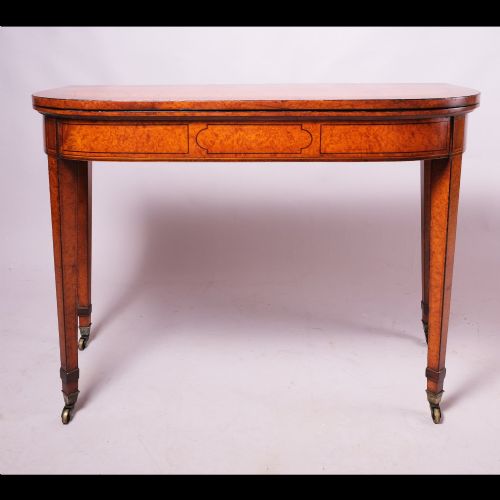
The assortment includes fold-over card tables, tea tables, and writing tables adapted for hallway placement. While some examples date directly to the Georgian and Regency periods, others reflect later Edwardian and twentieth-century interpretations of Sheraton and George III designs.
Materials and construction
Cabinet makers utilised solid mahogany, walnut, oak, and fruitwood as the structural foundation, applying fine veneers of satinwood and amboyna to the top surfaces. These timbers received hand-cut stringing and marquetry detailing in boxwood, ebony, and lighter woods.
Construction relied on traditional joinery techniques, combining pegged frames with dovetailed drawer boxes and hinged mechanisms for fold-over tops. Brass fittings, including handles and escutcheons, secured the functional elements of writing and drawer tables.
The furniture spans the seventeenth, eighteenth, and nineteenth centuries, alongside Edwardian and later twentieth-century revivals.
Craftsmanship and proportion
The distinction between tiers rests on the precision of the timber selection and the crispness of the inlay work. Finer examples display tightly figured mahogany veneers matched with meticulous boxwood stringing that follows the curve of the top without distortion.
Structural integrity and original surface patination separate standard pieces from superior ones. Tables retaining their original brass hardware, unblemished secondary timbers, and balanced proportions demonstrate the hand of a skilled workshop.
The Georgian Inlaid Hall Table Glossary
- Demi-lune
- A half-moon shape popular for console and card tables designed to sit flush against a wall.
- Lowboy
- A small, low dressing or side table featuring one or more rows of drawers beneath the surface.
- Marquetry
- Decorative patterns formed by fitting together thin veneers of various coloured woods.
- Stringing
- Very narrow inlay of a contrasting wood used to outline the edges of table tops and drawers.
- Crossbanded
- A border of veneer laid around the edge of a table top with the grain running perpendicular to the centre.
Georgian Inlaid Hall Table: Frequently Asked Questions
Where did people place these tables?
These tables stood primarily in entrance halls, corridors, and reception rooms to hold lamps, letters, or decorative items.
Their narrow depth allowed them to occupy passage spaces without obstructing movement through the house.
What woods were commonly used?
Mahogany served as the predominant timber, supported by walnut, oak, and fruitwood for carcass construction and secondary elements.
Satinwood, boxwood, and ebony provided the contrasting tones required for detailed inlay and stringing.
How do I distinguish revival periods?
Revival pieces from the Edwardian era or the twentieth century often display machine-cut veneers and standardised construction methods.
Earlier eighteenth and nineteenth-century examples show hand-shaped joints, natural timber movement, and older patination.