
Georgian III Mahogany Furniture
Georgian iii mahogany furniture brings the warm tone and steady proportion of the eighteenth century directly into daily domestic use.
Georgian III Mahogany Furniture
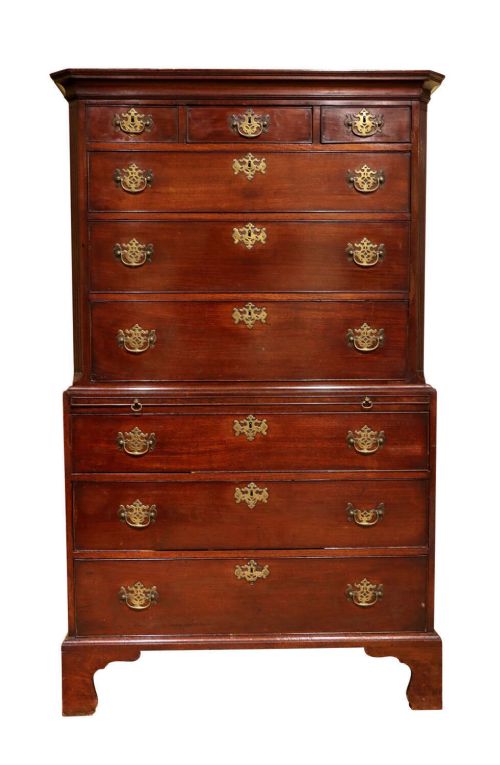
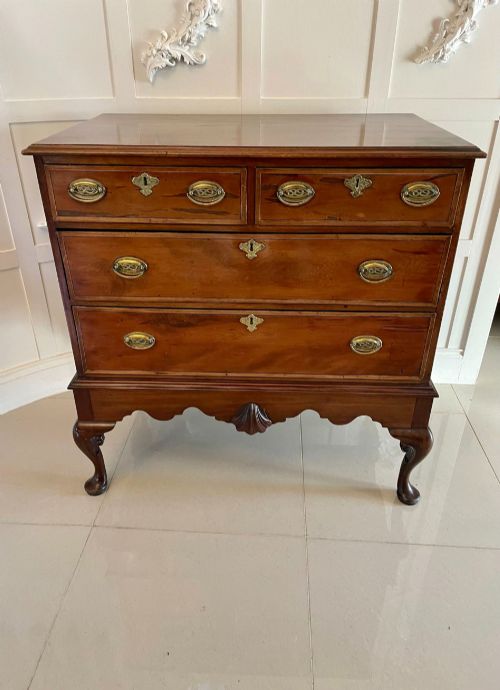
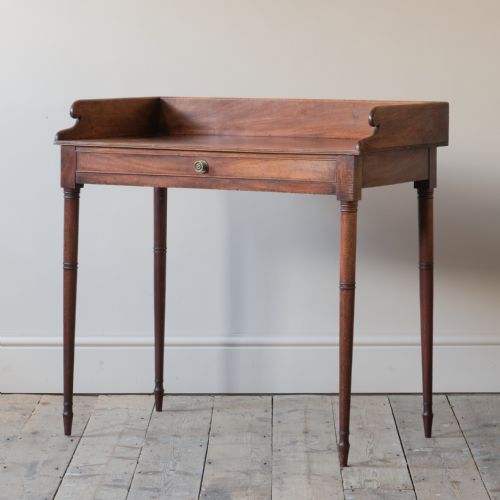
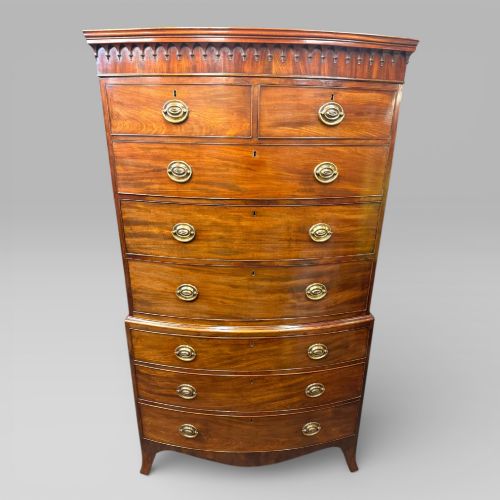
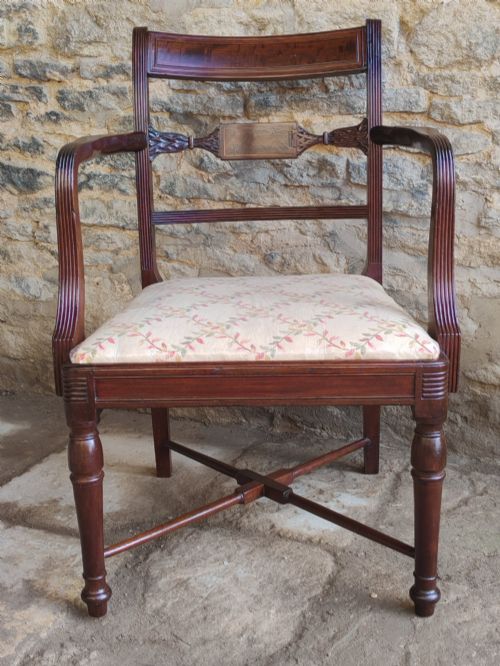
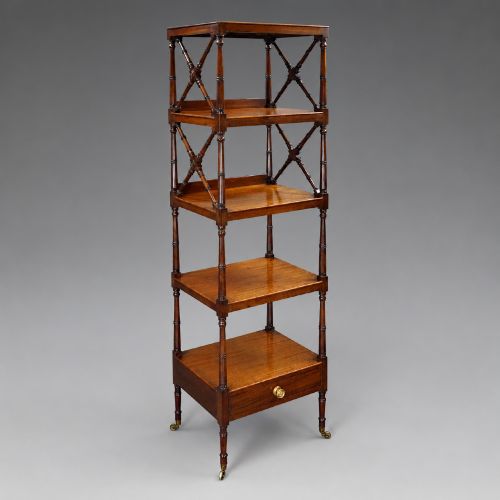
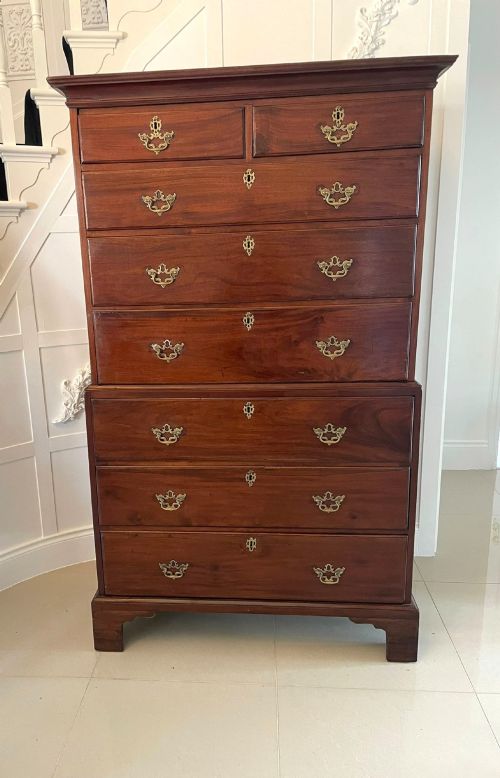
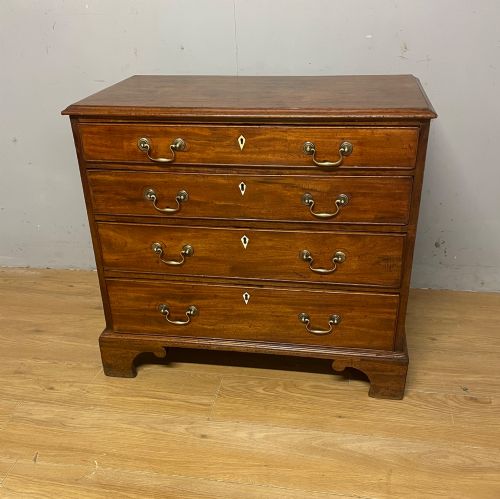
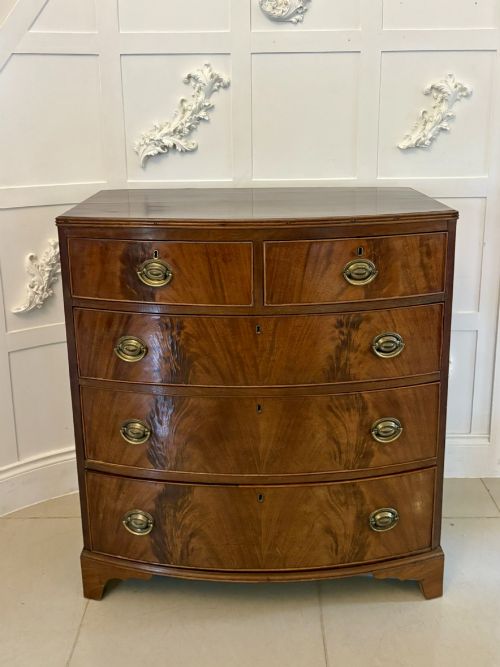
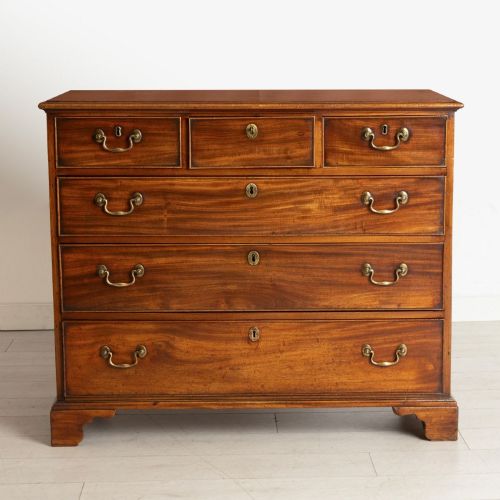
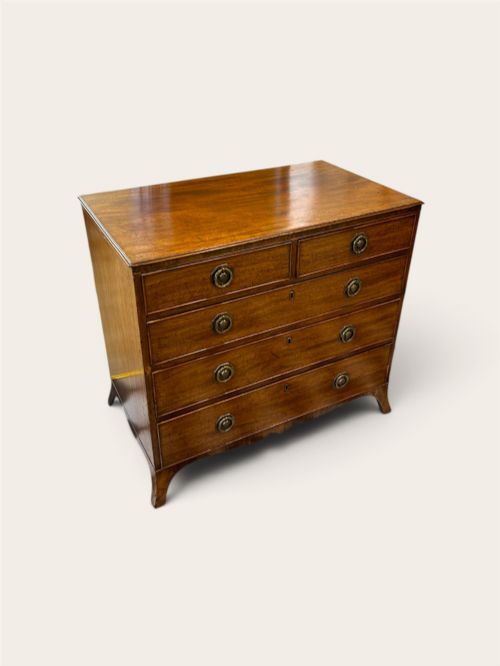
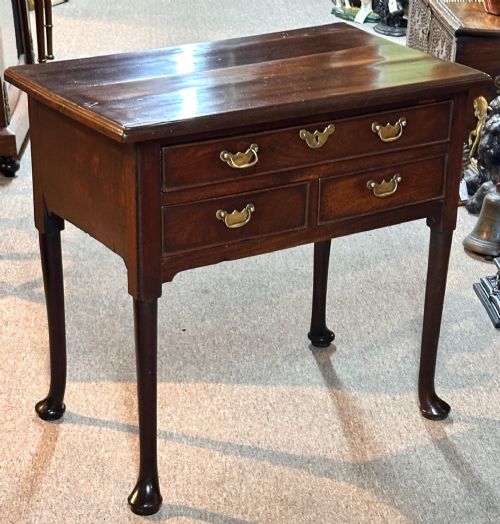
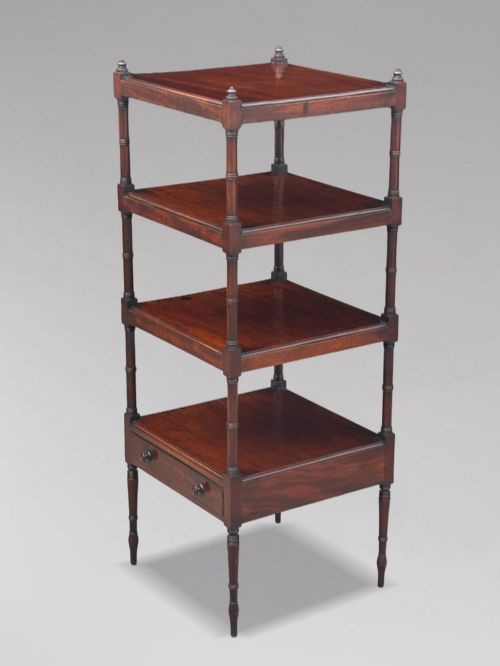
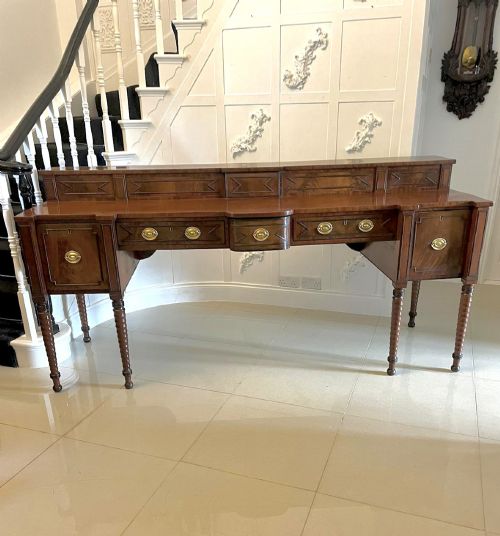
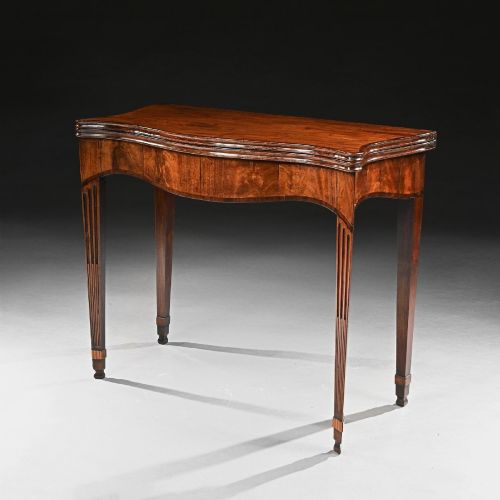
Georgian iii mahogany furniture encompasses practical timber pieces made during the reign of George III, spanning chests of drawers, washstands, side tables, and dining chairs. The selection centres heavily on storage and occasional forms, from compact bow-front chests to larger linen presses and cellarettes.
Buyers meet works from the eighteenth and nineteenth centuries, alongside later Edwardian interpretations built in the same style. Solid proportions and functional domestic designs define the items encountered on this page.
How they were made
Cabinetmakers utilised dense mahogany, often figured, supported by secondary timbers such as oak, pine, and wood veneer. Surface detailing relied on contrasting inlay, satinwood accents, and carved blind fret cornices rather than heavy applied decoration.
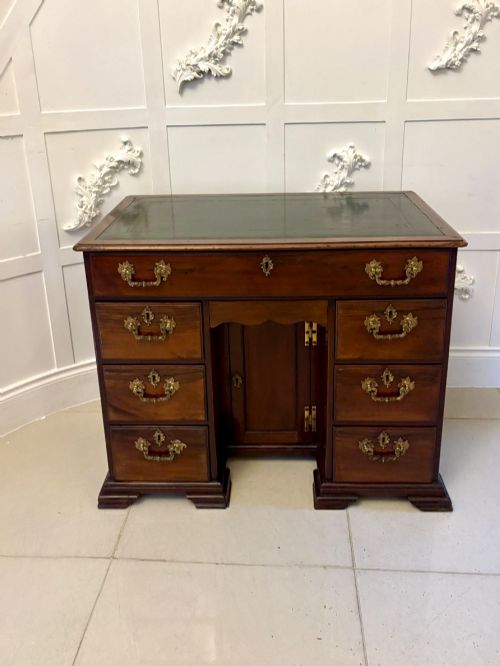
Metal hardware such as brass handles, escutcheons, and occasional brass banding provided functional contrast to the dark timber. Joinery focused on sturdy construction for items intended for rigorous household service, including cellarettes and kneehole desks.
Some cellarettes still retain their original internal partitions designed to keep vintage claret safely separated from rolling about.
What varies in quality
Quality rests in the natural figuring of the mahogany timber and the depth of the surface patination achieved over time. Examples showing exceptional colour, subtle inlay work, and crisply executed carvings sit at the upper end of the range.
Proportion and structural integrity distinguish superior pieces from heavier, plainer alternatives. The refinement of secondary details, such as bracket feet, cockbeaded drawer edges, and original brass fittings, determines the standing of an individual item.
Gillows
The Georgian III Mahogany Furniture Glossary
- Cellaret
- A timber container lined for cooling bottles of wine, frequently mounted with brass bands and standing on legs or castors.
- Blind fret
- A carved ornamental band applied to a flat surface to imitate pierced fretwork without cutting through the wood.
- Bow-front
- A convex curved front profile popular on chests of drawers and sideboards during the period.
- Brush slide
- A pull-out shelf fitted above drawers to serve as a surface for grooming or writing.
- Secretaire
- A cabinet or chest incorporating a fitted writing drawer with a drop-front desk surface.
Georgian III Mahogany Furniture: Frequently Asked Questions
What defines georgian iii mahogany furniture?
These pieces originate from the reign of George III, built primarily from mahogany with restrained classical proportions and functional forms like chests of drawers and writing tables.
They reflect the transition from heavier walnut styles to lighter, durable mahogany designs suited to refined domestic interiors.
How were cellarettes used?
Cellarettes sat beneath dining tables or sideboards, lined to hold wine bottles chilled in ice or water during long dinner services.
Their robust timber construction and brass banding kept heavy bottles secure while allowing servants to move them easily.
How do I care for mahogany surfaces?
Keep timber pieces away from direct heat sources and strong sunlight to prevent the mahogany grain from drying out and fading.
Apply natural wax polish sparingly and buff with a soft cloth to maintain the historic patination without building up heavy residues.
Are these pieces suitable for modern bedrooms?
Compact bow-front chests, kneehole desks, and linen presses offer practical storage that fits comfortably into contemporary bedroom layouts.
Their sturdy construction ensures they handle daily use just as well today as they did in the eighteenth century.