
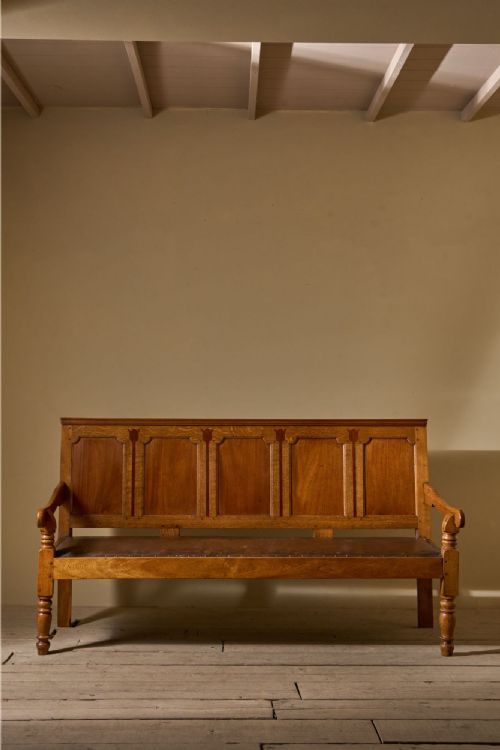
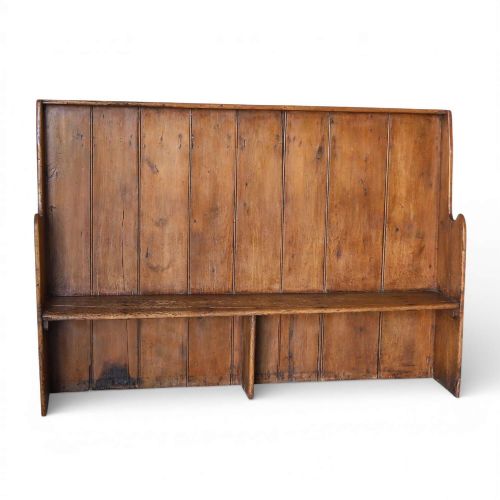
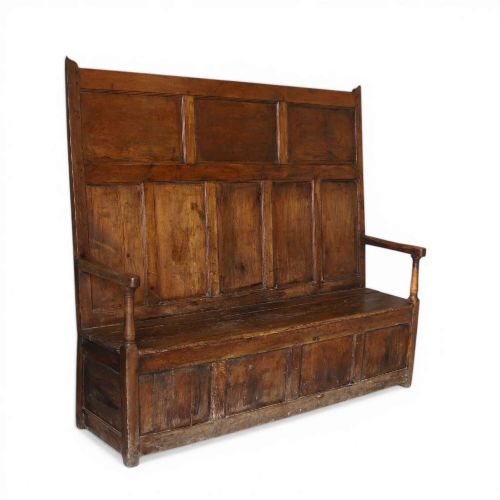


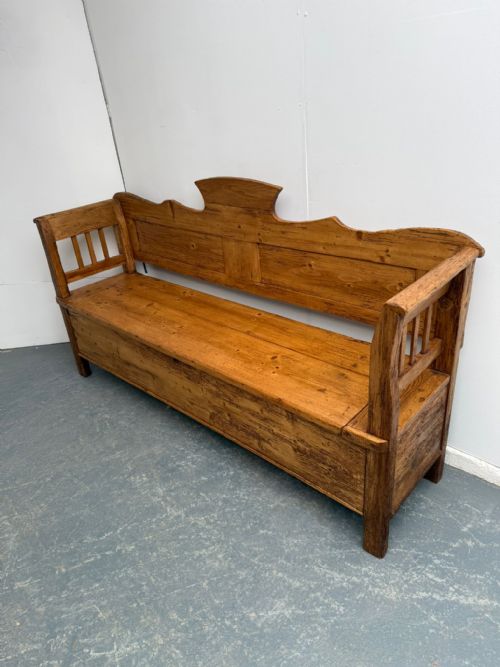


Georgian High Back Settle
A georgian high back settle offers solid timber seating designed to keep out draughts in older homes.
Georgian High Back Settle
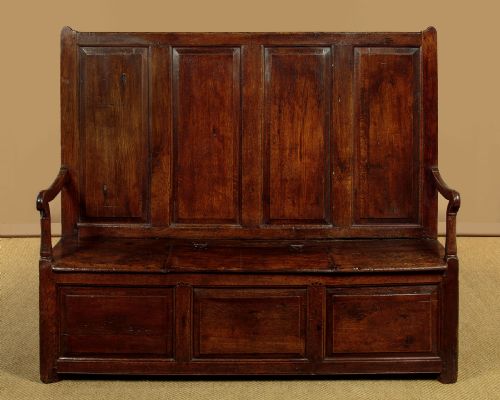
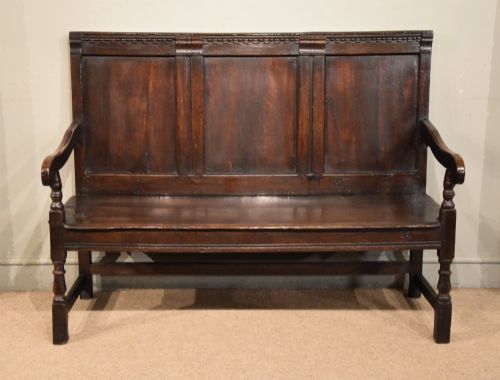
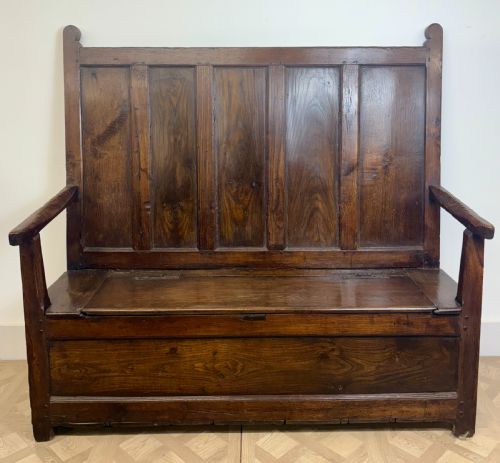
Most examples found here date from the eighteenth and nineteenth centuries, emerging from English, Welsh and continental provincial workshops. Forms range from straight panelled oak benches to curved barrel-backed designs and box settles with integrated storage.
Makers built these items to withstand heavy daily use in communal rooms, employing local timbers such as oak, pine and elm. Their primary function combined seating with draught exclusion, making them central to domestic life before central heating.
Materials and construction
Joiners relied heavily on native hardwoods and softwoods, predominantly oak and pine, supplemented by ash, elm and fruitwood. Construction typically involved peg-joined frames, panelled backs and solid plank seats designed for maximum durability.
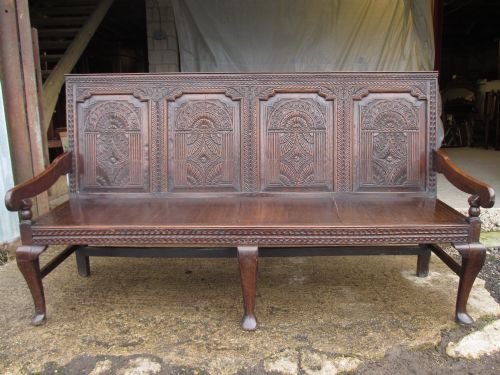
Many items display surfaces finished with original paint, scumble glazes, wax or honey brown patina developed over centuries of wear. Details such as carved tulip motifs, panelled wings and hinged box storage appear across regional variations.
Listings feature oak, pine, elm and fruitwood, spanning periods from the early eighteenth century into the late nineteenth century.
Assessing quality and character
Quality rests upon the integrity of the timber, the retention of original surfaces such as early paint or wax, and the survival of structural elements like feet and panel backs. Pieces retaining their original proportions and uncompromised joinery command greater interest.
Regional vernacular character also shapes distinction, where unusual forms like barrel backs or integrated box storage reflect local cabinet-making traditions rather than standardised factory production.
The Georgian High Back Settle Glossary
- Box settle
- A bench featuring an enclosed compartment beneath the seat, accessed via a hinged lid, used historically for household storage.
- Barrel back
- A curved or concave high back designed to wrap around the seated person, offering superior protection against draughts.
- Peg joined
- A method of construction using wooden pegs to secure mortise and tenon joints instead of modern metal fasteners.
- Scumble
- A decorative painting technique involving a translucent glaze dragged over a base coat to imitate finer grain or texture.
- Vernacular
- Furniture made by regional craftsmen following local traditions and utilising nearby materials rather than high-style metropolitan designs.
Georgian High Back Settle: Frequently Asked Questions
Where were settles used?
These benches sat in the draughty kitchens, halls and parlours of farmhouses and cottages to shelter occupants from cold air.
Taverns also utilised them extensively around hearths to provide communal seating that blocked chills from open doors.
What is a box settle?
A box settle incorporates a storage compartment directly beneath the seat boards, accessed by lifting the hinged lid.
Householders stored blankets, fuel or daily items inside this space to keep living areas tidy.
How do I care for antique pine?
Keep wooden furniture away from direct heat sources and drastic humidity changes to prevent timber splitting or warping.
Apply a traditional beeswax polish sparingly to maintain the surface sheen without building up excessive residue.
Are barrel back settles rare?
Barrel-backed examples feature curved wooden panels wrapping around the seat to trap heat effectively.
Their specialised construction required more complex joinery than flat-backed versions, making them less common.