
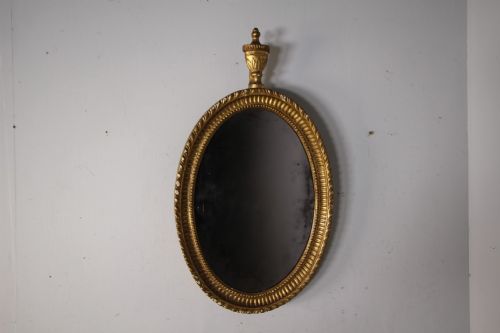
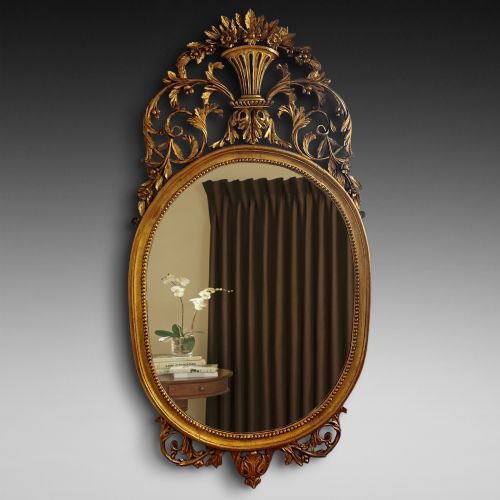
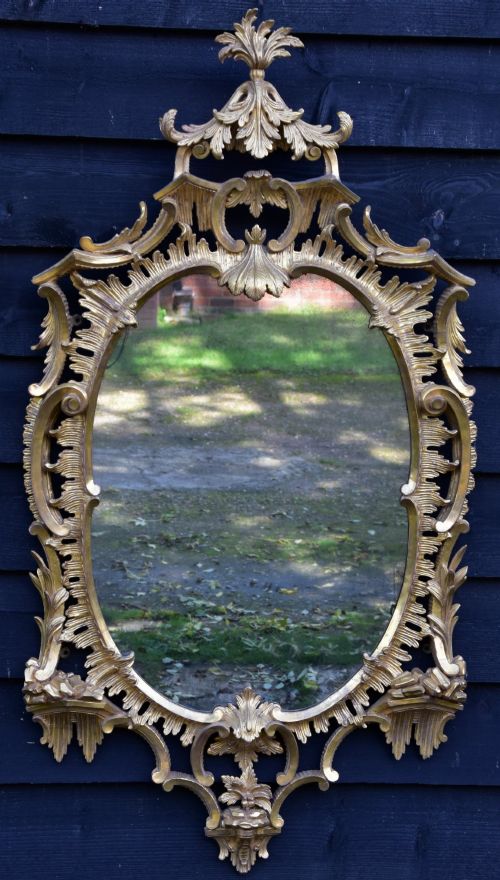
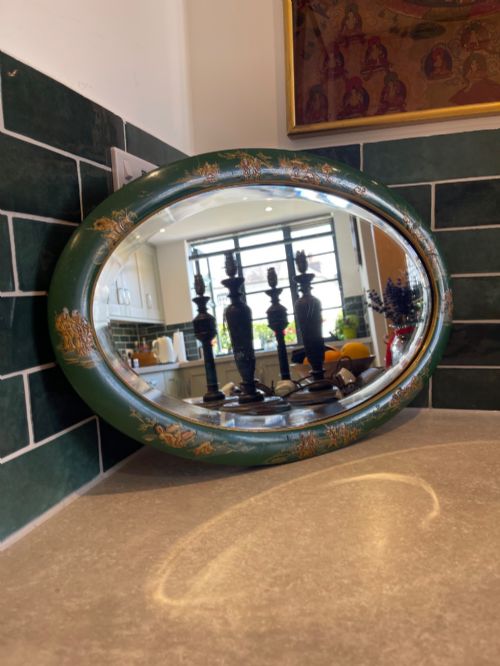
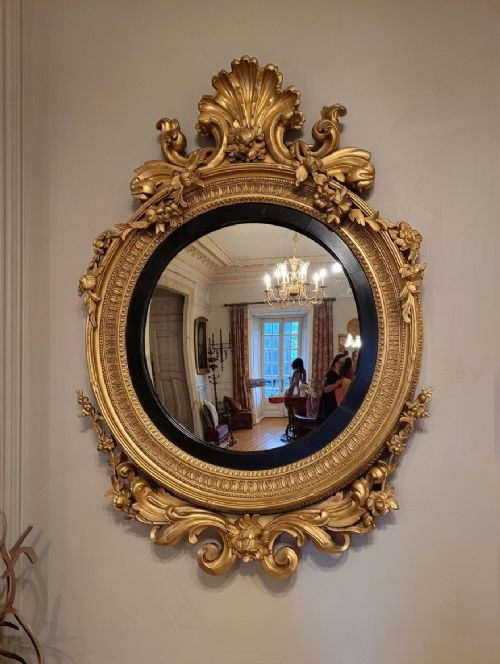


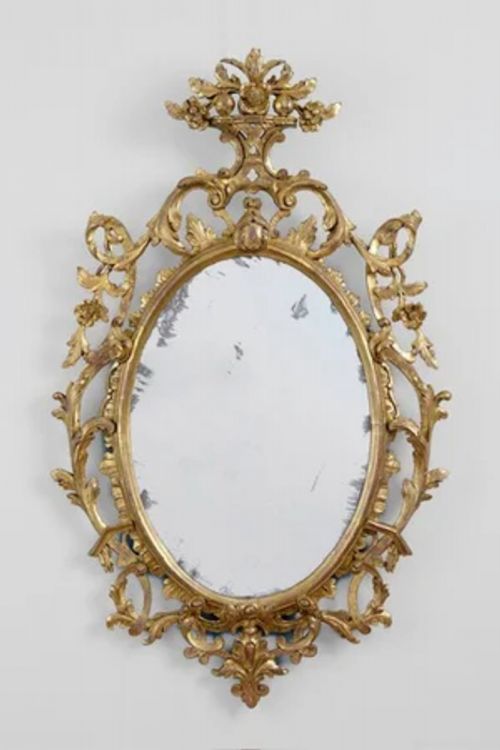


Georgian Gilded Oval Mirrors
Georgian gilded oval mirrors bring light and proportion to a room, cast in carved giltwood and gesso to reflect an interior with soft brilliance.
Georgian Gilded Oval Mirrors
Georgian gilded oval mirrors are wall-hung looking glasses defined by curved frames and gilded surfaces, originating primarily in the eighteenth and early nineteenth centuries. These pieces function both as decorative wall furnishings and functional mirrors, capturing natural light within domestic interiors.
Buyers browsing this selection will encounter genuine period examples alongside later revivals from the nineteenth and early twentieth centuries. The primary forms include simple wall mirrors, grand overmantels, and girandoles fitted with candle sconces.
Origins span English cabinet-making traditions, incorporating neoclassical, Adam, and Chippendale designs. The evidence shows formats ranging from miniature wall pieces to large overmantle installations designed for principal rooms.
Materials and construction
Makers constructed the foundational frames using timber such as pine, upon which layers of gesso were applied to build up intricate carved details. This plaster-like mixture allowed artisans to carve crisp motifs before applying thin sheets of gold leaf.
Giltwood and gesso surfaces were often burnished to create contrasting textures of matte and reflective gold. Mirror glass of the period was set within these frames, sometimes accompanied by reverse-painted glass panels in specialised styles.
Materials recorded across the selection include giltwood, gesso, pine, and antique mirror glass.
Assessing quality and craftsmanship
The distinction between tiers rests upon the crispness of the hand-carving and the depth of the gilding layers. Superior examples display sharply defined foliage, scrolls, and neoclassical urns carved directly into the wood rather than moulded in heavy composition.
Original mercury glass and untouched gilded surfaces retain a warmer tone and subtle imperfections that differentiate period craftsmanship from later revival interpretations. The structural integrity of the pine carcass and the retention of the original backing boards further indicate superior origin.
The Georgian Gilded Oval Mirrors Glossary
- Giltwood
- Wood that has been coated with gold leaf or gold paint. This technique provides the luminous metallic finish characteristic of formal period frames.
- Gesso
- A plaster mixture applied to wood frames to create a smooth surface for carving and gilding. Artisans used it to build up relief decoration before applying gold leaf.
- Girandole
- A decorative wall mirror featuring attached candle sconces. The candle arms reflect additional light into the chamber.
- Overmantel
- A large mirror designed to hang above a fireplace mantelpiece. These pieces frequently feature horizontal or expansive oval proportions to fill the chimney breast.
- Neoclassical
- A style drawing inspiration from classical antiquity. It is characterised by symmetry, restrained ornamentation, urns, and swags.
Georgian Gilded Oval Mirrors: Frequently Asked Questions
Where should I hang an oval mirror?
These mirrors suit principal reception rooms, hallways, and above mantelpieces where their curved frames soften architectural angles. Positioning them opposite a window maximises light distribution across the interior.
Ensure the wall fixings match the weight of the timber and gesso frame to support the piece securely.
How do I distinguish original Georgian pieces from later revivals?
Period pieces from the eighteenth century display hand-carved detailing within the wood and gesso, alongside period mirror glass showing subtle oxidation. Revivals from the Victorian and Edwardian eras often utilise heavier moulded composition ornaments.
Examining the construction of the pine frame and the backboards provides further clues regarding the date of manufacture.
What maintenance do giltwood frames require?
Dust the gilded surfaces gently with a soft, dry brush to prevent accumulation without disturbing the delicate gold leaf. Avoid liquid cleaners and modern chemical polishes, which can strip the historic gilding.
Keep the mirrors away from direct moisture and extreme temperature fluctuations to protect the gesso and wood substrate.
Did these mirrors always include candle arms?
Only specific forms, known as girandole mirrors, incorporated candle sconces designed to multiply candlelight. Standard wall and overmantel mirrors served purely as looking glasses without lighting attachments.
The presence of original sconces adds distinct functional variety to the surviving pieces.