



Georgian Fluted Stemware
Georgian fluted stemware brings genuine eighteenth-century drinking vessels to the table, offering tactile historical character that modern glass simply cannot replicate.
Georgian Fluted Stemware
When you search for georgian fluted stemware, you encounter authentic drinking vessels spanning the eighteenth and early nineteenth centuries. These pieces encompass specialised forms designed for specific drinks, including ale glasses, wine flutes, rummers, and ratafia glasses.
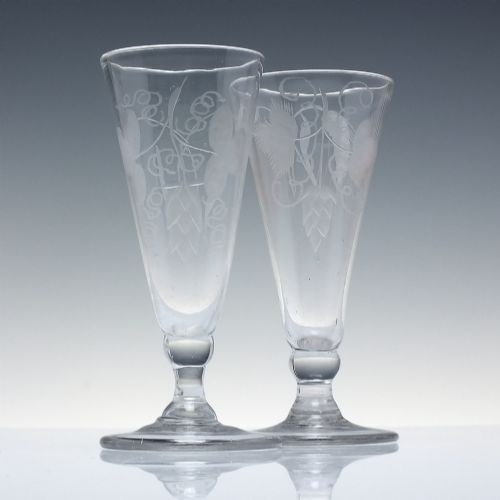
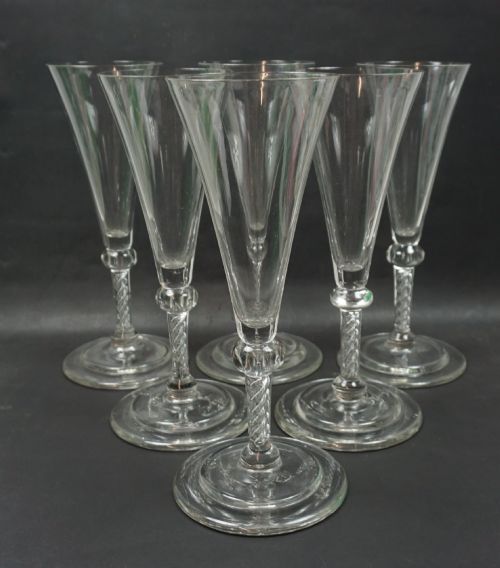
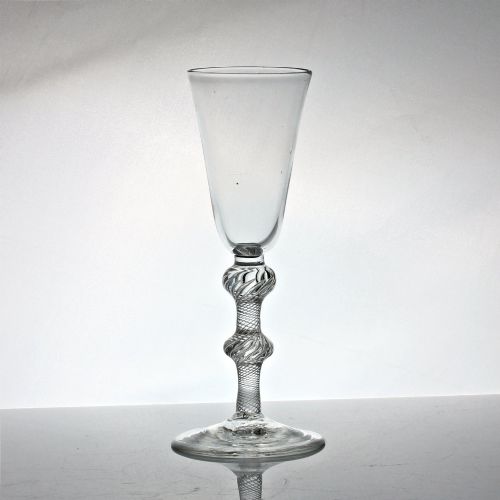
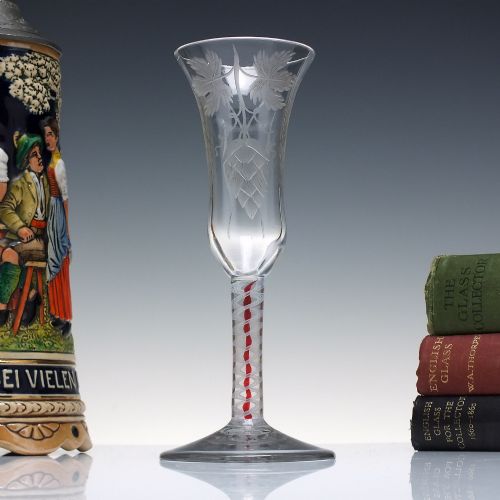
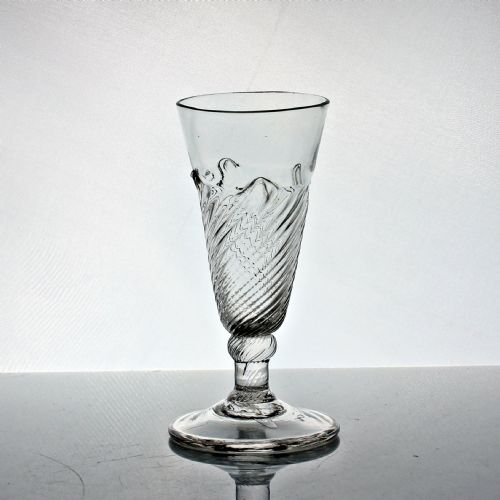
The selections on this page lean heavily towards mid-to-late eighteenth-century examples, showcasing characteristic manufacturing traits of the period. Forms such as the flute-moulded ogee bowl and tall air twist stems define the dominant visual style.
Alongside genuine eighteenth-century production, the range extends to occasional Georgian Revival interpretations from later decades. This variety provides both foundational pieces for early glass collections and striking functional items for the modern dining table.
How they were made
Makers utilised lead glass and flint glass compositions, shaping the molten material through hand-blowing techniques. Folded feet and applied optical mouldings provide structural stability while displaying the characteristic weight of period metal.
Twist stems required immense skill, incorporating air bubbles or white enamel threads drawn through the glass before being spun and elongated. Engraved decoration, including hop and barley motifs, was applied by hand using rotating copper wheels.
Georgian drinkers enjoyed their ales so much they commissioned dwarf glasses specifically designed to survive enthusiastic tavern toasts.
What varies in quality
The sophistication of the internal twist formation dictates much of the visual appeal, separating standard production from master craftsmanship. Crispness in facet cutting and delicacy in flute-moulding further distinguish finer examples.
Proportion and metal clarity remain vital, with superior pieces showing minimal internal striations and balanced weight distribution from foot to rim.
The Georgian Fluted Stemware Glossary
- Air twist
- A stem formation created by drawing out internal air bubbles into spiral threads within the glass. This technique gained widespread popularity in mid-eighteenth-century English drinking vessels.
- Opaque twist
- A stem style featuring white enamel rods twisted inside the clear glass core. These threads produce complex single or double series patterns.
- Flute-moulded
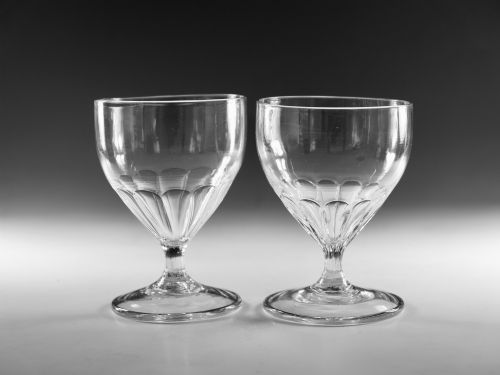
- A decorative technique producing vertical flutes or ribs around the lower portion of a drinking bowl. It adds both grip and visual texture to the vessel.
- Folded foot
- A rim edge turned underneath the base of a glass to create a thicker, more durable edge. This practice was common on eighteenth-century drinking glasses to prevent chipping.
- Ratafia glass
- A tall, narrow drinking vessel historically used for sweet fruit liqueurs and cordials. Their slender bowls often feature flute-moulding or detailed twist stems.
- Wrythen
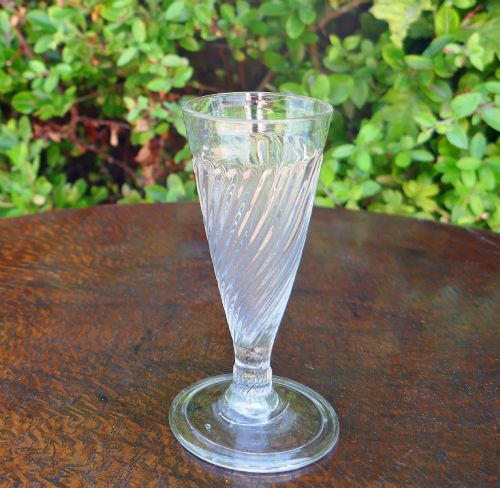
- A decorative swirl pattern created by twisting the glass while hot. This optical effect appears frequently on ale and wine glasses from the mid-eighteenth century.
Georgian Fluted Stemware: Frequently Asked Questions
Can I use georgian fluted stemware for daily dining?
These eighteenth-century drinking vessels remain entirely usable for special occasions or quiet evenings. Hand washing in warm, soapy water preserves the fragile lead glass.
Sudden temperature changes should be avoided to protect the historic material. Treating the glass with care ensures it survives for decades more.
How do I identify an air twist stem?
Hold the glass against a plain light source to examine the interior of the stem. You will see delicate spiral threads of trapped air running through the clear metal.
Authentic period examples display subtle irregularities in these threads. Modern reproductions often look too uniform and lack the warmth of hand-drawn glass.
What is a dwarf ale glass?
Dwarf ale glasses are shorter, sturdier drinking vessels produced during the eighteenth century. Their compact proportions made them less susceptible to tipping over on crowded tavern tables.
Despite their smaller stature, they frequently feature elaborate air twist or opaque twist stems. Collectors prize them for their distinct combination of utility and refined manufacture.
Why do some glasses have folded feet?
Makers folded the bottom rim of the glass underneath itself to create a stronger base. This extra layer of glass protected the vulnerable edge from chipping against wooden tabletops.
Folded feet serve as a reliable indicator of eighteenth-century manufacturing methods. They add tangible weight and balance to the lower portion of the vessel.
What distinguishes rummers from standard wine glasses?
Rummers are larger, heavier drinking vessels designed for robust beers, wines, and spirits during the Georgian period. Their capacious bowls often sit on short, sturdy stems.
They frequently feature facet cutting or engraved decoration around the upper body. These glasses reflect the changing social drinking habits of the late eighteenth and early nineteenth centuries.