
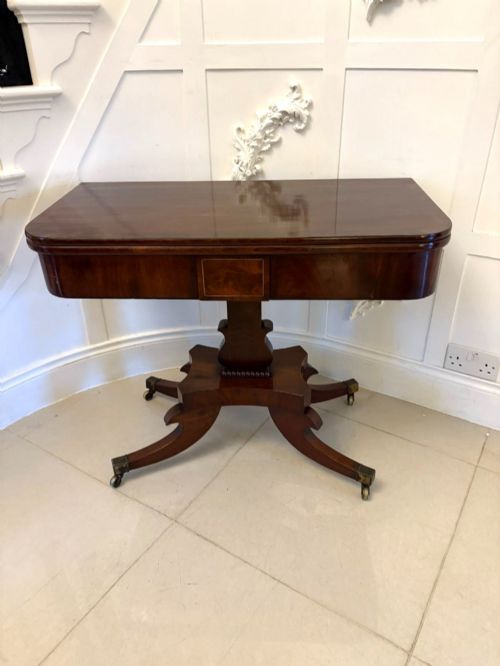
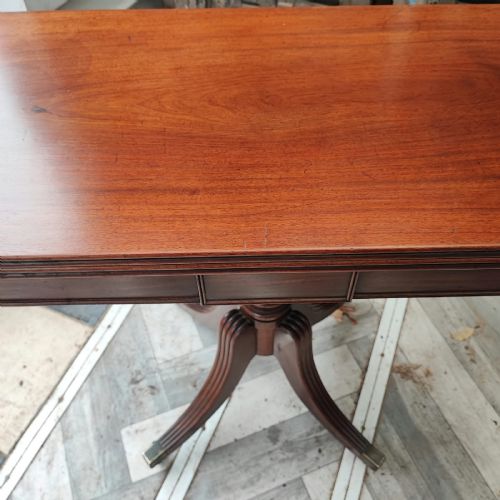
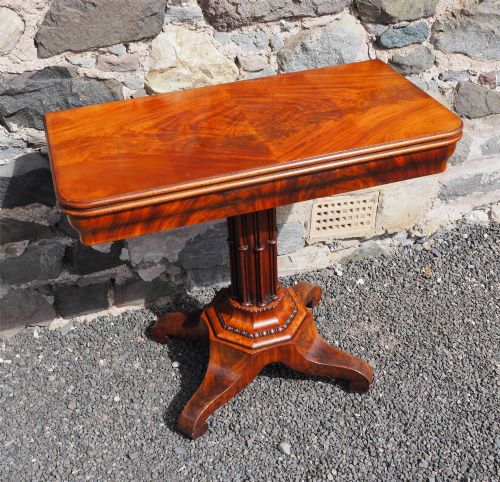
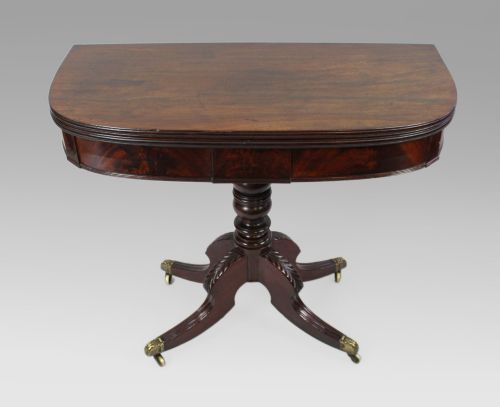


Georgian Flip Top Table
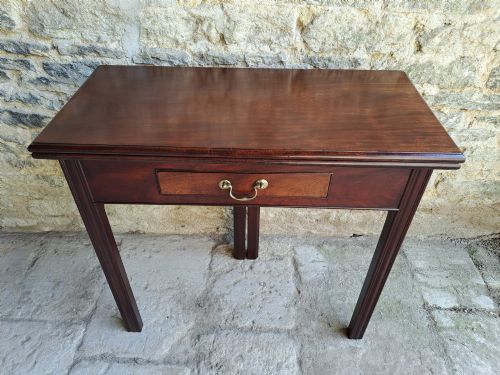
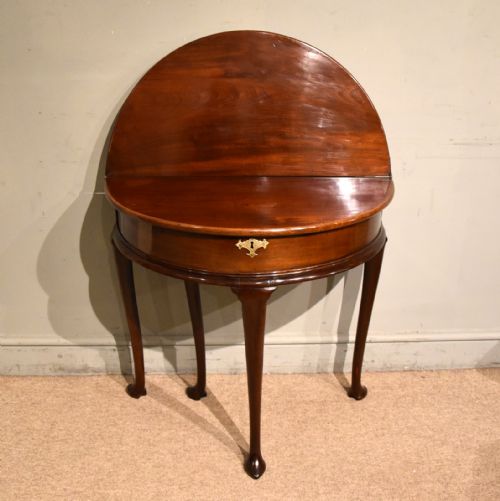
A georgian flip top table combines ingenious folding or tilting mechanisms with rich timber surfaces, offering versatile living spaces a clever piece of period engineering.
Georgian Flip Top Table
A georgian flip top table encompasses diverse folding, turn-over, and tilt-top forms designed to save space when not in use. The search phrase covers tea tables, card tables, games tables, and occasional tripod breakfast or dining tables spanning the 18th and 19th centuries.
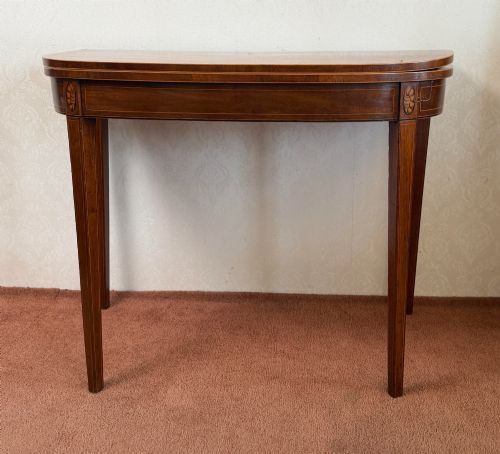
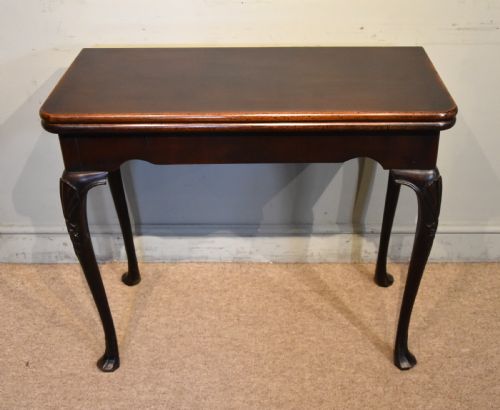
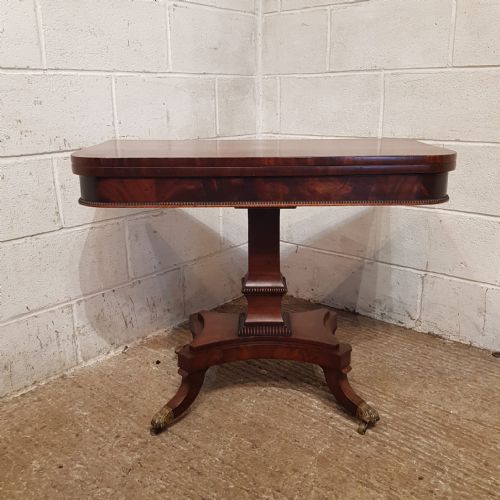
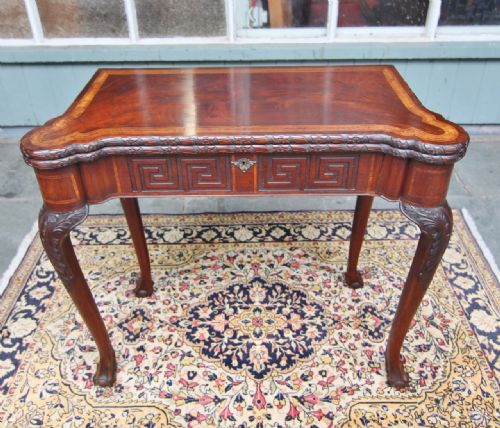
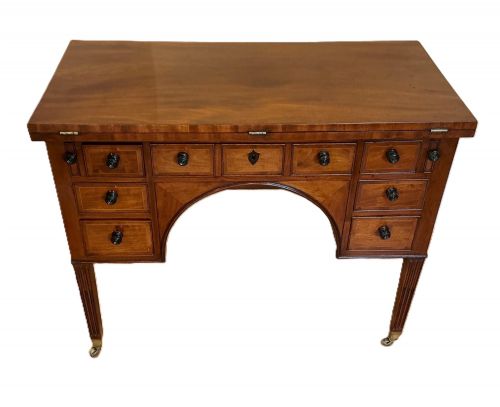
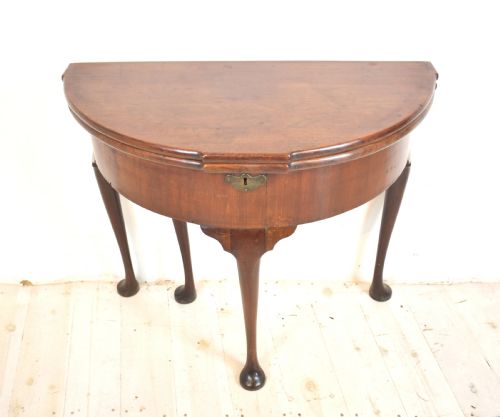
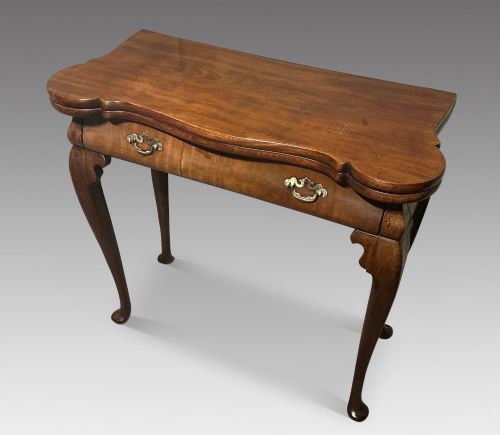
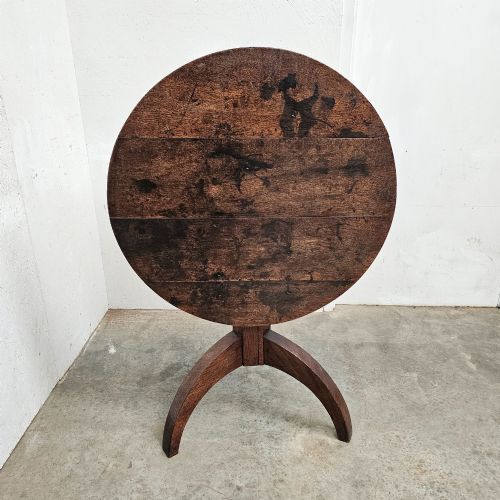
The pieces appearing on this page span styles from George II and George III through to Regency and William IV. Buyers meet D-shaped tea tables, demi-lune card tables, and circular tilt-top tripod pieces executed in rich timbers.
Makers and cabinetmakers of these eras produced tables that stood against walls as console or side tables before unfolding to accommodate evening cards, tea service, or dining.
How They Were Made
Mahogany dominates the evidence, including figured, flame, Honduras, and Cuban varieties, often complemented by secondary timbers like oak and walnut. Cabinetmakers utilised satinwood, boxwood, and brass inlay or mounts to define borders and edges.
Construction relied on concertina actions, dual-action mechanisms, and robust pivot hinges that allowed heavy timber leaves to turn over or tilt smoothly. Tripod bases employed sturdy pedestal columns secured by three or four legs.
Georgian Flip Top Table Retail Price Guide 2026
Typical asking prices for georgian flip top table among the pieces listed under this phrase on Sellingantiques today, from the lower quarter to the upper quarter. They describe what is for sale here now, not the wider market.
Materials recorded across the inventory include mahogany, oak, walnut, rosewood, satinwood, boxwood, and brass.
What Varies in Quality
The distinction between ordinary and exceptional examples rests in timber selection and figuring, such as highly prized flame mahogany or figured grain. Finer tables display crisp carving on legs and friezes, alongside precise joinery in the folding mechanism.
The refinement of brass mounts, subtle boxwood or satinwood stringing, and deep patination on the primary surfaces separate workshop masterpieces from utilitarian pieces.
The Georgian Flip Top Table Glossary
- Concertina action
- An expanding frame mechanism used on card tables that pulls out to support the unfolded top on four legs instead of two. This engineering feat allows full weight distribution across the opened surface.
- Tilt-top
- A tabletop design mounted on a central pillar catch that pivots vertically to store flat against a wall. It is frequently seen on tripod breakfast or occasional tables.
- Demi-lune
- A half-moon shape popular for card and side tables designed to sit flush against a wall. When opened, the hinged top reveals a full circular or rectangular playing surface.
- Sabre leg
- A concave tapering furniture leg that curves outward in the manner of a cavalry sabre. This form defines many Regency period designs.
- Patination
- The lustrous surface sheen and mellow colour developed by aged timber through decades of handling and wax polishing. It serves as a visual indicator of genuine age and continuous care.
Georgian Flip Top Table: Frequently Asked Questions
How were these tables used originally?
These tables served multiple functions in period drawing rooms and parlours, standing compactly against walls as console or side furniture during the day. When evening arrived, servants or residents unfolded or turned the leaves to host tea parties, card games, or dining.
The clever dual-action mechanisms allowed households to maximise floor space in reception rooms without sacrificing surface area for social gatherings.
How do I tell a card table from a tea table?
Card tables typically feature baize, felt, or leather-lined interiors designed for playing cards, alongside small corner indents for counters or candlesticks. Tea tables usually present polished timber surfaces across the entire folding top.
While both share similar D-shaped or rectangular profiles when closed, their internal fittings reveal their primary historical purpose.
Where should I place a flip top table at home?
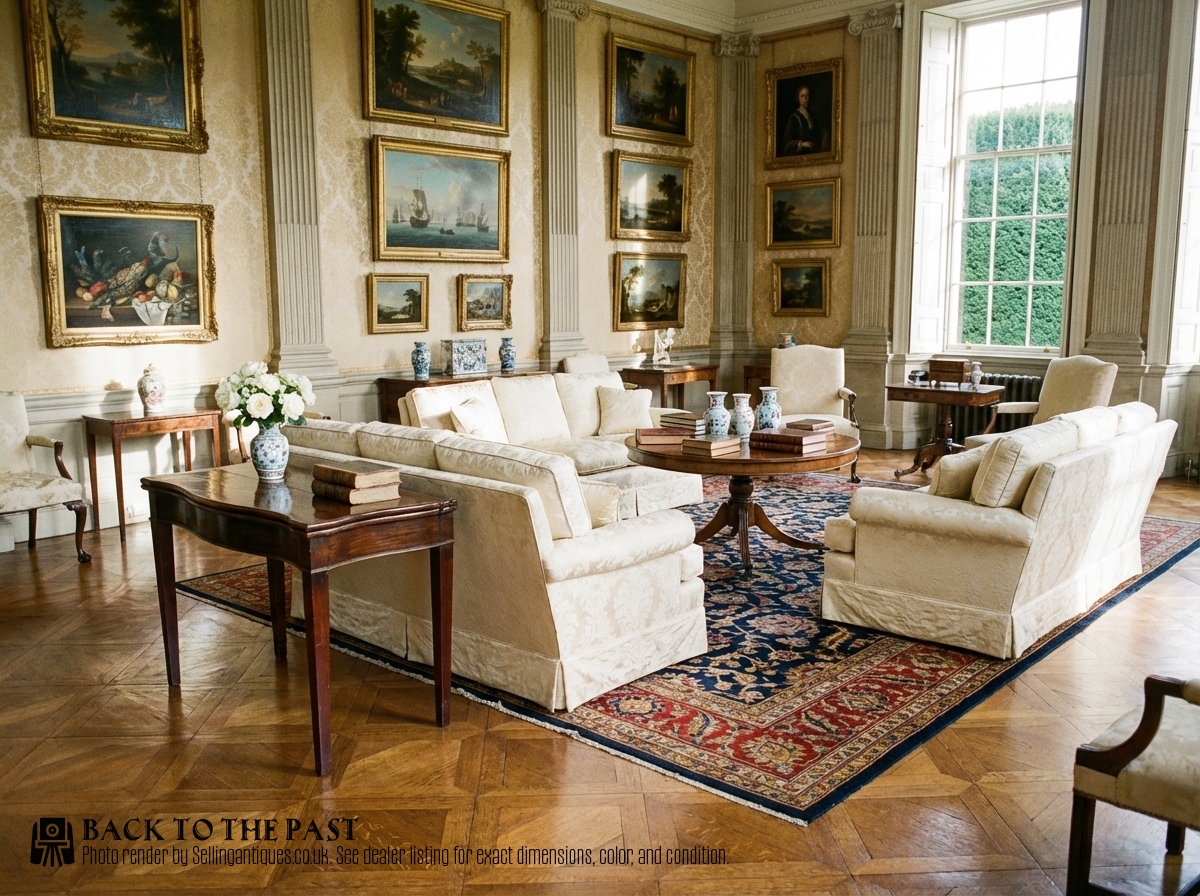
These pieces fit naturally against a hallway wall or beneath a window in their closed configuration, functioning as a slim side or console table. Opening the leaf transforms the piece into a writing desk or a display surface for lamps and books.
Their versatile footprint makes them suited for living rooms where flexible furniture arrangements matter.
How do I identify the period of a table?
Dating relies on stylistic clues like straight Chippendale-style carved legs, Sheraton inlay patterns, or sweeping Regency sabre legs and brass mounts. Timber choice also points to eras, with Cuban and Honduras mahogany appearing frequently in earlier centuries before rosewood and walnut gained favour.
Examining the underside construction and hinges helps confirm the manufacturing era.