
Georgian Flame Mahogany Sideboard
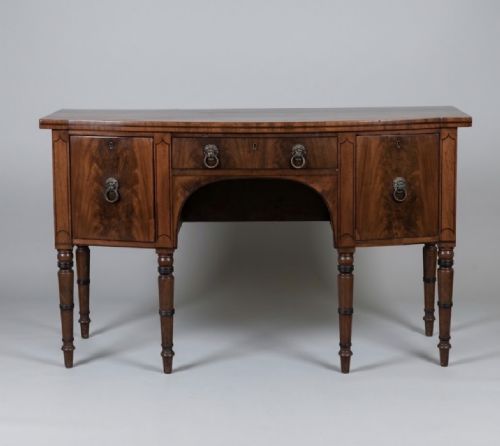
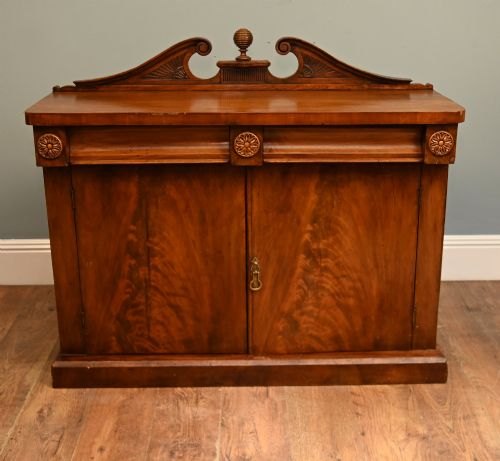
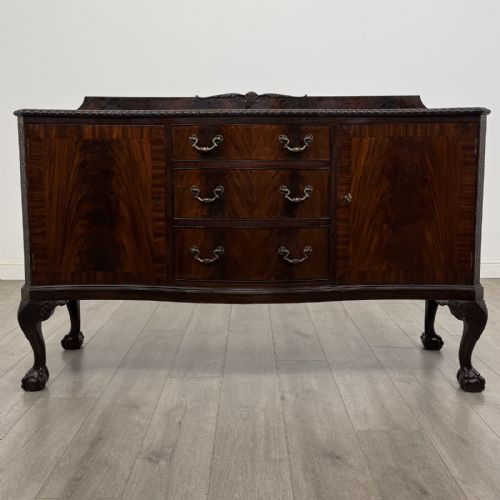
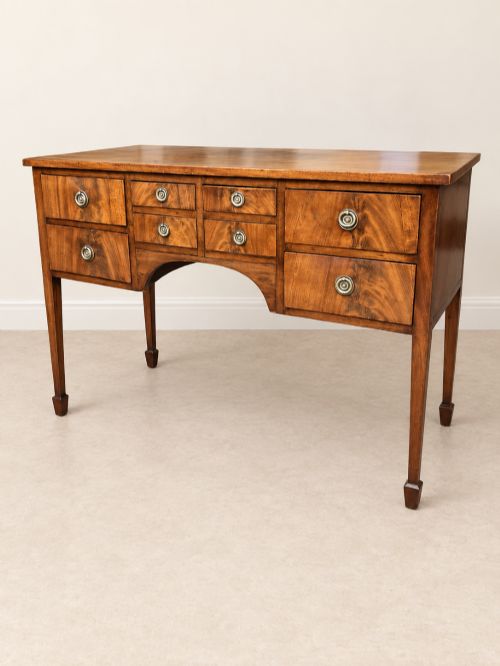
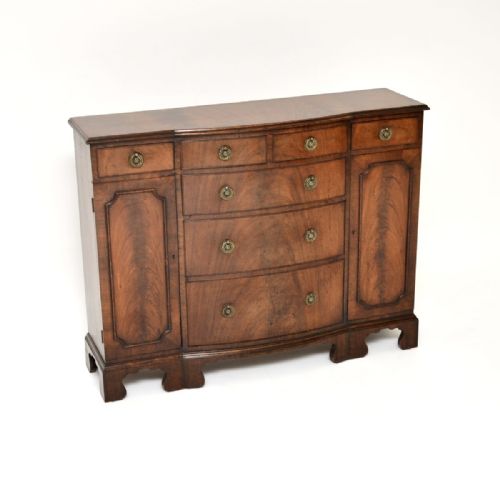
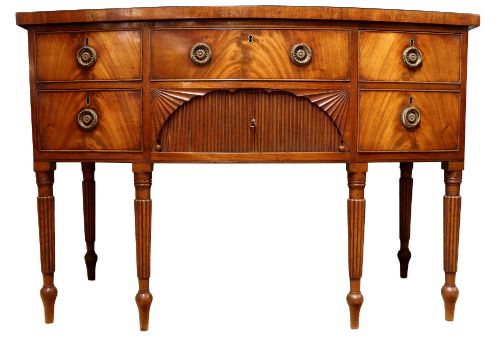
A georgian flame mahogany sideboard brings striking grain patterns and substantial proportions to a dining room.
Georgian Flame Mahogany Sideboard
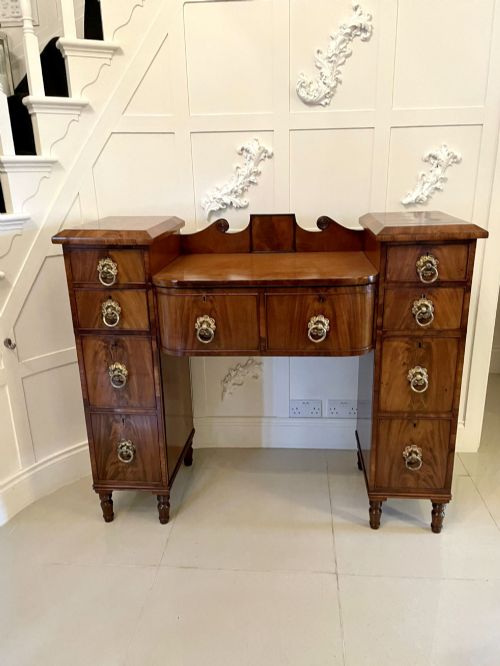
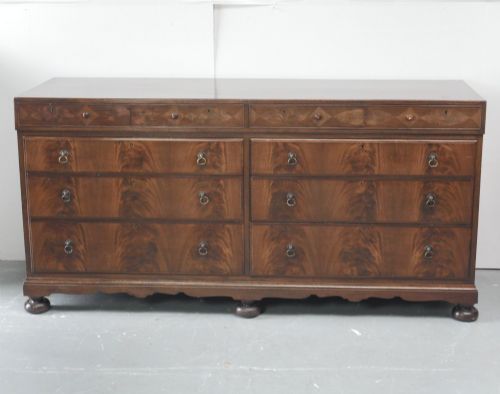
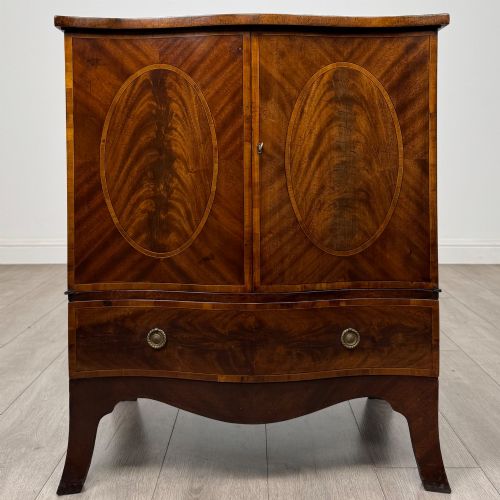
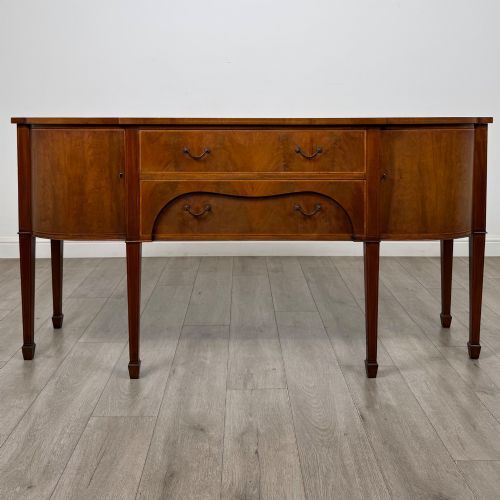
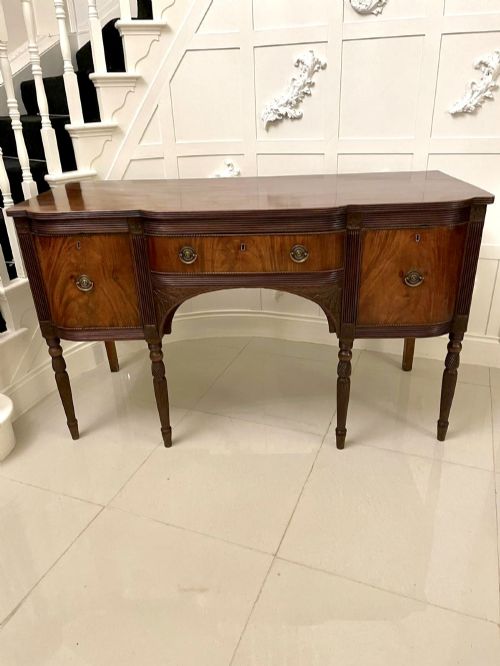
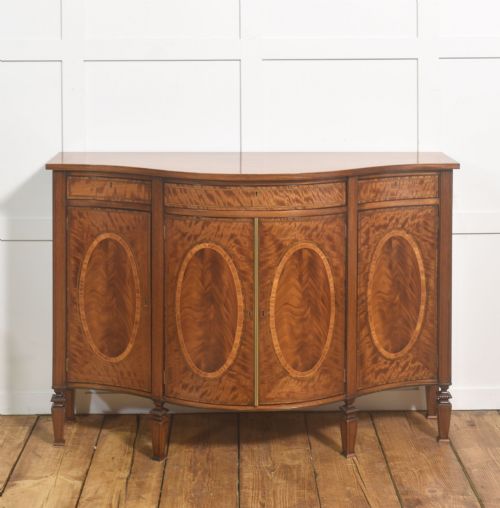
A georgian flame mahogany sideboard stands as a formal dining room server, designed for holding silver, linen and serving dishes during grand meals. The pieces appearing most frequently on this page span the Georgian, Regency and Victorian periods, often taking straight, bow-front or serpentine forms.
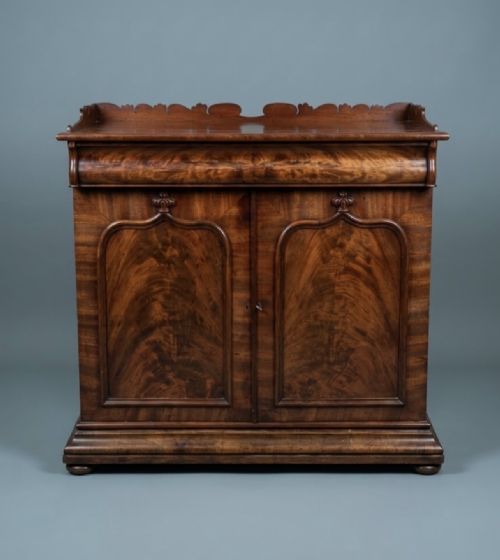
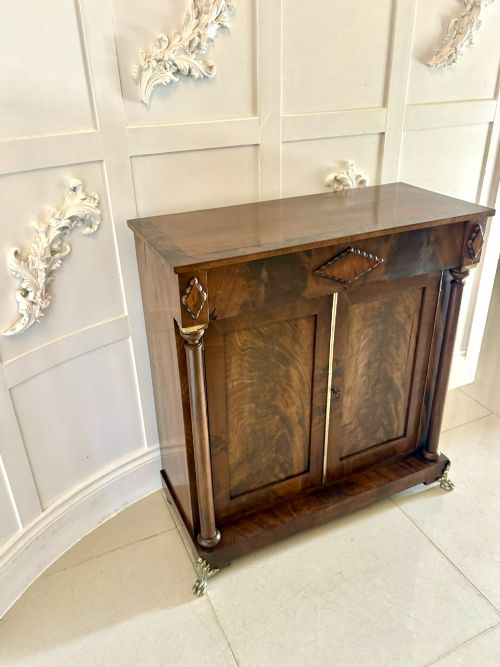
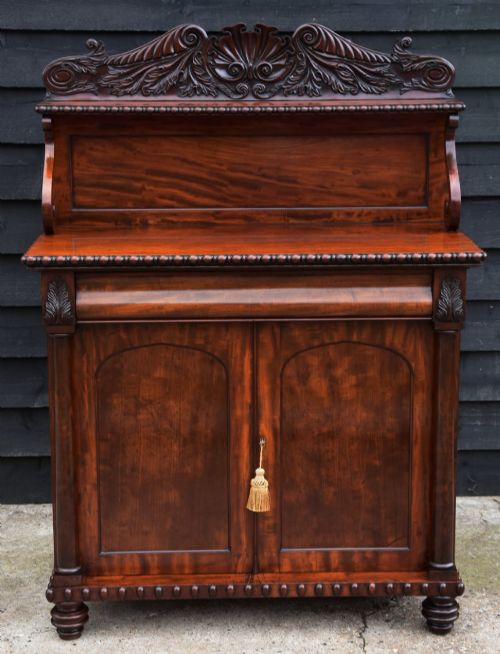
Makers and cabinetmakers of the eighteenth and nineteenth centuries utilised the deep reddish-brown timber for its strength and appearance. Alongside full-size sideboards, the selection includes smaller side cabinets, chiffoniers and breakfront servers sharing the same vocabulary of fine wood.
Distinguishing quality levels
Quality rests heavily on the choice and matching of the veneer, where top-tier examples display continuous flame patterns flowing symmetrically across multiple drawers and doors. Lesser pieces show mismatched grain directions or careless patching where timber shrank over centuries of domestic use.
Structural integrity also separates standard utility pieces from master works, visible in hand-cut dovetail joints on drawers and the crispness of inlaid banding. Subtleties in brasswork casting and the retention of original feet or gallery backs determine the standing of an individual survivor.
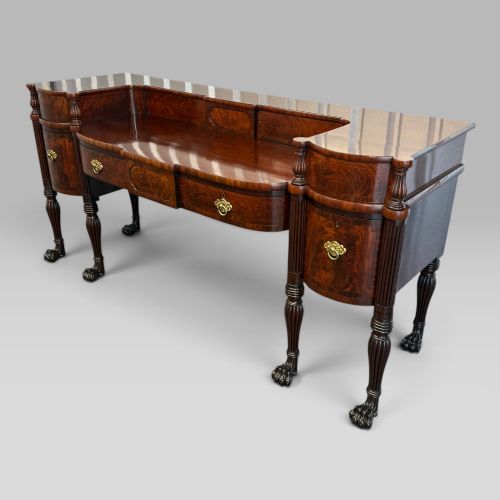
Some survivors retain six carved lion paw feet to hold up their heavy flame mahogany bulk.
Whytock and Reid·George Hepplewhite
The Georgian Flame Mahogany Sideboard Glossary
- Flame mahogany
- A veneer cut from the branch junction of the mahogany tree, displaying a distinctive feather-like or flickering grain pattern. Cabinetmakers prized this cut for principal display surfaces.
- Serpentine
- A furniture front curving outward in the centre and inward toward the ends in a continuous undulating line. This shape required exceptional joinery skill.
- Bow front
- A convex curved front projecting outward in a smooth arc. It appears frequently on sideboards from the Regency and Georgian eras.
- Chiffonier
- A small low sideboard or cupboard, often incorporating a shelfed superstructure at the back. These served similar dining functions to larger servers in restricted spaces.
- Stringing
- Thin inlaid lines of contrasting light wood, such as boxwood or satinwood, set into darker mahogany surfaces to create geometric borders.
Georgian Flame Mahogany Sideboard: Frequently Asked Questions
How do I date a sideboard?
Examine the secondary timbers inside the drawers, handle styles, and construction methods like hand-cut dovetails. Regency and Georgian pieces generally show softer patination and older joining techniques compared to later revival items.
Look closely at the backboards and timber thickness, as nineteenth-century workshops used different milling methods than twentieth-century factories. Period hardware also provides clear clues to the decade of manufacture.
Where were sideboards placed?
These servers stood against the dining room wall, holding platters and tableware before servants brought food to the table. Their proportions suited large formal rooms where storage and display mattered equally.
Smaller side cabinets and chiffoniers often found places in parlours or breakfast rooms for holding books and smaller household items.
How do I care for flame mahogany?
Keep wooden furniture away from direct sunlight and radiators to prevent the timber from drying out and the veneer from lifting. Apply natural beeswax periodically to nourish the surface and maintain a soft sheen.
Avoid chemical polishes that build up sticky residues and dull the natural chatoyancy of the figured grain over time.
What is the difference between a sideboard and a chiffonier?
A sideboard is typically a longer dining room server designed for food preparation and tableware storage. They feature multiple drawers and cupboards arranged in various configurations.
A chiffonier is generally smaller, combining a lower cabinet with an upper shelf or small bookcase structure. They served multipurpose storage roles in smaller living spaces.