
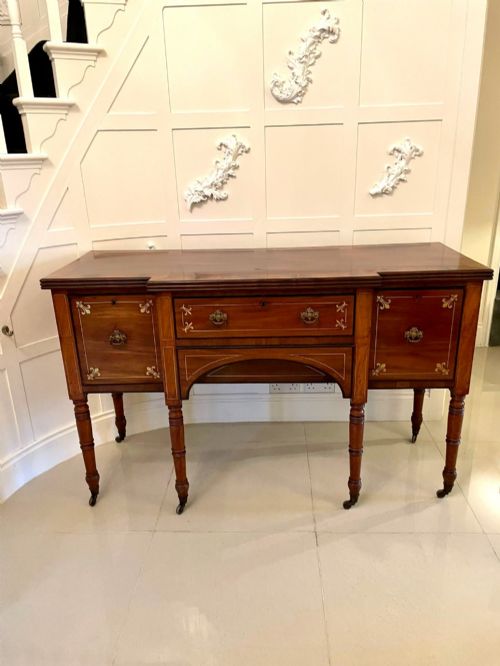
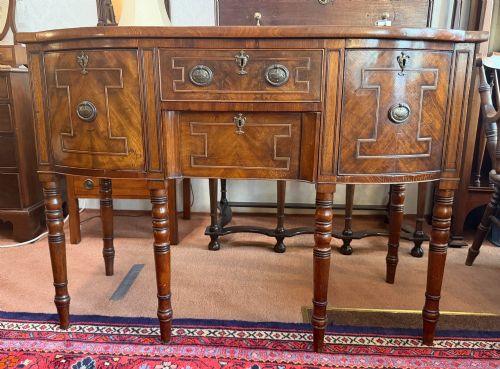
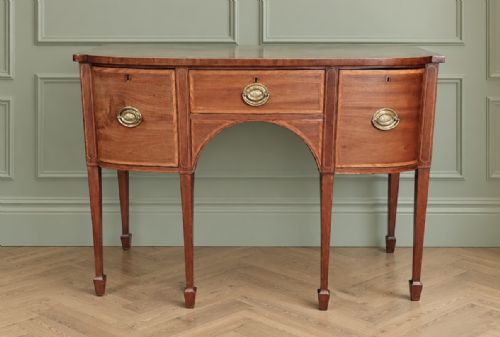
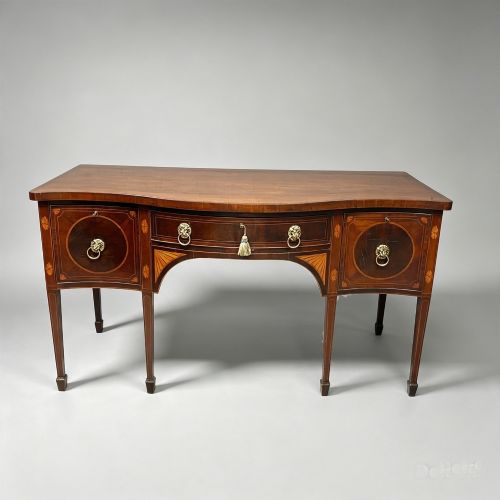

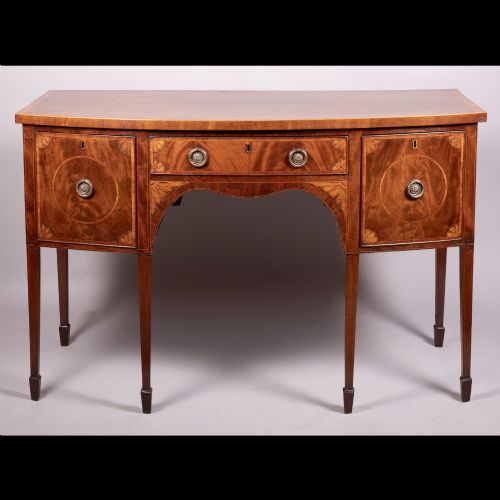
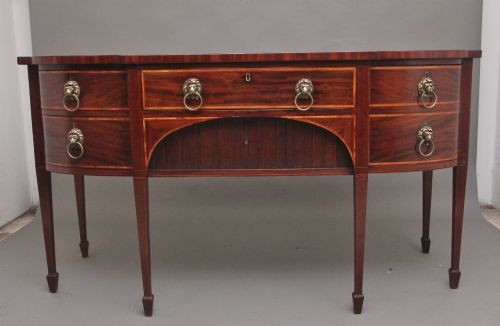
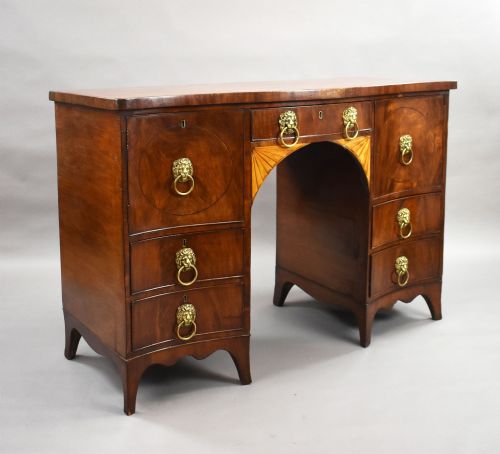


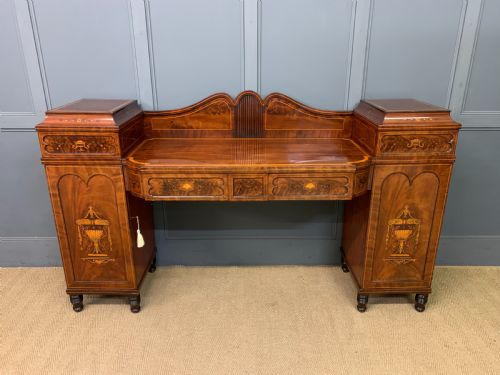

Georgian Inlaid Buffet Table
These georgian inlaid buffet table pieces offer exceptional timber work and refined proportions for dining storage.
Georgian Inlaid Buffet Table
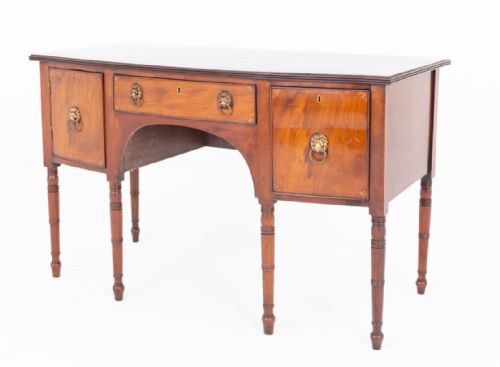
A georgian inlaid buffet table typically takes the form of a mahogany sideboard or serving table designed for the dining room. These pieces serve as practical furniture for storing china and silver while providing a surface for food and drink during service.
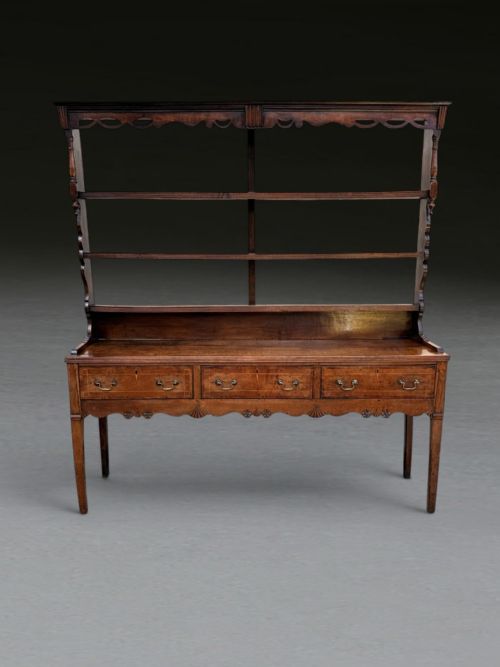
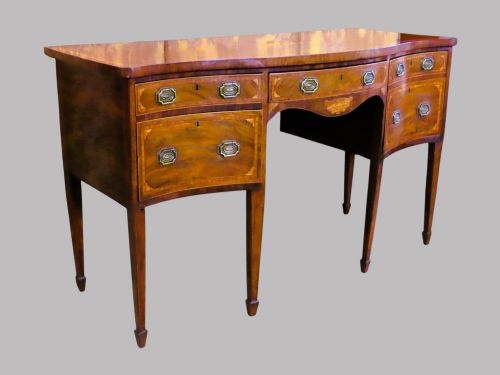
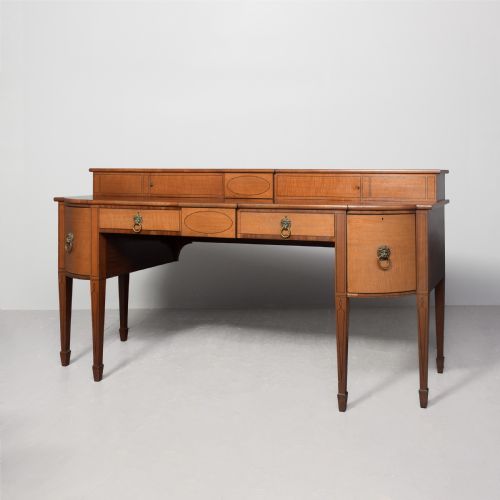
The pieces on this page span the Georgian, Regency, and Edwardian periods, including Sheraton Revival examples. Most items adopt bow-front or serpentine shapes constructed from mahogany and accented with contrasting wood inlay.
Makers utilised various regional layouts, from Scottish stage-back designs to smaller pedestal formats. Buyers encounter both original eighteenth-century items and later nineteenth-century revival interpretations.
Materials and construction methods
Cabinet makers built these pieces primarily from solid mahogany and flame mahogany veneers over secondary timbers. Selected sections of timber receive careful placement to create symmetrical grain patterns across the front drawers and doors.
Craftsmen applied contrasting stringing and banding using lighter woods such as satinwood and boxwood. Brass fixtures, including handles and gallery rails, complete the hardware scheme on select pieces.
Listings feature mahogany, satinwood, and boxwood across periods spanning the Georgian era to the Edwardian revival.
Distinctions in craftsmanship
Quality depends on the precision of the timber selection and the complexity of the cabinet shape. Serpentine and bow-front forms require advanced joinery skills to curve the structural framing and drawer boxes accurately.
The fineness of the boxwood and satinwood inlay separates standard production from superior work. Crisply executed stringing and well-matched veneer panels indicate a higher standard of original workshop execution.
The Georgian Inlaid Buffet Table Glossary
- Bow-front
- A cabinet front that curves outward in a convex arc. This shape gained popularity during the late eighteenth century for sideboards and serving tables.
- Serpentine
- A furniture front characterised by a central convex curve flanked by two concave curves. It demands precise carpentry to align drawers and frames.
- Stringing
- Narrow inlay lines of a contrasting timber embedded into the surface of the wood. Craftsmen use this technique to outline drawer fronts and tabletops.
- Pedestal sideboard
- A form featuring central sections flanked by distinct pedestal cupboards or cabinets. These pieces often date from the George III and Regency periods.
- Sheraton Revival
- A late nineteenth and early twentieth century style that reinterprets the lighter neoclassical designs of Thomas Sheraton. Pieces from this era often feature elaborate satinwood inlay.
Georgian Inlaid Buffet Table: Frequently Asked Questions
How do I date a sideboard?
Dating relies on examining the timber species, construction methods, and secondary woods used inside the drawer boxes. Hardware types and inlay styles also provide clues to the period of manufacture.
Later revival pieces often display machine-cut dovetails or standardised interior framing compared to eighteenth-century examples. Comparing the overall proportion against known period forms helps confirm the date.
Where were these pieces used?
These servers and sideboards stood in the dining rooms of substantial houses and town residences. Staff utilised the surfaces during meals to carve joints and hold plates.
Cupboards and drawers housed cutlery, linens, and serving vessels between meals. Their placement against dining room walls combined domestic utility with formal display.
What is flame mahogany?
Flame mahogany refers to timber cut from the fork of the mahogany tree where the branch joins the trunk. This creates a distinctive feather-like pattern with intense chatoyancy.
Cabinet makers reserved these highly figured veneers for the most prominent surfaces of drawer fronts and tabletops. The grain creates visual depth when polished.
How should I clean the wood?
Maintenance requires gentle dusting with a soft, dry cloth to remove surface particles without scratching the polish. Avoid modern silicone sprays that build up residue over time.
Periodic application of traditional beeswax feeds the timber and maintains the lustre of the finish. Keep the furniture away from direct heat sources and strong sunlight to prevent warping.