
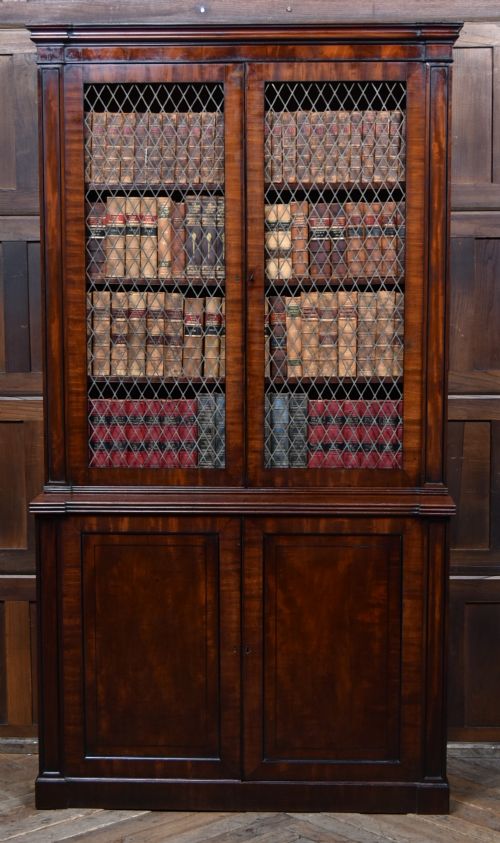
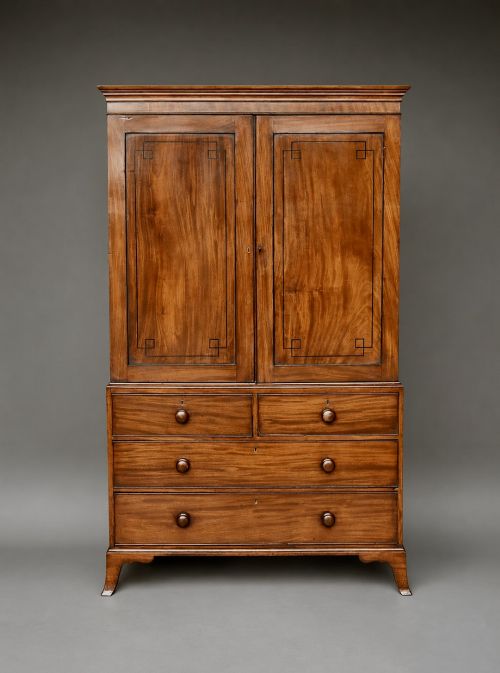
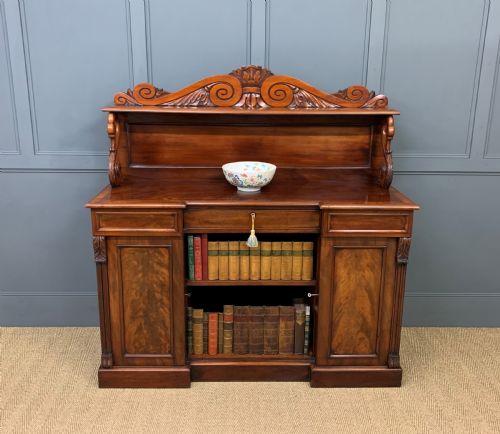
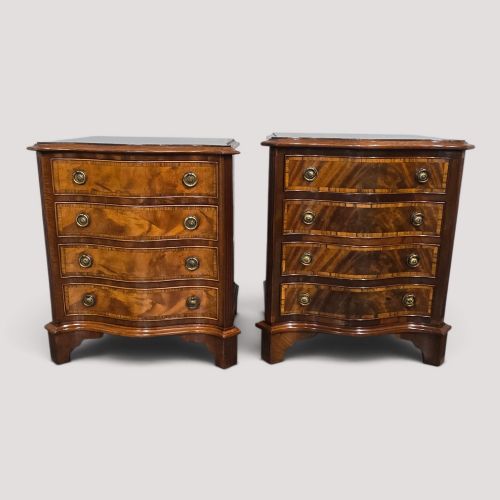
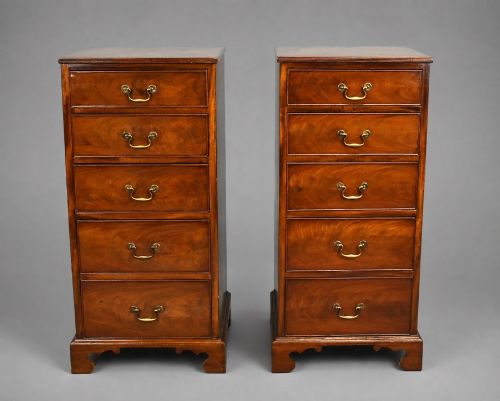
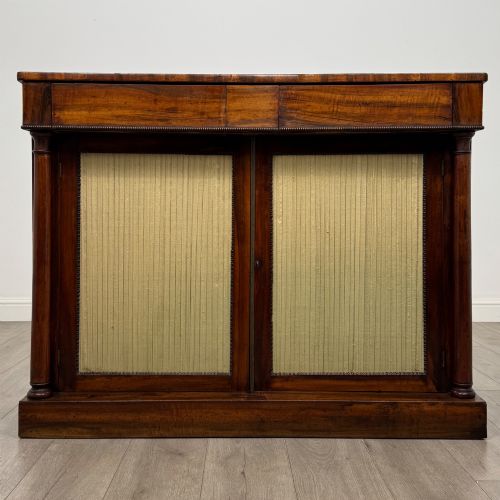
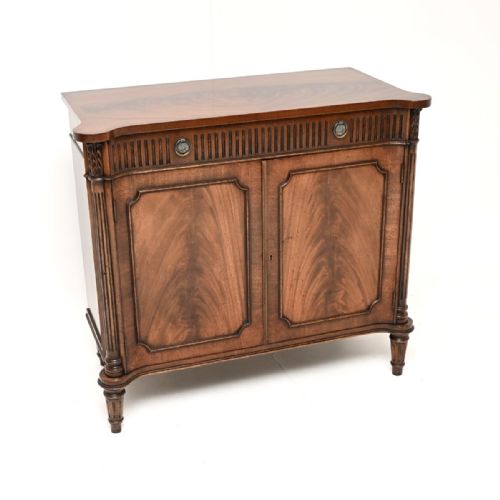
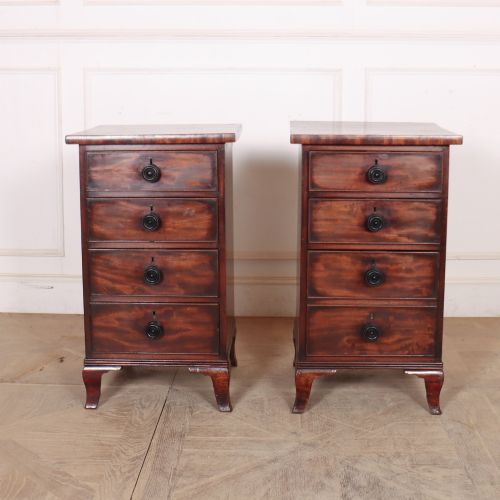
Georgian Flame Mahogany Cupboard
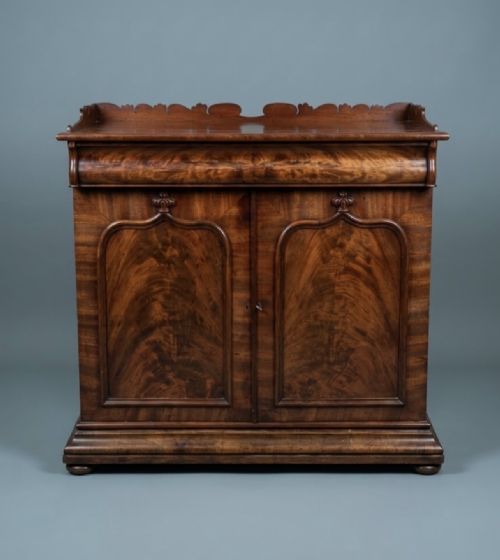
When you seek a georgian flame mahogany cupboard, you are looking for timber with rippling grain wrapped around functional storage.
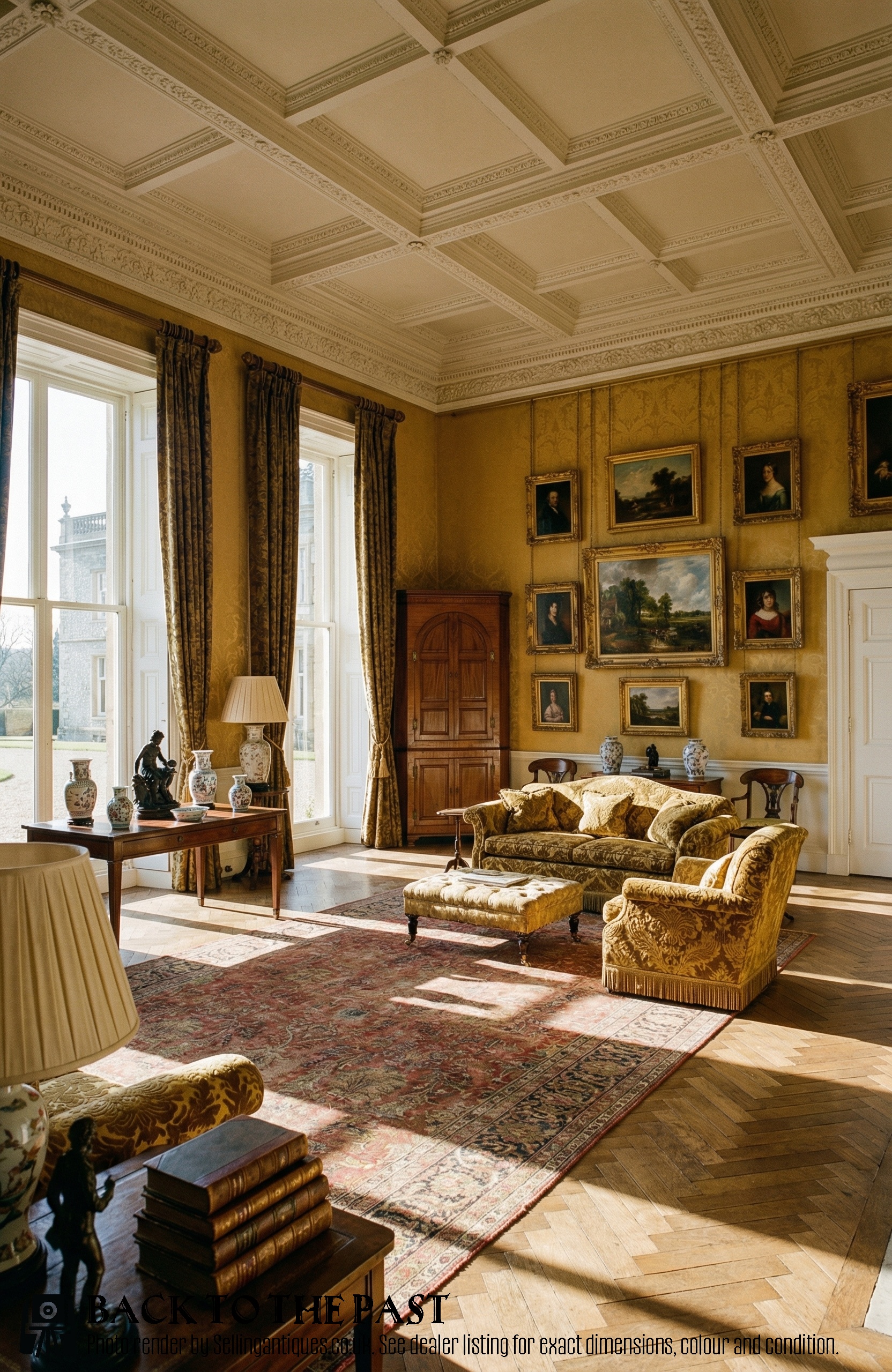
Georgian Flame Mahogany Cupboard
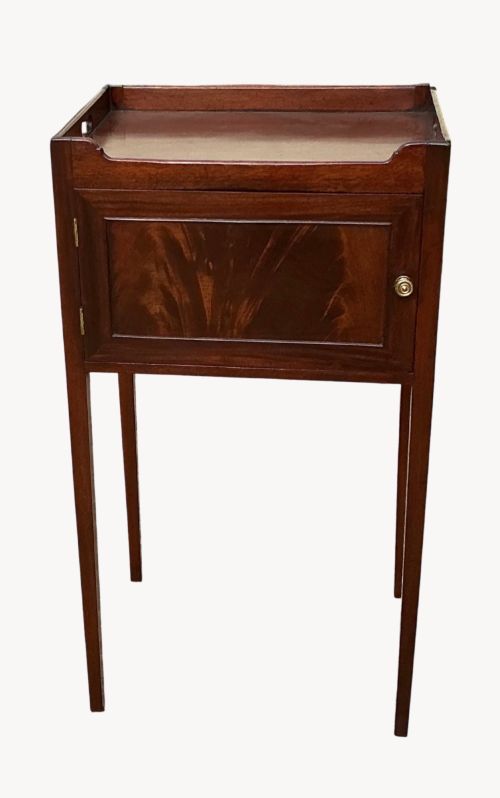
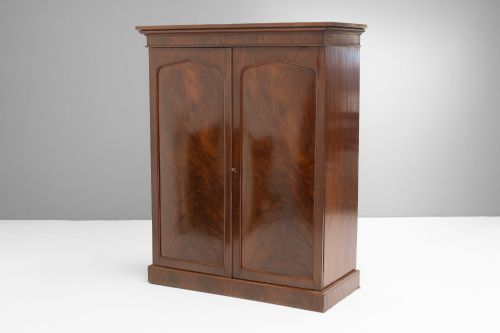
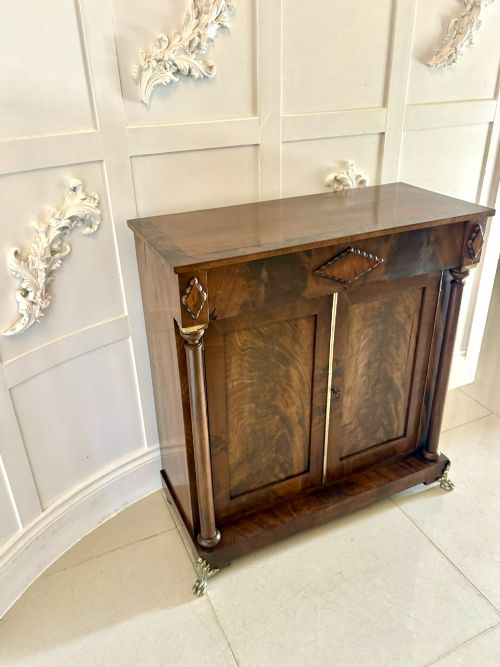
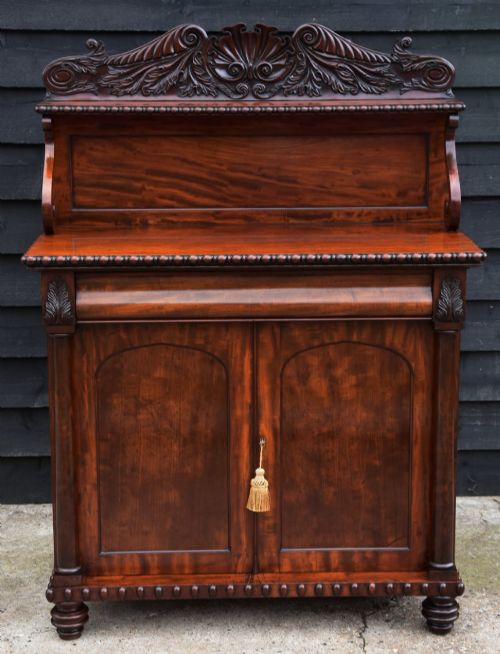
A georgian flame mahogany cupboard brings striking wood figures together with practical compartments designed for domestic use. The pieces span periods from the eighteenth century through the nineteenth, with later revival interpretations also appearing.
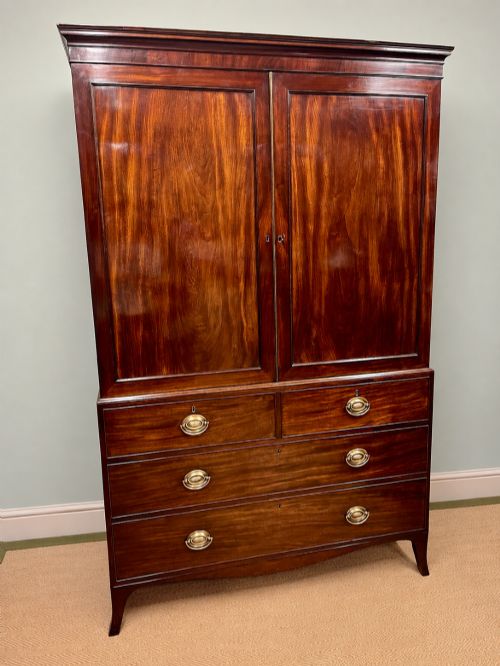
Forms on this page range from bedside cabinets and tray top commodes to larger linen presses, side cabinets, and bookcases. Bedside tables and corner cupboards are common smaller formats, while wardrobes and sideboards offer larger proportions.
Origins include authentic Georgian and Regency examples alongside later Victorian and Edwardian iterations. The selection covers standing floor models as well as hanging wall cabinets.
How they were made
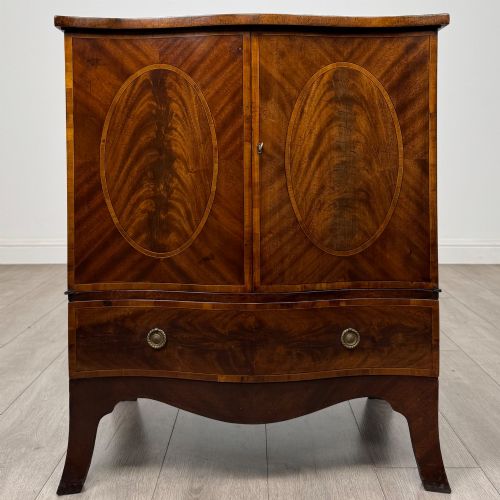
Cabinet makers applied flame mahogany veneer over solid secondary timbers such as oak, creating dramatic patterns on primary surfaces. Selected cuts of timber were arranged symmetrically to accentuate the natural figuring of the wood.
Details incorporate brass hardware, glass panels, and contrasting inlay work utilising boxwood and ebony. Cornices often feature decorative elements like blind fretwork above panelled doors.
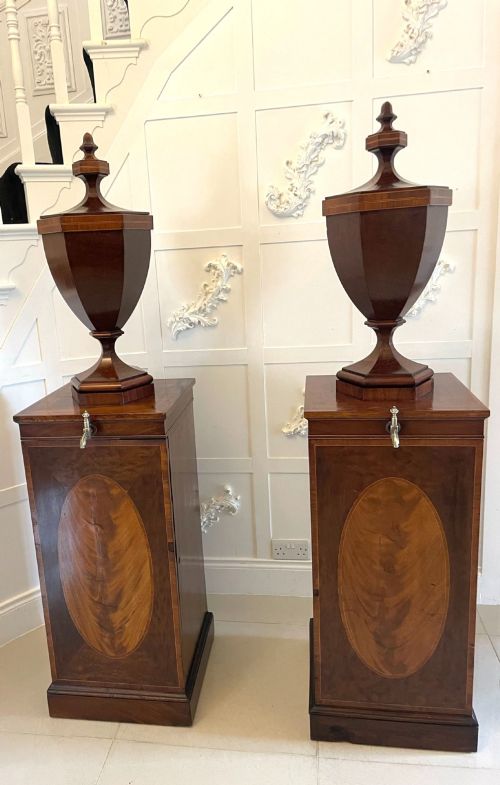
Plate-warmer pedestals kept dining silver warm before it reached the table.
What varies in quality
The visual impact of the timber grain sets individual examples apart, with more dynamic figuring commanding greater presence. Symmetry in the application of veneer across doors and drawers indicates careful planning by the maker.
Proportions and the crispness of secondary details, such as inlay work or cornice carvings, distinguish standard utility pieces from finer cabinet work. Original hardware and intact structural timber contribute to the integrity of each item.
Gillows·Wylie and Lochhead·S and H Jewell
The Georgian Flame Mahogany Cupboard Glossary
- Flame mahogany veneer
- A thin slice of wood cut from the branch junction where the grain twists, producing a flame-like pattern. This veneer is applied over a stable secondary timber.
- Tray top
- A raised rim surrounding the upper surface of small tables or commodes to prevent items from sliding off. This feature is frequently found on bedside cabinets.
- Linen press
- A tall piece of furniture comprising upper sliding shelves for textiles above a chest of lower drawers. These items often feature panelled doors enclosing the internal trays.
- Chiffonier
- A compact sideboard or low cabinet developed during the Regency period, often fitted with shelves or a gallery top. They typically combine enclosed cupboard storage with display space.
- Blind fretwork
- Carved ornamentation applied to a solid flat surface to imitate intricate pierced fretwork. It frequently appears along the cornices of large wardrobes and presses.
Georgian Flame Mahogany Cupboard: Frequently Asked Questions
What is a flame mahogany finish?
Flame mahogany refers to veneer sliced from specific sections of the tree where the grain forms undulating patterns resembling flames.
Cabinet makers laid these pieces symmetrically across drawer fronts and cupboard doors to create striking decorative panels.
How do I use a bedside cupboard?
These compact cupboards provide enclosed storage beside a bed while offering a flat top surface for a lamp or small objects.
Many period versions feature tray tops designed specifically to keep items secure.
What is a linen press used for?
A linen press originally served to store folded household linens on internal sliding trays behind large upper doors.
The lower drawers accommodated bulkier garments and smaller clothing items.
How do I distinguish Georgian from Victorian pieces?
Georgian furniture generally displays lighter proportions and restrained classical detailing associated with the eighteenth and early nineteenth centuries.
Victorian pieces often present heavier timber selections and more robust construction scales.
Where were corner cupboards placed?
Corner cupboards fit directly into room junctions to utilise awkward or empty architectural spaces efficiently.
Wall-hanging versions utilise vertical wall space, while standing floor models anchor room corners from the base.