



Late Georgian Mahogany Cabinet
A late georgian mahogany cabinet brings warm timber tones and practical storage to a room, offering the clean architectural lines prized by collectors.
Late Georgian Mahogany Cabinet
When you search for a late georgian mahogany cabinet, you encounter a diverse range of furniture types spanning bookcases, sideboards, corner cupboards, and chests of drawers. These pieces originate primarily from the late eighteenth and early nineteenth centuries, reflecting the classical proportions and refined tastes of the Georgian and Regency eras.
The versions you are most likely to meet on this page include corner cabinets designed to utilise awkward spaces, bedside commodes, and larger library bookcases or linen presses. Many examples display the influence of prominent cabinet-maker styles such as Sheraton, incorporating subtle geometric or floral details.
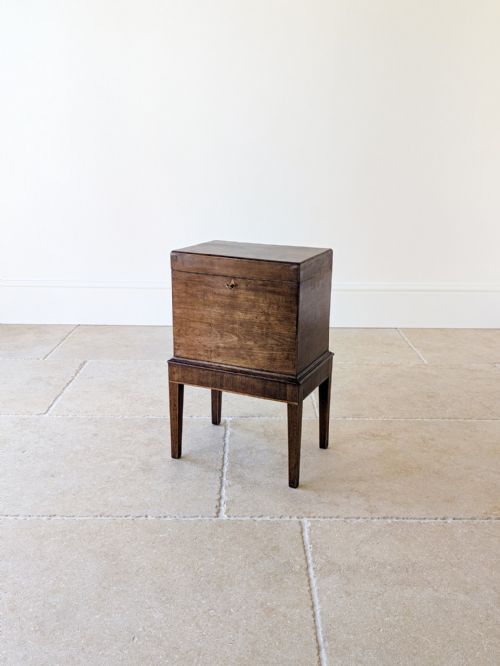
Beyond standard storage forms, the selection encompasses specialised items like collectors cabinets with numerous small drawers, secretaire bookcases with fitted writing desks, and cellarettes. These pieces demonstrate the period's focus on functional domestic furnishings tailored for specific household tasks.
Materials and Construction
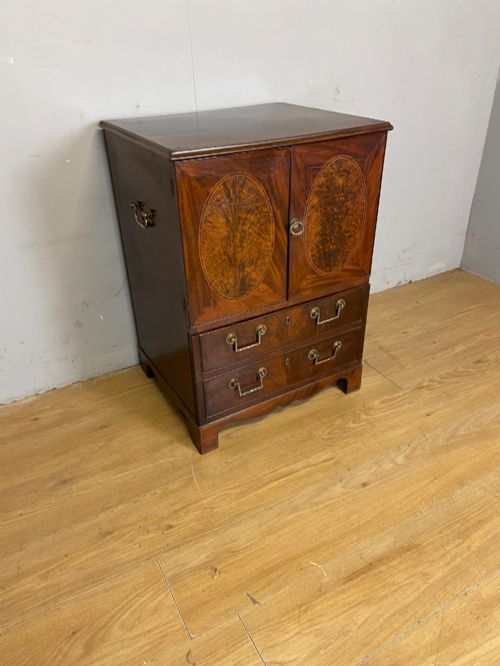
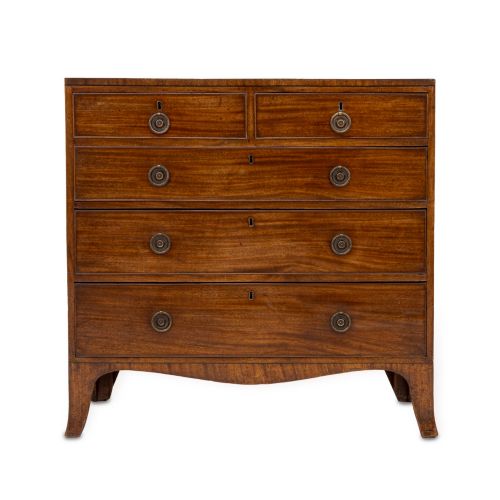
Joiners and cabinet-makers built these pieces using solid mahogany and flame mahogany veneers over secondary timbers such as oak, applying boxwood and satinwood inlay for linear contrast. Brass hardware, including drop handles and escutcheons, provides functional and decorative accents across doors and drawers.
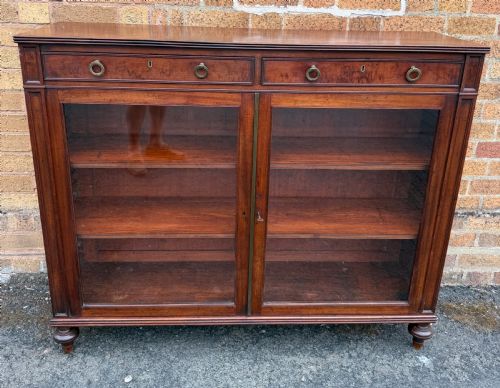
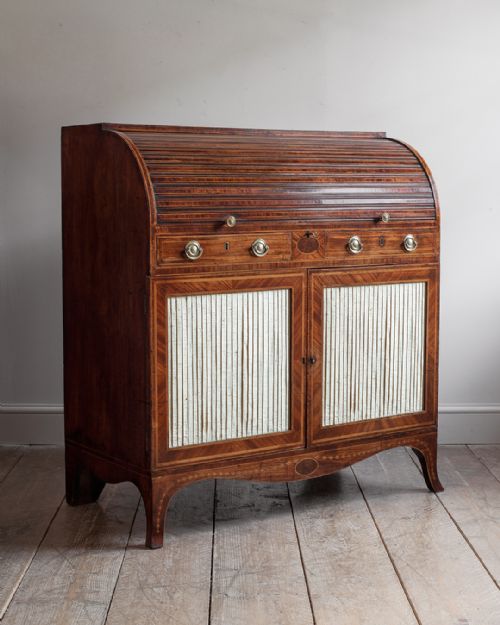
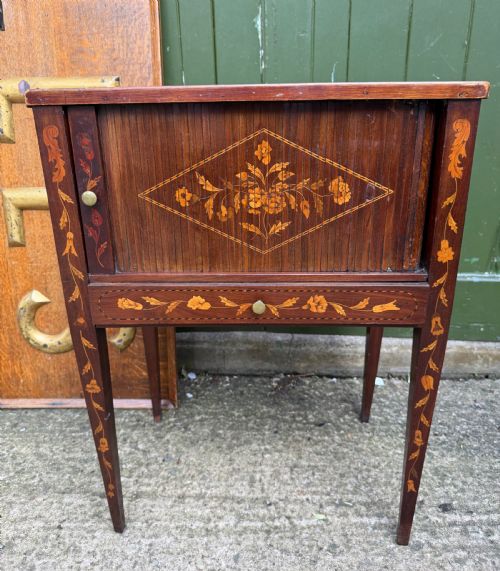
Glazing takes the form of astragal bars dividing glass panes in bookcases and display cabinets, while specialised items utilise tambour shutters of narrow wooden slats running in grooves. Structural integrity relies on traditional joinery methods, with crossbanding applied to drawer fronts and tabletops to stabilise the timber.
Current listings feature mahogany furniture incorporating satinwood, boxwood, oak, and brass, spanning the Georgian through late Victorian periods.
Evaluating the Pieces
The distinction between ordinary and exceptional examples rests upon the selection of timber figures and the precision of inlaid details. Well-figured flame mahogany grain patterns and carefully matched veneers indicate superior material selection by the maker.
Construction subtleties such as hand-cut dovetails, original brass fixtures, and intact glass panes elevate a piece. The integration of specialised mechanisms, like tambour slides or folding washstand tops, demonstrates advanced cabinet-making skill that distinguishes finer workshop production.
The Late Georgian Mahogany Cabinet Glossary
- Flame mahogany
- A veneer cut from timber where the branches join the main trunk, producing a distinctive, fiery ripple pattern. This figure was highly sought after for drawer fronts and cabinet doors.
- Astragal
- A moulded bar separating individual panes of glass within a cabinet door. These fine wooden strips define the geometric pattern of the glazing.
- Tambour
- A flexible shutter made from narrow strips of wood glued to canvas, allowing curved compartments or desk fronts to slide open smoothly. It requires precise joinery to operate without binding.
- Crossbanding
- A strip of veneer laid perpendicularly to the main grain along the border of a tabletop or drawer front. This technique frames the primary timber and protects against edge splitting.
- Cellarette
- A dedicated storage box or cabinet designed to hold wine bottles securely. These pieces often feature interior partitions and lined compartments.
Late Georgian Mahogany Cabinet: Frequently Asked Questions
How do I spot original brass hardware?
Original brass handles and escutcheons show consistent patination, wear patterns that match the age of the timber, and pin holes on the reverse that align with undisturbed wood grain.
Replacement hardware often leaves mismatched fixing marks or exhibits a brighter, uniform finish lacking centuries of handling.
How do I distinguish George III from later styles?
George III pieces typically display strict classical proportions, restrained satinwood or boxwood stringing, and solid architectural cornices. Later nineteenth-century revivals often exaggerate proportions or incorporate heavier carving styles.
Examining internal secondary timbers like oak alongside construction joints helps confirm the period of manufacture.
Where were corner cabinets placed?
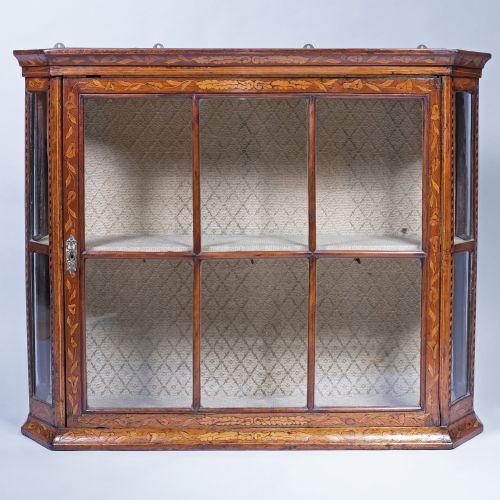
Corner cabinets were specifically constructed to fit into room angles, making efficient use of otherwise neglected space in dining rooms, parlours, or bedrooms. Wall-hanging versions secured directly to plasterwork, while floor-standing variants rested on sturdy plinths or legs.
They served primarily to display porcelain, glassware, or household silver behind glazed or panelled doors.