

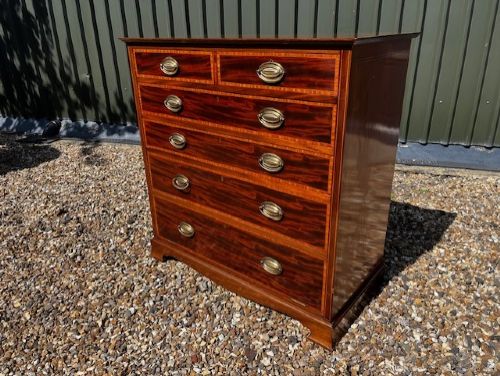

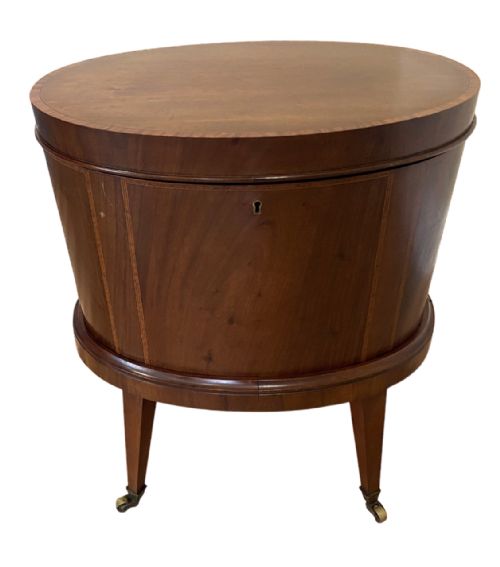


Oval Inlaid Mahogany Cabinet
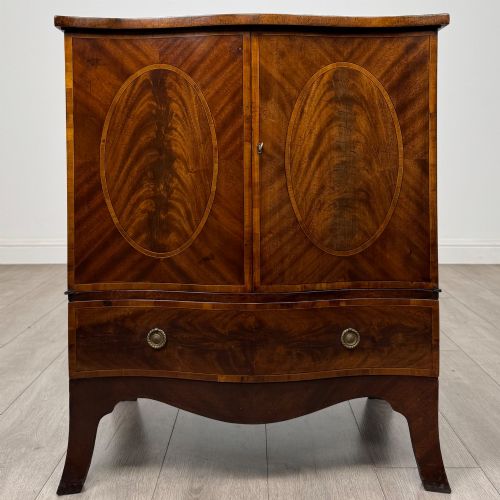
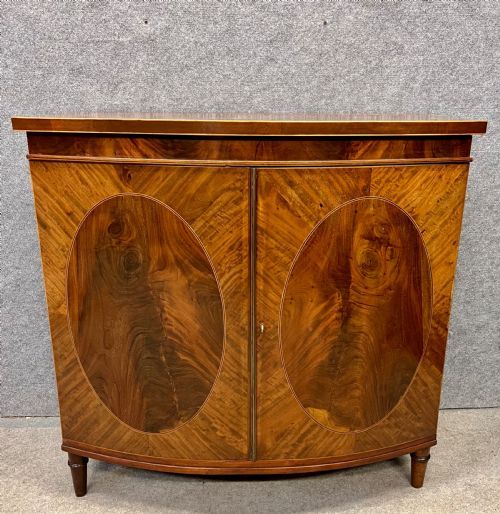
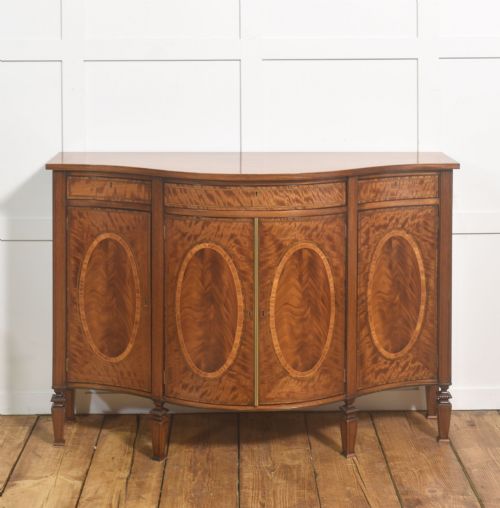
These oval inlaid mahogany cabinet pieces are refined display items and storage furniture that bring warmth and classic detail to an interior.
Oval Inlaid Mahogany Cabinet
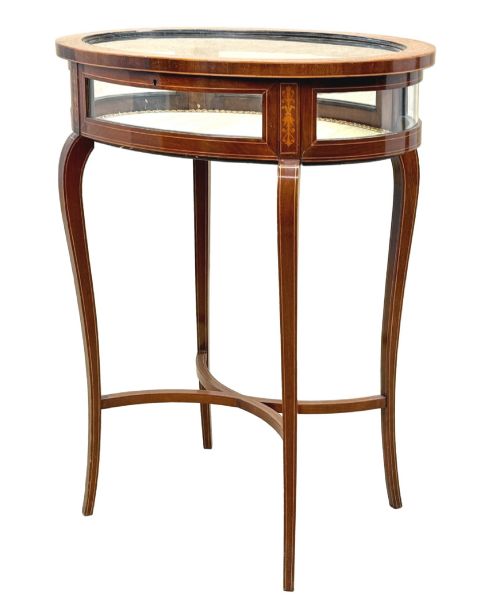
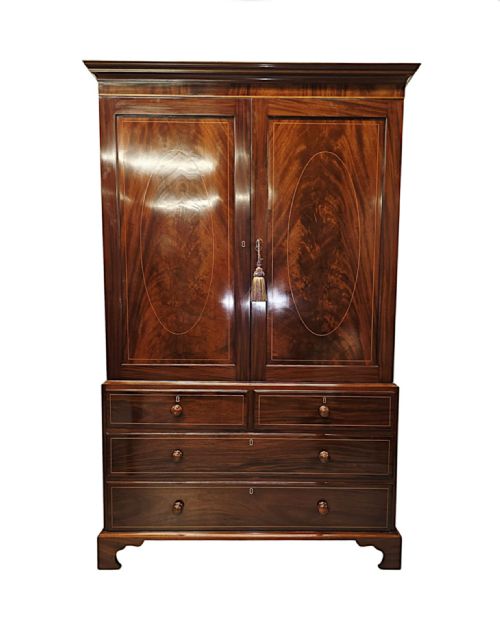
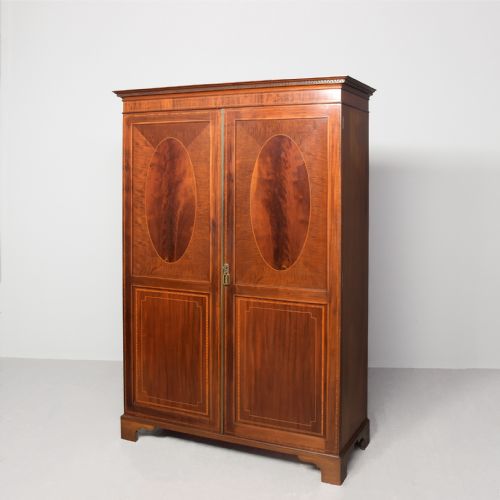
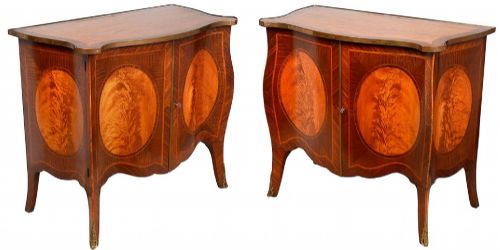
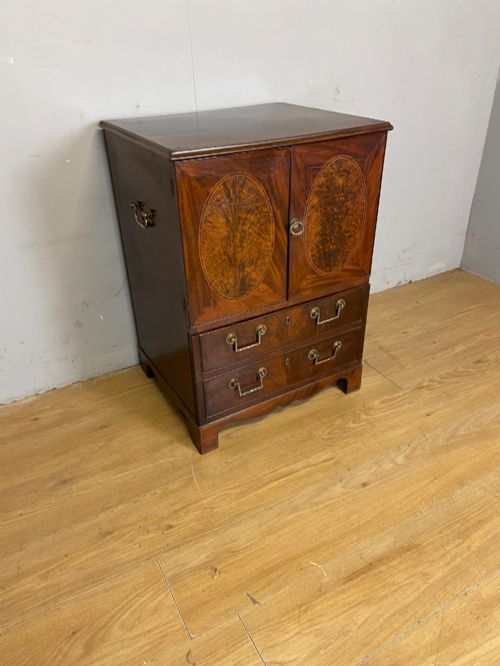
When you search for oval inlaid mahogany cabinet, you uncover a selection of refined storage and display pieces originating from periods such as the Georgian era, the nineteenth century, and the Edwardian epoch. The forms span from bijouterie display tables and vitrines to linen presses, side cabinets, and cellarettes.
You are most likely to encounter Edwardian and nineteenth-century interpretations on this page, often reflecting Georgian Revival or Sheraton Revival styles. These pieces combine practical storage with decorative inlaid surfaces suited to traditional interiors.
How they were made
Cabinet makers utilised solid mahogany and flame mahogany veneer as the primary structural and visual foundations, often selecting wood with rich grain patterns. They incorporated contrasting timbers such as satinwood and boxwood for delicate stringing and detailed inlay work.
Brass hardware and glass panels complete the construction of display-oriented forms like bijouterie tables and vitrines. Fabric linings occasionally appear within the interior display compartments of these glass-fronted tables and cabinets.
Some nineteenth-century cellarettes were designed with lead linings to hold melting ice for cooling wine bottles at the dining table.
What varies in quality
The sophistication of the timber selection and the precision of the inlay work separate standard items from superior examples. Finely figured flame mahogany veneer combined with crisp satinwood and boxwood stringing indicates higher workshop standards.
Proportion and structural harmony also determine the distinction within this selection. Pieces that maintain balanced dimensions and retain original brass fittings and glass demonstrate greater integrity of design and execution.
The Oval Inlaid Mahogany Cabinet Glossary
- Bijouterie table
- A glass-topped display table designed for showcasing small valuable objects or jewellery. These tables often feature hinged lids and fabric-lined interiors.
- Flame mahogany veneer
- A thin slice of mahogany timber cut from the point where a branch joins the main trunk, creating a distinctive flickering flame pattern. This veneer was prized for decorative drawer fronts and cabinet doors.
- Linen press
- A tall storage piece comprising upper cupboard doors enclosing sliding trays or shelves, positioned above a chest of base drawers. They were traditionally used for storing household linen and garments.
- Stringing
- A narrow strip of contrasting wood inlay used to outline panels, drawers, or table tops. Cabinet makers utilised boxwood and satinwood for this delicate decorative effect.
- Cellarette
- A fitted storage cabinet or box designed for holding bottles of wine or spirits. Many examples from the Georgian period stand on legs or feature internal dividers.
Oval Inlaid Mahogany Cabinet: Frequently Asked Questions
Where should I place a bijouterie table?
A bijouterie table suits a drawing room or study where its glass top can display small collections. Position it away from direct sunlight to protect any internal fabric linings.
Ensure the surrounding walkway allows comfortable access to the hinged lid for viewing items kept inside.
How do I care for mahogany veneer?
Dust mahogany surfaces regularly with a soft, dry cloth to prevent particle buildup. Avoid silicone-based polishes and keep the wood away from extreme temperature fluctuations.
Applying a traditional beeswax occasionally helps nourish the timber and maintain its natural lustre over time.
What is a linen press used for today?
A linen press serves as a versatile storage wardrobe for clothing, bedding, or books. The internal sliding trays and lower drawers offer practical organisation for modern homes.
These tall cabinets fit well in bedrooms or hallways where vertical storage is required without occupying excessive floor space.
How can I tell Georgian style from Edwardian revival?
Georgian pieces date from the eighteenth and early nineteenth centuries and display structural proportions driven by utilitarian domestic needs. Edwardian revival pieces date from the early twentieth century and often incorporate lighter frames and more extensive marquetry.
Examining the secondary timbers and interior construction methods helps confirm the actual manufacturing period of the cabinet.