
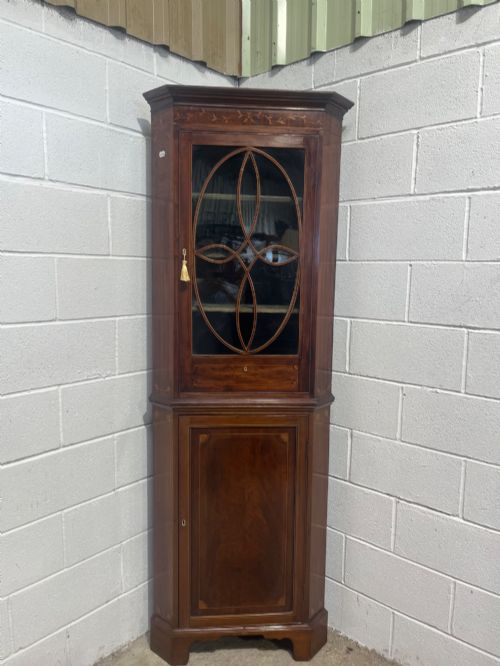
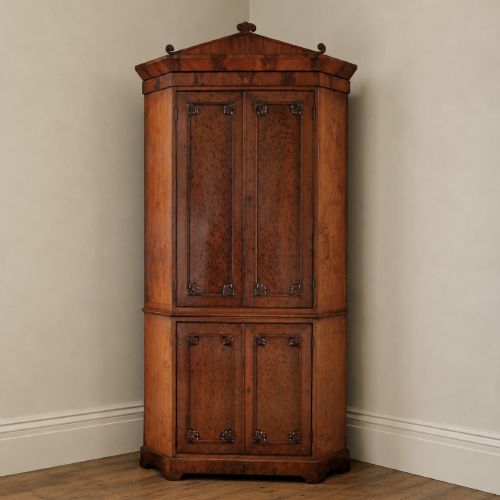


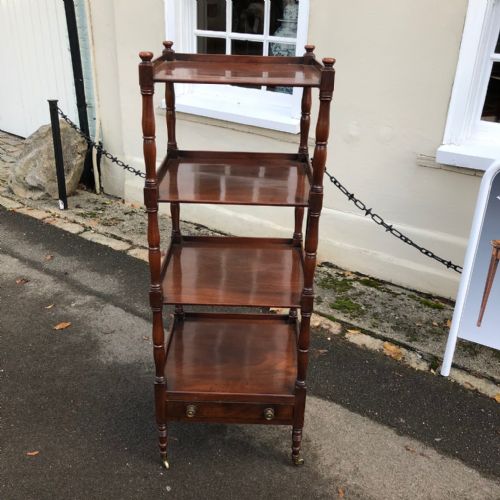


Regency Mahogany Corner Unit
These regency mahogany corner unit items are practical corner-fitting timber storage and display pieces that bring useful period character to empty interior angles.
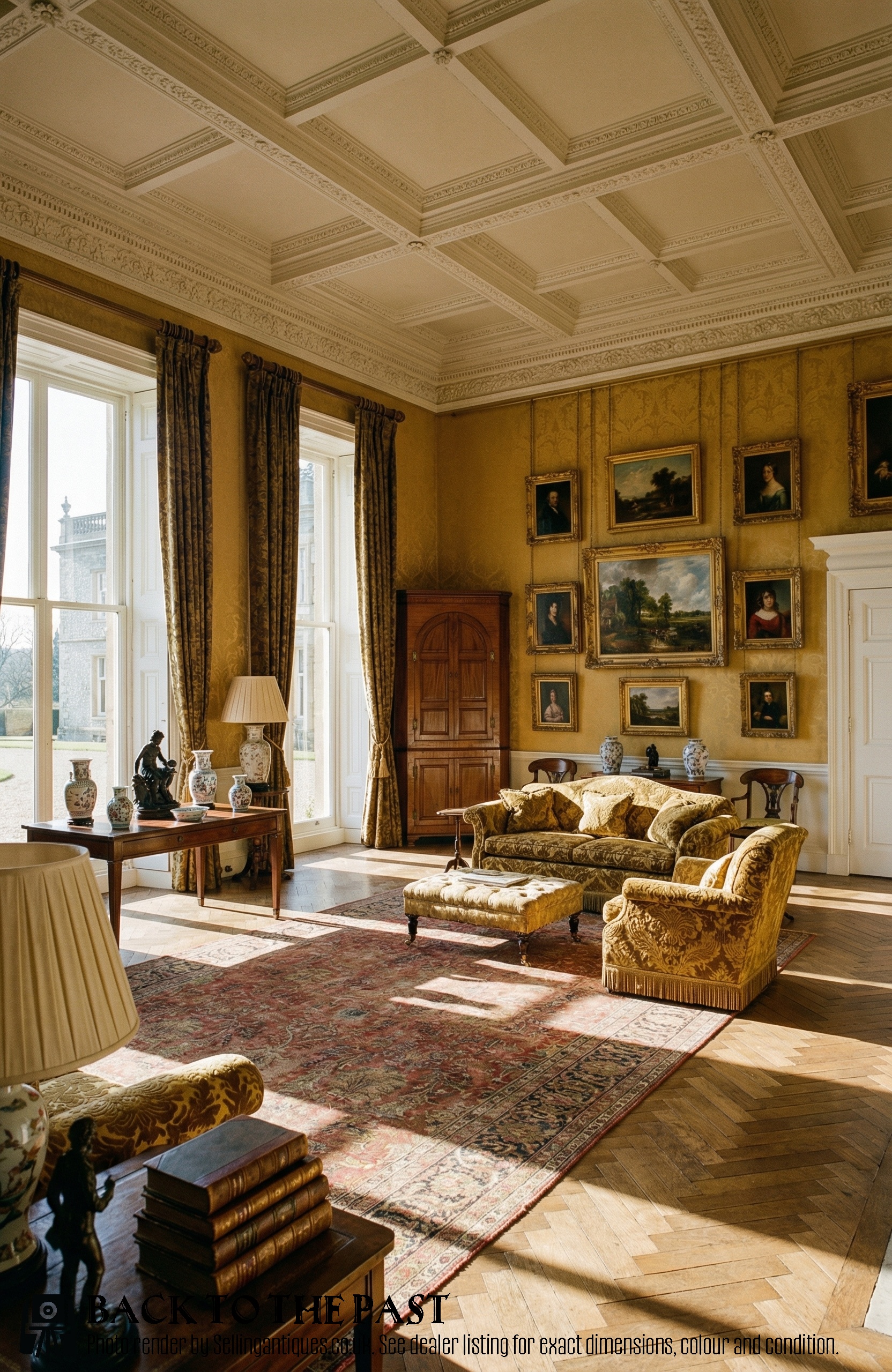
Regency Mahogany Corner Unit
A regency mahogany corner unit brings together timber corner cupboards, freestanding multi-tiered whatnots, etageres, and shelf units designed to make use of awkward room angles. These pieces range from substantial floor-standing cupboards with keys and fine detailing to open multi-tier display stands.
Materials and Construction
Makers utilised solid mahogany and plum pudding mahogany, occasionally accented with satinwood inlay and brass elements. The construction relies on traditional cabinet-making joints suited to architectural angles and freestanding vertical tiers.
Surfaces feature polished timber grains and careful cabinetry, with glass elements appearing in specific display formats. Iron keys and brass fittings frequently accompany the enclosed cupboard doors.
Several substantial corner cupboards arrive with their original keys, proving that historical locks sometimes outlast the doors they secure.
Assessing Quality and Character
Quality rests in the choice of timber figures, such as plum pudding mahogany or satinwood highlights, which distinguish standard utility pieces from finer examples. The crispness of fine detailing and the integrity of the structural joinery also determine the standing of each piece.
Proportion and presence separate country house scale items from simpler domestic iterations. The survival of original keys and uncompromised structural tiers adds significant authority to the object.
The Regency Mahogany Corner Unit Glossary
- Mahogany
- A durable tropical hardwood prized for its deep reddish-brown colour and smooth grain. It served as the primary material for high-end cabinet making through the Georgian and Regency periods.
- Plum pudding mahogany
- A highly decorative timber veneer showing mottled, circular grain patterns resembling the fruit in a traditional pudding. It indicates a luxury specification on select Regency and William IV furniture.
- Etagere
- An open French-origin display stand with multiple tiers supported by slender columns. These structures were utilised in principal rooms for holding ornaments and books.
- Whatnot
- A freestanding set of open shelves used for the display of small household objects. They appeared in three, four, or five tier configurations throughout the nineteenth century.
- Bow front
- A convex, outwardly curved front elevation typical of select cabinets and cupboards. This curved design softens room angles and provides extra internal capacity.
Regency Mahogany Corner Unit: Frequently Asked Questions
What is a whatnot?
A whatnot is an open multi-tiered shelving unit designed to display small ornaments and books in principal rooms. These freestanding structures evolved during the Georgian and Regency periods into practical multi-level furniture.
They appear with three, four, or five tiers supported by vertical uprights. Their open format distinguishes them from enclosed corner cupboards.
How do I date these pieces?
Dating relies on observing stylistic markers, timber selections, and construction methods associated with Georgian, Regency, William IV, and Edwardian eras. Plum pudding mahogany and specific brass mounts often point towards the Regency and William IV decades.
Cabinetry details and edge mouldings shift across these reigns. Comparing the joinery style against known period examples helps clarify the date of manufacture.
Where should I place a corner unit?
These units fit directly into room angles to utilise space that standard rectangular furniture leaves empty. Floor-standing corner cupboards anchor dining rooms or hallways by providing concealed storage.
Open whatnots and etageres suit drawing rooms or studies where visible display space is required. Their triangular or diagonal footprints integrate cleanly into room corners.