
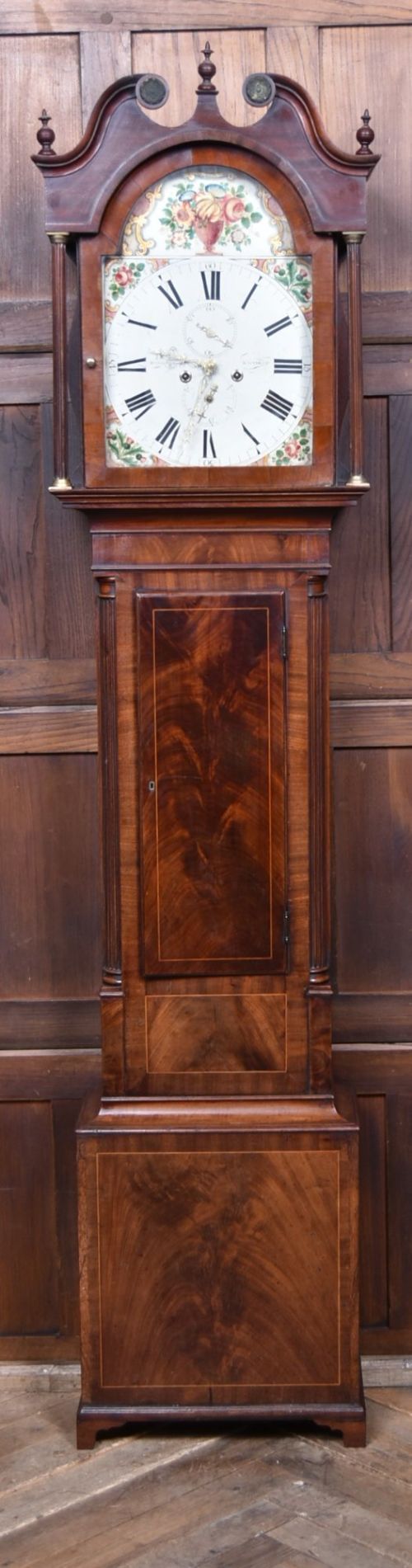
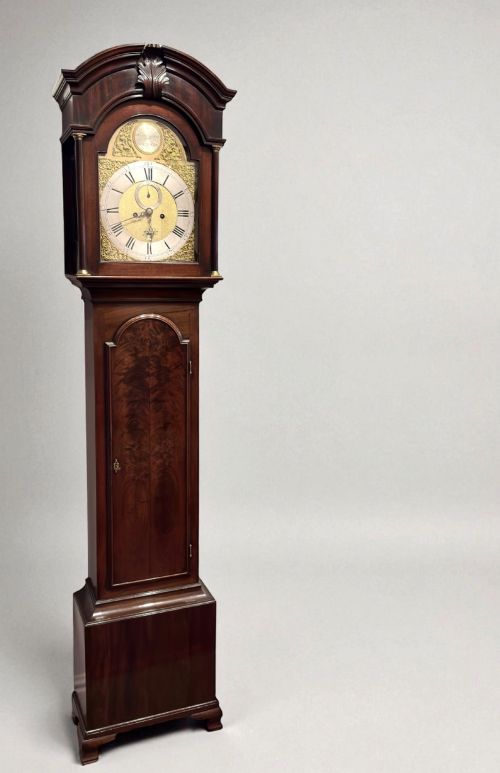
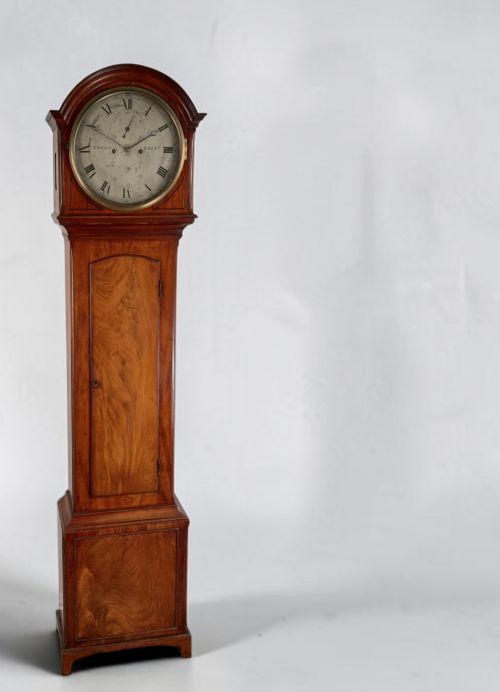
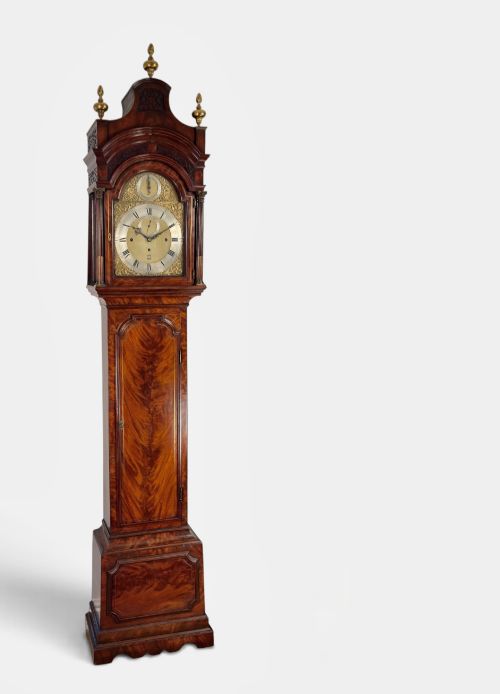
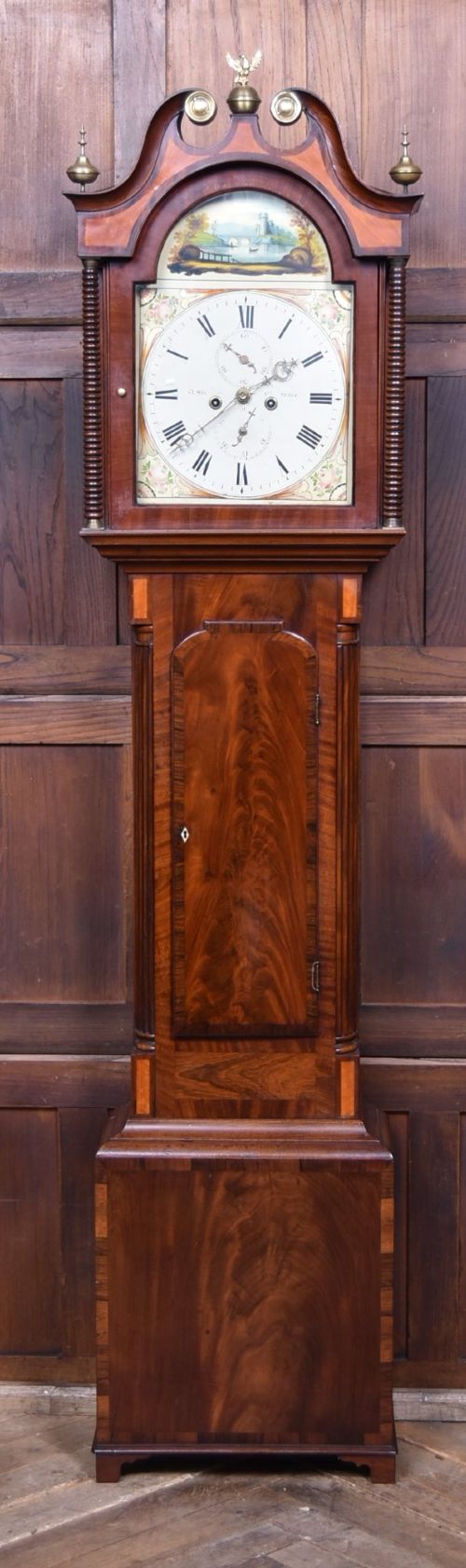
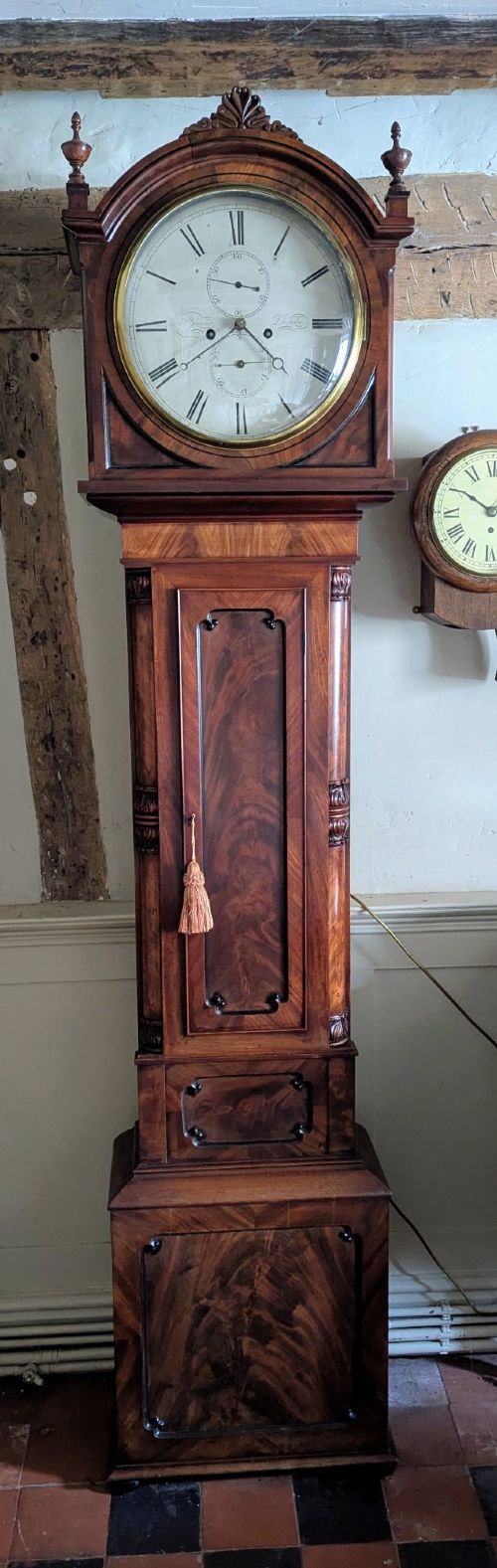
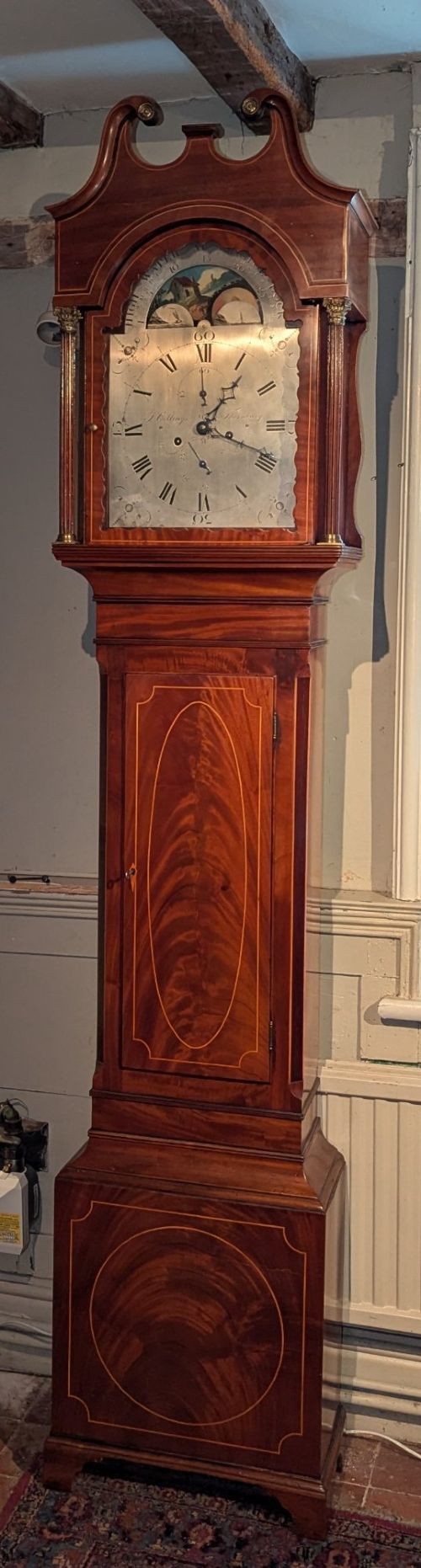
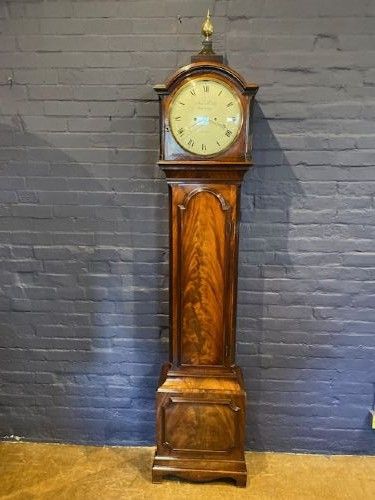
Georgian Flame Mahogany Clock
A georgian flame mahogany clock brings rich timber grain and precise mechanical movement into a room.

Georgian Flame Mahogany Clock
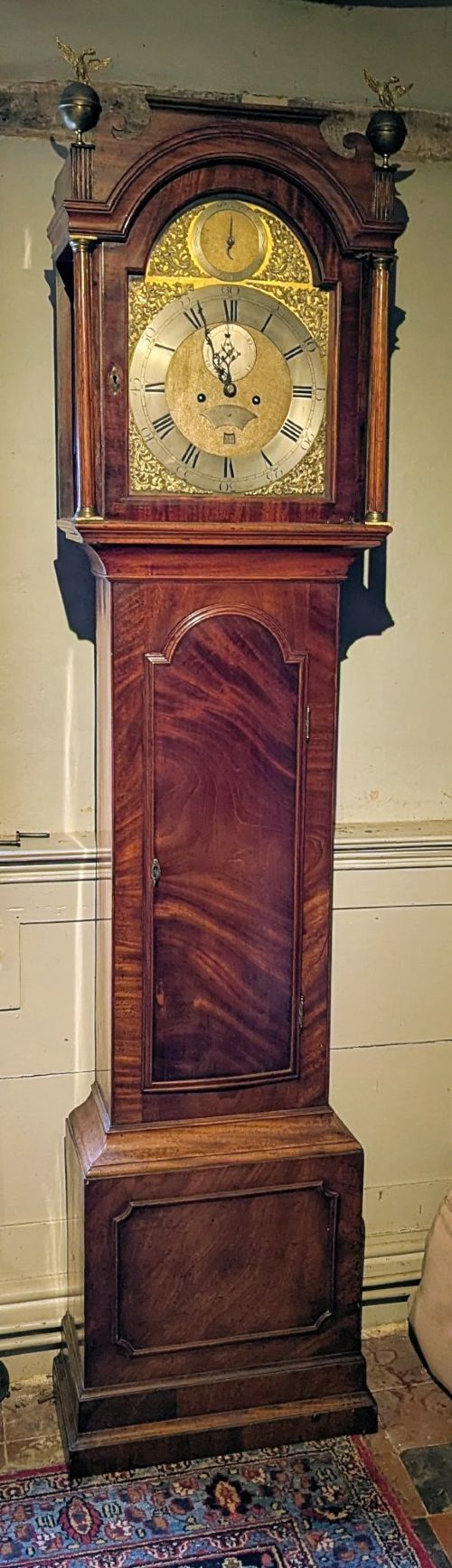
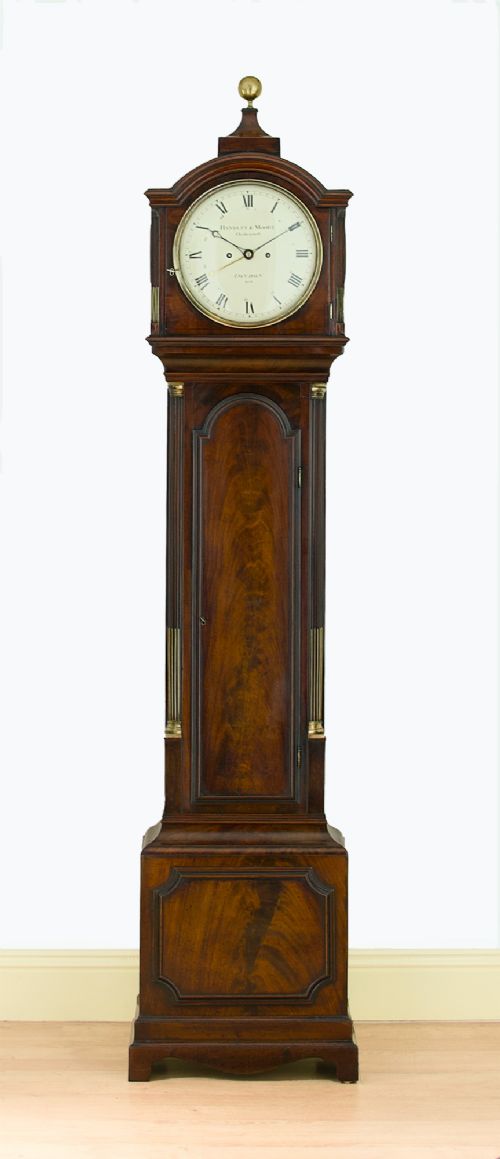
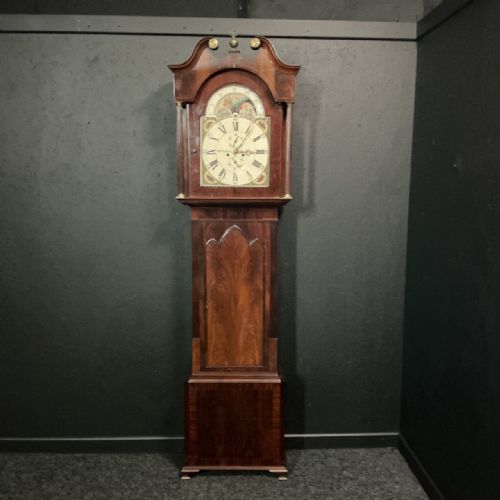
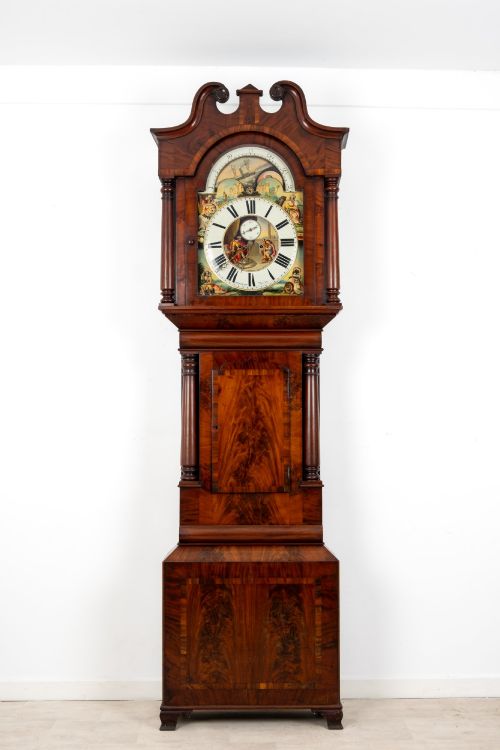
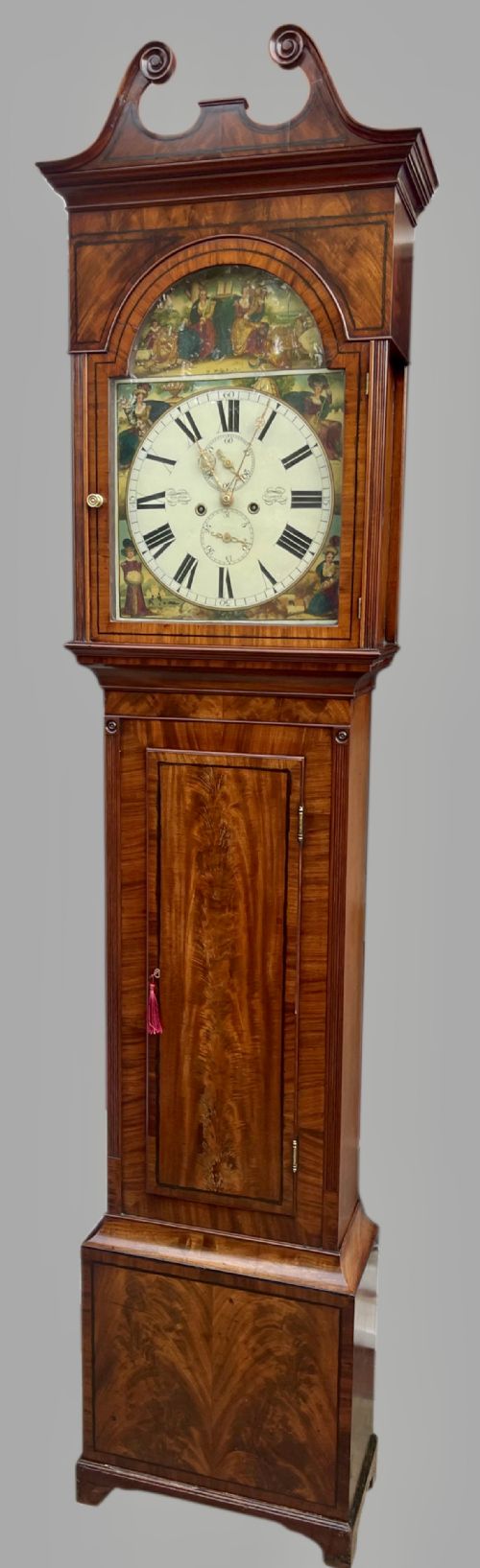
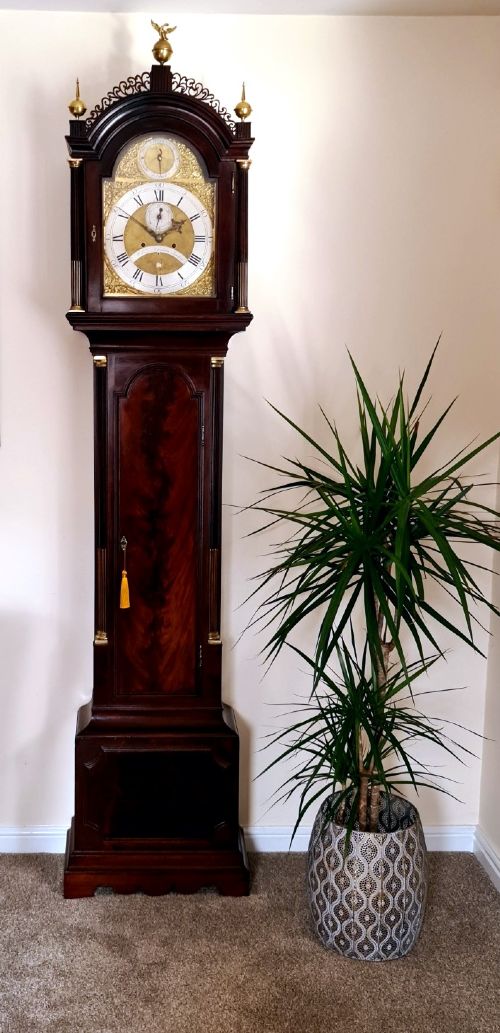
A georgian flame mahogany clock is primarily encountered as a tall longcase or grandfather clock originating from the eighteenth and nineteenth centuries. These timepieces display vertical proportions with arched or square dials framed in rich timber.
Regional variations span London workshops, provincial English towns and Scottish centres like Edinburgh and Glasgow. Most examples met here date from the Georgian, Regency and early nineteenth-century periods.
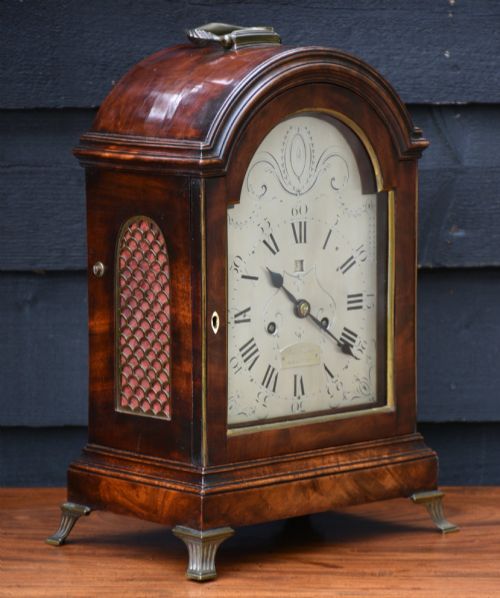
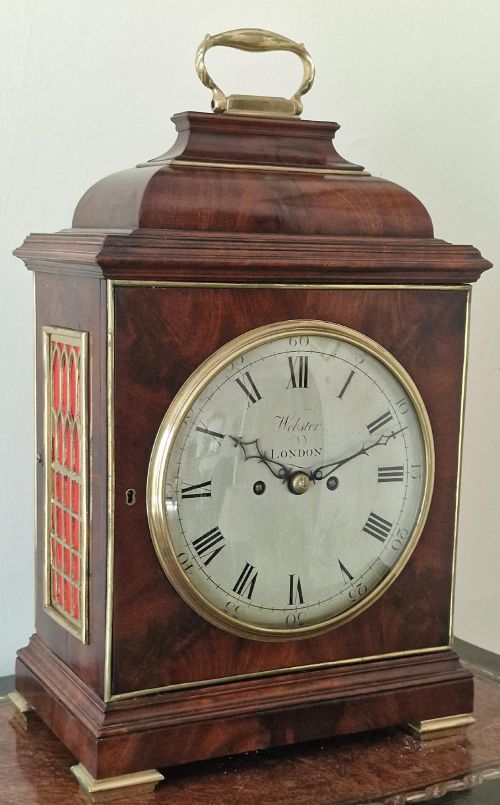
The assortment includes bracket clocks and wall-mounted tavern clocks alongside the predominant floor-standing longcase forms. Enamel, brass and painted iron dials feature frequently across these diverse formats.
Materials and construction methods
Cabinetmakers utilised solid mahogany and flame mahogany veneer applied to secondary framing timbers to achieve dramatic figured grain patterns on the trunk doors and bases. Brass mounts, spandrels and finely engraved clock faces complement the polished wood surfaces.
Movements combine brass gears, steel pinions and iron plates, often driven by lead weights or brass springs depending on whether the format is a tall case clock or a portable bracket clock. Glass panelling protects the delicate dial faces and swinging pendulums.
The listings feature mahogany, flame mahogany veneer, brass, iron and glass across 18th-century, Georgian, Regency and 19th-century periods.
Distinguishing factors in craftsmanship
Quality rests in the intensity and symmetry of the flame mahogany veneer selection across the primary surfaces of the case. Master cabinetmakers aligned wood grains meticulously to create mirrored patterns on longcase doors.
The distinction of the dial work and the reputation of the recorded maker dictate the standing of the piece. Finely engraved brass arch dials and complex movements signed by notable urban clockmakers represent the higher tier of these timepieces.
Hendrie Ogg·Gordon of Aberdeen·Green of Edinburgh·John Ellicott·D. Straiton·James McCabe·Handley and Moore·Parkinson Bros·Webster·William Jourdain·Benjamin Taylor·Rickards·Priory of Dundee·Mclennan·William McEwan·Richard Sharkey·Thwaites·William Allam·James Tregent·Thomas Goddard·Hyde of Salisbury·Pye of Falmouth·Pat Cock
The Georgian Flame Mahogany Clock Glossary
- Flame mahogany
- A veneer cut from the fork of the mahogany tree that produces a distinctive swirling, flame-like grain pattern. This timber was favoured for the primary display doors of high-status clock cases.
- Longcase clock
- A tall freestanding weight-driven timekeeper enclosed in a wooden case with a pendulum swinging inside the trunk. These are frequently referred to as grandfather clocks.
- Bracket clock
- A portable spring-driven clock designed to sit on a table, shelf or wall bracket. Many examples from the Regency period feature brass carrying handles.
- Moon phase
- A mechanical dial feature that tracks the lunar cycle through a rotating disc showing the phases of the moon. It typically sits within the arch of the clock face.
- Fusee
- A conical pulley used in spring-driven clocks to equalise the torque of the mainspring as it unwinds. This mechanism ensures consistent timekeeping throughout the running period.
Georgian Flame Mahogany Clock: Frequently Asked Questions
How do I wind a longcase clock?
Weights suspended inside the trunk must be drawn up using a winding key inserted into holes on the dial face. Care is required not to overwind the mechanism.
Pendulum clocks should be set to the correct time by moving the minute hand rather than forcing the gears backward.
Where should I place a grandfather clock?
A stable interior wall away from direct sunlight, central heating vents and damp environments preserves both the mahogany veneer and the internal brass mechanics.
Levelling the case securely on the floor ensures the pendulum swings evenly and the escapement ticks with a regular beat.
What does an eight-day movement mean?
An eight-day clock requires winding approximately once a week via weights or springs. This system represents an upgrade over thirty-hour movements that need daily attention.
Most quality Georgian and Regency longcase clocks utilise this longer duration setup.
How can I tell a provincial clock from a London one?
London makers often signed work with specific street addresses and incorporated sophisticated strike or moon phase complications. Provincial examples from Scotland or regional English towns display simpler local signatures and distinct regional cabinetmaking traits.