


Mahogany Pendulum Table Clock
A mahogany pendulum table clock sits heavily on a mantel or desk, bringing mechanical timekeeping and warm timber grain into a room.
Mahogany Pendulum Table Clock
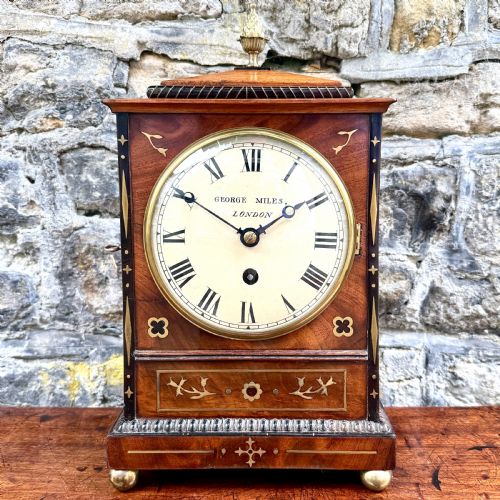
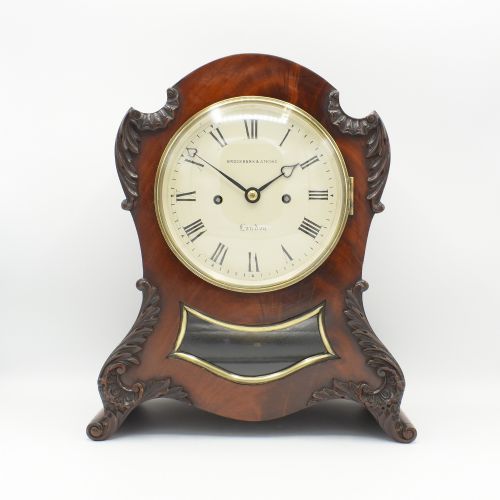
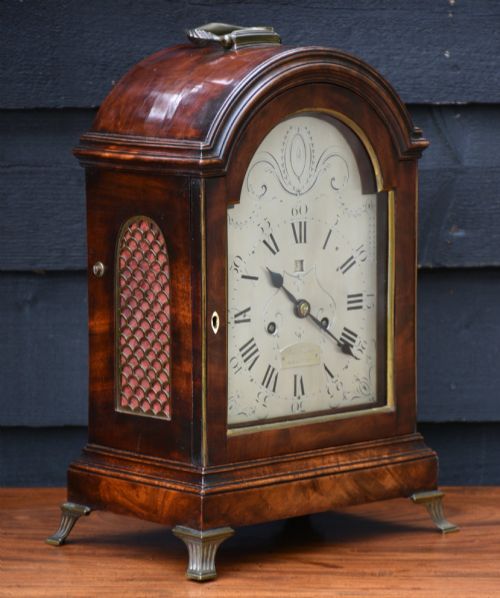
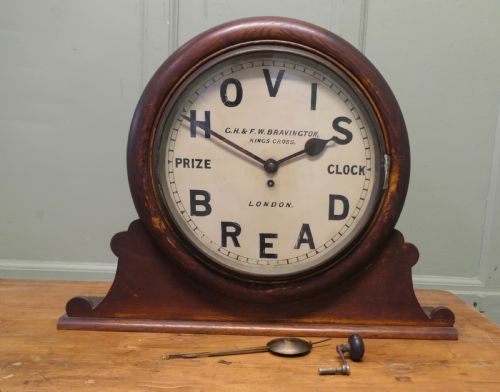
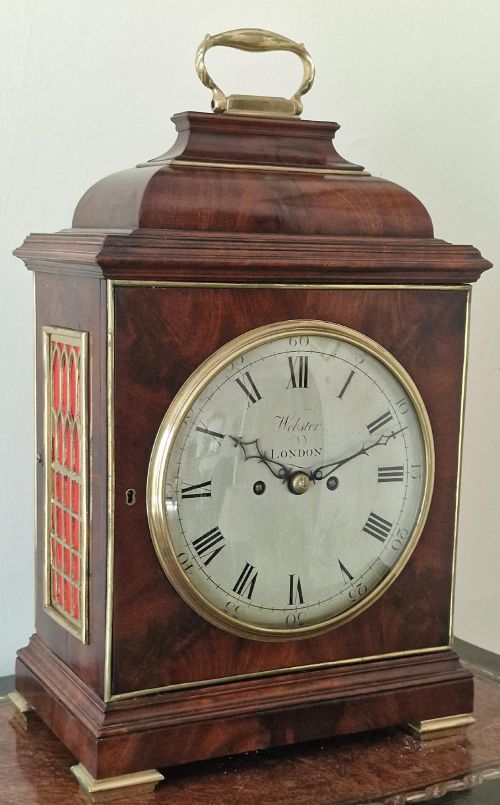
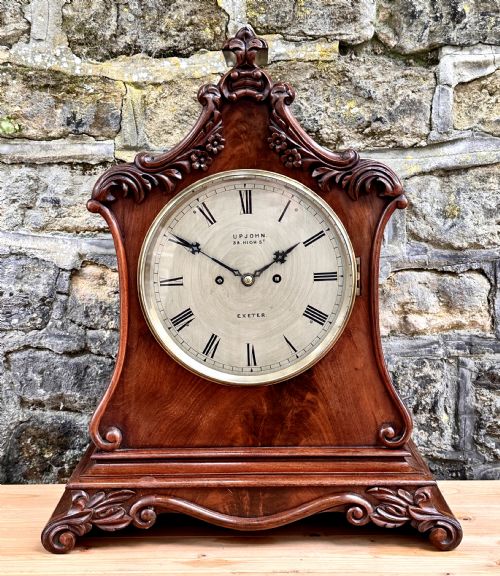
The versions most common on this page date from the Georgian, Regency, and Victorian periods, often taking the form of bracket clocks, mantel clocks, or portico clocks. They combine structural cabinetry with visible dials and internal movements regulated by a swinging pendulum.
Makers housed these movements in architectural or box-form cases, sometimes featuring brass mounts, glass panels, and silvered metal dials. Each piece reflects the dominant design taste of its decade, ranging from strict classical proportions to later ornate interpretations.
What varies in quality
The standard of a mahogany pendulum table clock depends heavily on the crispness of the cabinetwork and the complexity of the internal movement. Finer examples display precise dovetailing, well-matched wood veneers, and restrained brass detailing that integrates harmoniously with the timber case.
On the mechanical side, superior clocks feature multi-pillar movements, twin fusee setups, and signed dials by established makers rather than mass-produced generic assemblies. The weight and finish of the cast brass fittings and the legibility of the silvered or enamelled dial further separate standard pieces from exceptional ones.
The object forms recorded here range from traditional mantel clocks and portico clocks to complex twin-fusee bracket clocks.
Brockbanks And Atkins·G H And F W Bravington·Mappin And Webb·Geo Carter Hackney·Paul Philip Barraud·Seikosha Seiko·Maple And Co Paris·Vulliamy
The Mahogany Pendulum Table Clock Glossary
- Bracket clock
- A portable table clock originally designed to sit upon a matching wall bracket. These timepieces typically feature a sturdy wooden case with a carrying handle.
- Fusee
- A conical pulley used in spring-driven clocks to maintain even power as the mainspring unwinds. This mechanism ensures more accurate timekeeping throughout the running cycle.
- Portico clock
- A mantel clock styled after classical temple architecture with supporting columns. They often display a visible pendulum swinging between the vertical pillars.
- Verge escapement
- An early mechanical regulation mechanism using a crown wheel and pallet foliot. It creates the traditional ticking rhythm associated with antique clocks.
- Silvered metal
- A brass dial plate treated with a silver compound to produce a matte white finish. The numbers and maker inscriptions are usually engraved and darkened for clarity.
Mahogany Pendulum Table Clock: Frequently Asked Questions
How do I wind a fusee clock?
You wind the movement using a matching key inserted into the dial winding holes, turning slowly until resistance stops the barrel. Care must be taken not to overwind the mainspring.
Most fusee mechanisms run for eight days per wind. Keeping a consistent schedule helps maintain the health of the historical gear train.
Where should I place a table clock?
These clocks belong on stable, level surfaces such as mantelpieces, sideboards, or library tables where vibrations are minimal. A flat base ensures the pendulum swings evenly without catching.
Avoid placing them in areas with direct sunlight or fluctuating humidity. Stable indoor conditions protect both the mahogany finish and the internal brass components.
How do I tell a Regency clock from a Victorian one?
Regency clocks generally favour clean classical lines, architectural pediments, and restrained brass inlay inspired by antique Roman and Greek forms. They rely on proportion rather than heavy carving.
Victorian pieces often introduce bolder proportions, richer surface carvings, and more elaborate dial surrounds. The styling reflects changing domestic tastes across the nineteenth century.