
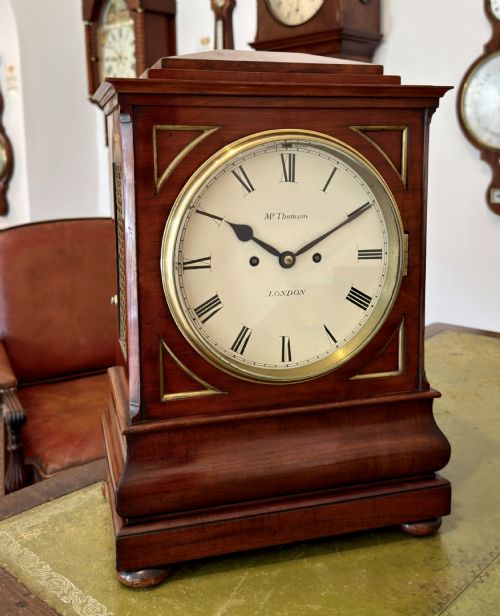
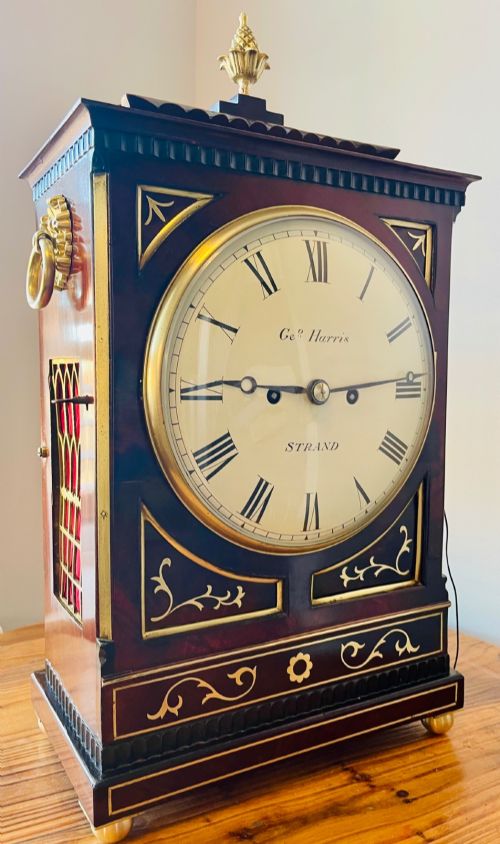
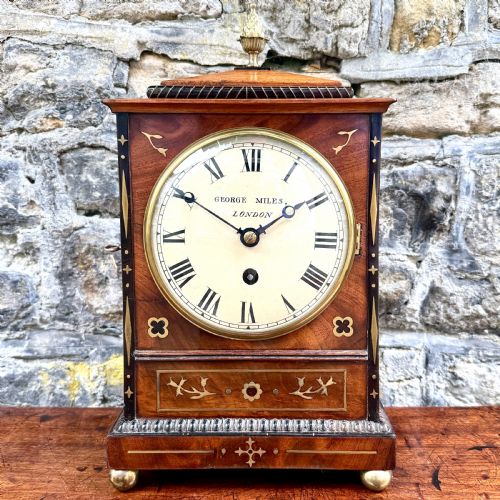
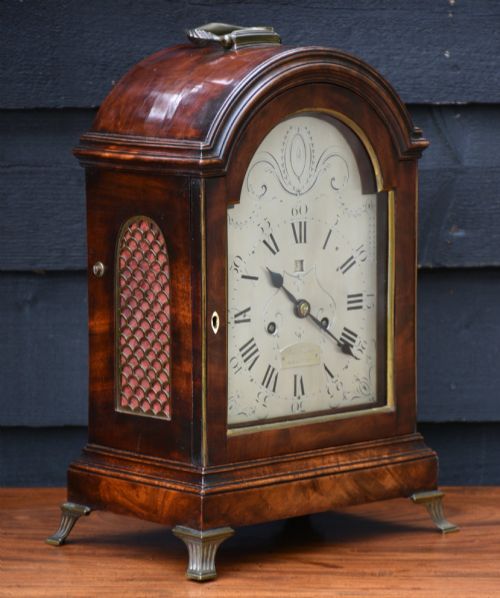
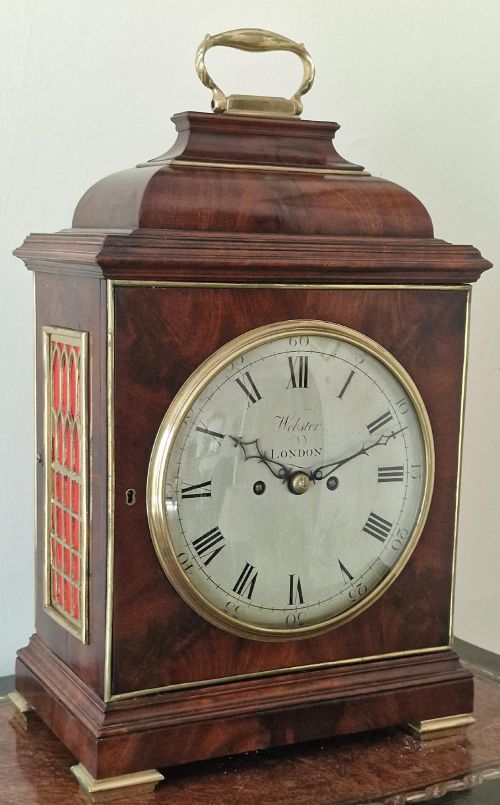
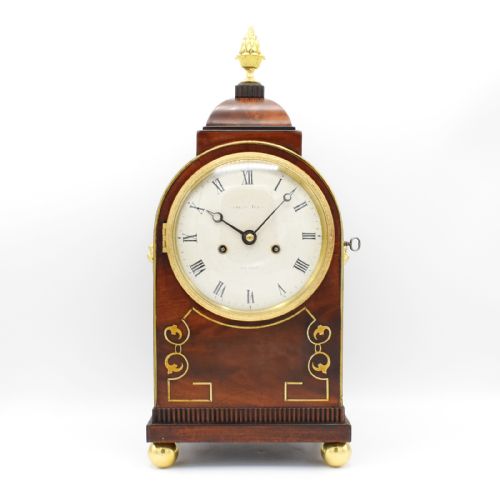
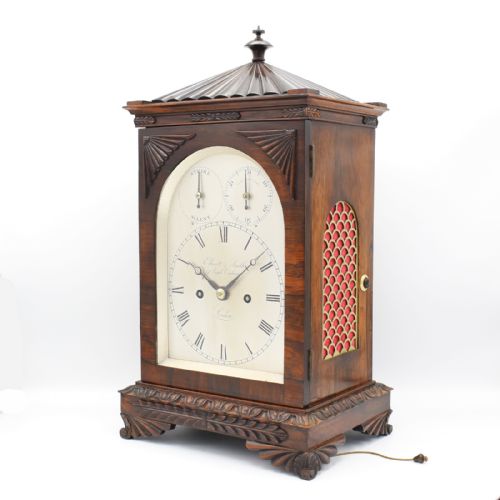
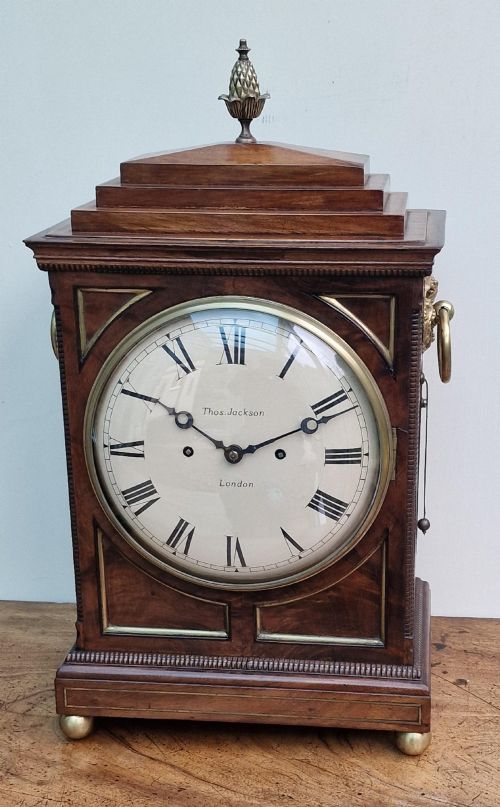


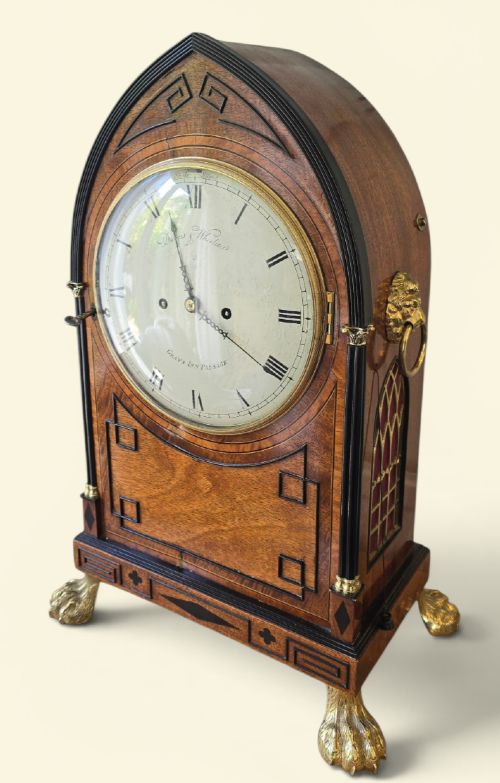

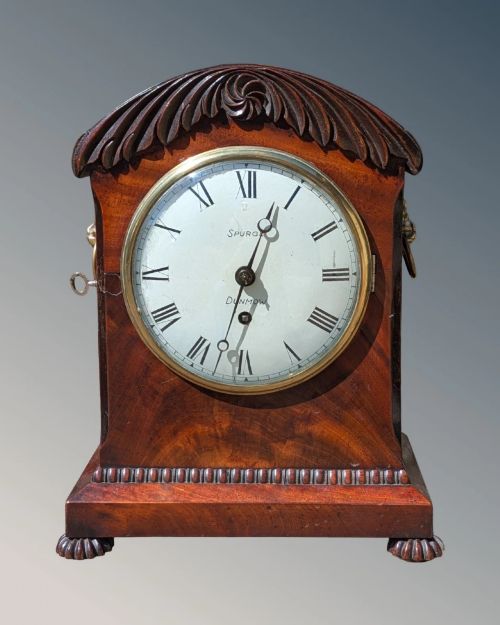
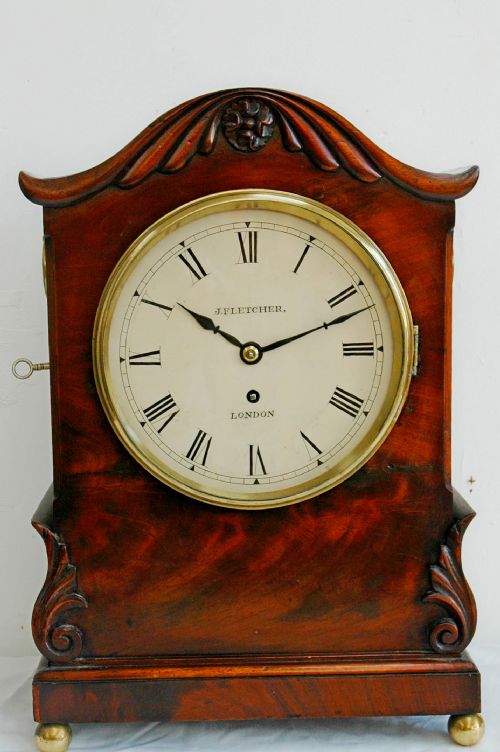


Regency Mahogany Bracket Clock
A regency mahogany bracket clock brings mechanical precision and rich timber into a room, serving as a striking focal point on a mantel or table.
Regency Mahogany Bracket Clock
When searching for a regency mahogany bracket clock, a buyer encounters portable mechanical timepieces housed in dark timber cases designed during the Georgian, Regency, and early Victorian periods.
Originating predominantly from London workshops as well as provincial makers, these clocks combined utility with architectural elegance to serve the libraries and drawing rooms of the period.
How They Were Made
Clockmakers fitted brass fusee movements, which utilised a tapered drum and chain or cord to equalise the pull of the mainspring as it unwound.
Dials were constructed from painted enamel or silvered metal, protected behind hinged glass bezels and framed by cast brass bezels and mounts.
Listings feature mahogany timber paired with brass, enamel, and silvered metal across Georgian, Regency, and Victorian periods.
What Varies in Quality
The refinement of the cabinetwork and the complexity of the brass inlay distinguish finer examples, where timber selection shows rich grain and brass work sits flush within the mahogany surface.
Movement sophistication also separates pieces, ranging from simple timepieces to twin-fusee models with striking and repeating capabilities signed by notable makers.
Proportion and dial execution matter greatly, with crisp engraving on silvered metal dials and well-balanced case silhouettes marking out superior workshop output.
Thomson of London·Webster London·Barwise London·Charles Pratt London·Ellicott Smith·Thomas Jackson·George Orpwood·Bush of London·Desbois Wheeler·L Vick of Stroud·Spurge Dunmow·Cording of London·Wilkinson Leicester·Barrett London·J Kingerley Manchester·Paul Philip Barraud·Thomas Connold·Hyde of Salisbury·Hampson Son·Taylor of London·Leplastrier of London·J Condliff Liverpool·Robert Molyneux·Thomas Glaze·James McCabe
The Regency Mahogany Bracket Clock Glossary
- Fusee
- A conical pulley used in a clock movement to maintain even power delivery as the mainspring relaxes. This mechanism ensures more accurate timekeeping throughout the running cycle.
- Bracket Clock
- A portable clock originally designed to sit on a wall bracket or a table. Despite the name, many survived simply resting on mantelpieces.
- Silvered Metal
- A brass dial plate treated with a silver solution to create a matte white finish. The numerals and maker signatures are typically engraved and darkened into this surface.
- Lancet Top
- A pointed, gothic-arched case shape popular during the Regency period. It resembles the pointed architectural profile of a lancet window.
- Striking
- A mechanism function that causes the clock to sound the hours on a bell or gong. Some more complex movements also repeat the last hour on demand.
Regency Mahogany Bracket Clock: Frequently Asked Questions
Where should I place a bracket clock?
Place the clock on a sturdy, level surface such as a mantelpiece, sideboard, or dedicated wall bracket where vibrations are minimal. A stable base prevents the pendulum from going out of beat.
Keep the timber away from direct sunlight and strong heat sources to protect the mahogany finish and prevent veneer cracking.
How can I tell a Regency case from a Victorian one?
Regency cases often display crisper architectural proportions, restrained brass inlay, and sharp bracket feet or pad tops. Dial signatures from this era typically feature prominent London or provincial makers.
Victorian interpretations sometimes introduce heavier proportions or varied revival styles, reflecting changing interior tastes later in the nineteenth century.
What does a double fusee movement do?
A double fusee movement has two separate trains, one to drive the timekeeping and another to power the striking mechanism. Each train uses its own fusee cone and mainspring.
This setup allows the clock to strike the hours independently without drawing power away from the escapement, ensuring steady timekeeping.