

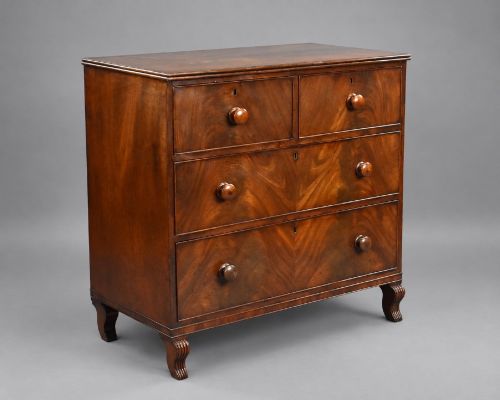
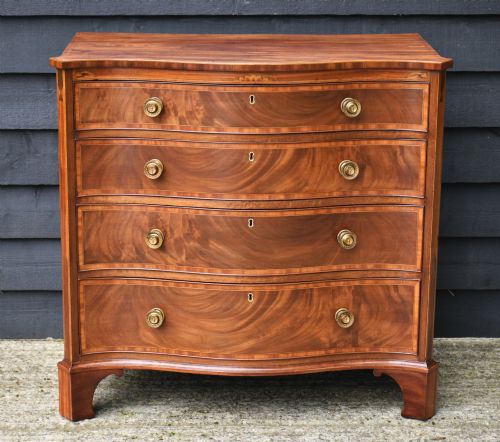
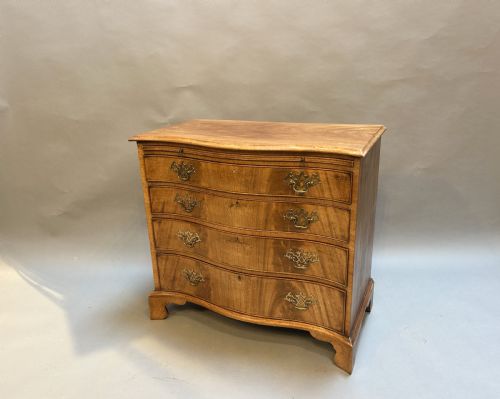
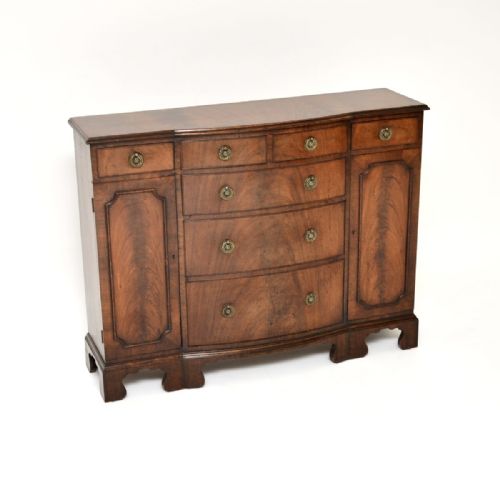
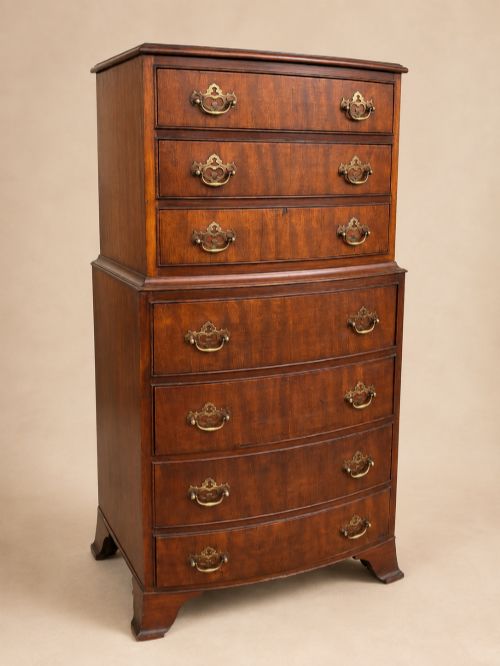
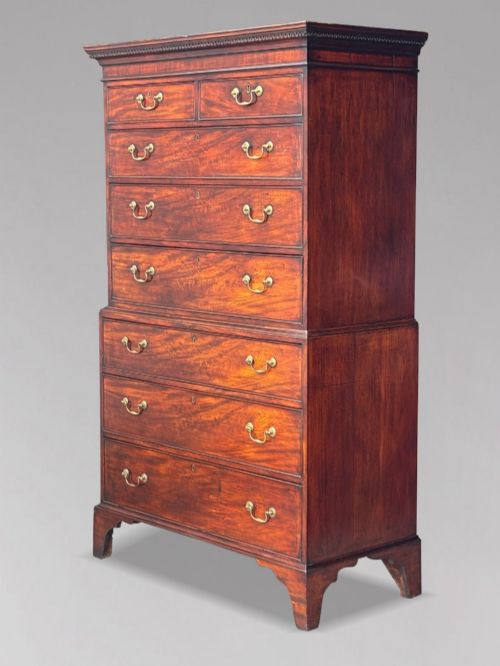
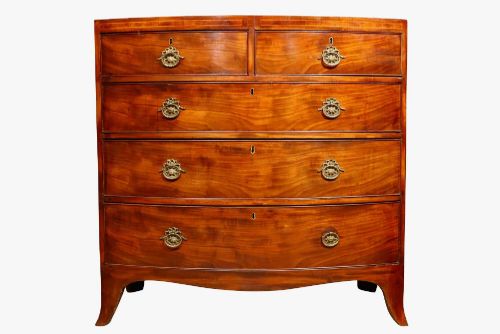
Georgian Flame Mahogany Chest
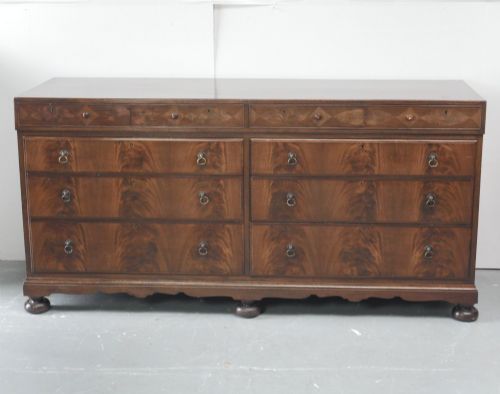
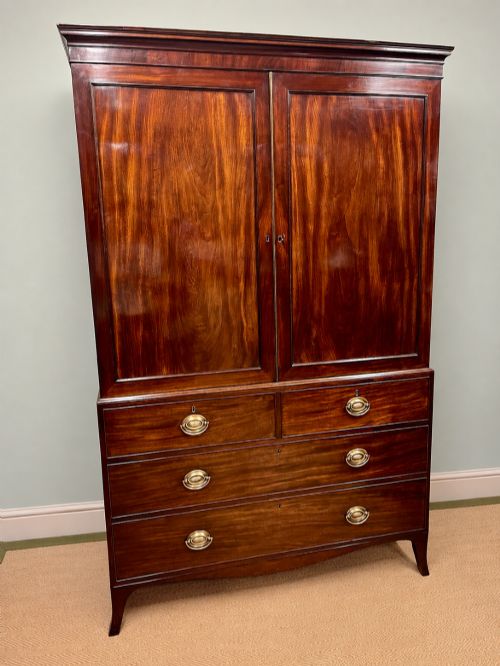
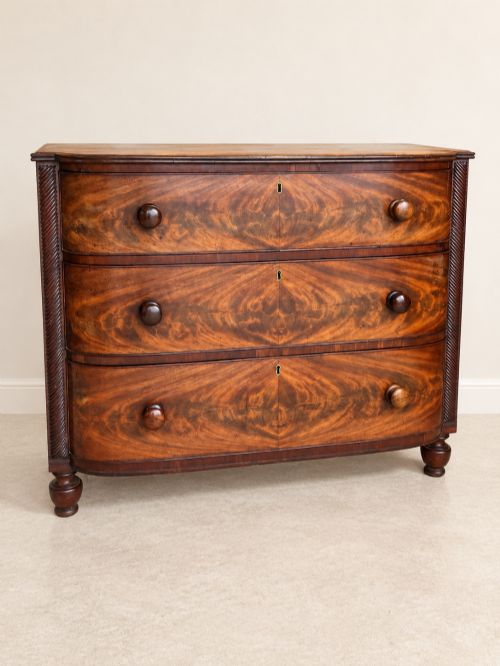
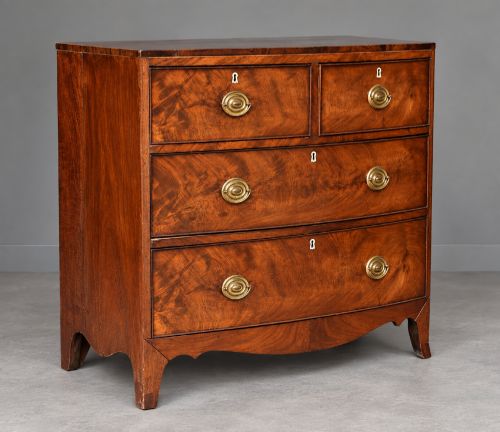
A Georgian flame mahogany chest brings distinctive figured timber and classical proportion into a room, serving as both storage and decorative focus.
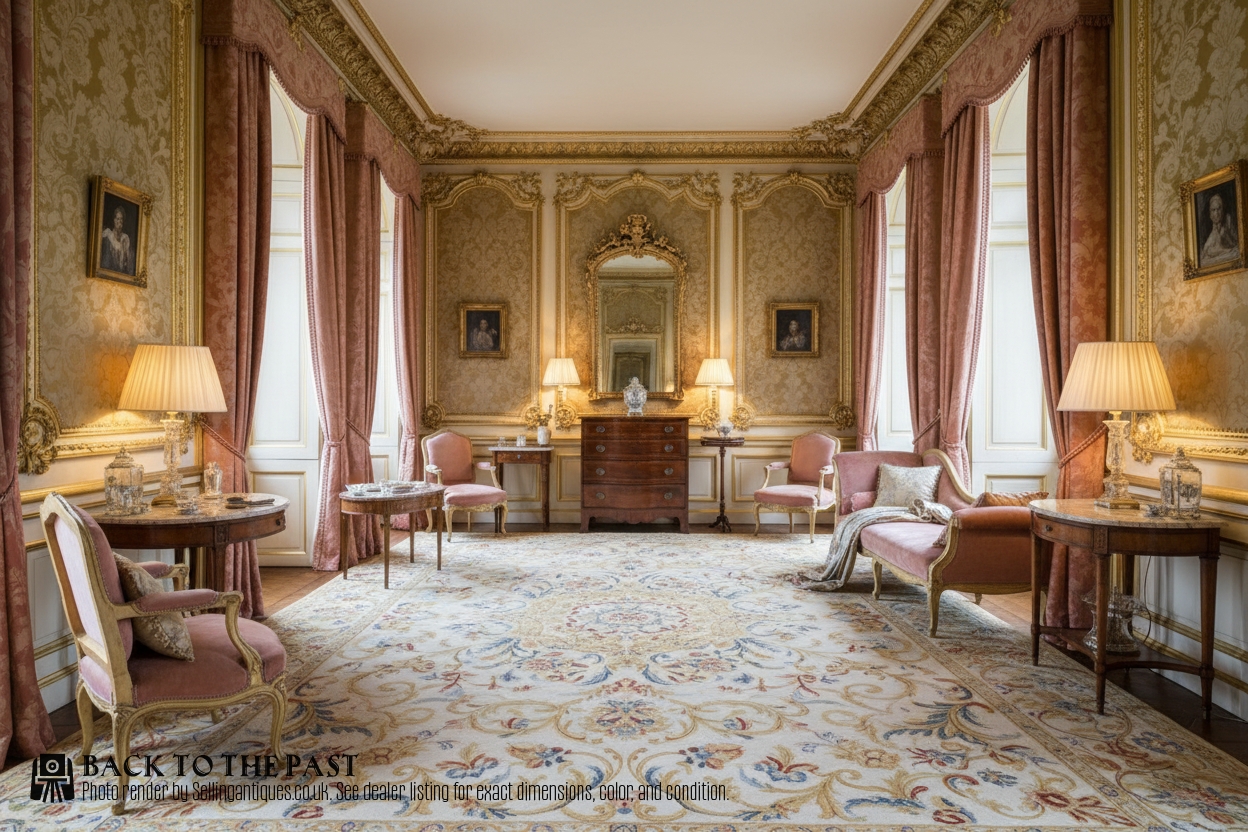
Georgian Flame Mahogany Chest
When you search for a georgian flame mahogany chest, you encounter case furniture designed to store garments or valuables while displaying striking wood grain.
The pieces on this page span several decades from the eighteenth century through the regency era, featuring chest on chest designs, tallboys, and compact bow-front examples.
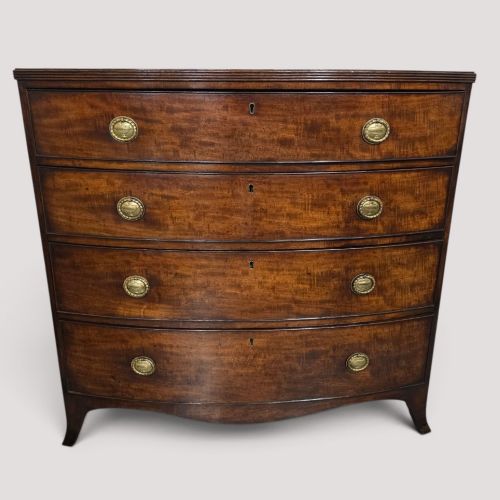
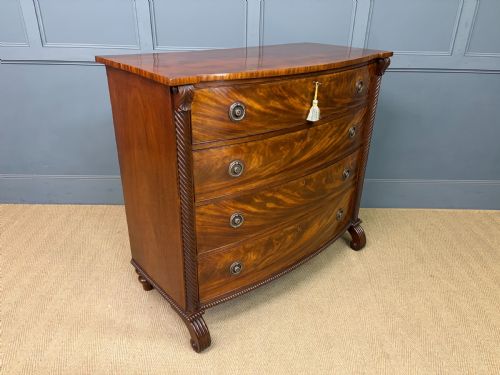
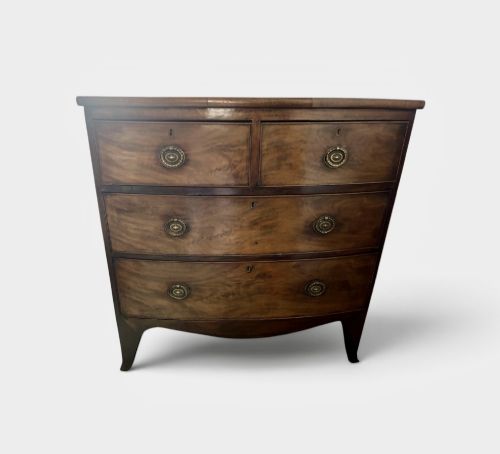
Bow-front and serpentine silhouettes appear frequently alongside straight-front versions, often accompanied by secondary timbers such as oak within the drawer linings.
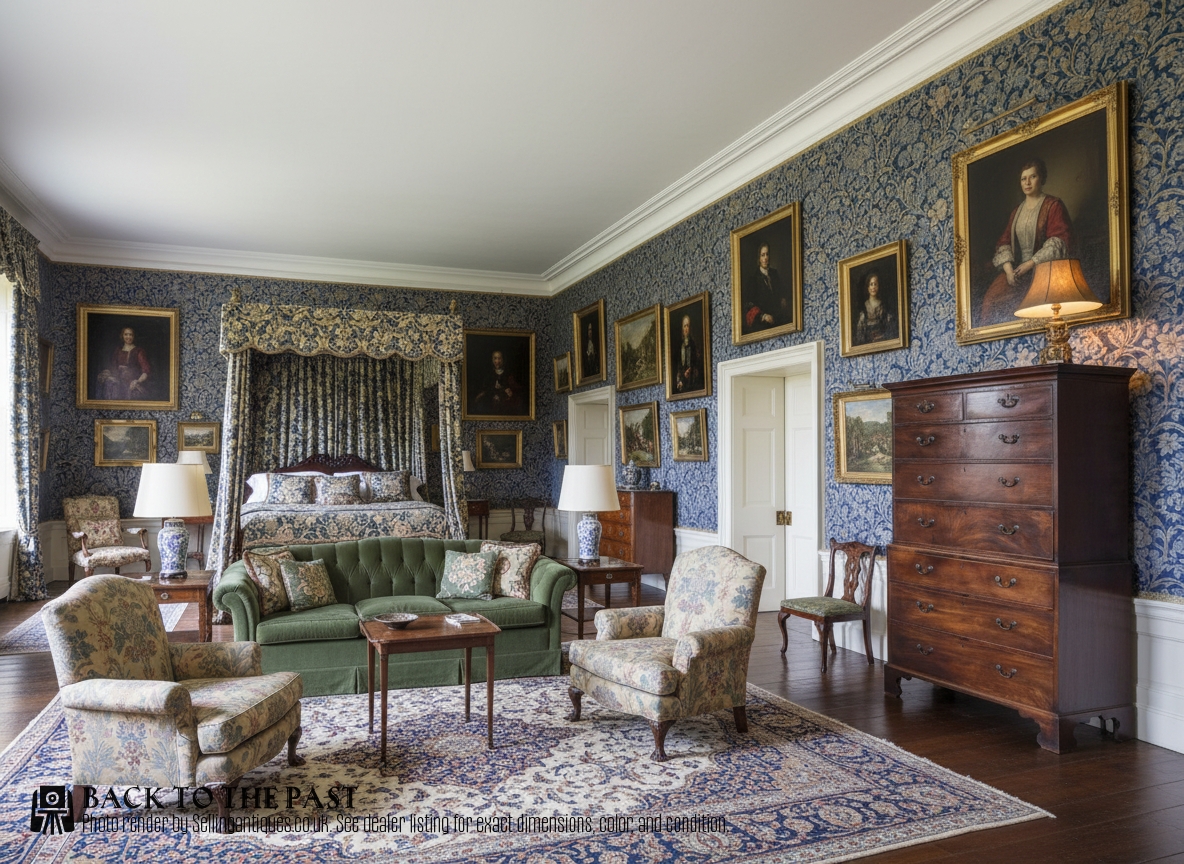
Materials and Construction
Cabinet makers applied thin veneers of figured timber over stable foundational woods like mahogany or oak, arranging the grain patterns symmetrically to create visual depth.
Brass hardware such as handles, escutcheons, and occasional inlay details in satinwood or bone complement the primary dark timber surfaces.
Georgian Flame Mahogany Chest Retail Price Guide 2026
Typical asking prices for georgian flame mahogany chest among the pieces listed under this phrase on Sellingantiques today, from the lower quarter to the upper quarter. They describe what is for sale here now, not the wider market.
Listings feature primary mahogany construction paired with oak secondary linings, brass hardware, and occasional satinwood or bone inlay details.
Evaluating the Craftsmanship
The visual impact depends largely on the choice and placement of the figured veneer, where book-matched flame patterns create striking symmetry across drawer fronts.
Structural refinement shows in the tightness of the dovetail joints, the smoothness of the drawer runs, and the integrity of the secondary timbers used inside the carcass.
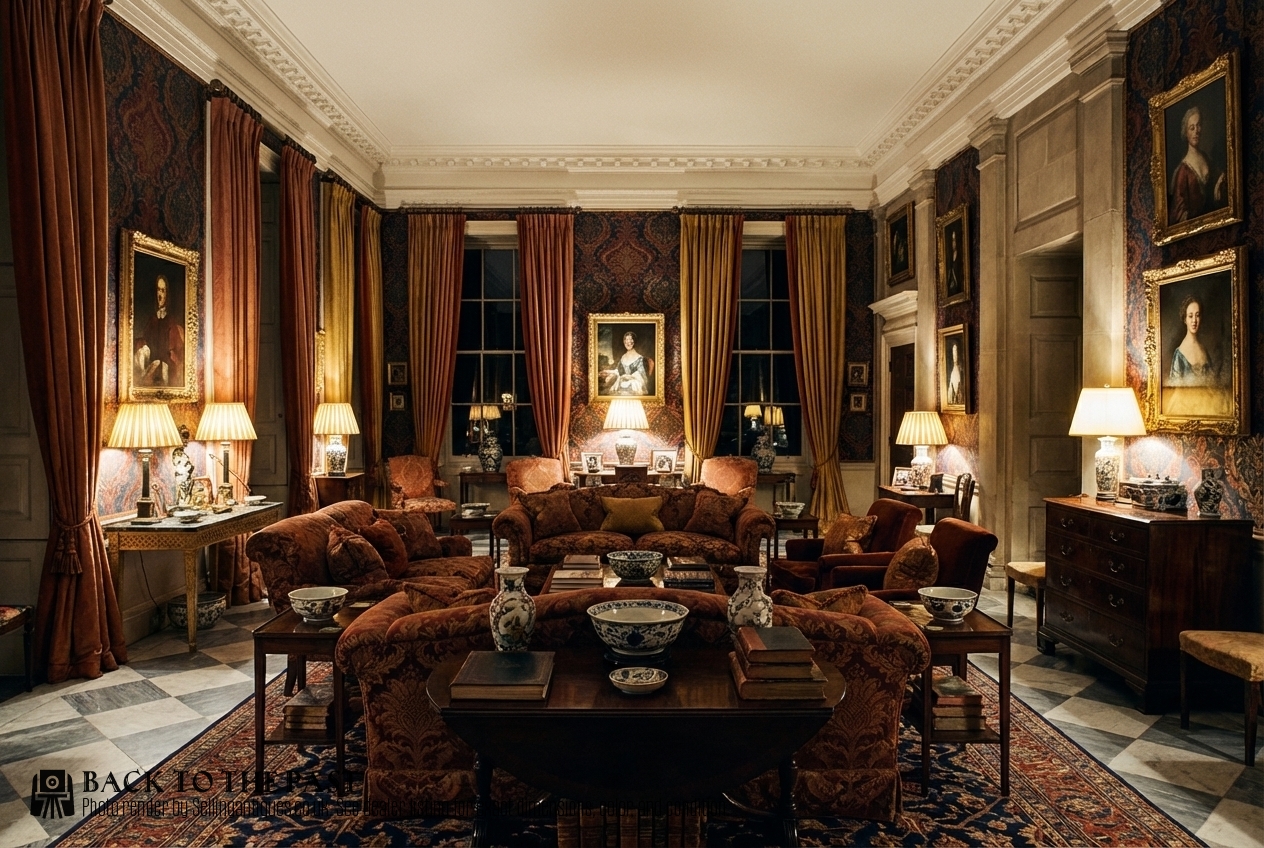
Whytock & Reid
The Georgian Flame Mahogany Chest Glossary
- Flame mahogany veneer
- A thin slice of wood cut from the branch junction where the grain twists and curls, producing a flame-like pattern. Cabinet makers prized this for its decorative impact on drawer fronts.
- Bow front
- A convex curved cabinet front that swells outward in the centre. This style gained popularity during the late eighteenth and early nineteenth centuries.
- Serpentine
- A front shape featuring a concave central section flanked by two convex ends, or the reverse. It requires advanced woodworking skill to execute properly.
- Chest on chest
- A tall storage piece comprising a smaller upper chest stacked upon a deeper lower chest, also known as a tallboy. These units maximised vertical storage space in period bedrooms.
- Dovetail
- A joint formed by interlocking wedge-shaped fingers secured with glue. Hand-cut dovetails indicate traditional period construction methods.
Georgian Flame Mahogany Chest: Frequently Asked Questions
What periods do these chests come from?
The pieces span the georgian flame mahogany chest tradition, originating primarily in the eighteenth and early nineteenth centuries during the georgian and regency periods, with occasional later revivals.
Craftsmen across these decades maintained traditional joinery methods while adapting silhouettes from straight fronts to sweeping bow fronts.
How were these chests originally used?
Households utilised these pieces in bedrooms, dressing rooms, and country house chambers to store garments, linens, and personal valuables.
Certain configurations included dedicated compartments or secret drawers for securing important documents and currency.
How do I care for flame mahogany surfaces?
Maintain the timber by keeping the piece away from direct sunlight and sudden temperature shifts that can dry out the ancient veneer.
Apply traditional beeswax occasionally to nourish the wood and preserve the natural sheen of the polished surface.
What distinguishes a bow front from a serpentine front?
A bow front curves outward in a smooth, continuous convex arc from side to side.
A serpentine front incorporates alternating curves, typically starting with a convex sweep that transitions into a central concave curve.