
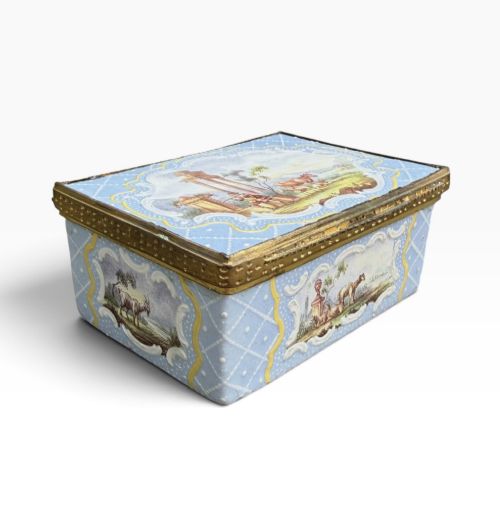
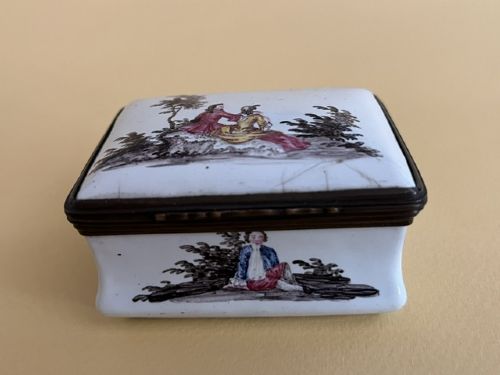


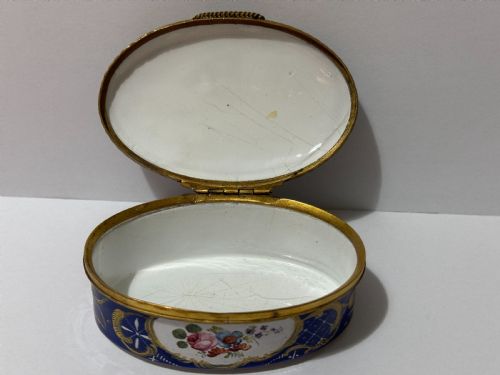


Georgian Enamel Snuff Box
A georgian enamel snuff box brings pocket-sized colour and delicate metalwork from the eighteenth century straight to your palm.
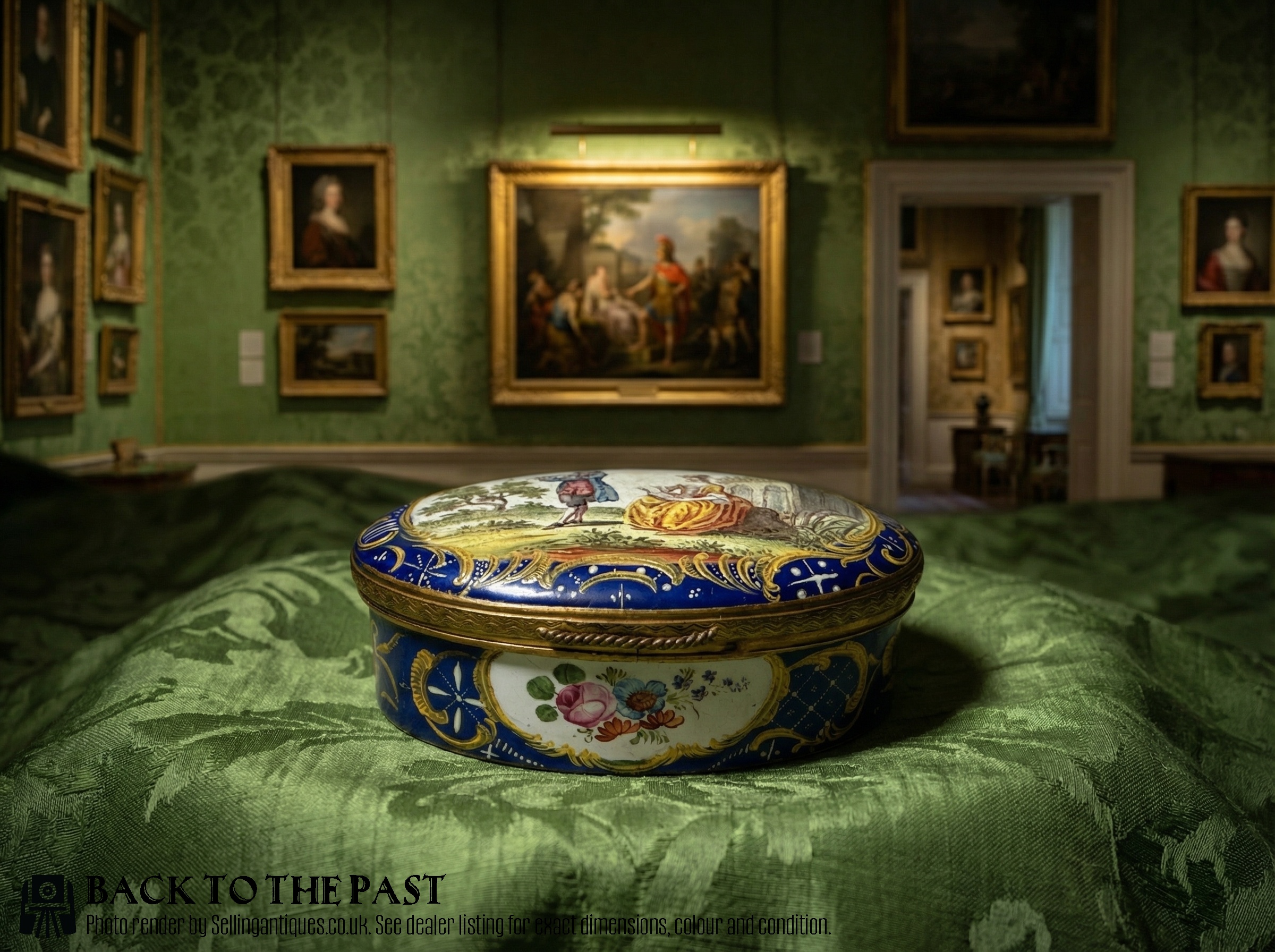
What these pieces are
A georgian enamel snuff box represents a focused group of eighteenth-century containers made for snuff, patches and small keepsakes. These items span rectangular, oval and novelty forms originating from English workshops.
The pieces on this page include surviving examples from the georgian era, featuring hinged lids, decorative plaques and trinket boxes. Most items date from the seventeen-seventies and seventeen-eighties.

How they were made
Craftsmen fused vitreous enamel to copper or copper alloy bases, often mounting the finished pieces in gilded metal or copper gilt. The resulting metalwork created durable housings for hand-applied coloured designs.
Many items combined smooth enamel surfaces with inlaid elements or mounted panels, utilising metal alloy frames to secure the hinged lids of snuff and patch boxes.
Retail Price Guide 2026
Typical UK retail prices for georgian enamel snuff box, calculated from the Sellingantiques database of over a million retail prices indexed since 2003. This retail price guide relies exclusively on Sellingantiques data; no external sources or auction records are used, so the figures do not describe the wider market.
Listings feature eighteenth-century pieces utilising enamel, copper, and gilded metal.
What varies in quality
Quality rests in the crispness of the enamel painting and the integrity of the metal mounts. Smoother surfaces and well-preserved gilding on the copper alloy distinguish finer specimens.
The precision of the box closure and the complexity of the shape also separate standard utility pieces from more ambitious novelty or plaque formats.

The Georgian Enamel Snuff Box Glossary
- Bilston enamel
- A term for enamel items produced in the Staffordshire town renowned for eighteenth-century box making. These pieces frequently feature detailed hand painting.
- Patch box
- A small container originally used to hold cosmetic fabric patches for the face. They share construction methods with snuff boxes.
- Copper gilt
- Copper metal coated with a thin layer of gold. This material provided a decorative and protective frame for enamel panels.
- Vitreous enamel
- A material made by fusing powdered glass to a substrate by firing. It forms a smooth, coloured coating on metal boxes.
Frequently Asked Questions
What did people keep in a georgian enamel snuff box?
These boxes held ground tobacco known as snuff, which users inhaled or placed against the inside of the nose.
Some smaller versions also carried cosmetic patches or served as personal trinket holders.
How do I date an eighteenth-century enamel box?
Dating relies on stylistic clues, shape evolution and the specific manufacturing traits of English centres like Bilston and South Staffordshire.
Most surviving examples date from the middle to late eighteenth century, particularly the seventeen-seventies and eighties.
Are these boxes made of solid enamel?
No, the pieces feature a metal core, typically copper or copper alloy, coated in fused glass enamel.
The metal mounts and hinges provide structural support for the fragile enamel panels.
How should I clean my antique enamel box?
Dust the surface gently with a soft, dry cloth to avoid scratching the delicate glass coating.
Keep moisture away from the metal mounts and hinges to prevent corrosion.