

Georgian Demilune Side Table
A georgian demilune side table brings understated elegance to a hallway or drawing room with its curved front and compact footprint.
Georgian Demilune Side Table
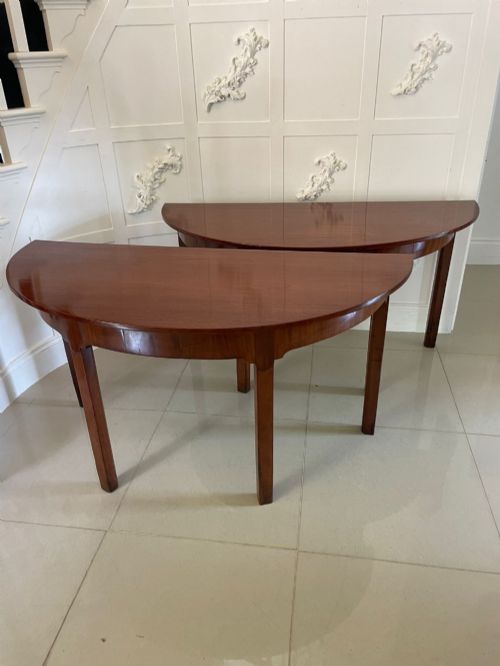
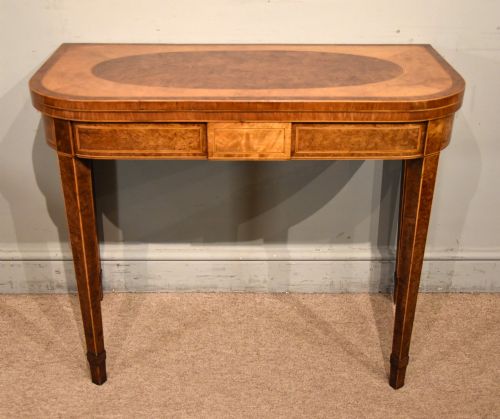
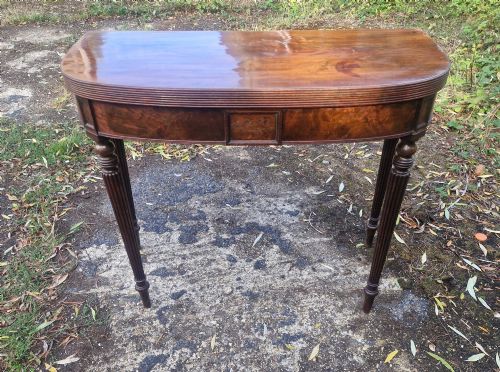
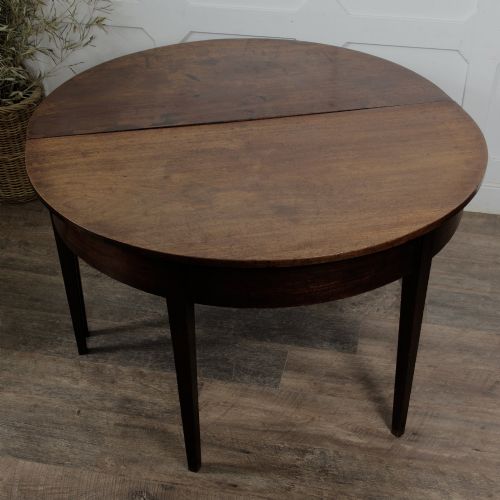
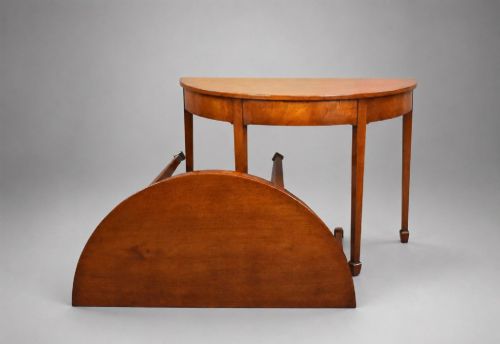
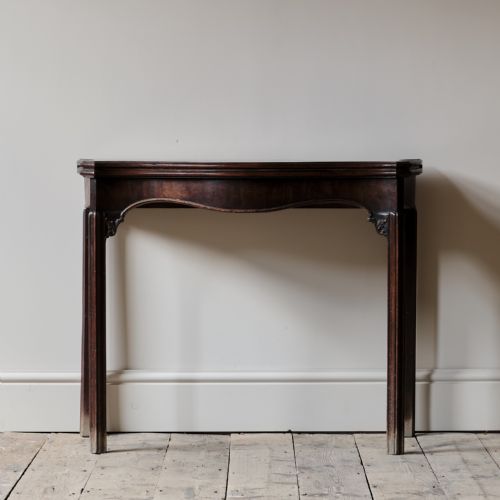
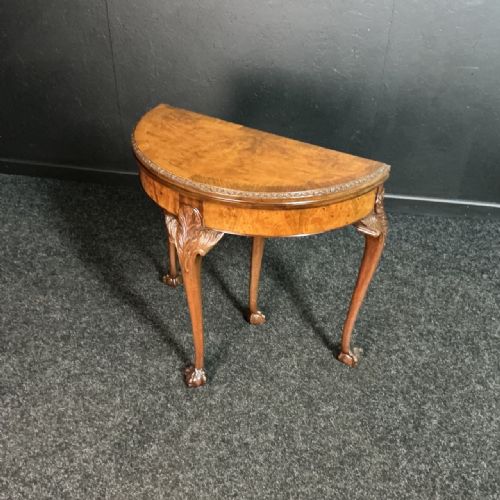
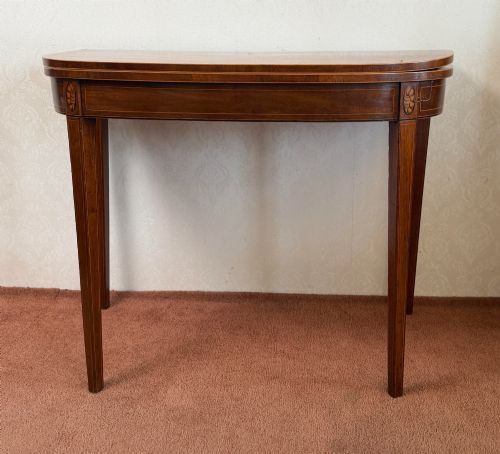
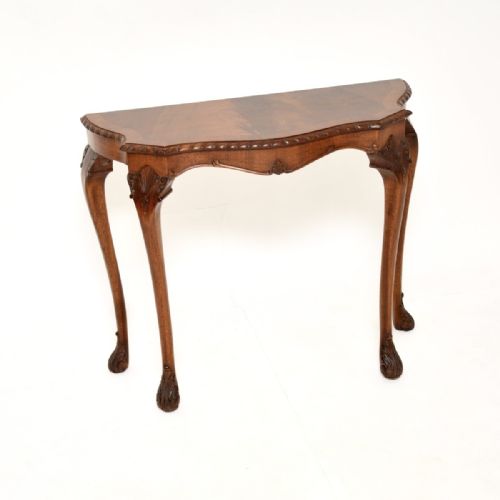
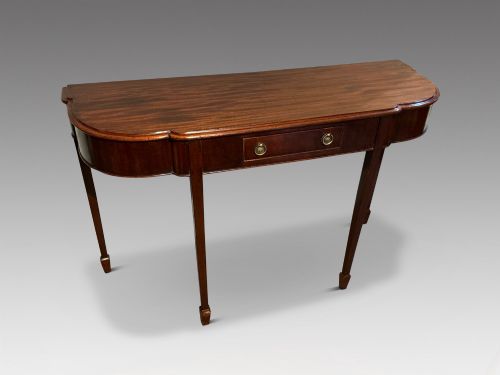
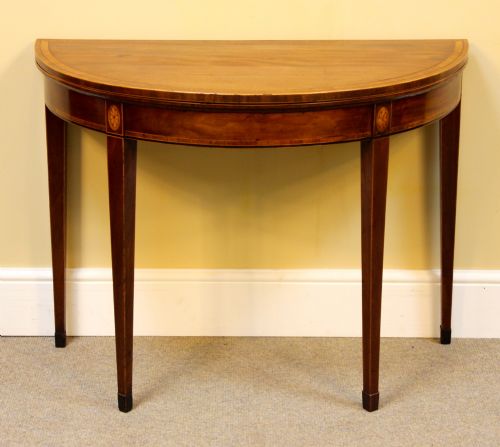
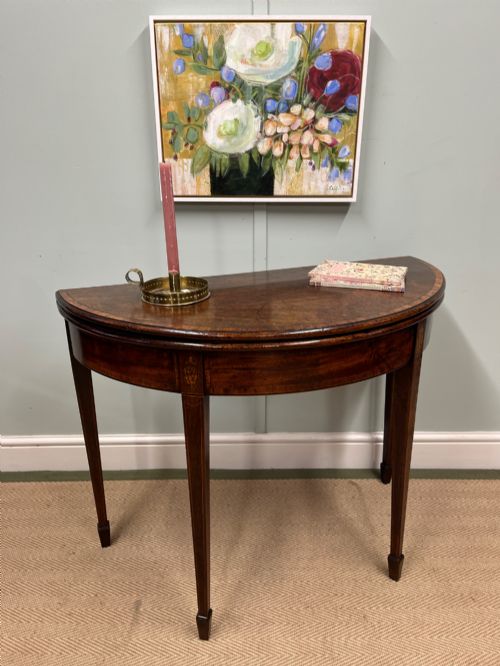
A georgian demilune side table is a semicircular item of furniture designed to stand flush against a wall in domestic interiors. The form encompasses dedicated console tables, folding card tables, and tea tables with hinged tops.
Most examples found here date from the Georgian and Regency periods, constructed in mahogany, satinwood, and walnut. Makers built them to follow the architectural curves of period rooms while saving valuable floor space.
Materials and construction
Cabinet makers utilised solid timbers alongside fine veneers of mahogany, burr walnut, and rosewood applied to stable carcases. Boxwood inlay and crossbanding provide crisp geometric borders around the curved perimeters of the tops.
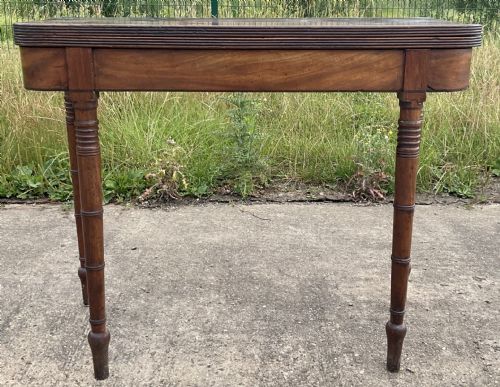
Leg structures vary from straight tapered supports to turned members and console configurations, frequently reinforced with gateleg actions to support folding leaves.
Some card tables hide secret swing-out compartments beneath their folding tops to hold counters and coins.
What separates the best from the rest
Quality rests in the selection of the timber figures on the top and the precision of the inlay work. A superior table exhibits continuous grain matching across folding leaves and subtle hand-cut joinery.
Later revival pieces from the twentieth century lack the depth of patina and timber density found in eighteenth-century originals.
Gillows
The Georgian Demilune Side Table Glossary
- Demilune
- A half-moon shape characteristic of these tables, allowing them to sit flat against a wall.
- Crossbanding
- A strip of veneer laid perpendicular to the grain of the main surface, creating a framed border.
- Card table
- A folding table designed for evening games, lined with baize or leather on the interior surface.
- Console table
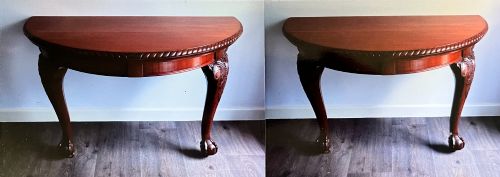
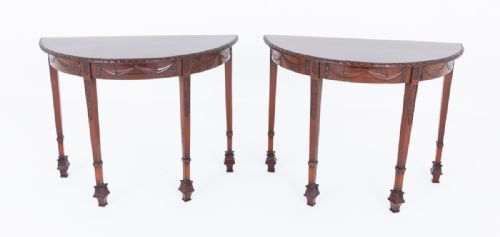
- A table supported by brackets or legs against a wall, often built as part of a matched pair.
Georgian Demilune Side Table: Frequently Asked Questions
How do I use a demilune table in a modern hall?
A georgian demilune side table fits neatly into narrow corridors because its curved front projects very little into the walking space. It provides a convenient surface for post, keys, or a small lamp without blocking doorways.
Pair the table with a simple wall mirror above it to balance the proportions and bounce light around smaller entrance areas.
Can these tables be used for dining?
Many examples on this page are card tables or tea tables with hinged tops that unfold to double their surface area. While originally intended for social games or taking tea, they function well as occasional serving surfaces.
Ensure you check the hinge mechanism and support legs before placing heavy items on the unfolded leaf.
How do I tell an original Georgian table from a later revival?
Look closely at the timber grain, construction methods, and secondary woods used on the underside and drawer linings. Eighteenth-century pieces show hand-cut joinery and a deep wax patina developed over generations of use.
Revival pieces from the twentieth century often display machine tooling and lack the subtle undulations found in older hand-planed surfaces.