

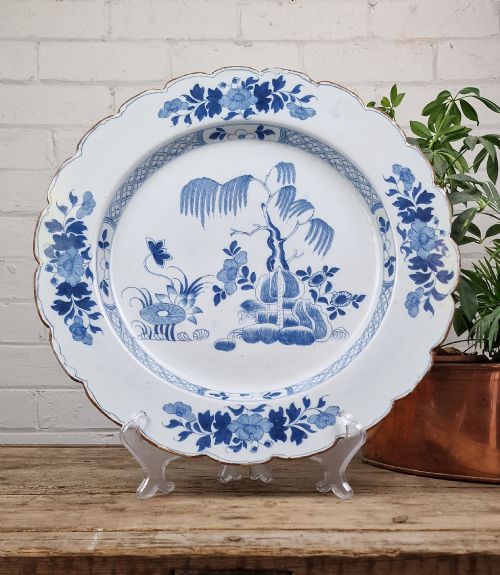


Georgian Delftware Charger
A Georgian delftware charger is a tin-glazed earthenware display dish prized for its hand-painted blue or polychrome pigment.

What They Are
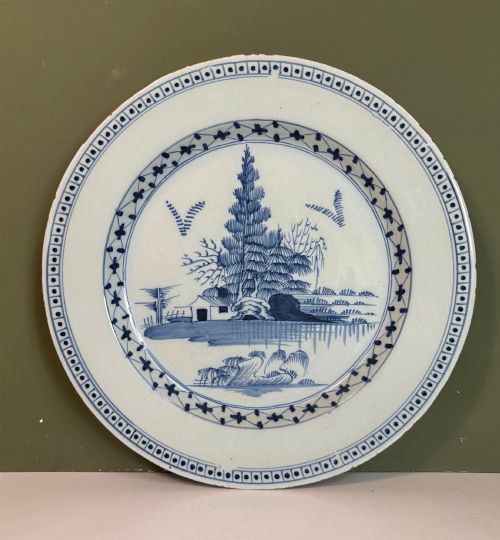
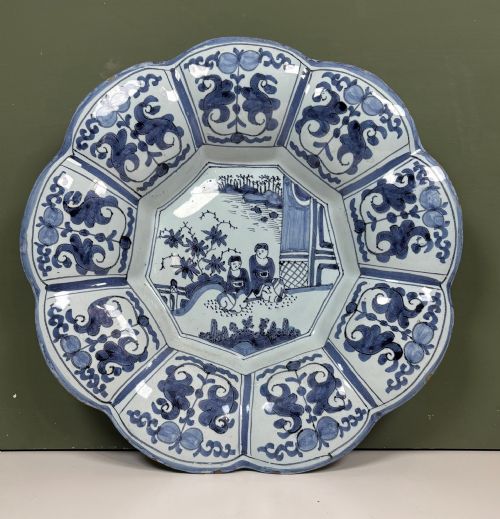
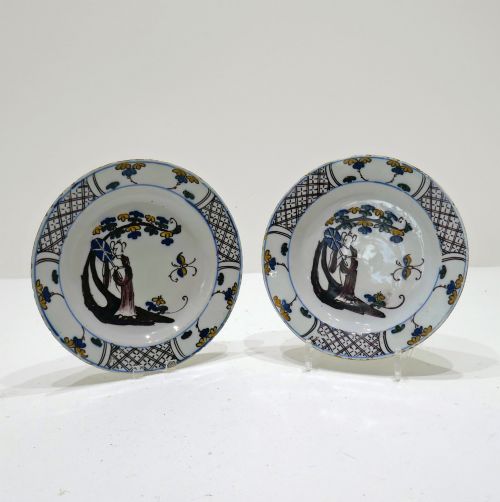
A Georgian delftware charger is a large decorative dish produced during the eighteenth century in England and the Netherlands. These pieces include items designated simply as chargers, platters and decorative plates.
The objects seen here date from the eighteenth century, including specific references to the year 1750. Surviving forms encompass early eighteenth-century English delft polychrome chinoiserie charger plate dishes and large English delft chargers.
Buyers encounter earthenware dishes featuring traditional tin glaze and cobalt pigment decoration. These broad, shallow vessels were primarily intended for display on walls or dresser shelves rather than heavy dining use.

How They Were Made
Potters formed these items from earthenware clay, shaping them into broad plates and chargers. The raw body received an opaque white tin glaze to provide a smooth surface for painting.
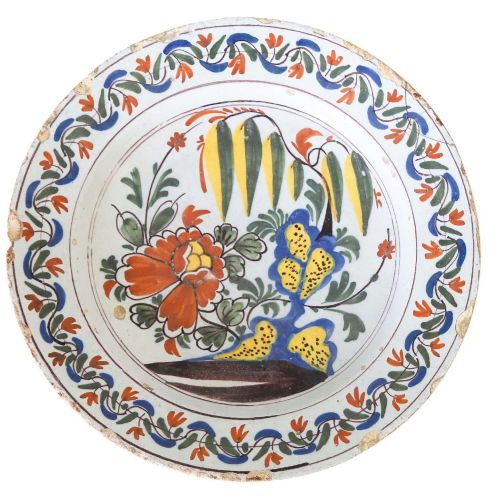
Painters applied cobalt pigment and polychrome colours directly onto the unfired or absorbent tin glaze. Cobalt oxide provided the deep blue tones seen in traditional Dutch Baroque and Georgian designs.
Current listings exclusively feature earthenware pieces decorated with tin glaze and cobalt pigment from the eighteenth century.
What Varies in Quality
Quality rests upon the crispness and complexity of the hand-painted brushwork across the tin glaze. Early eighteenth-century examples with detailed polychrome chinoiserie motifs demonstrate greater artistic ambition than simpler monochrome pieces.
The purity of the white tin glaze and the stability of the cobalt pigment during firing distinguish finer chargers. Pieces that retain a vibrant surface and clear pictorial composition stand apart from those with muddied colours.
The Georgian Delftware Charger Glossary
- Charger
- A large decorative plate or dish, typically measuring over twelve inches in diameter, designed for display. These wide vessels form the primary focus of this search.
- Tin Glaze
- An earthenware glaze made opaque by the addition of tin oxide, creating a milky white surface. This coating serves as the canvas for painted cobalt pigment.
- Cobalt Pigment
- A metallic oxide used to create deep blue decoration on ceramics. It withstands high firing temperatures without losing its intense colour.
- Polychrome
- Decoration utilising multiple colours rather than a single pigment. Eighteenth-century examples often combine iron red, yellow, and green alongside cobalt blue.
- Chinoiserie
- European interpretations of East Asian artistic motifs, popular on eighteenth-century ceramics. These designs frequently feature imaginary landscapes, figures, and pavilions.
Frequently Asked Questions
What is a Georgian delftware charger?
A Georgian delftware charger is a large earthenware display plate made during the eighteenth century. These pieces feature an opaque white tin glaze painted with cobalt pigment or polychrome colours.
Potters shaped these wide vessels primarily for visual impact rather than daily service. They represent a distinct tradition of British and Dutch tin-glazed earthenware production.
How were these chargers used?
These chargers were decorative items rather than utilitarian tableware. Owners typically displayed them on dresser shelves or hung them on walls to showcase their painted designs.
The large surface area provided potters and painters a canvas for narrative scenes, floral patterns, and chinoiserie motifs.
How do you date an eighteenth-century charger?
Dating relies on stylistic markers, potting characteristics, and the nature of the tin glaze. Eighteenth-century pieces often display specific decorative conventions, such as early chinoiserie motifs or traditional Dutch Baroque influences.
Examinations of the earthenware body and pigment application help place these items within the seventeen-hundreds.
Are these dishes made of porcelain?
No, these pieces are earthenware rather than porcelain. They consist of a porous clay body covered in an opaque tin glaze rather than a vitrified paste.
This technique produces a heavier, softer ceramic body that requires careful handling compared to later hard-paste porcelain.