
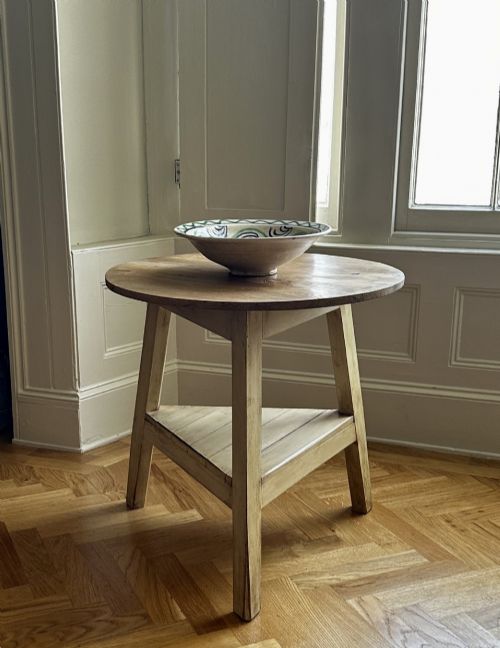


Georgian Cricket Table
A georgian cricket table gives you a sturdy, three-legged surface born from vernacular utility, prized for its honest proportions and compact footprint.
What these tables are
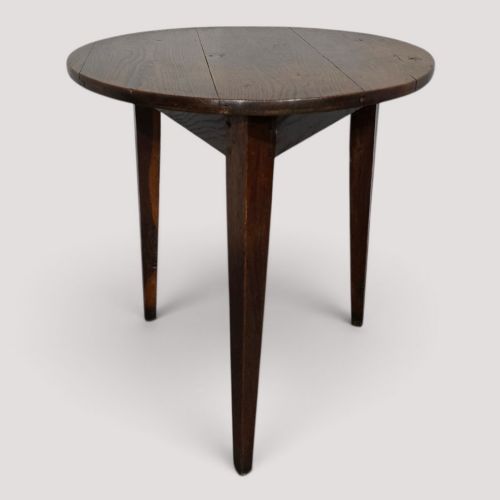
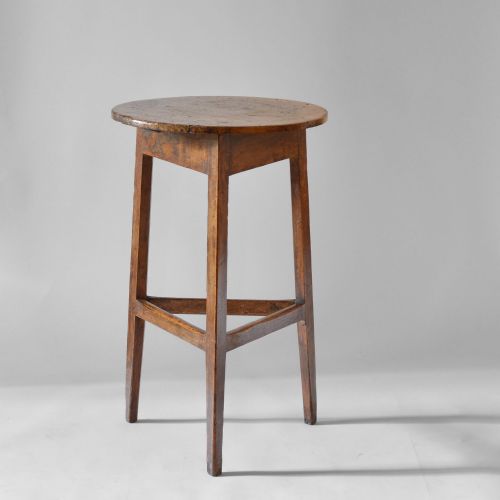
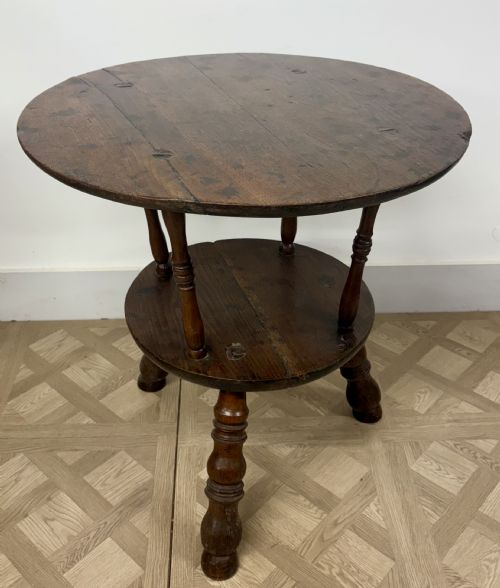
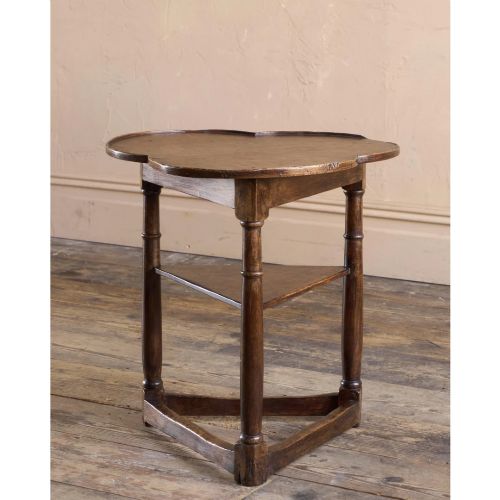
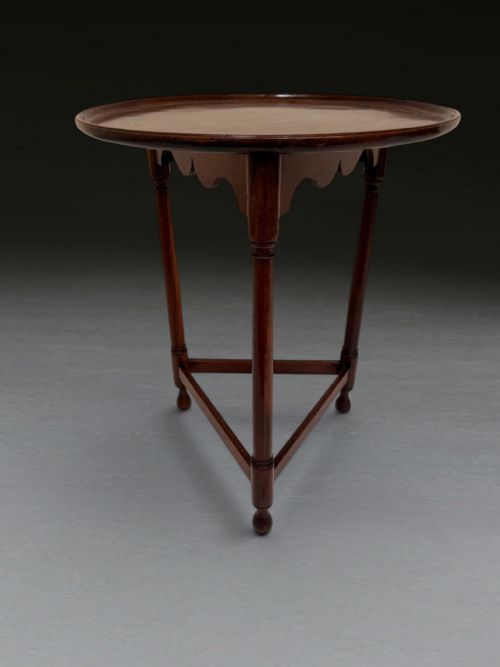
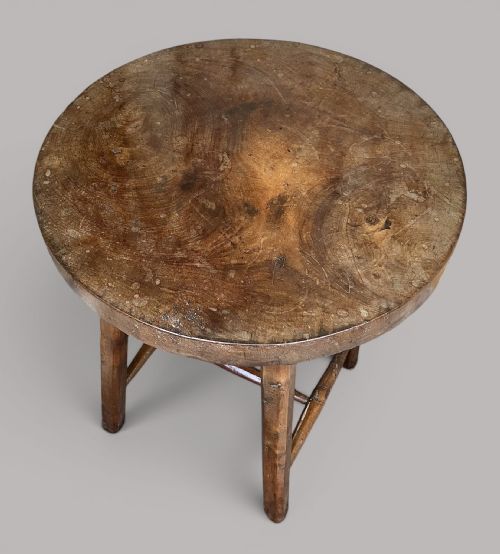
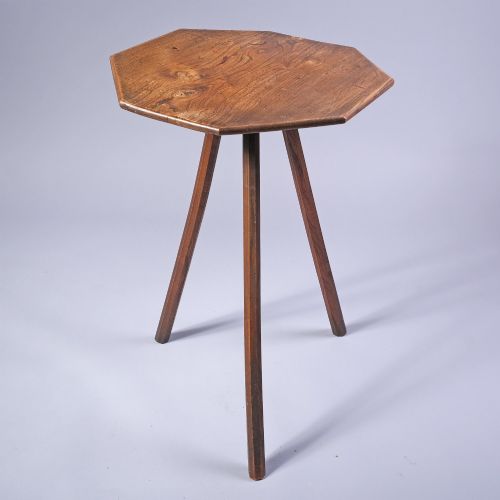
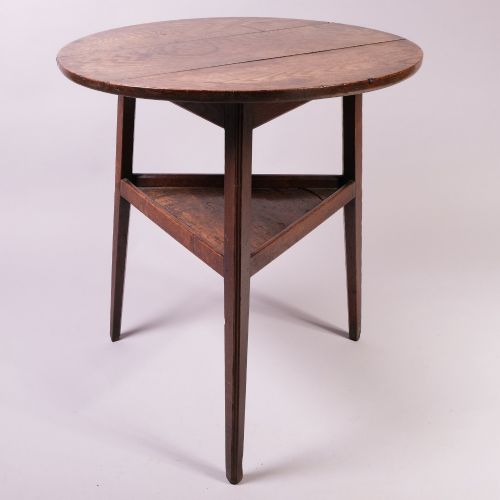
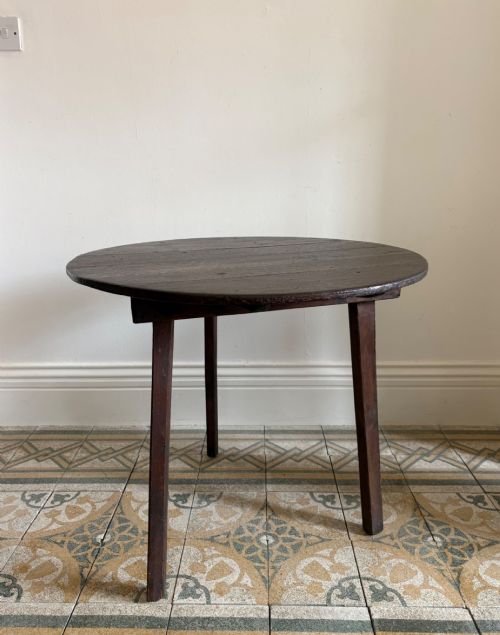
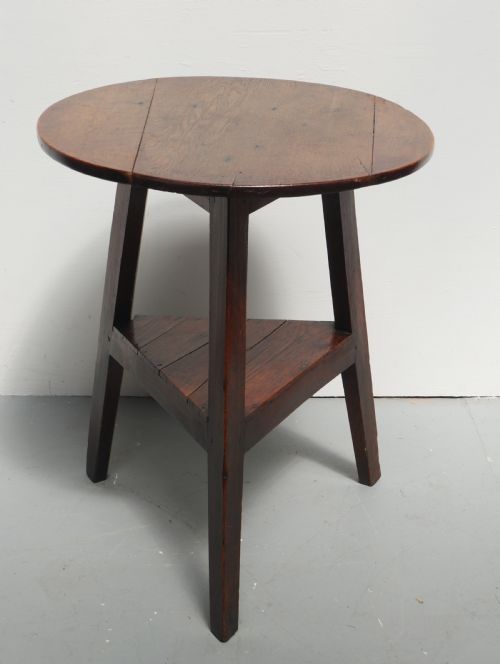
A georgian cricket table typically appears as a round-topped occasional or side table supported by three splayed legs, designed to stand firm on uneven farmhouse floors. These pieces emerge predominantly from the eighteenth century and the early nineteenth century, reflecting country vernacular traditions across England and Wales.
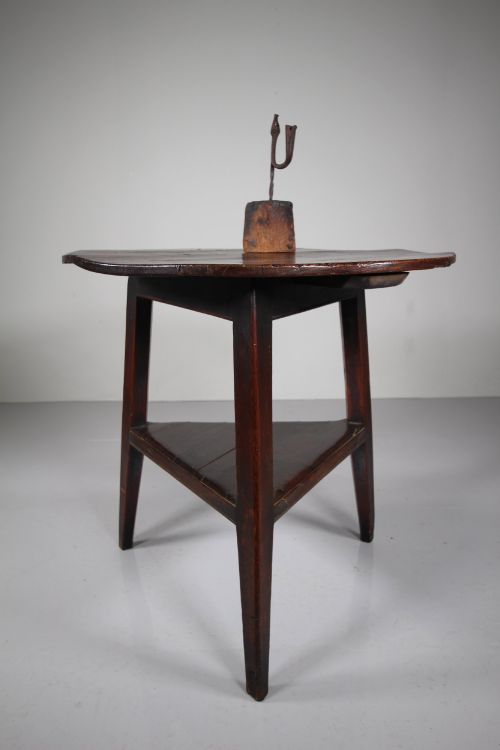
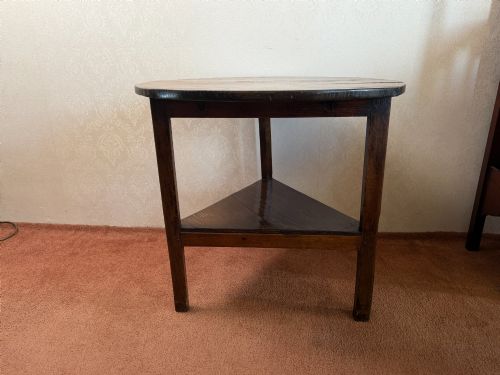
You are most likely to encounter oak and elm examples on this page, often built with a lower tier or shelf fitted between the legs for added stability. The form ranges from modest circular occasional surfaces to larger dining variants, serving utility rooms, parlours and kitchens alike.
Materials and construction
Joiners built these tables using solid native timbers, chiefly oak, elm, pine, sycamore and ash, selected for local availability and practical strength. Tops were frequently fashioned from single boards or joined planks, secured to three peg-jointed legs that pierced the underside.
Makers utilised plain, robust construction methods suited to country workshops, occasionally incorporating painted finishes or simple lower shelves. The splayed arrangement of the three legs provided inherent balance without requiring complex framing.
Retail Price Guide 2026
Typical UK retail prices for georgian cricket table, calculated from the Sellingantiques database of over a million retail prices indexed since 2003. This retail price guide relies exclusively on Sellingantiques data; no external sources or auction records are used, so the figures do not describe the wider market.
Distinctions in quality
Quality rests in the balance of proportions, the thickness of the top board, and the retention of original surface patination rather than elaborate ornament. Tables showing untouched timber surfaces or honest early painted finishes command greater respect among collectors than heavily restored examples.
Structural integrity depends on how firmly the legs remain pegged into the top and whether any lower tier survives intact. Sycamore, fruitwood and well-figured oak specimens often display finer grain character, elevating them above standard utilitarian pine versions.
The Georgian Cricket Table Glossary
- Cricket table
- A small three-legged circular table dating from the eighteenth or early nineteenth century, originating in vernacular English and Welsh country workshops.
- Vernacular
- Furniture made by local country joiners using regional traditions and available timber, prioritizing practical use over metropolitan fashion.
- Splayed legs
- Legs that angle outwards from the centre, providing a wide base for stability on uneven floors.
- Lower tier
- A secondary circular shelf fitted between the legs beneath the main top, often used for holding small items.
- Patina
- The surface sheen and colour developed by wood over decades of handling, cleaning and exposure to light.
Frequently Asked Questions
What is a cricket table used for?
These tables served as portable, versatile surfaces in eighteenth-century homes, easily moved beside a chair or hearth for holding mugs, books or lamps.
Today, their compact circular tops and three-legged footprint make them useful as bedside tables, lamp stands or small corner tables in modern rooms.
What woods were used to make them?
Country joiners built these tables from native hardwoods and softwoods available locally, most commonly oak, elm, pine, sycamore and ash.
Selection depended on the region, with Welsh and West Country pieces frequently featuring oak, elm or local pine, sometimes finished with traditional painted surfaces.
How do I date a georgian cricket table?
Dating relies on observing construction details, tool marks, timber shrinkage, and the type of wood used, comparing them against known vernacular examples from the eighteenth and early nineteenth centuries.
Regional characteristics, such as West Country pine construction or Welsh oak framing, also help narrow down the likely period of origin.
How do I care for an antique cricket table?
Keep the wood away from direct heat sources and sudden humidity changes to prevent the solid timber top from splitting or warping over time.
Feed the surface occasionally with traditional beeswax to nourish the wood and maintain the natural finish without building up heavy chemical residues.