
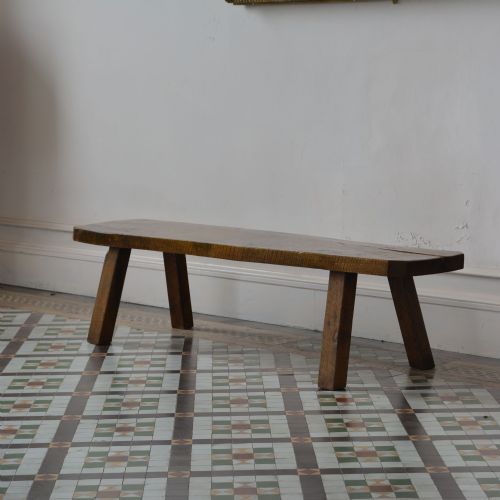
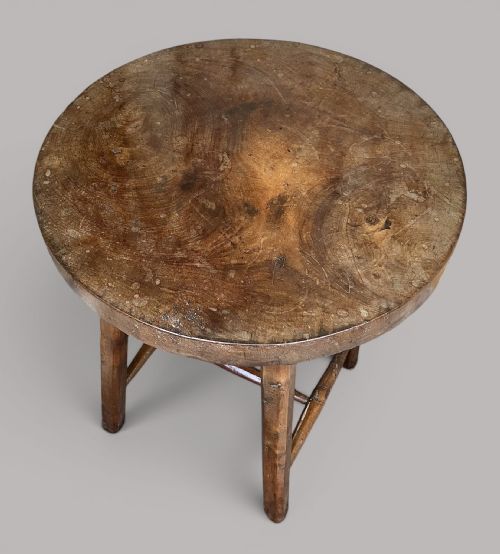
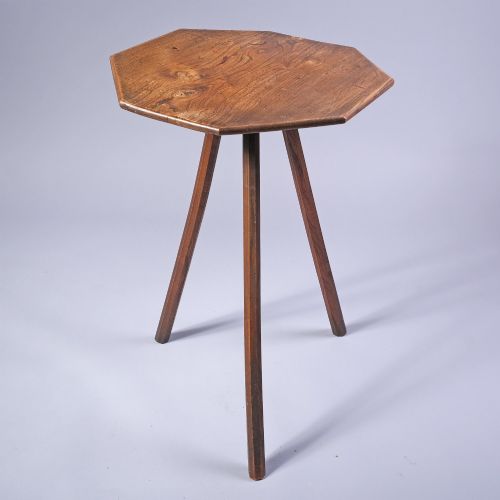
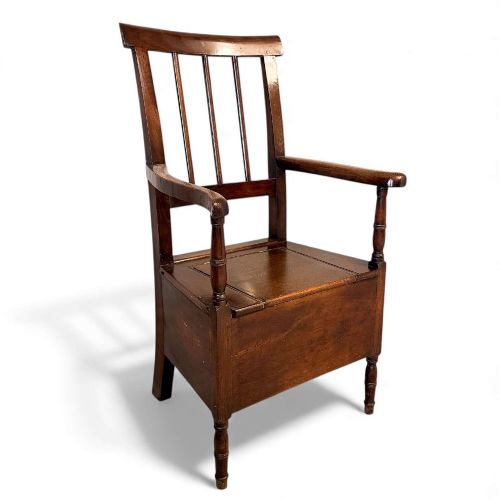
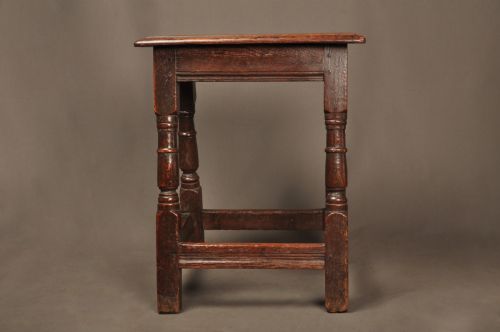


Georgian Country Stool
A georgian country stool offers robust provincial character, built by regional makers from honest local timbers to serve utilitarian domestic purposes.
Georgian Country Stool
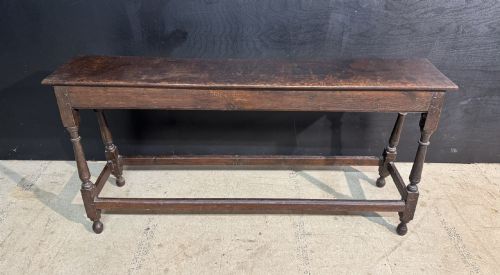
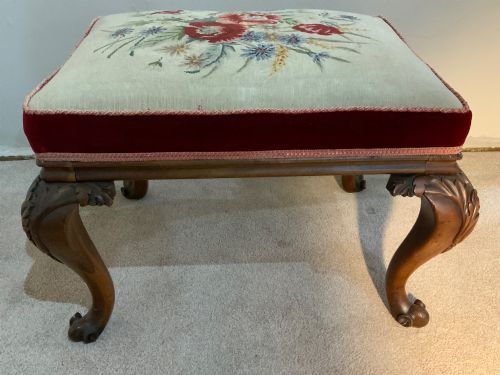
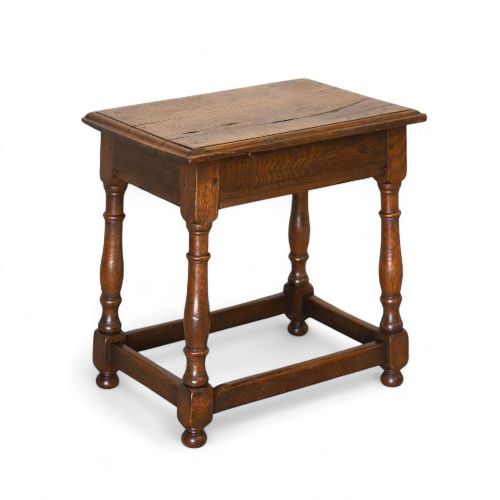
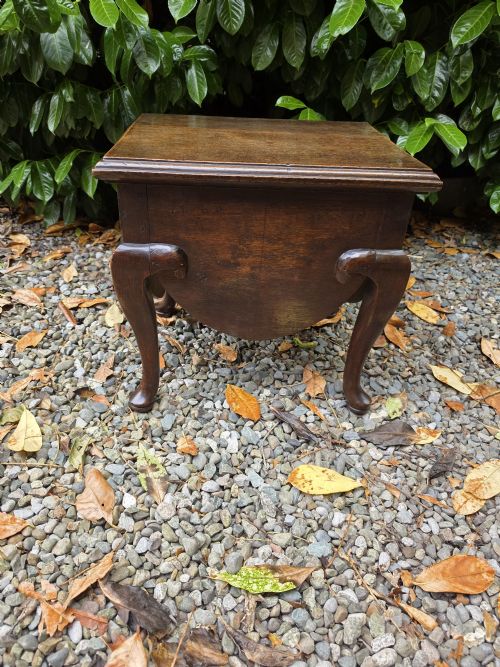
A georgian country stool represents the utilitarian seating of provincial domestic interiors, appearing in forms such as joint stools, milking stools, and low four-legged variants. These items span the eighteenth and nineteenth centuries, reflecting the straightforward needs of rural households.
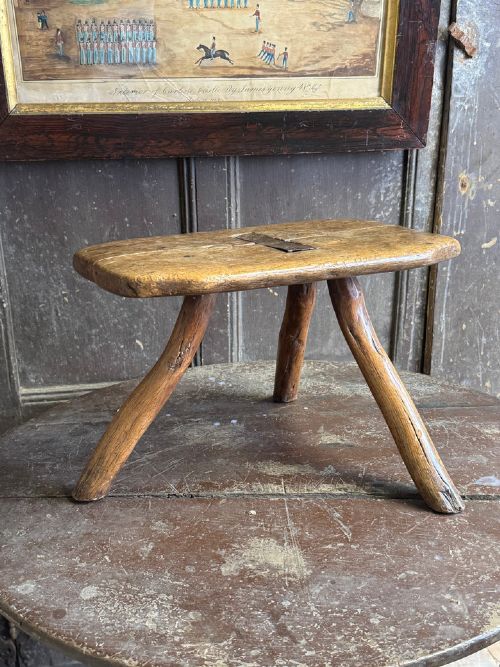
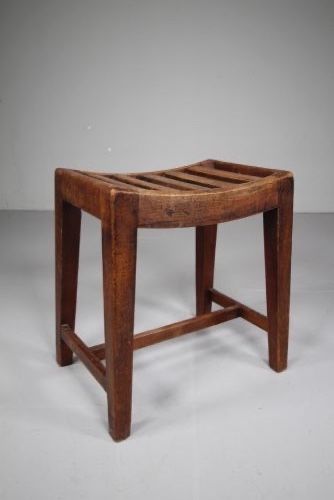
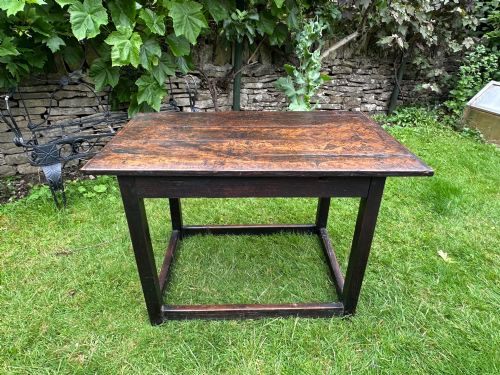
The material palette focuses on accessible regional woods like oak, elm, ash, and fruitwood, frequently paired with simple plank tops or sculpted seats. Examples range from primitive three-legged formats to sturdy joined frames with splayed legs.
Buyers encounter regional variations that include provincial joint stools with blacksmith repairs alongside rustic elm and ash seating. The selection emphasises practical construction and honest wear over formal urban polish.
Materials and construction methods
Makers utilised native hardwoods, predominantly oak for structural framing and elm or ash for resilient seats. These timbers provided the necessary strength for daily rural service without requiring imported materials.
Joinery methods relied on traditional pegging and mortise and tenon joints to secure the legs to the underside of the plank top. Blacksmiths supplied supplementary iron brackets and repairs when structural reinforcement proved necessary.
Several examples retain traces of original paint, reminding us that early country furniture was often brightly decorated before time wore it down.
Evaluating quality in provincial seating
Quality separates through the integrity of the original timber and the retention of honest surface patination. Pieces that maintain their early pegged joints and unmolested wood surfaces command greater attention from collectors.
Proportion and structural balance dictate the appeal of individual examples, with splayed leg arrangements and sculpted seats showing deliberate design within vernacular limits. Excessive restoration or replaced components diminish the integrity of the object.
The Georgian Country Stool Glossary
- Joint stool
- A sturdy wooden stool constructed with mortise and tenon joints, originally used for seating or serving in early domestic spaces.
- Milking stool
- A low, typically three-legged stool designed for stability on uneven agricultural floors during dairy work.
- Splayed legs
- Legs that angle outward from the underside of the seat to provide a wider, more stable base for the sitter.
- Vernacular furniture
- Everyday objects made by local regional makers using traditional local materials and methods, uninfluenced by high urban fashion.
- Plank top
- A seat constructed from one or more solid boards joined together, frequently showing the natural grain and wear of use.
Georgian Country Stool: Frequently Asked Questions
What is a georgian country stool?
A georgian country stool is a utilitarian wooden seat made by regional makers during the eighteenth or nineteenth century for domestic or agricultural tasks.
These pieces prioritise sturdy construction and practical function using local timbers like oak, elm, and ash rather than decorative urban refinement.
How were these stools used originally?
Households used these sturdy seats around the hearth, at tables, or for specific chores like milking animals in agricultural settings.
Their robust build allowed them to withstand heavy daily service in farmhouses and provincial cottages.
How do I identify the wood types?
Makers selected timbers based on local availability and structural demands, utilising oak for rigid frames and elm or ash for tough, resilient seats.
Examining the grain pattern and weight helps distinguish between dense hardwoods like oak and the characteristic interlocking grain of elm.
Are repairs common on these pieces?
Provincial furniture frequently bears evidence of working life, including early blacksmith repairs and structural reinforcement.
Period alterations and honest repairs completed during the working life of the stool form part of its historical record.
How do I care for antique timber?
Maintain antique wood by keeping it away from direct heat sources and sudden humidity changes that can cause the timber to split.
Apply traditional wax sparingly to nourish the surface and preserve the natural patination built up over centuries.