

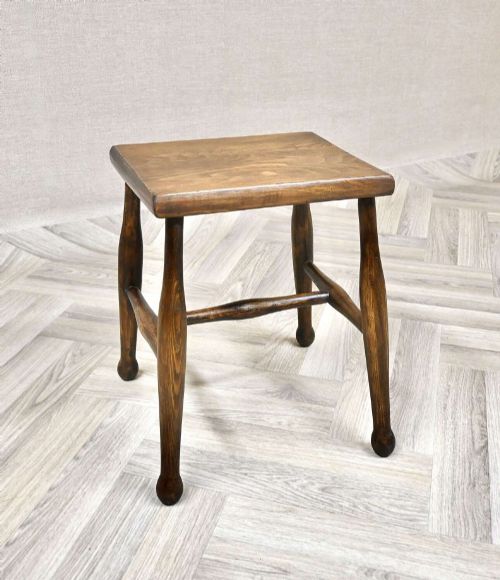
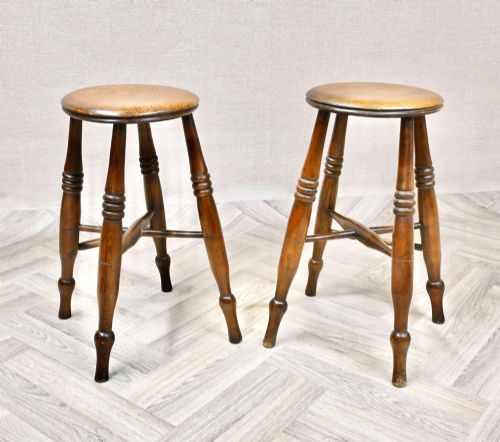
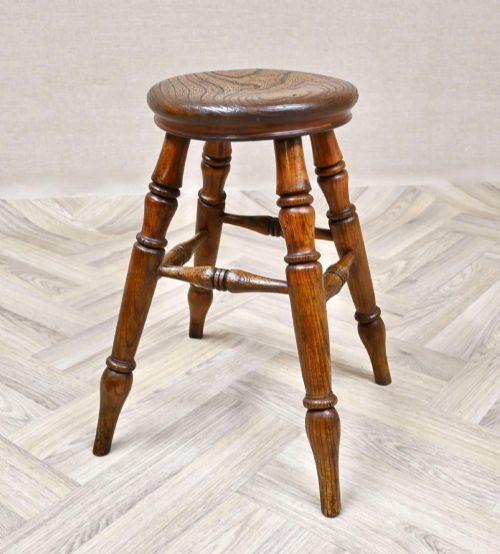
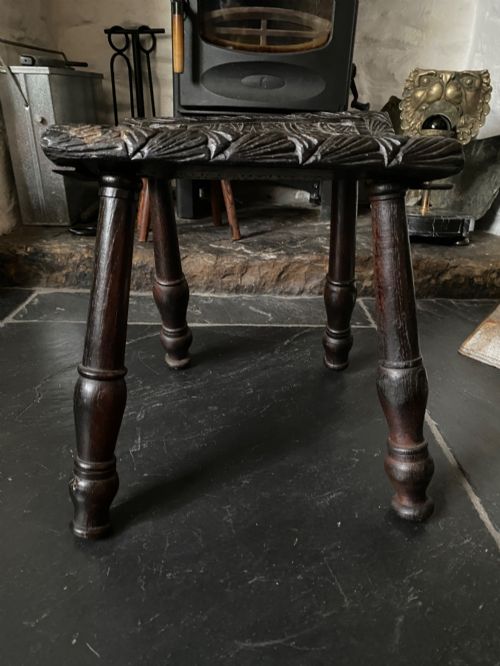
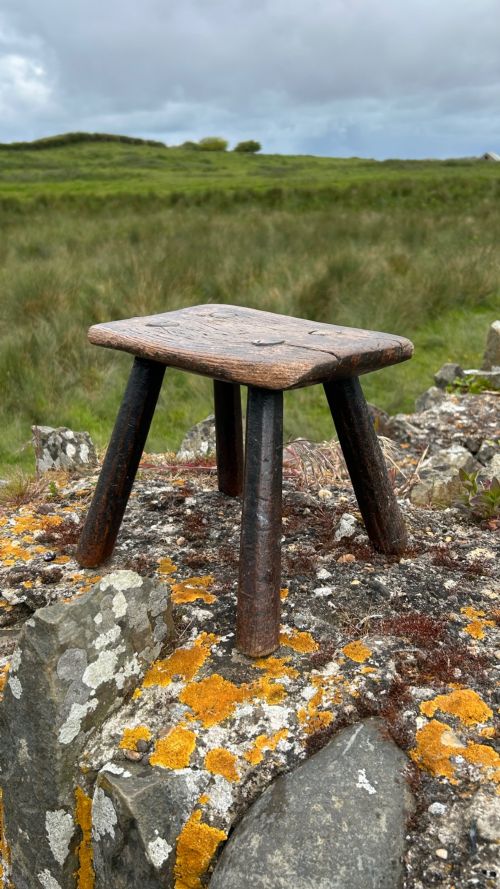
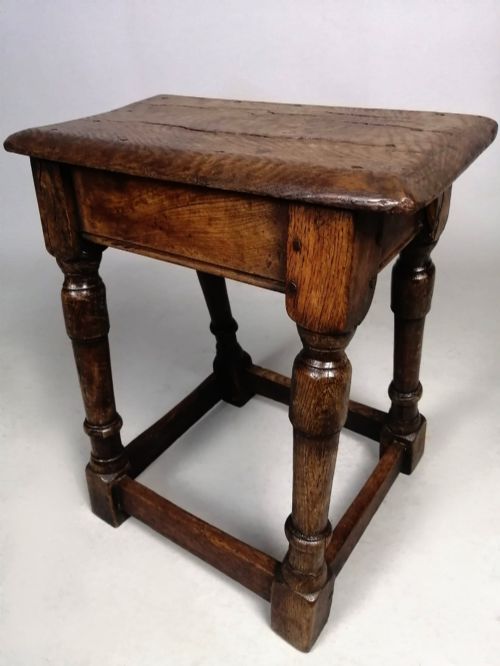
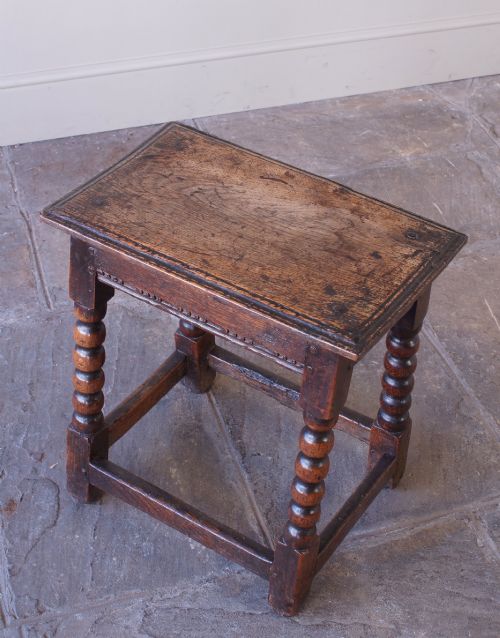
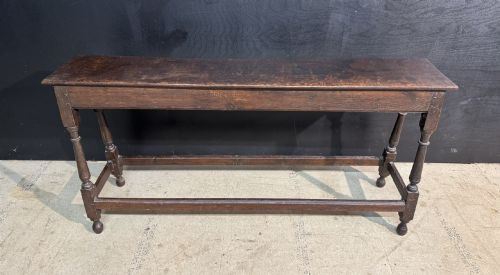
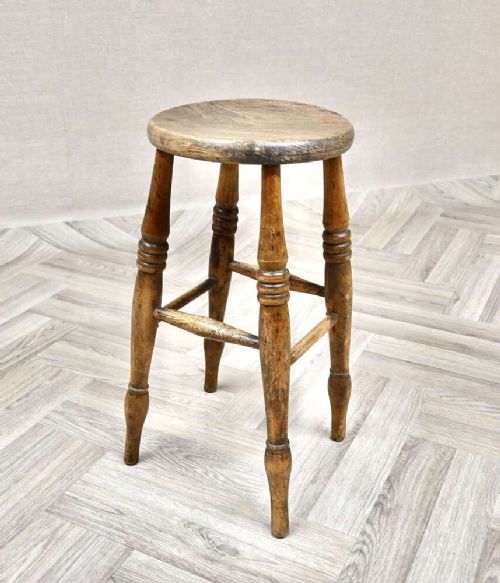
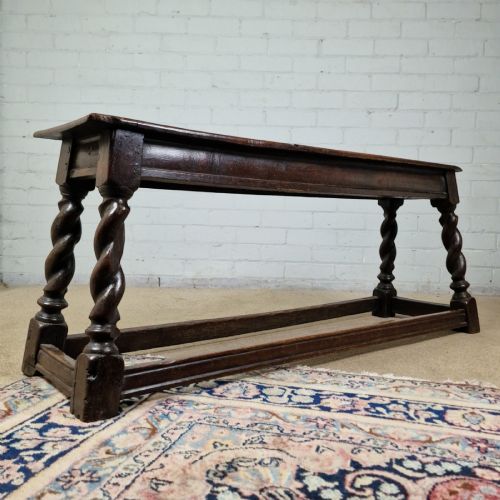
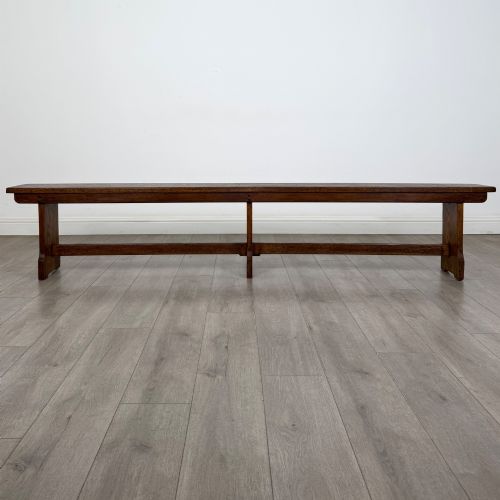
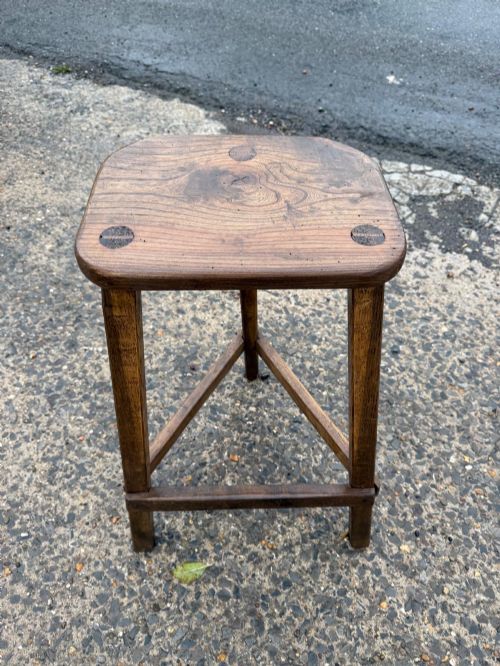
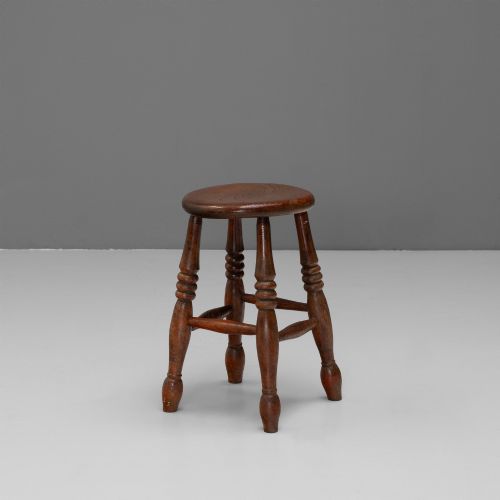

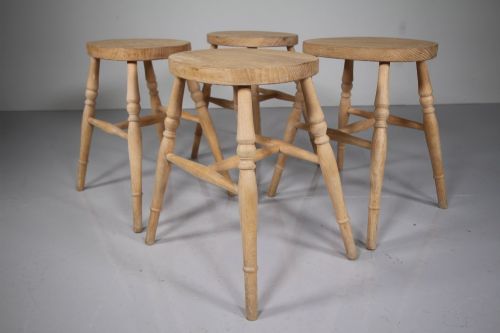
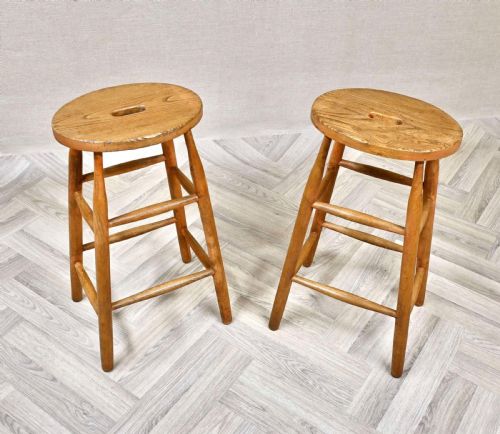
Oak Rustic Stool
An oak rustic stool brings honest craft and tactile timber grain to a room, offering enduring utility in a compact form.
Oak Rustic Stool
An oak rustic stool represents practical domestic and working seating shaped by utilitarian needs across centuries. When searching for an oak rustic stool, buyers encounter forms ranging from low milking and dairy variants to tall tavern or bar seats.
The selection on this page spans origins from the seventeenth century through to the mid-twentieth century, capturing domestic country furniture and workshop seating. Joint stools, low footstools, and long benches sit alongside specialised artisan designs.
Most pieces display the straightforward construction methods of English country workshops, utilising native timbers like elm, ash, and beech alongside oak. These items served daily roles in dairies, pubs, and homes rather than formal parlours.
How they were made
Joinery and turning form the structural backbone of these pieces, employing traditional mortise and tenon joints secured with wooden pegs. Timber selection prioritised durability, pairing sturdy oak frames with resilient elm or ash seats.
Surface finishing relied on simple hand tools such as drawknives and adzes, leaving tool marks that reveal the hand of the maker. Legs were frequently turned on pole lathes or shaped from branchwood, creating organic profiles adapted to raw material.
Oak Rustic Stool Retail Price Guide 2026
Typical asking prices for oak rustic stool among the pieces listed under this phrase on Sellingantiques today, from the lower quarter to the upper quarter. They describe what is for sale here now, not the wider market.
Listings feature oak, elm, ash, and beech across periods spanning the seventeenth century to the twentieth century.
What varies in quality
The integrity of the original construction and the survival of untouched surfaces dictate the standing of a piece. Examples retaining their original pegging and genuine patina command attention above those with extensive modern repairs.
Proportion and timber figure elevate certain forms, particularly where pollard oak or carefully matched grain patterns display natural character. The balance between utilitarian function and refined proportion distinguishes standard workshop output from exceptional survivals.
Jack Grimble
The Oak Rustic Stool Glossary
- Joint stool
- A joined wooden stool constructed with mortise and tenon joints pegged together. These sturdy seats preceded upholstered chairs in common households.
- Milking stool
- A low, three-legged seat designed for stability on uneven agricultural floors. They feature simple wooden tops fitted with splayed legs.
- Tavern stool
- A high or low pub seat often built with a dished top for comfort during long hours. Elm and oak were standard materials for these heavy-use items.
- Apotropaic mark
- A ritual protection carving intended to ward off evil spirits. These symbols appear on early domestic woodwork.
- Windsor stool
- A seat built with turned legs and spindles wedged directly into a solid carved timber seat. This construction method provides robust support.
Oak Rustic Stool: Frequently Asked Questions
What is an oak rustic stool used for?
These pieces served practical roles in dairies, pubs, workshops, and domestic spaces as working seats or low surfaces. Today they function as bedside tables, plant stands, or occasional seating in contemporary interiors.
Their robust construction allows them to endure daily use while adding textural weight and historical character to a room.
How do I date an antique oak stool?
Dating relies on observing construction methods, tool marks, and timber characteristics rather than relying on carved dates alone. Seventeenth-century examples show heavy pegging and joined frames, whereas nineteenth-century pieces often utilise simpler turned legs and varied hardwoods.
Examining the wear patterns on the seat and feet also reveals the age and intensity of use a piece experienced.
Are these stools comfortable to sit on?
Many historical examples feature dished or saddled wooden seats shaped to fit the body rather than upholstered cushions. While firm, their ergonomic shaping provides surprising support for short periods.
Low footstools and dairy variants were designed for specific working heights, making them well-suited for particular seating arrangements.
What woods were used alongside oak?
Country makers utilised whatever native hardwoods were locally available for strength and flexibility. Elm was frequently chosen for seats because its interlocking grain resisted splitting under pressure.
Ash, beech, and pine also appear in legs, stretchers, and secondary components, contributing to the varied visual texture of country furniture.