

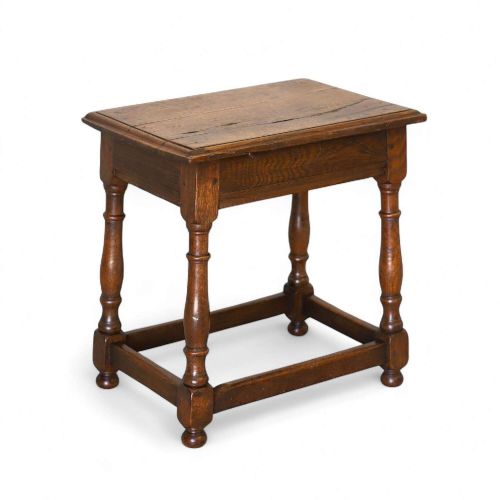
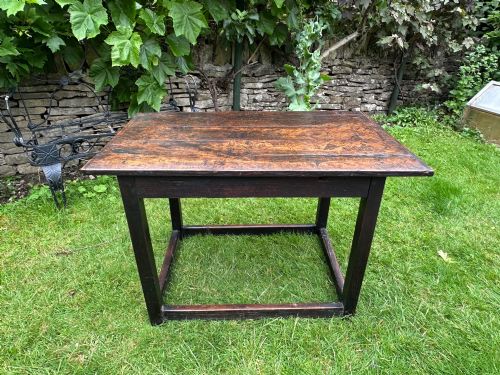
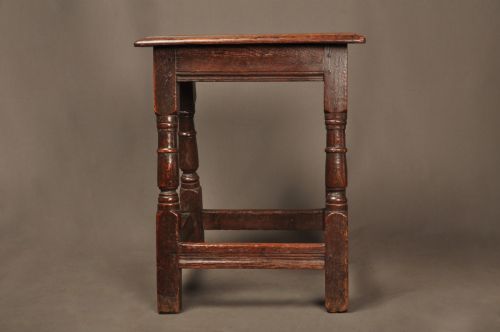


Georgian Oak Side Stool
A georgian oak side stool brings honest provincial craftsmanship and sturdy timber into any room.
Georgian Oak Side Stool
When you search for a georgian oak side stool, you are looking at practical vernacular seating and low tables made across the eighteenth century and neighbouring periods. These items include joint stools, milking stools, country stools, and small occasional tables built for everyday domestic use.
The versions you are most likely to meet on this page span the seventeenth, eighteenth, and early nineteenth centuries, reflecting English provincial and country workshop traditions. They combine sturdy timber construction with straightforward forms that suit modern interiors just as well as historic settings.
Makers often utilised local timbers such as oak, elm, and ash, sometimes pairing solid walnut or adding brass details. Forms range from three-legged milking stools to plank-top tables and joint stools with rich surface colour.
How they were made
Cabinet makers and rural carpenters built these pieces using solid native hardwoods like oak, elm, and ash, selected for strength and durability. Planks were shaped for table tops and seats, while turned or pegged legs provided stable support.
Joinery techniques relied on traditional jointing methods, visible in the pegged construction of joint stools and the fitted legs of three-legged country stools. Surfaces developed their character through centuries of handling rather than heavy factory finishing.
Georgian Oak Side Stool Retail Price Guide 2026
Typical asking prices for georgian oak side stool among the pieces listed under this phrase on Sellingantiques today, from the lower quarter to the upper quarter. They describe what is for sale here now, not the wider market.
Listings here feature items spanning from the seventeenth century through to the nineteenth century, built from oak, elm, ash, and solid walnut.
What varies in quality
The distinction between ordinary workshop pieces and the top of the range rests largely on the depth of the timber's colour and the integrity of the original construction. Pieces retaining their early surface patination and honest proportions command greater attention from collectors.
Subtle differences in turning, the choice of secondary woods like elm or ash alongside primary oak, and the survival of early pegged joints separate utilitarian items from those possessing distinct vernacular character.
The Georgian Oak Side Stool Glossary
- Joint stool
- A sturdy wooden stool constructed with mortise and tenon joints, pegged together rather than glued. These were common in early households for sitting or reaching high places.
- Vernacular
- Everyday furniture made by regional carpenters for local use, following traditional local patterns rather than high-style metropolitan designs. It represents the honest domestic output of the period.
- Patina
- The deep, lustrous surface sheen developed on old wood over centuries of handling, polishing, and exposure to light. It is a key indicator of age and genuine preservation.
- Plank top
- A tabletop constructed from solid wooden boards joined edge to edge, commonly seen on early tables and benches. This method made efficient use of wide timber boards.
Georgian Oak Side Stool: Frequently Asked Questions
What is a joint stool?
A joint stool is a solidly built wooden seat constructed with mortise and tenon joints secured by wooden pegs. They date back to periods before upholstered chairs became common in every household.
These pieces were versatile items used for sitting, standing upon, or serving as small impromptu tables in early domestic interiors.
How do I style a country stool?
Country stools work well as compact bedside tables, plant stands, or side surfaces in a living room. Their neutral timber tones blend easily with both traditional and contemporary interiors.
Placing them where the grain and surface colour can be appreciated allows the historical character of the wood to stand out.
How can I tell the age of oak furniture?
Age is judged by the construction methods, tool marks left by the maker, and the natural wear accumulated on the timber over generations. Hand-pegged joints and deep surface patination usually point to earlier periods.
Comparing the timber density and the style of the legs against known vernacular pieces helps confirm the likely century of origin.
What is the difference between a side table and a stool?
Side tables generally stand slightly higher and are designed primarily for holding objects, whereas stools are built lower for seating purposes. However, many early country pieces served dual functions depending on household needs.
Lower tables and tall stools often overlap in form, reflecting the practical nature of rural furniture production.