
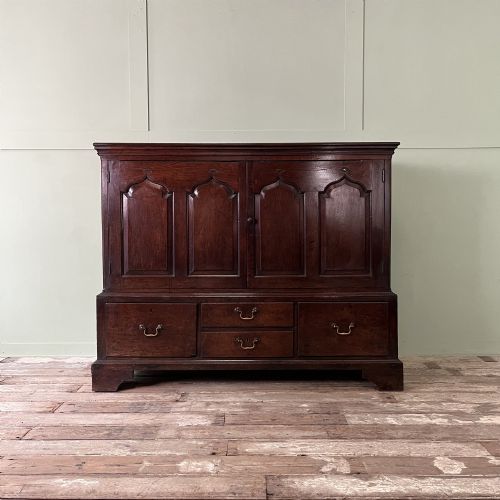


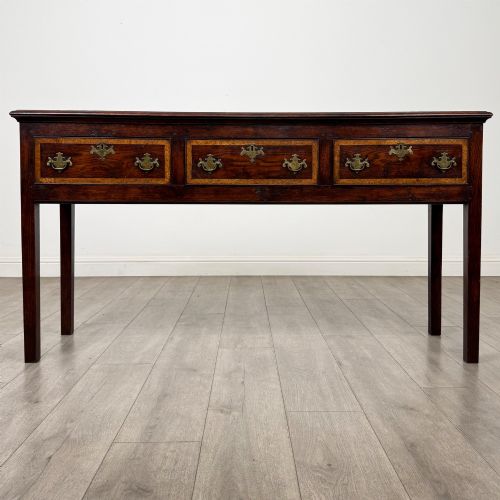
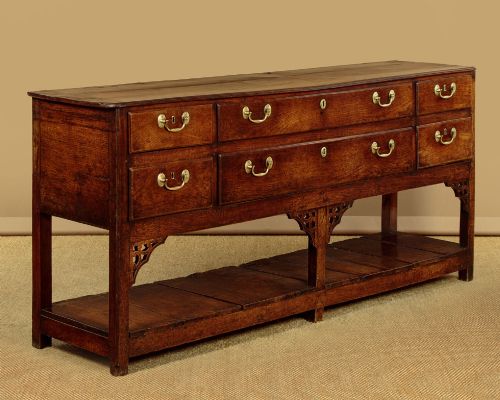
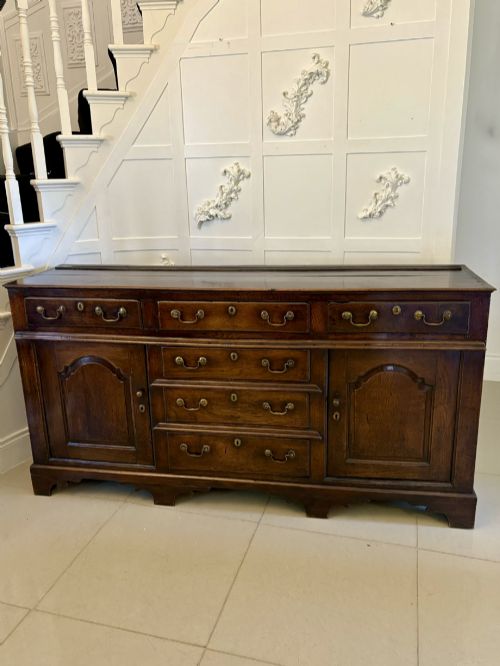
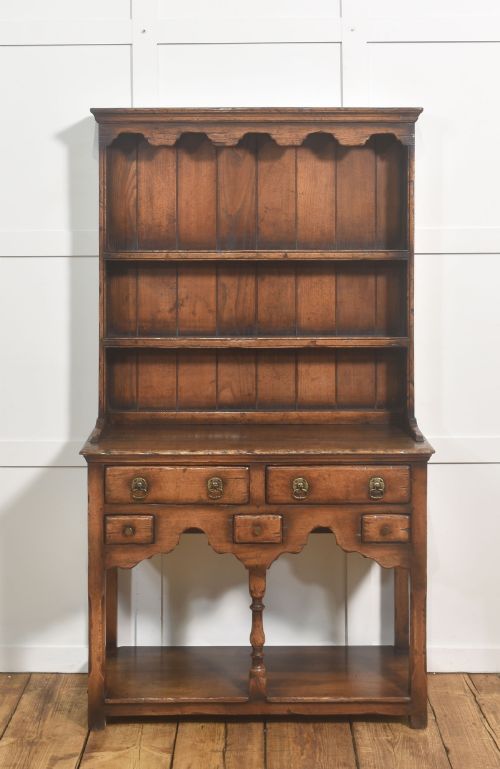
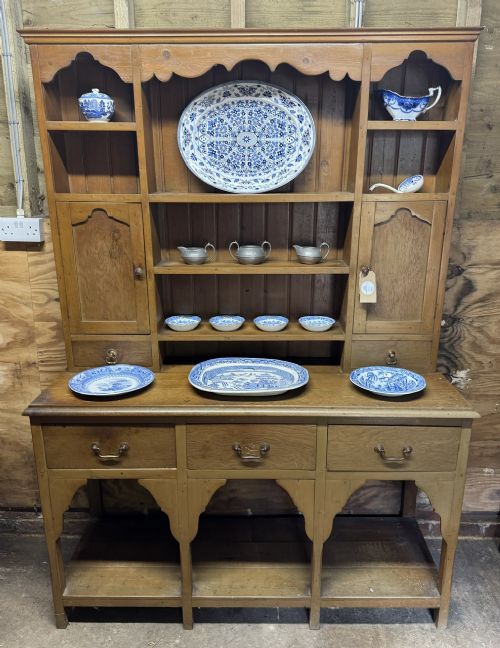
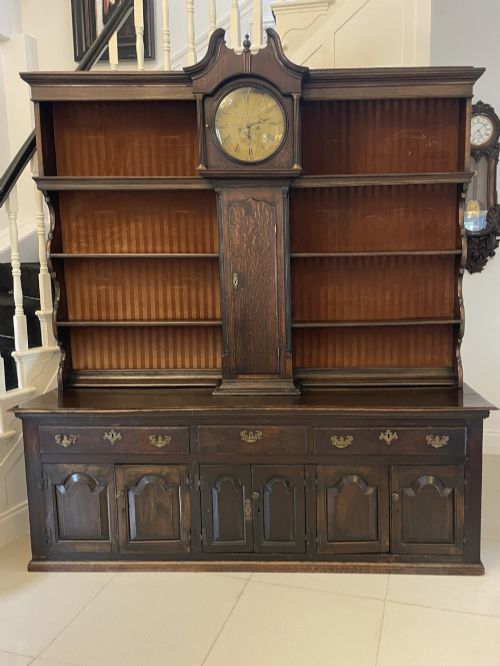
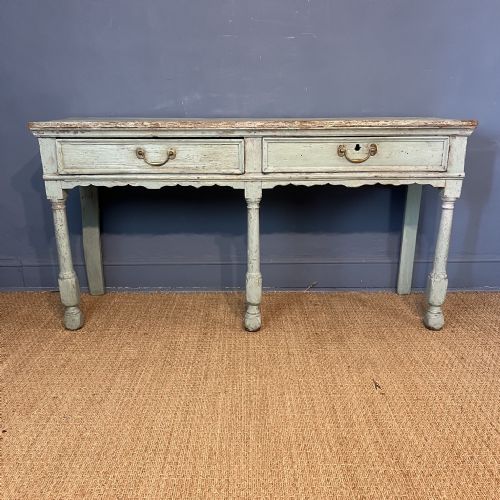
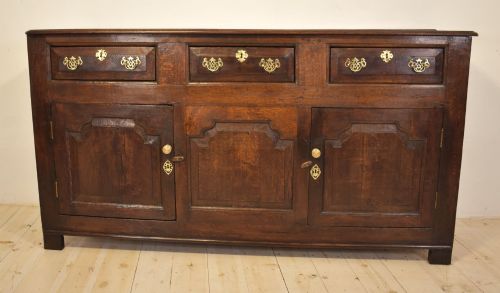
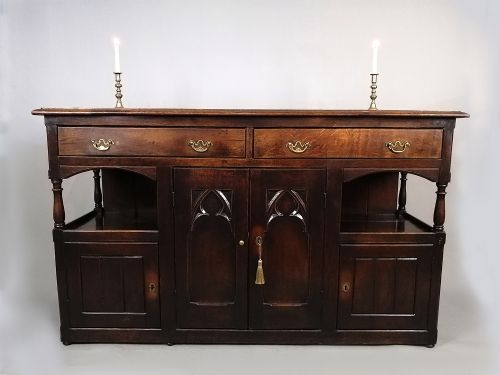
Georgian Country Sideboard
A georgian country sideboard delivers solid timber utility and regional character, offering practical storage anchored in eighteenth and nineteenth century vernacular traditions.
Georgian Country Sideboard
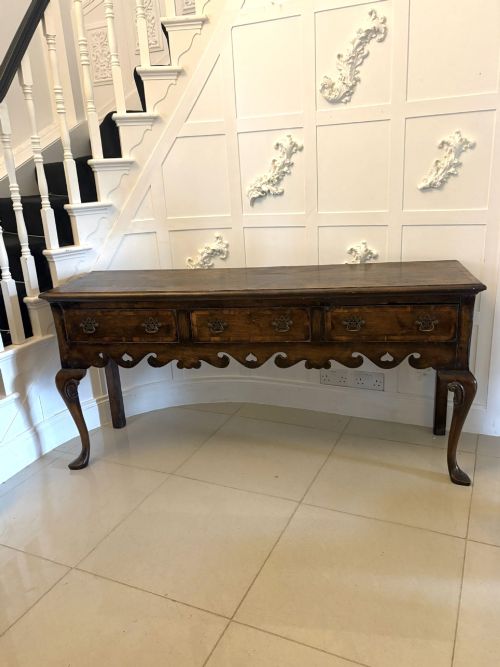
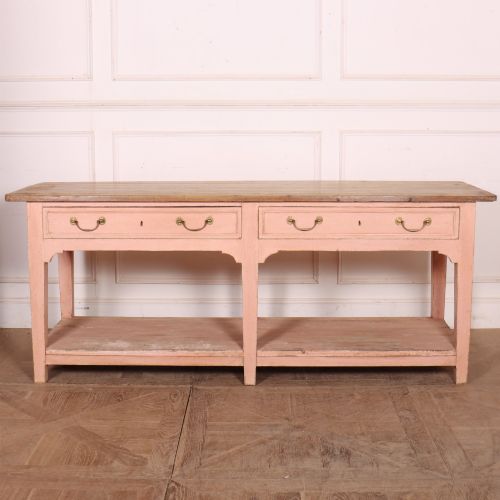
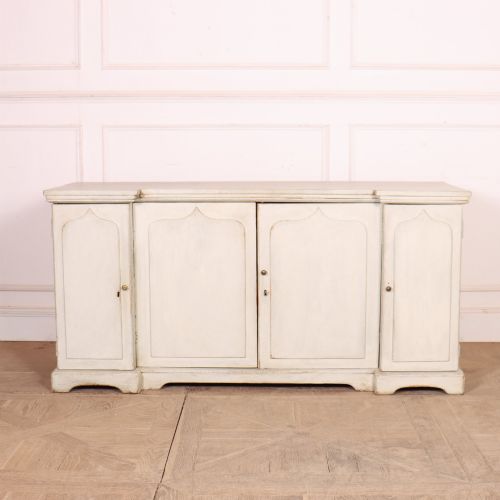
When searching for a georgian country sideboard, you encounter robust oak, pine, and elm storage furniture originating from English, Welsh, and Scottish rural workshops. These forms encompass low dresser bases, potboard tables, and sideboard cupboards designed for practical domestic use rather than formal drawing room display.
The pieces appearing on this page span the eighteenth and nineteenth centuries, including George III periods alongside later revival interpretations from the Edwardian era and the nineteen-twenties. Regional variations emerge clearly, from Lancashire and Yorkshire bases to Welsh cottage dressers complete with plate racks.
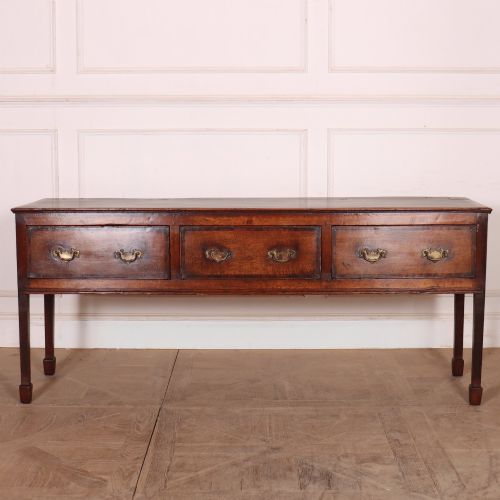
Most examples function as low storage units or console tables, frequently featuring drawers above enclosed cupboards or open lower potboards. Their utility stems from rural farmhouse origins where durable timber surfaces served food preparation alongside general storage.
How they were made
Makers utilised solid native timbers, predominantly oak and pine, supplemented by elm, sycamore, and walnut for specific panels and structural framing. Surfaces often display original paint, wax finishes, or accumulated patination developed through centuries of domestic handling.
Joinery techniques rely on traditional peg construction, hand-cut dovetails for drawer boxes, and planked timber tops secured to sturdy uprights. Brass drop handles and iron hardware punctuate the timber facades, reflecting the functional requirements of rural cabinet makers.
Georgian Country Sideboard Retail Price Guide 2026
Typical asking prices for georgian country sideboard among the pieces listed under this phrase on Sellingantiques today, from the lower quarter to the upper quarter. They describe what is for sale here now, not the wider market.
The inventory records vernacular items originating from Welsh, Scottish, and English rural workshops alongside later revival furniture.
What varies in quality
Construction integrity separates standard utility pieces from exceptional regional examples, specifically in the selection of quartersawn timber and the precision of dovetail joints. The presence of original hardware, unaltered potboards, and untouched surface patination elevates a piece above later adaptations.
Proportion and regional detailing dictate the distinction between simpler vernacular furniture and refined George III cabinet work. Pieces retaining their original plate racks, authentic backboards, and integrated architectural mouldings command greater appreciation among collectors.
The Georgian Country Sideboard Glossary
- Potboard
- An open lower shelf fitted beneath a dresser base, originally designed to store ceramic pots and heavy kitchen utensils.
- Dresser Base
- A low rectangular cabinet featuring drawers across the top and cupboards or open space below, functioning independently without a plate rack.
- George III
- The stylistic period spanning from seventeen-sixty to eighteen-twenty, characterised by classical proportions executed in regional timbers.
- Patina
- The surface sheen and colour depth acquired by timber through age, wear, and regular polishing over generations.
- Coffer
- A large wooden storage chest, occasionally incorporated into sideboard and dresser combinations found in rural Welsh and English homes.
Georgian Country Sideboard: Frequently Asked Questions
How do I date an oak dresser?
Dating relies upon examining construction methods such as hand-cut dovetails, pegged joints, timber grain characteristics, and hardware fixings.
Earlier eighteenth-century examples display irregular hand-planed surfaces and deep patination, whereas nineteenth-century and revival pieces show more uniform mechanical processing.
Are these pieces suitable for modern kitchens?
These robust timber units provide generous surface workspace and practical drawer storage that adapt easily to contemporary dining rooms or kitchens.
Their shallow depths and low profiles allow them to function effectively as sideboards or serving tables in diverse architectural interiors.
What is a Welsh dresser?
A Welsh dresser combines a lower storage base of drawers and cupboards with an upper plate rack designed to display ceramics.
Originating in rural Wales, these pieces utilise native oak and pine, frequently displaying distinct regional moulding profiles and carpentry traits.