

Georgian Country Cupboard
A genuine georgian country cupboard brings solid vernacular character and honest regional utility into a modern interior.
Georgian Country Cupboard
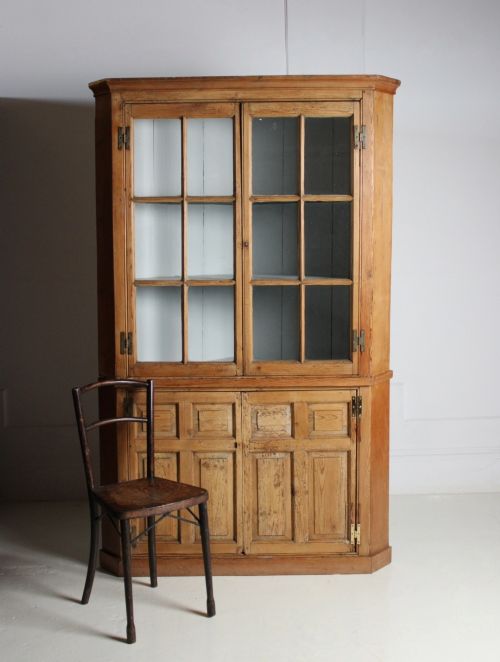
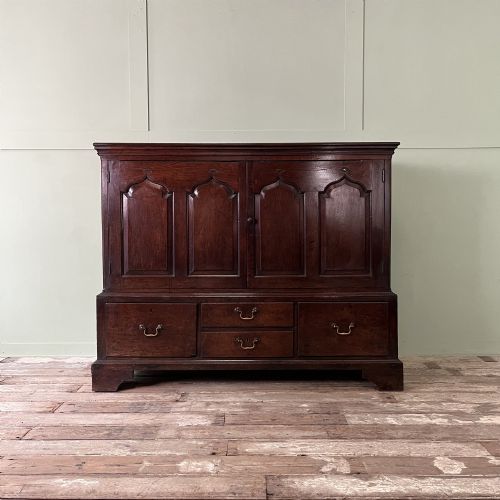
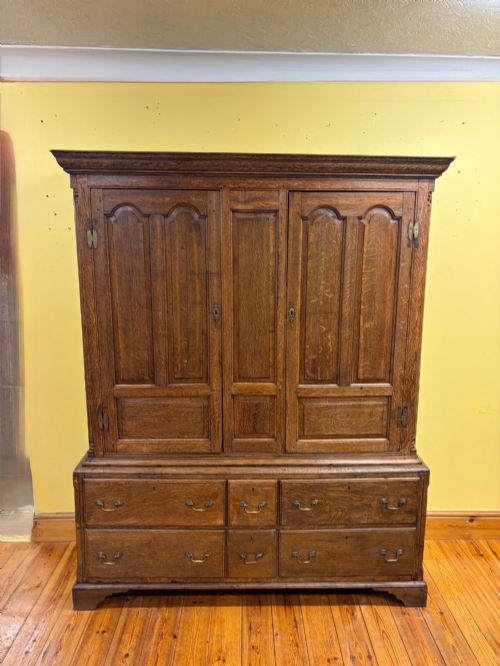
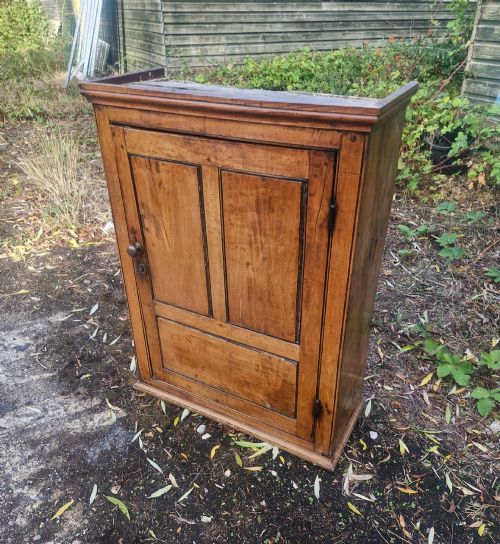
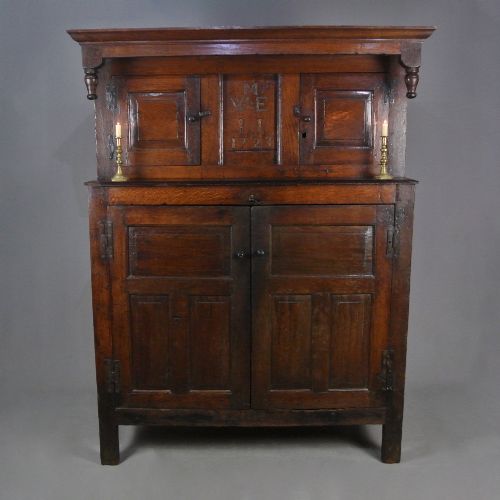
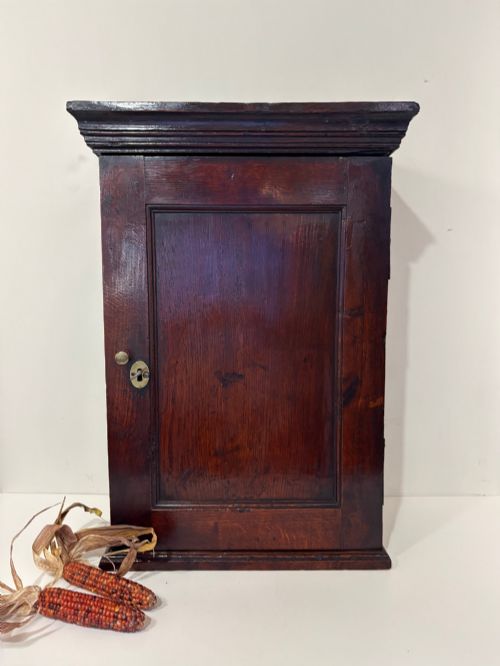
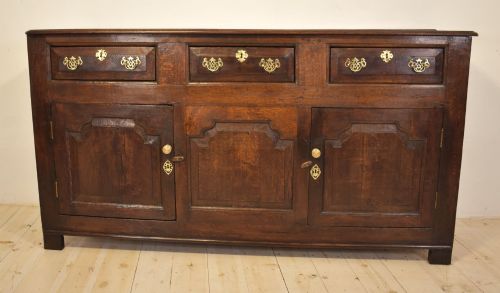
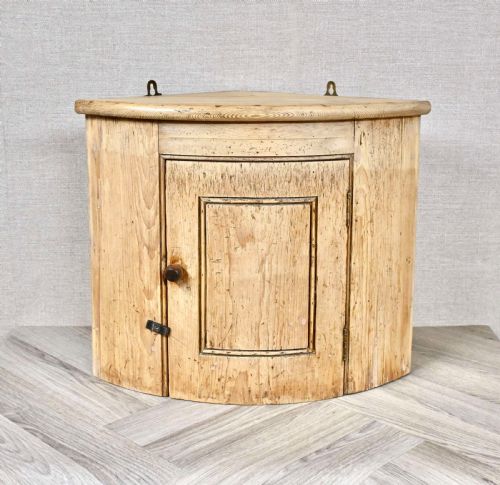
A georgian country cupboard encompasses functional provincial storage pieces designed for domestic life, ranging from tall housekeepers' presses to compact wall-hanging corner cabinets. These utilitarian objects reflect the regional traditions of English, Welsh, Scottish, and Irish makers working outside metropolitan centres.
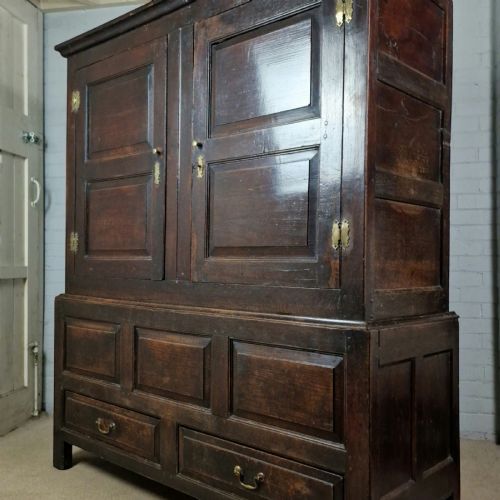
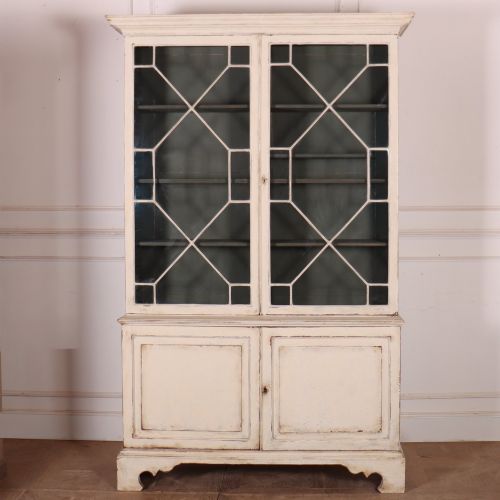
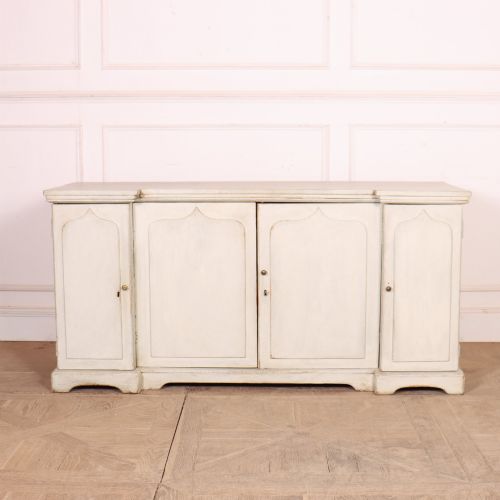
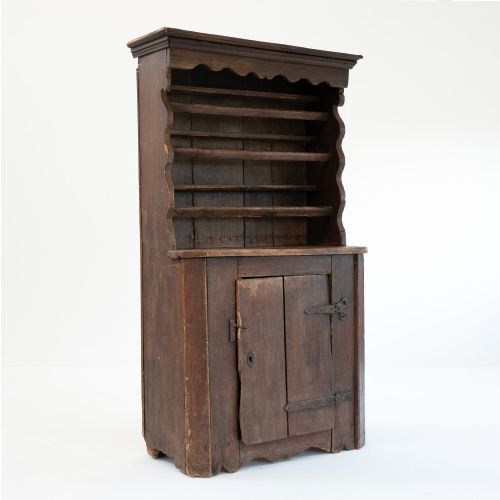
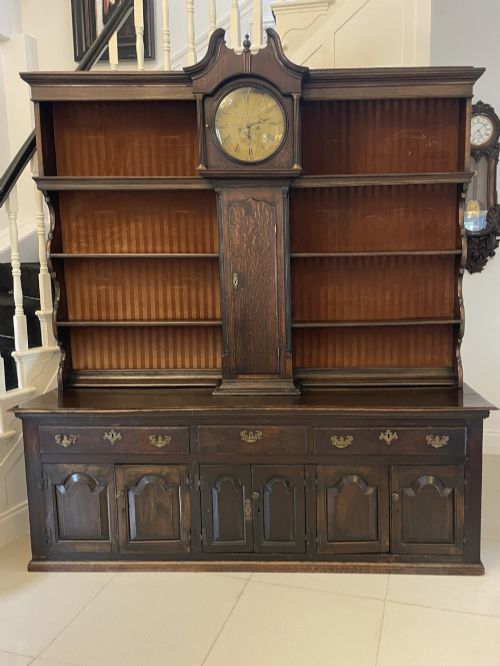
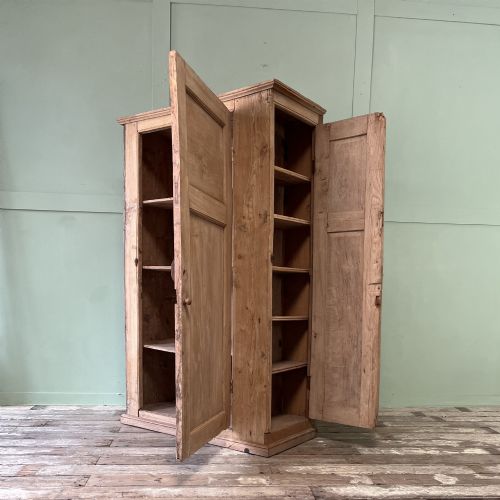
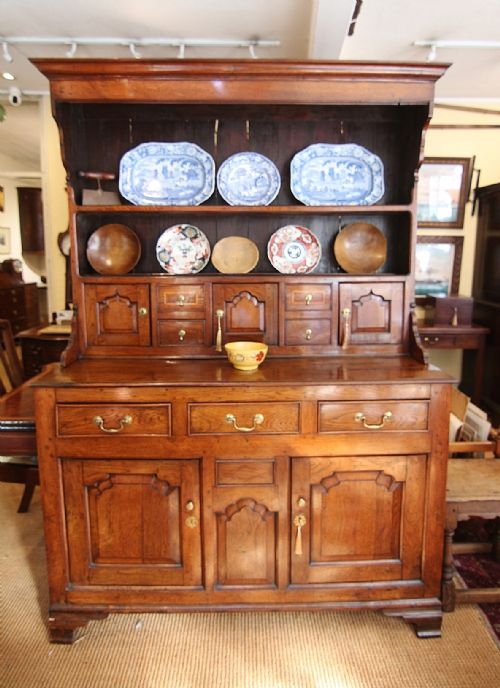
Buyers most frequently encounter robust oak and pine examples from the eighteenth and early nineteenth centuries. Forms include dresser bases, food cupboards, livery cupboards, and glazed bookcases built to serve the daily needs of rural households.
Regional variations dominate the selection, with Welsh vernacular dressers and West Country corner cupboards appearing alongside Lancashire and Carmarthenshire pieces. Each localized style utilises indigenous timbers to solve specific household storage challenges.
Materials and construction methods
Makers relied primarily on sturdy domestic timbers, building the core framework of these cupboards in solid oak, pine, and occasionally elm or mahogany. Boards were joined using traditional pegged tenons and panel construction designed to accommodate the natural seasonal movement of unseasoned wood.
Surface finishes range from bare waxed timber to historic layers of paint, including characteristic blue and painted pine variations. Iron hinges, brass escutcheons, and handmade glass panes complete the structural assembly, combining utilitarian durability with honest regional craftsmanship.
Listings feature eighteenth and nineteenth-century pieces constructed from oak, pine, and mahogany, reflecting English, Welsh, and Irish vernacular traditions.
Assessing quality in provincial storage
Quality rests upon the integrity of the original construction and the proportion of the piece, distinguishing utilitarian farm furniture from finer country house commissions. Untouched surfaces retaining early peg joints and original backboards hold higher regard among collectors.
The Georgian Country Cupboard Glossary
- Press cupboard
- A large storage furniture piece typically featuring upper wardrobe-style compartment doors above lower drawers or shelves used for linens and clothing.
- Corner cupboard
- A specialised storage cabinet constructed with a triangular footprint designed to fit neatly into the corner of a room, built either for wall hanging or as a floor-standing unit.
- Dresser base
- A low utilitarian cabinet fitted with drawers and cupboards beneath a flat top surface, sometimes accompanied by an upper plate rack.
- Livery cupboard
- A traditional provincial storage cabinet originally designed for ventilating food or storing provisions, often featuring turned spindles or pierced panels.
- Peg joined
- A traditional timber construction method utilising wooden dowels rather than metal nails to secure joints firmly together.
Georgian Country Cupboard: Frequently Asked Questions
Where were these cupboards originally used?
These cupboards served daily domestic functions in rural farmhouses, cottages, and country manors across Britain and Ireland. They were positioned in kitchens, halls, and pantries to store provisions, linens, and household gear.
Over generations, their robust utility allowed them to transition easily into modern living spaces as practical storage furniture with distinct regional character.
How do I care for antique pine and oak?
Maintain timber surfaces by applying natural beeswax sparingly and buffing gently with a soft cloth to nourish the dry wood. Avoid placing wooden cupboards near direct heat sources or in fluctuating humidity to prevent warping.
Allow the historic wood to breathe and settle naturally within your room environment without relying on modern chemical polishes.
Are these pieces made entirely of solid wood?
Makers constructed these regional cupboards using solid indigenous timbers like oak, pine, elm, and mahogany for both the structural frames and interior shelving. Panels were typically framed to float within grooves, accommodating natural timber movement over centuries.
Secondary woods such as pine were frequently employed for internal drawer linings and backboards in otherwise oak-fronted pieces.
How can I tell regional styles apart?
Regional characteristics reveal themselves through timber choice, construction quirks, and localized decorative traditions. Welsh pieces often showcase distinctive architectural cornices and fine inlay, while West Country and northern English cupboards favor robust oak frames with fielded panels.
Comparing the specific proportions and hardware helps identify whether a piece originated in a Welsh valley, an English shire, or an Irish workshop.