
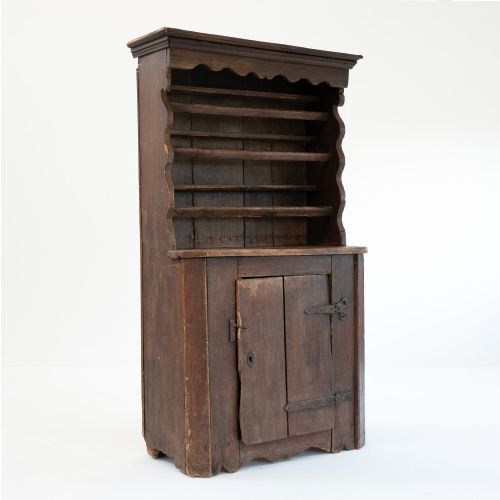
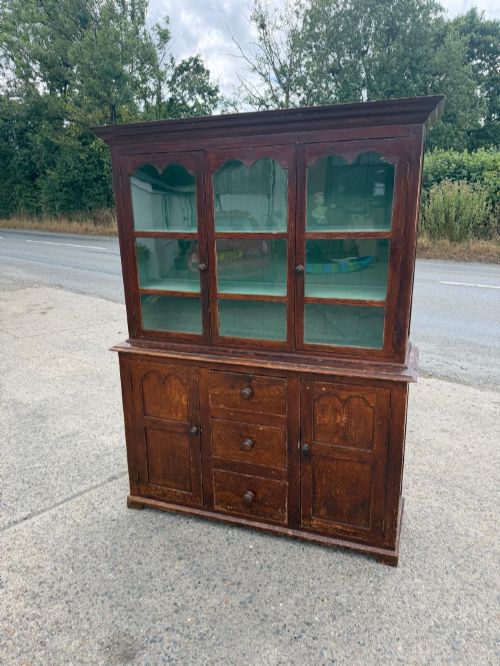
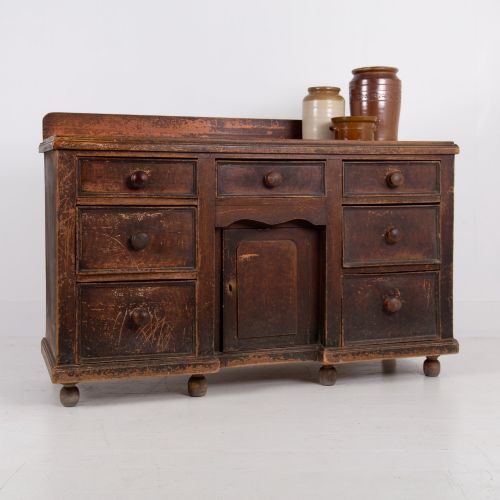


Dark Brown Pine Dresser
A dark brown pine dresser anchors a room with honest utility, offering deep timber tones and practical storage built for everyday life.
Dark Brown Pine Dresser
When searching for a dark brown pine dresser, buyers encounter substantial storage furniture designed for domestic use across several centuries. The pieces on this page span the eighteenth century and the Victorian era, encompassing regional styles such as English, Irish, Scottish, and Welsh country.
Forms vary significantly beyond the standard kitchen dresser. Available formats include dresser bases, glazed top dressers, kitchen dresser cabinets in original paint, plate racks, oak and pine Delft racks, housekeepers cupboards, food cupboards, and scumble pine chests of drawers.
The aesthetic is rooted in country traditions, utilising timbers like pine and oak supplemented by secondary woods such as mahogany. Makers applied finishes ranging from natural dark patination and scumble paint to original historical paint surfaces.
How they were made
Construction relies primarily on solid pine and oak, built by country joiners using traditional methods suitable for heavy domestic service. Structural integrity often involves robust framing to support plate racks, heavy timber tops, and capacious drawer bases.
Surface treatments define much of the character in these pieces. Workshops applied scumble paint to imitate finer hardwoods, left wood to age into dark natural patination, or preserved original historical paint coats alongside brass and wrought iron hardware.
Object forms on this page span kitchen dressers, food cupboards, housekeepers cupboards, chests of drawers, and freestanding Delft plate racks.
What varies in quality
Quality rests in the survival of original surfaces, such as undisturbed scumble paint or early historical coatings rather than later stripping and refinishing. The presence of original hardware, including brass pulls and wrought iron hinges, elevates a piece.
Proportion and regional vernacular detail distinguish superior examples. Finer items incorporate architectural elements like Corinthian columns on Delft racks or sophisticated breakfront drawer arrangements, reflecting the ambition of the original maker.
The Dark Brown Pine Dresser Glossary
- Scumble
- A decorative paint technique involving translucent layers dragged or brushed over a base coat to simulate the grain of more expensive timber. It creates mottled, dark brown depths on pine furniture.
- Delft rack
- Open shelving mounted above a dresser base or wall to display ceramic plates and pottery. These often feature shaped board backs and plate grooves.
- Housekeepers cupboard
- A large storage cabinet traditionally used for linens, dry goods, and household provisions. They typically feature panelled doors enclosing multiple internal shelves or drawers.
- Breakfront
- A cabinet or dresser base where the central section projects forward from the flanking outer sections. This architectural form adds depth and shadow to the facade.
Dark Brown Pine Dresser: Frequently Asked Questions
How do I date an antique pine dresser?
Dating relies on construction methods, timber selection, and historical surface treatments like original paint or early scumble. Eighteenth-century pieces often display hand-cut joinery and deep natural patination.
Victorian examples from the nineteenth century frequently incorporate machine-sawn elements, glazed upper sections, or distinct regional styles associated with Scottish and English workshops.
Where were these dressers used?
These pieces originated in domestic kitchens, farmhouses, and sculleries across England, Ireland, Wales, and Scotland. They served as central storage units for daily tableware, cooking provisions, and household linens.
Open plate racks displayed everyday ceramics, while enclosed cupboards and deep drawer bases kept dry goods and utensils protected from dust and damp.
How do I care for an old pine finish?
Preserving the finish requires avoiding direct sunlight and excessive heat, which can dry out nineteenth-century pine and crack original paint or scumble surfaces. Dust gently with a dry, soft cloth.
Avoid modern chemical polishes and liquid cleaners that strip historical wax patination or damage fragile painted layers built up over centuries.