


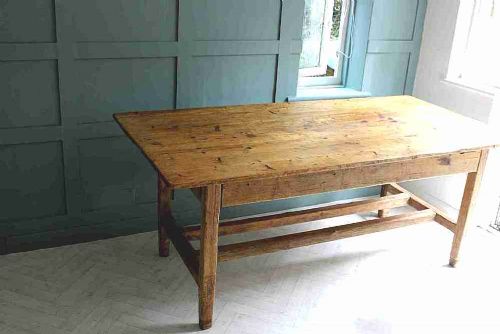

Irish Country Furniture
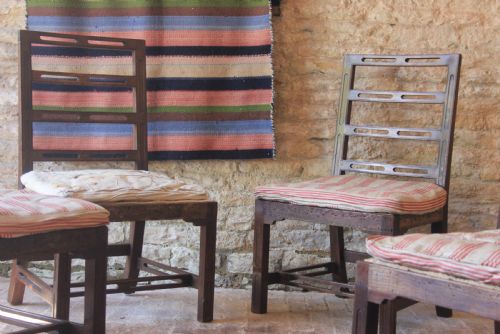
Irish country furniture brings honest utility into a home through vernacular pieces built from local pine, oak, and hardwood.
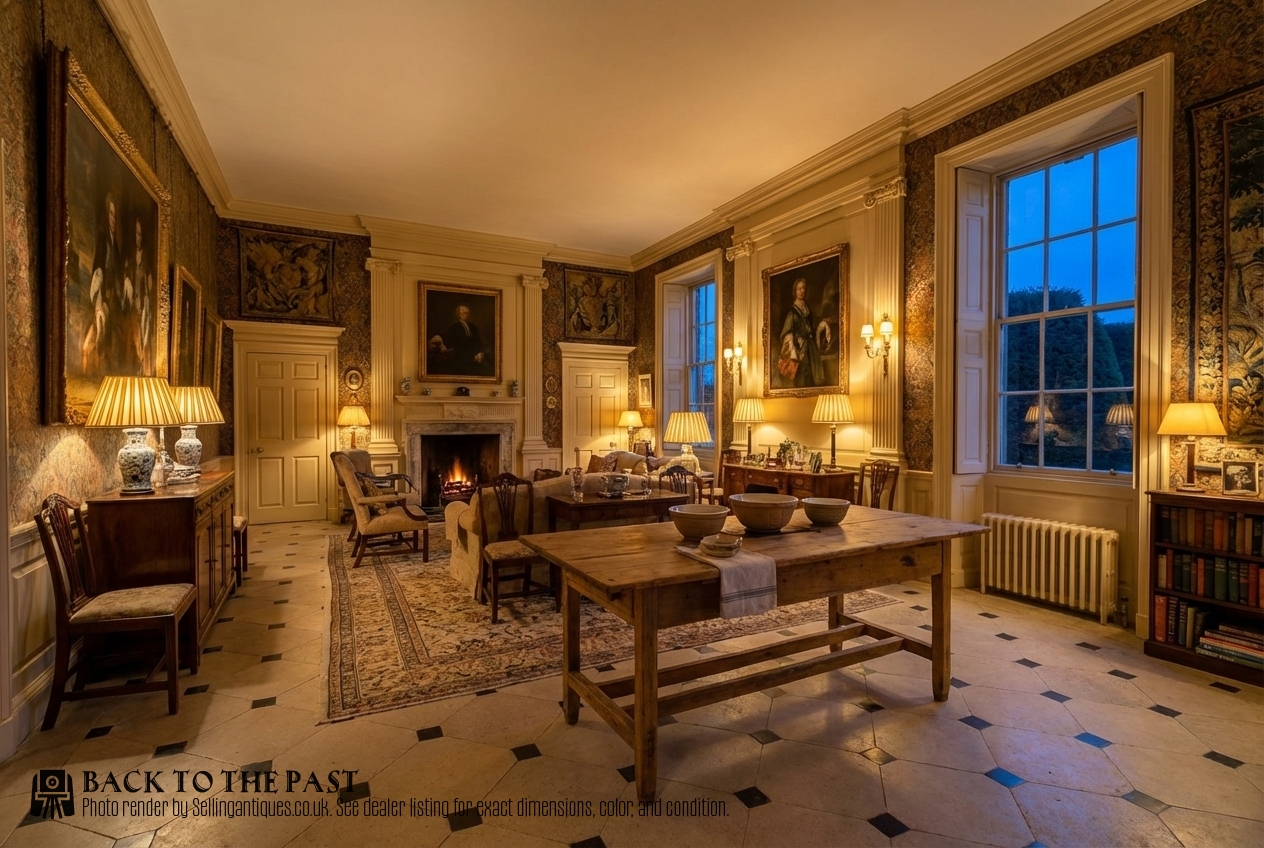
Irish Country Furniture
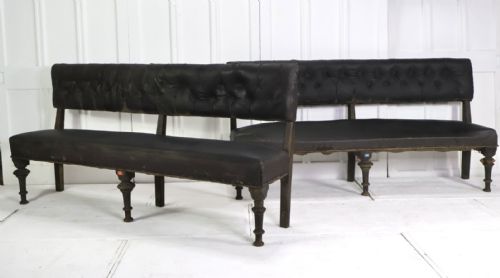
When buyers search for irish country furniture, they encounter sturdy domestic objects shaped by regional necessity and practical design. These items span the 18th century and 19th century, including periods like the Victorian era.
The prevailing aesthetic follows styles like Irish country, Georgian, primitive vernacular, Irish vernacular, and Victorian country. Pieces originate directly from local domestic and rural contexts.
How irish country furniture was made
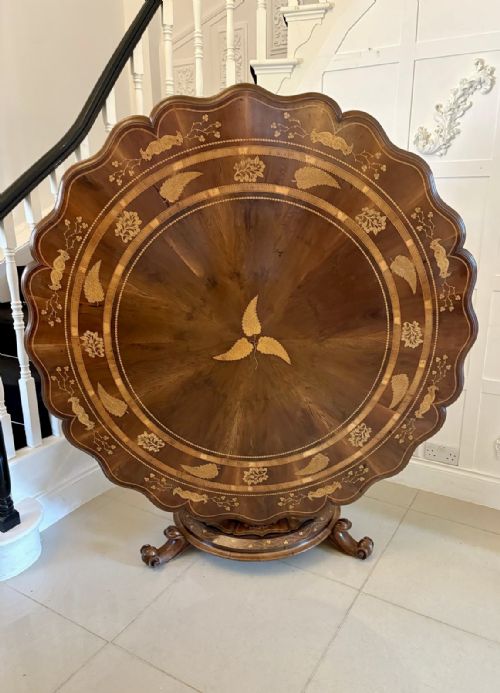
Makers utilised available timbers, notably pine, oak, mahogany, hardwood, dark hardwood, ash, and yew wood. Surfaces frequently display old paint, natural wax, or intricate marquetry inlay work.
Structural joints often incorporate wrought iron or iron hardware to reinforce functional everyday objects. Construction relies on straightforward hand woodworking techniques suited to local workshops.
Materials documented across the listings include pine, painted finishes, oak, mahogany, wrought iron, hardwood, and yew wood.
What varies in quality
Differentiation across the range depends on the integrity of the original timber and the survival of early painted surfaces. Pieces showing untouched patination command greater interest than those stripped or heavily restored.
Refinement of form sets vernacular items apart, ranging from simple peg-joined pine construction to sophisticated Killarney marquetry inlay. The balance between domestic utility and decorative ambition defines each individual piece.
Egan Workshop
The Irish Country Furniture Glossary
- Vernacular
- Everyday objects built by local craftspeople for domestic use rather than following high-style academic designs. This term describes the honest character of rural pieces.
- Súgán
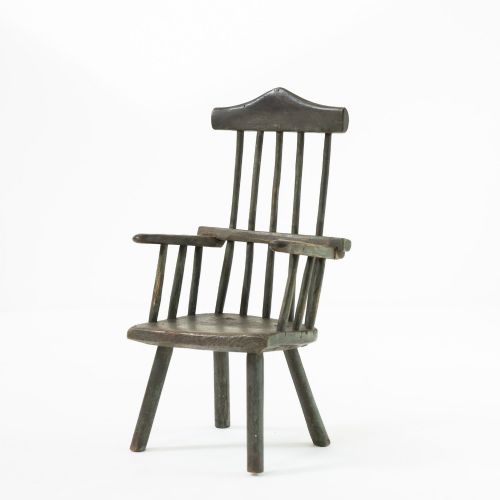
- A twisted straw rope used to form traditional woven seats on wooden chairs. It represents a practical seating material found in rural domestic interiors.
- Dresser
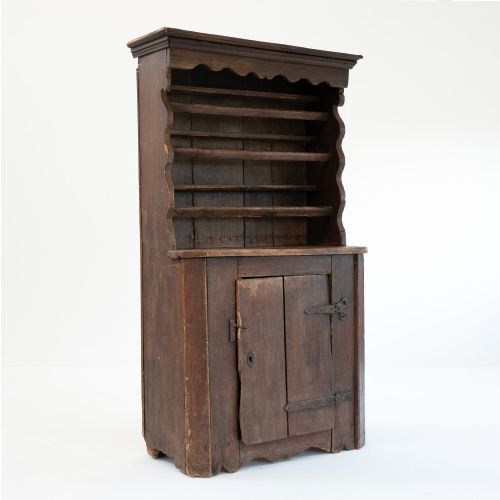
- A large kitchen furniture form combining open plate shelves with base cupboards or drawers. These items served as the central storage unit in traditional households.
- Marquetry
- The art of applying decorative veneer pieces in wood to create pictorial or geometric patterns on a surface. It appears on finer exhibition items.
- Press
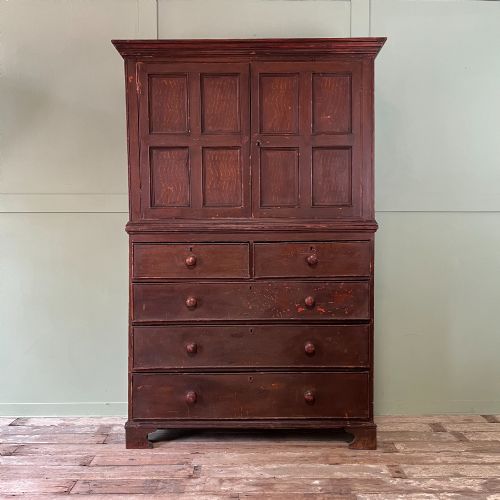
- A large tall cupboard used for storing linen, clothing, or provisions within the home. These heavy storage units formed essential household inventory.
Irish Country Furniture: Frequently Asked Questions
What is irish country furniture?
These pieces comprise practical domestic furnishings made in rural regions during the 18th and 19th centuries. They include dressers, tables, chairs, and storage presses built for everyday life.
Makers relied on local timbers such as pine, oak, and ash, often applying simple paint finishes or leaving the wood waxed.
How were kitchen dressers used?
Kitchen dressers served as the primary storage and display units in traditional rural homes. The upper shelves held ceramic plates and bowls while the lower cupboards stored provisions.
Their sturdy construction reflects the heavy demands of daily domestic labour in country households.
Where does pine furniture fit in?
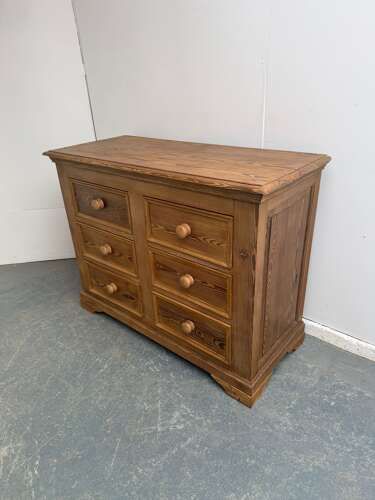
Pine formed the backbone of utilitarian rural making, valued for its accessibility and workability. Painted or waxed pine pieces bring straightforward charm to contemporary interiors.
Such items range from narrow chests of drawers to large farmhouse tables and wall cupboards.
How do periods differ in these pieces?
Earlier 18th-century examples tend to display heavier proportions and simpler joined construction. 19th-century and Victorian items often incorporate more refined vernacular styles or decorative marquetry.
Examining the wood species and surface treatment helps clarify the chronological origin of each item.