


Pine Kitchen Prep Table
A pine kitchen prep table brings honest utility to a room, offering a sturdy workspace shaped by generations of daily culinary labour.
Pine Kitchen Prep Table
A pine kitchen prep table is a utilitarian surface designed for food preparation, daily domestic work, and communal use in domestic spaces. These tables originate from various periods including the nineteenth century and the early twentieth century, spanning Victorian, Georgian, and various regional styles.
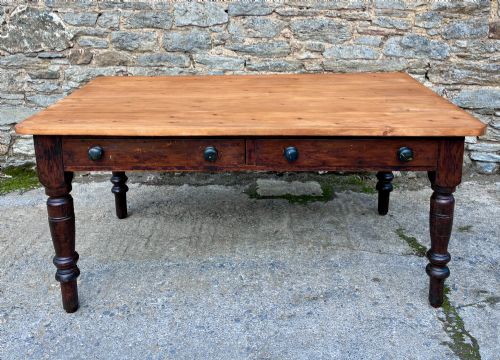
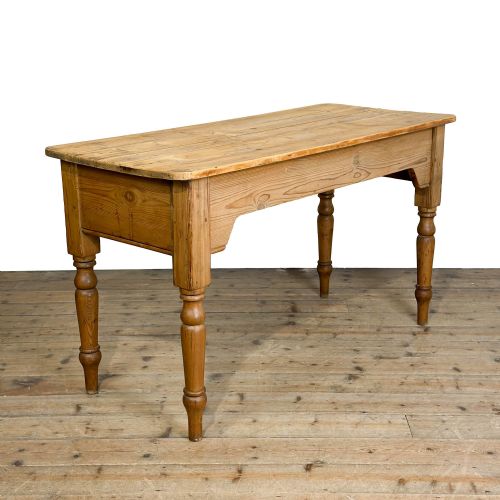
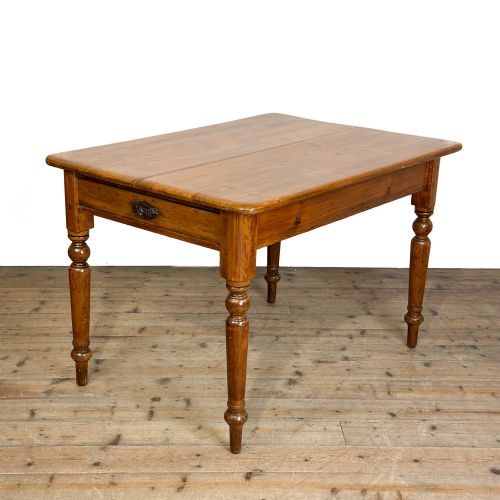
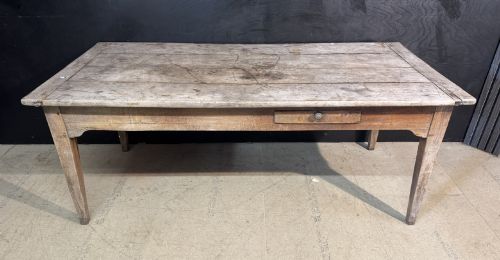
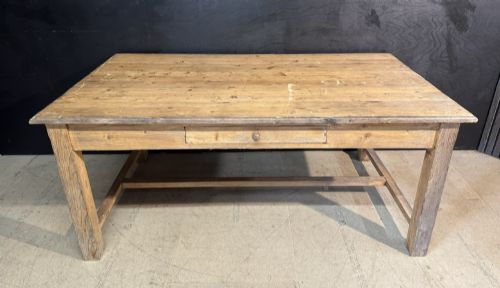
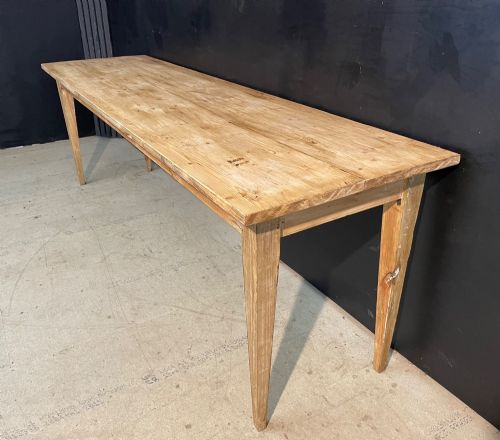
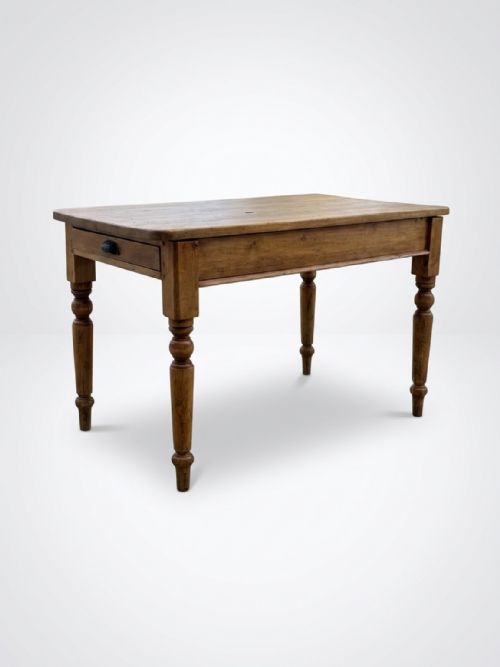
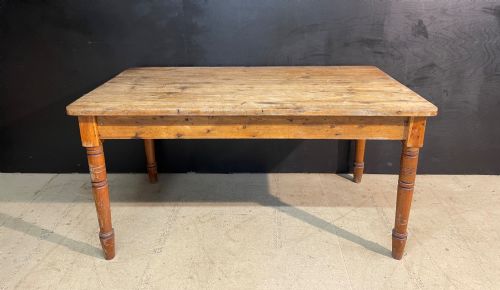
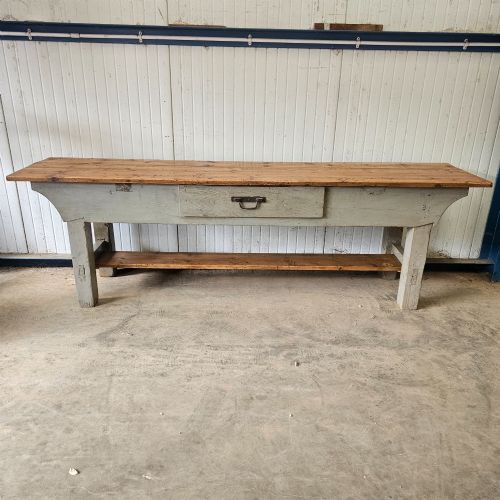
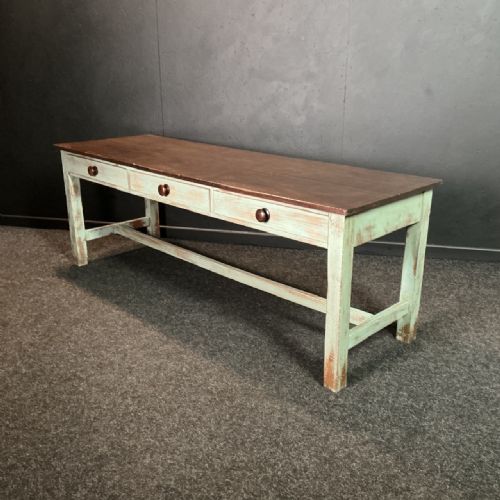
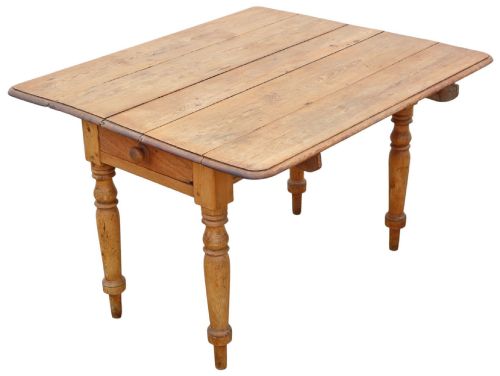
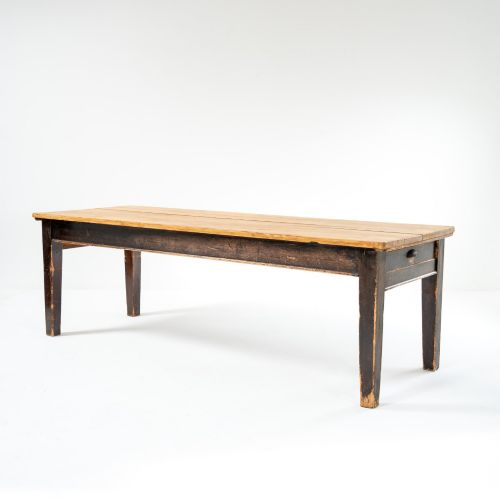
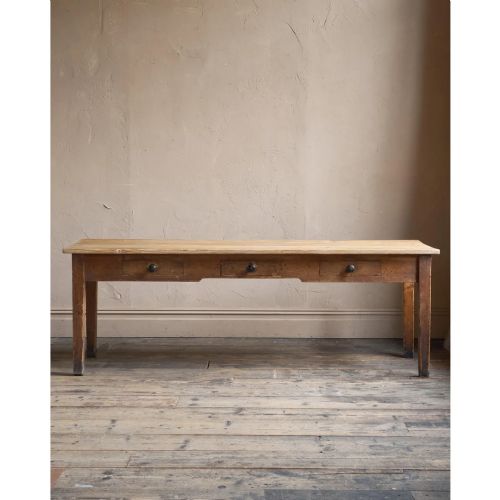
The pieces listed here appear in forms such as farmhouse tables, dairy tables, scullery tables, and bakers prep tables. Many examples feature single or multiple drawers, drop leaves, pot shelves, or extended lengths suitable for large kitchens.
Makers and origins vary from English and Scottish country workshops to French provincial makers, utilising local softwoods and hardwoods. Buyers encounter pieces with scrubbed tops, original paint finishes, or later painted surfaces reflecting active domestic histories.
How They Were Made
Makers constructed these tables primarily using pine, pitch pine, and painted wood, frequently combining them with secondary timbers such as oak, sycamore, fruitwood, maple, and cherry for tops or internal components. Metal fixings like brass and iron appear in structural joints, drawer pulls, and hardware.
Construction techniques focused on load-bearing stability and durability under heavy daily use, employing sturdy mortise and tenon joinery for frames and solid wood panels for table tops and drawer construction.
Pine Kitchen Prep Table Retail Price Guide 2026
Typical asking prices for pine kitchen prep table among the pieces listed under this phrase on Sellingantiques today, from the lower quarter to the upper quarter. They describe what is for sale here now, not the wider market.
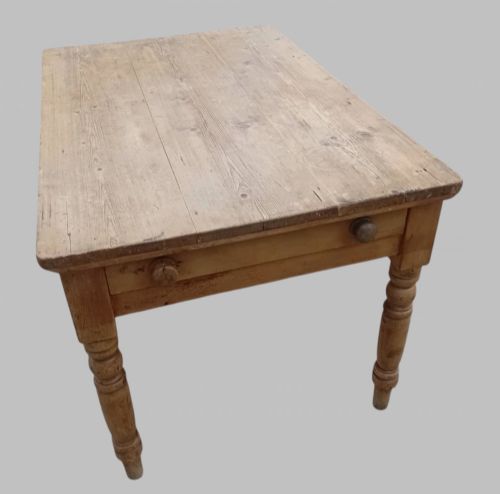
Scrubbed table tops bear the pale, rippled grain left by a century of enthusiastic weekly scouring with scrubbing brushes.
What Varies In Quality
Quality in a pine kitchen prep table lies in the integrity of its timber selection, the weight of the construction, and the preservation of original surfaces like scrubbed tops or early paintwork. Dense pitch pine and seasoned standard pine boards show superior resistance to wear compared to softer replacement timbers.
The refinement of the joinery and proportion separates standard utilitarian pieces from finer workshop productions. Thoughtful integration of functional elements such as dovetailed drawers, pot shelves, and drop-leaf mechanisms indicates higher craftsmanship within domestic furniture traditions.
The Pine Kitchen Prep Table Glossary
- Scrub-top
- A wooden table top designed to be aggressively scrubbed clean with water and sand or soap after food preparation. This frequent scouring leaves the pine grain raised and pale.
- Pitch pine
- A dense, resinous variety of pine timber known for its durability and strong grain pattern. It was frequently utilised for heavy-duty furniture and large prep surfaces.
- Frieze
- The horizontal band or rail running directly beneath the top of a table. Drawers are frequently integrated into this structural section.
- Pot shelf
- A low open lower shelf positioned between the legs of a table or dresser base. It provided convenient storage for heavy pots, pans, and kitchen utensils.
- Drop leaf
- A hinged flap of wood attached to the main table top that can be raised and supported to extend the surface area. It allowed tables to save space when not in use.
Pine Kitchen Prep Table: Frequently Asked Questions
What is a pine kitchen prep table used for?
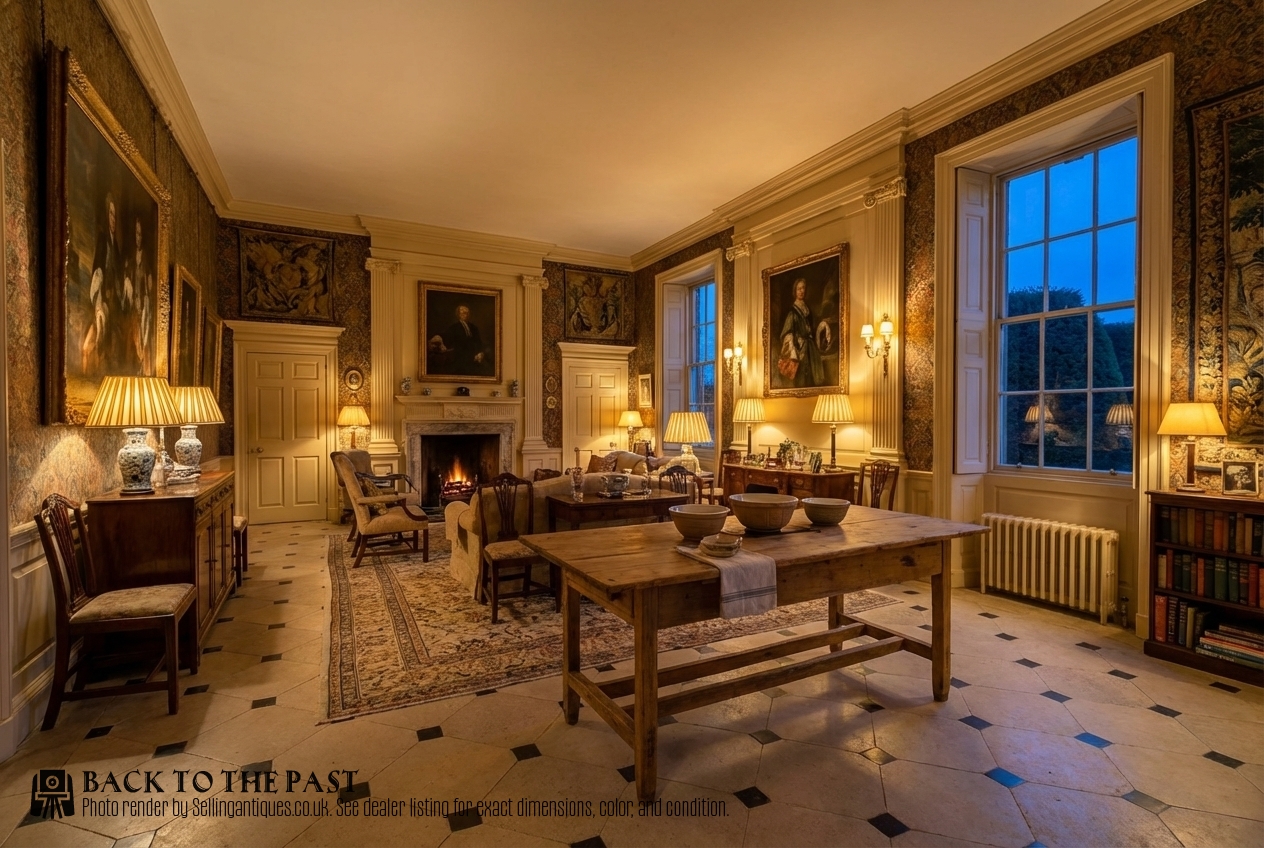
These tables served as the central workspace for domestic tasks like kneading bread, butchering meat, and preparing vegetables in historical kitchens. Today, they function as kitchen islands, dining surfaces, or console tables in homes.
Their robust construction makes them well-suited for modern culinary use while adding rustic character to an interior space.
How do I care for a scrubbed pine top?
Scrubbed pine surfaces benefit from gentle cleaning with mild soap and water, avoiding harsh chemical cleaners that strip the aged timber. Regular application of clear beeswax helps protect the dry wood from moisture and staining.
Allowing the wood to age naturally preserves the patina earned through decades of domestic service.
Are these tables waterproof?
Historic pine tables feature untreated or wax-finished wood rather than modern waterproof synthetic seals. Spills should be wiped up promptly to prevent water marks or staining on the absorbent timber.
Using boards and mats helps protect the historical surface during everyday food preparation.
How do I identify a Victorian prep table?
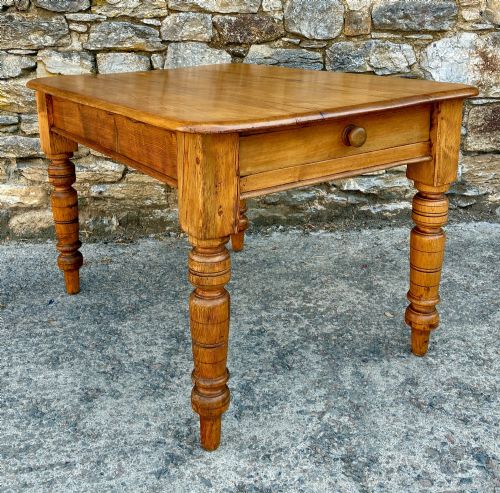
Victorian examples often display sturdy turned or tapered legs supporting thick pine or pitch pine tops, frequently accompanied by utilitarian drawers with simple wooden knobs or brass pulls. Regional variations reflect the distinct building traditions of English, Scottish, and French makers from the nineteenth century.
Examining the construction methods, tool marks, and wear patterns helps distinguish nineteenth-century production from later revivals.