
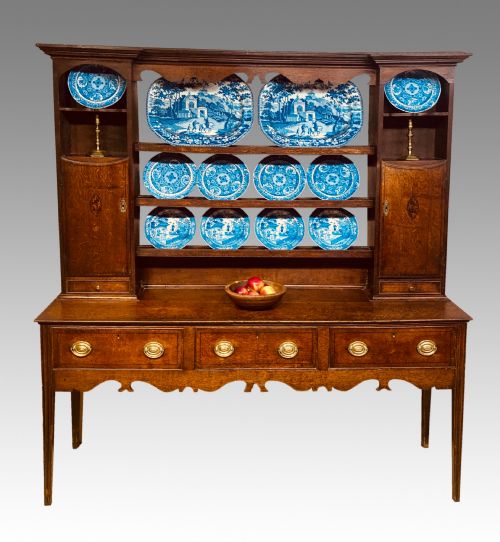


Welsh Dresser Shelf
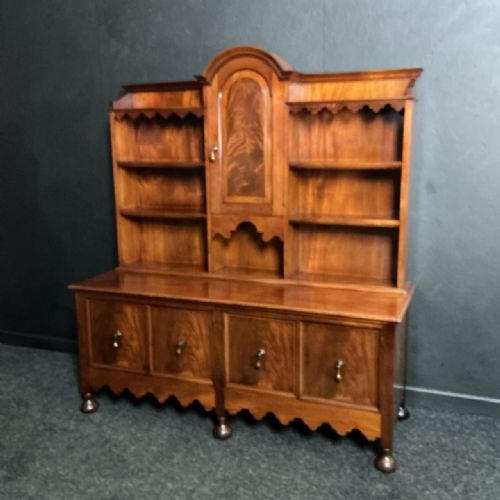
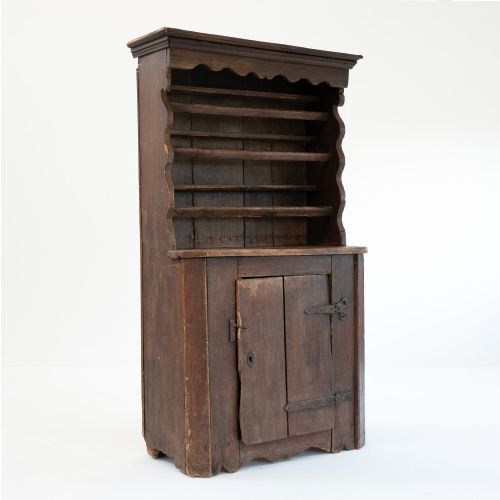
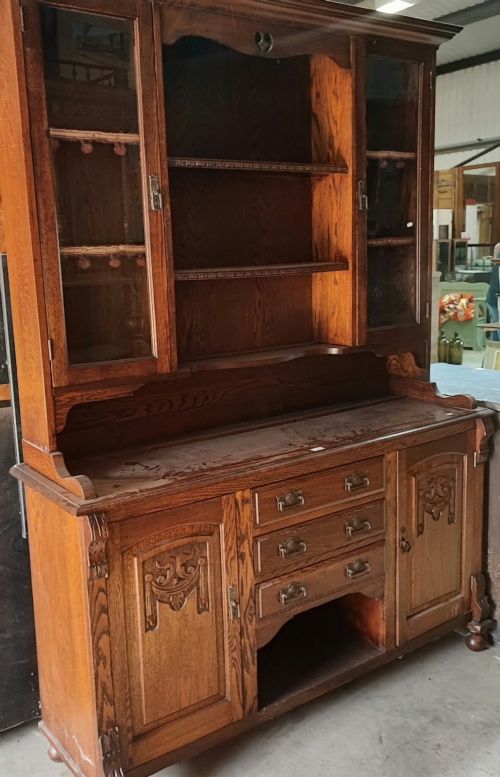
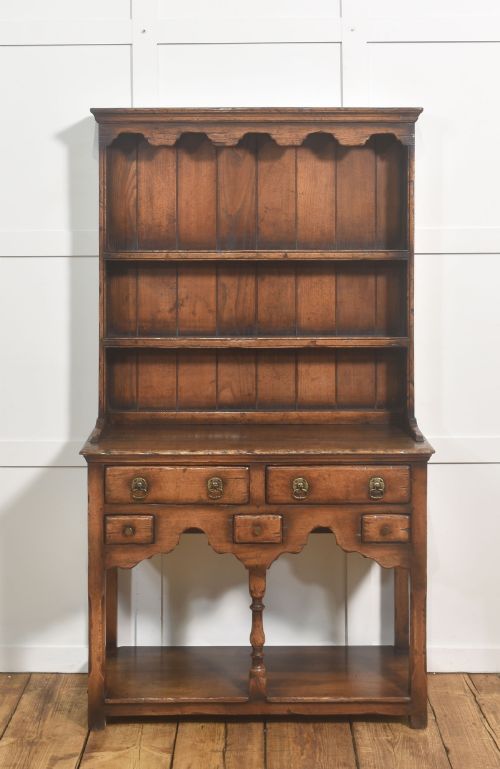
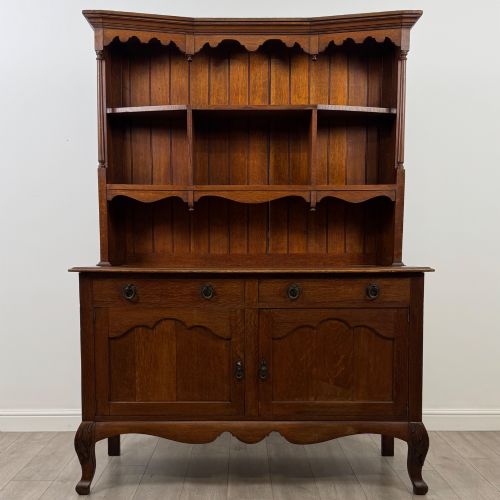
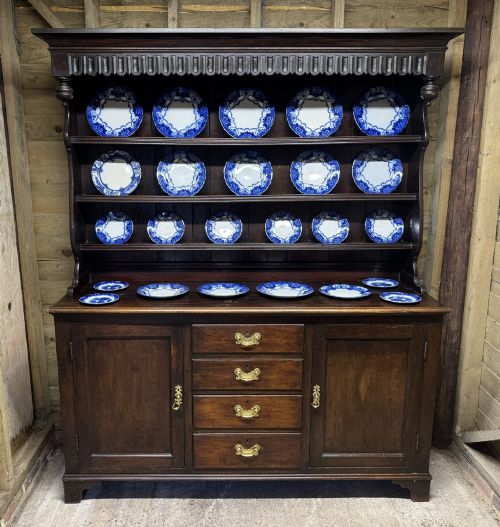
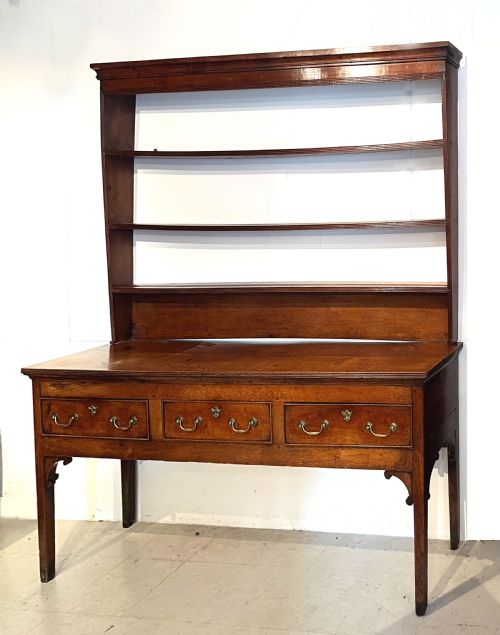
These welsh dresser shelf assemblies are period oak and pine structures designed to display pottery and hold daily kitchen wares.
Welsh Dresser Shelf
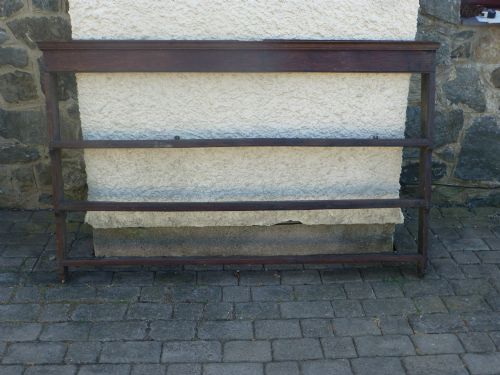
When you search for a welsh dresser shelf, you are looking at the upper tier or plate rack portion of a traditional kitchen storage unit. These elements are designed to mount above a base cabinet or stand independently against a wall to display ceramics.
The pieces on this page span the eighteenth and nineteenth centuries, alongside Edwardian and later interpretations. You will encounter straightforward oak and pine constructions originating from English, Irish, and Welsh rural traditions.
Most examples combine open shelving with narrow plate grooves and plate rails to keep ceramics secure. Some variations include small cupboards or glazed sections built directly into the upper rack framework.
How they were made
Joiners relied principally on solid oak and pine for the framework, using pegged mortise and tenon joints to bear the weight of heavy tableware. Backboards are typically constructed from vertical planks secured with handmade nails.
Mouldings and plate retaining strips were shaped by hand using moulding planes, while surface finishes developed through generations of wax polishing and natural wear. Iron hooks and brass hanging brackets occasionally appear beneath the lower shelves for mugs and utensils.
Several country racks still retain tiny original wooden pegs once used to hang pocket watches while washing up.
What varies in quality
Quality rests in the harmony of proportions between the height of the shelves and the depth of the cornices. Superior examples feature well-figured timber grains, particularly where quarter-sawn oak or choice pine boards were selected for the visible face.
Construction integrity defines the better pieces, with tight joints and original backboards intact. Alterations to shelf heights or replacement cornices change the visual balance and separate honest vernacular pieces from heavily restored assemblies.
The Welsh Dresser Shelf Glossary
- Plate rack
- The upper shelving unit of a dresser fitted with grooves or rails to hold plates upright. It allows ceramic collections to be stored safely in view.
- Potboard
- The lower open shelf situated near the floor on traditional vernacular dressers. Originally utilised for storing heavy metal pots and earthenware.
- Cornice
- The decorative moulded projection running along the top edge of the upper rack. It provides a finished architectural cap to the furniture.
- Vernacular furniture
- Objects built by local craftspeople for domestic utility rather than following strict high-style metropolitan designs. These pieces reflect regional materials and rural habits.
Welsh Dresser Shelf: Frequently Asked Questions
How do I date a dresser shelf?
Dating relies on timber species, tool marks on the backboards, and construction methods. Eighteenth-century examples often display hand-sawn board marks and pegged joinery.
Later Victorian and Edwardian pieces utilise more uniform machine-cut lumber and standardised iron fixings.
What wood was used for these shelves?
Oak is the predominant timber found across these listings, prized for its strength and availability. Pine and elm also appear frequently in regional country pieces.
Secondary woods like deal or fruitwood were occasionally utilised for internal framing and backing boards.
How should I clean antique oak shelves?
Dust the timber regularly with a dry, soft cloth to prevent grime accumulation. Avoid harsh chemical cleaners that strip the historic wax finish.
Feed the dry wood periodically with a traditional beeswax polish to maintain the natural lustre of the surface.