



Georgian Copper Pitcher
A georgian copper pitcher is a sturdy vessel built for heavy daily use, prized today for its rich warm tone and honest craftsmanship.
What They Are
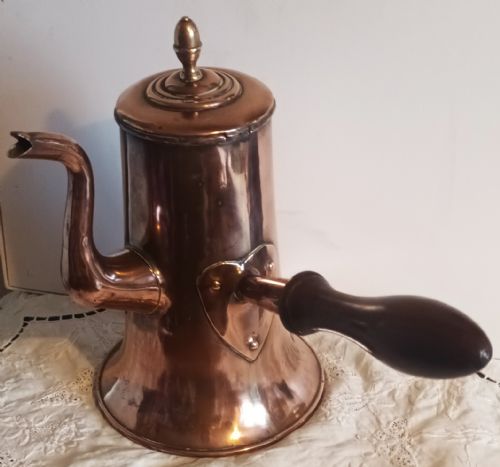
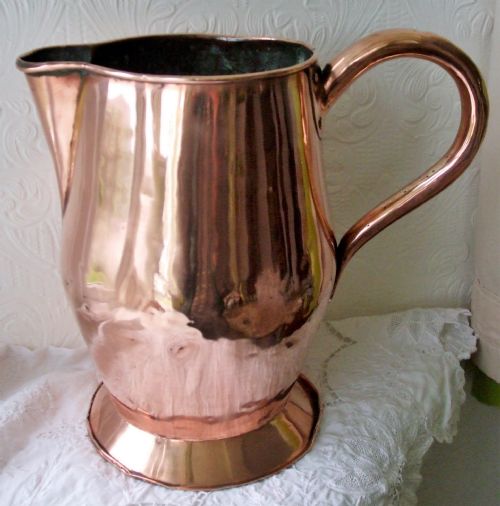
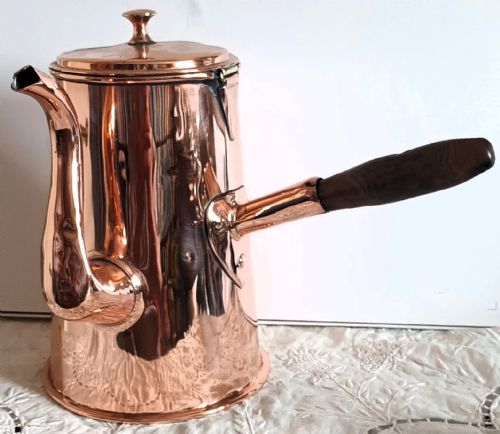
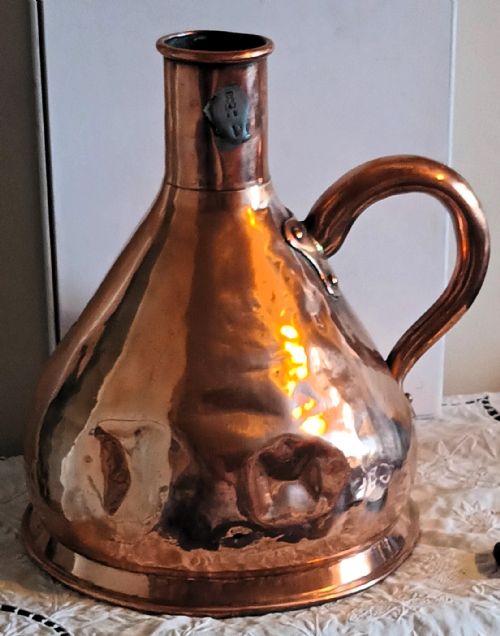
A georgian copper pitcher encompasses functional liquid containers ranging from small two pint jugs up to massive gallon measures and colossal lidded vessels. These pieces originate from the Georgian and nineteenth century eras, reflecting an English domestic and commercial heritage of utility.
The inventory on this page shows standard domestic jugs alongside named London merchant pieces like those stamped by Loftus of Oxford Street. Forms vary from simple pouring jugs to heavy Liverpool gallon measures designed for precise volume holding.
How They Were Made
These vessels are built primarily from sheet copper, often incorporating brass for handles, rims or fittings, alongside lead and tin components. Smiths shaped the metal by hand, hammering seams and reinforcing edges to withstand rigorous liquid transport.
Makers joined sections using traditional methods suited to holding water and liquids securely without leaking.
Retail Price Guide 2026
Typical UK retail prices for georgian copper pitcher, calculated from the Sellingantiques database of over a million retail prices indexed since 2003. This retail price guide relies exclusively on Sellingantiques data; no external sources or auction records are used, so the figures do not describe the wider market.
Listings span the eighteenth and nineteenth centuries, featuring copper combined with brass, tin, and lead.
What Varies in Quality
Quality rests in the weight of the metal and the integrity of the original construction, distinguishing heavy commercial measures from lighter domestic items. Pieces bearing maker stamps or specific retail locations like Oxford Street command greater interest for their documented origin.
The proportion of the handle to the body and the skill shown in hammering the copper sheet mark the difference between standard utilitarian output and finer workshop production.
The Georgian Copper Pitcher Glossary
- Gallon measure
- A large capacity vessel designed to hold a precise imperial gallon of liquid for trade or domestic stockkeeping. These heavy pieces often feature calibrated markings or maker stamps.
- Brass
- An alloy of copper and zinc frequently used on these pitchers for handles, rims, and secure mountings. It provides a bright contrasting metal tone against the darker copper body.
- Tin lining
- A protective interior coating applied to copper vessels to prevent the liquid from reacting with the copper metal. This process was essential for safe water and liquid storage.
- Loftus of Oxford Street
- A recorded maker or retailer operating from a prominent London address. Their presence on a piece denotes a specific metropolitan mercantile origin.
Frequently Asked Questions
How were these pitchers used?
These vessels served everyday liquid storage and transport needs in domestic kitchens, commercial taverns, and trades. Large gallon measures acted as standard volume containers for liquids.
Smaller two pint jugs functioned closer to the table for water or beverage pouring, handling heavy daily wear without decorative pretense.
How do I clean copper safely?
Maintenance involves gentle washing with warm soapy water and a soft cloth to preserve the aged surface. Avoid harsh abrasive cleaners that strip away historical character.
Allowing the metal to retain its natural dark patina preserves the authentic appearance of age valued by collectors.
Can I use these for water?
Most antique pitchers function primarily as decorative display items rather than functional drinking vessels. Modern use depends entirely on the condition of the internal tin lining and overall metal integrity.
Consult the specific description of each piece to understand its internal state before attempting to hold liquids.
How do I date a piece?
Dating relies on comparing the construction methods, handle attachments, and overall form against documented examples from the eighteenth and nineteenth centuries. Maker stamps and retail inscriptions provide the most reliable chronological markers.
Stylistic shifts between Georgian production and later nineteenth century manufacture are evident in the weight and assembly of the copper sheets.