

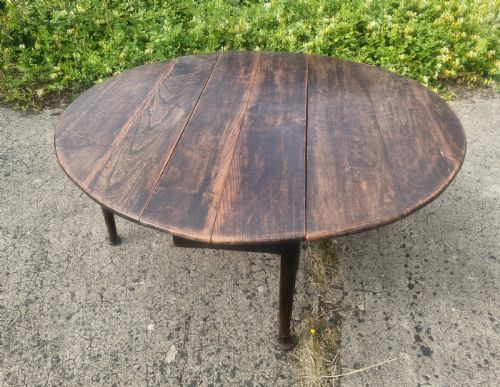
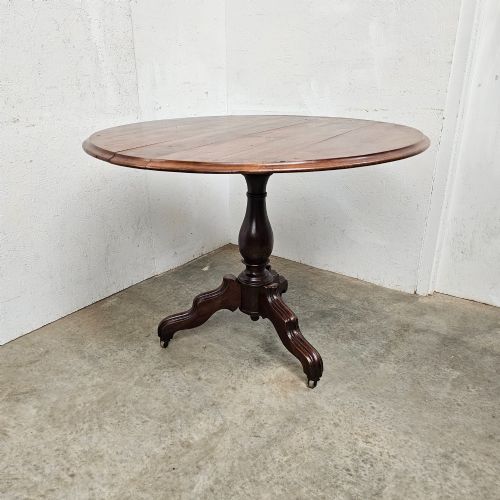


Georgian Circular Dining Table
A georgian circular dining table offers an elegant centrepiece for dining rooms, combining practical round seating with traditional cabinetmaking.

Georgian Circular Dining Table
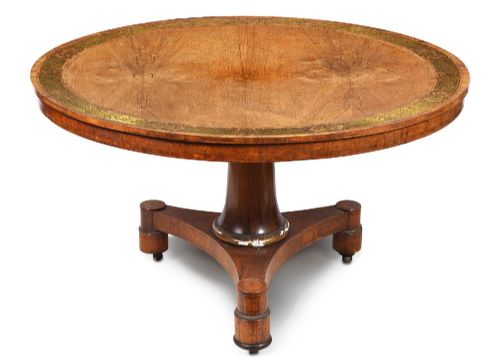
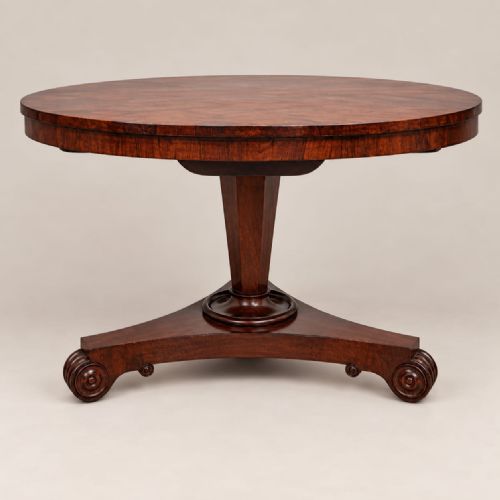
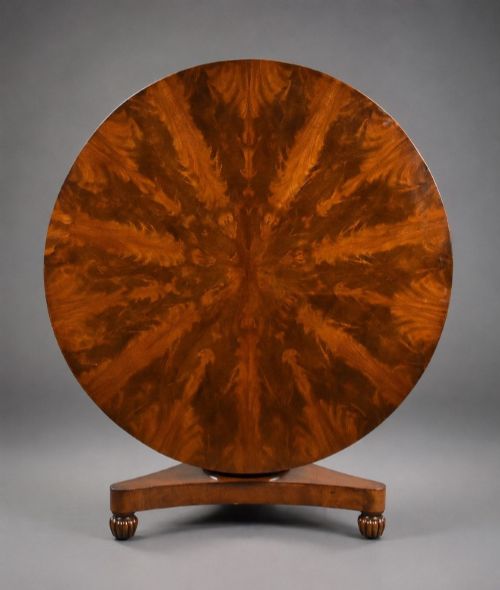
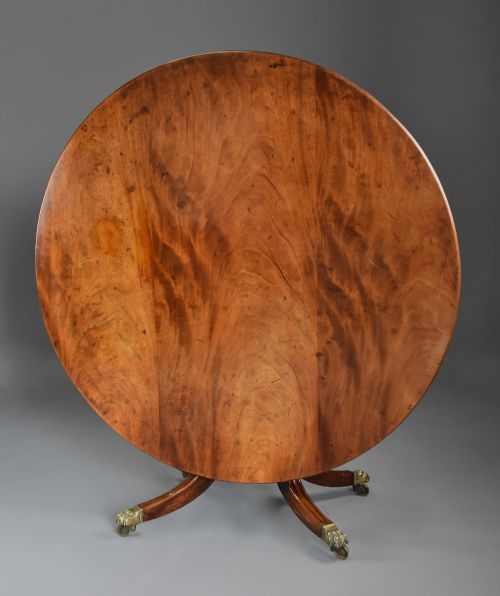
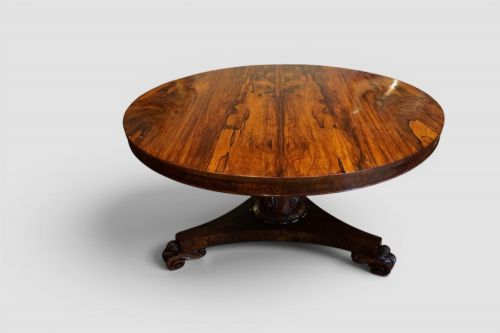
A georgian circular dining table brings together classic proportion and flexible dining arrangements, appearing primarily in mahogany, rosewood, and oak across periods ranging from the Georgian era through to the Regency and Victorian epochs.
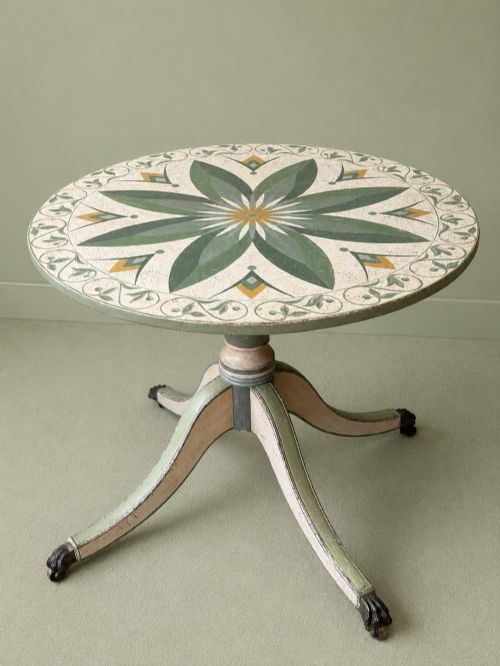
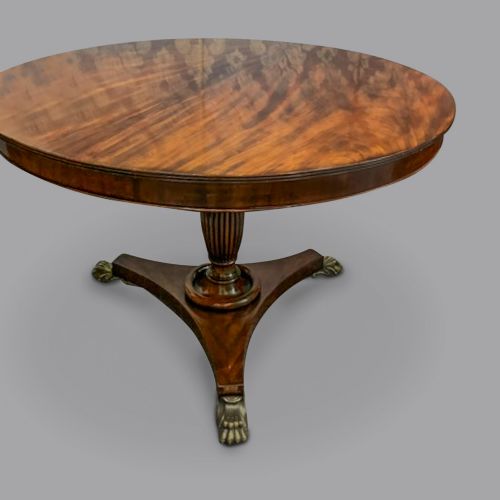
Buyers encounter various formats including tilt-top breakfast tables, pedestal centre tables, and occasional dining tables supported by tripod legs, triform bases, or central pedestals.
The selection ranges from country-made elm and oak pieces to finely figured mahogany and rosewood examples designed for formal interiors.
Materials and construction
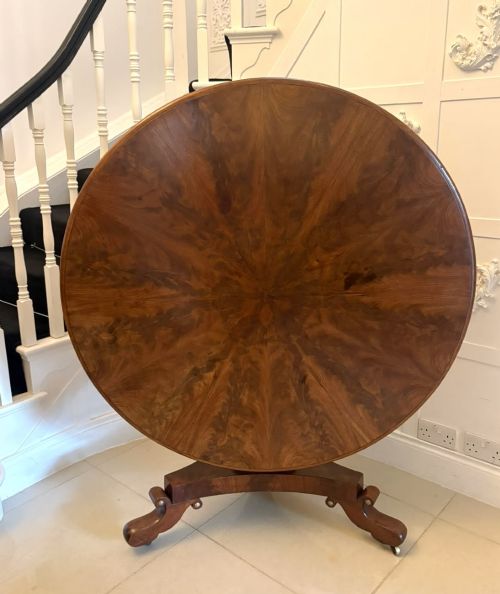
Cabinetmakers utilised dense timbers such as mahogany, rosewood, burr elm, and walnut, often applying decorative veneers like flame mahogany, plum pudding mahogany, and radially arranged grains across the circular tops.
Construction techniques involve stable central pedestals, tilt-top mechanisms with brass catches, and sturdy tripod or triform bases designed to support large circular surfaces without wobbling.
Listings feature woods including mahogany, rosewood, elm, satinwood, and goncalo alves across Georgian, Regency, and Victorian periods.
Judging execution
Quality rests in the choice of timber figure, the precision of the joinery on the central pedestal, and the crispness of any brass inlay, parcel gilding, or marquetry details.
Finer examples display superior timber selection for the top, such as single-piece mahogany boards or symmetrical veneering, paired with substantial and stable support bases.
Gillows·George Bullock·Walker-Lancaster
The Georgian Circular Dining Table Glossary
- Tilt-top
- A table mechanism allowing the circular top to pivot vertically when not in use, saving space in smaller rooms. This design was common on breakfast and tripod tables.
- Triform base
- A three-sided pedestal base frequently seen on Regency and William IV tables. It provides sturdy support while maintaining aesthetic balance.
- Breakfast table
- A multipurpose circular table from the Georgian and Regency periods used for morning meals or as a centre table. They often featured tilt mechanisms.
- Centre table
- A freestanding piece finished on all sides designed to stand in the middle of a room rather than against a wall. Many circular dining and breakfast tables served this dual purpose.
- Goncalo Alves
- An exotic dense hardwood with rich figuring utilised by cabinetmakers during the Regency period for high-status tables.
Georgian Circular Dining Table: Frequently Asked Questions
How do I seat six people around a round table?
A circular dining table allows diners to converse easily without the barrier of corners. Tables measuring around forty-eight inches or more generally accommodate several guests comfortably depending on the base design.
Pedestal and tripod supports provide better legroom than traditional four-legged tables, allowing chairs to tuck neatly underneath the top.
What is the difference between a breakfast table and a dining table?
Breakfast tables of the Georgian and Regency periods often featured tilt-top mechanisms for storage against a wall when not in use. They typically stood on a single central pedestal with tripod or triform feet.
Standard dining versions were occasionally larger or heavier, sometimes utilising gateleg or drop-leaf actions to expand surface area for evening meals.
How do I care for antique mahogany and rosewood surfaces?
Polished hardwood surfaces require protection from direct sunlight and excessive heat to prevent timber shrinkage or fading. Regular dusting with a soft, dry cloth preserves the natural lustre of the finish.
Applying occasional traditional wax feeds the wood and helps maintain the patina built up over centuries of use.
Can I use a centre table for everyday dining?
Many period centre tables were constructed with robust timbers like mahogany and oak, making them entirely suitable for daily meals. Using heat mats and tablecloths protects the antique polish from moisture and marking.
Ensuring the pedestal or leg assembly remains tight guarantees stability during regular family use.