
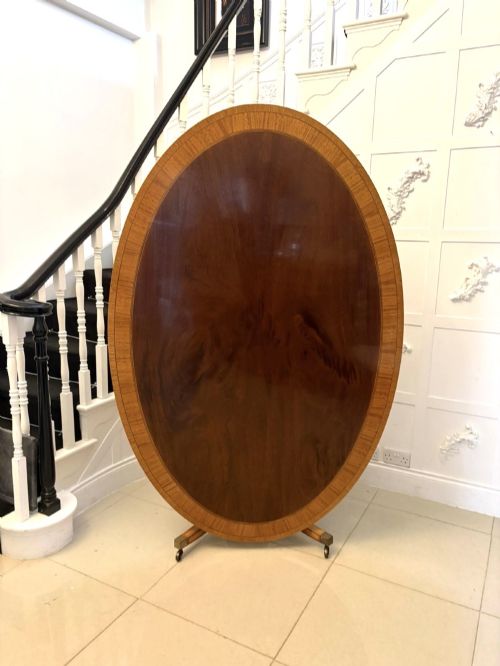
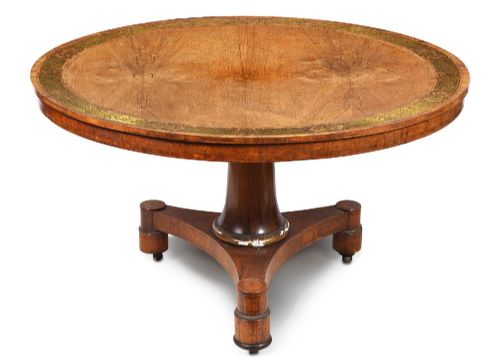
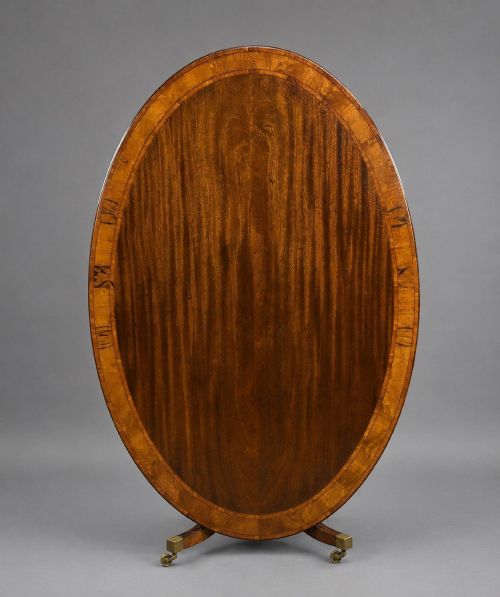
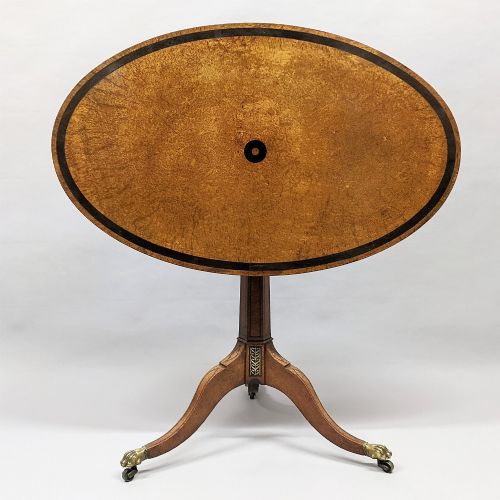
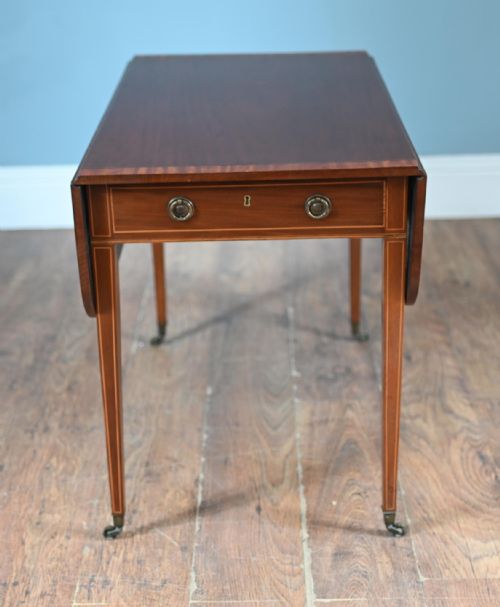


Inlaid Regency Breakfast Table
An inlaid regency breakfast table is a pedestal dining piece designed for morning meals, offering rich timber surfaces and delicate stringing that anchor a formal room.
Inlaid Regency Breakfast Table
An inlaid regency breakfast table represents the height of early nineteenth century dining furniture, combining a central pedestal support with a tilting or fixed top. The pieces found here span genuine Regency production alongside George III origins, late Regency examples, and later Edwardian or Regency Revival interpretations.
The predominant form on this page is the circular or oblong breakfast table designed for versatile use in the home. Alongside these, related forms such as Pembroke tables, centre tables, and loo tables appear, sharing the characteristic timber construction and inlaid decoration typical of the era.
Makers and designers of the period, such as William Trotter of Edinburgh or followers of George Smith, influenced the stylistic vocabulary seen across these items. The integration of satinwood, lacewood, and mahogany defines the visual weight of the inventory.
Materials and Technique
Cabinet makers utilised dense exotic and native timbers, with mahogany and rosewood forming the primary structural and surface materials. Secondary woods like amboyna, Goncalo Alves, birdseye maple, and lacewood provide contrasting figures and deep grain patterns across the tops.
Inlay and stringing techniques incorporate brass, ebony, boxwood, and satinwood to outline borders and create geometric motifs. Metal inlay requires precise channel cutting into the solid timber or veneer, secured flush with the surrounding surface.
Tilt-top mechanisms rely on robust box-and-pillar joints and brass catch systems that allow the surface to pivot upright when not in use. Pedestal bases frequently feature central columns rising from tripartite or quadrupartite platforms supported by brass castors.
Listings feature brass, mahogany, rosewood, satinwood, ebony, boxwood inlay, inlaid wood, and lacewood across nineteenth-century and revival periods.
Judging the Workmanship
The distinction between standard production and top-tier pieces rests on the choice of timber and the precision of the cabinet work. Finer examples display carefully matched flame mahogany or rich rosewood veneers with continuous grain alignment across the entire top.
The execution of the brass inlay separates accomplished workshops from routine makers. Superior execution shows tight mitres at corners and secure adhesion without lifting along the delicate metal channels.
Proportion and stability in the pedestal base dictate the overall architectural success of the table. High-grade items balance a heavy top upon a sturdy pillar and substantial legs without structural timber fatigue or wobble.
William Trotter of Edinburgh·George Smith
The Inlaid Regency Breakfast Table Glossary
- Tilt top
- A tabletop mounted on a pivot mechanism that allows the surface to be locked horizontally for use or vertically for storage against a wall.
- Crossbanding
- A border of veneer laid around the perimeter of a tabletop with the grain running perpendicular to the central panel.
- Stringing
- Thin lines of contrasting wood or metal inlaid into channels on the surface to create decorative borders and linear patterns.
- Pembroke table
- A small rectangular drop-leaf table featuring hinged flaps on opposing sides supported by pivoting wooden brackets.
- Loo table
- A large round or oval table originally utilised for the nineteenth-century card game of loo, sharing a pedestal format with breakfast tables.
Inlaid Regency Breakfast Table: Frequently Asked Questions
What is an inlaid regency breakfast table used for?
These tables were originally created for morning dining in private residences, serving as a functional centrepiece that could be cleared and tilted away when not in use.
Today, they function effectively as central dining surfaces in smaller rooms or as statement display tables in entrance halls.
How do I tell an original Regency piece from a revival?
Original pieces display authentic period construction methods, timber ageing, and hand-cut joinery consistent with the late eighteenth and early nineteenth centuries.
Revival items, such as Edwardian productions, often utilise machine-cut elements and different secondary woods beneath the surface veneers.
How should I care for a brass inlaid surface?
Keep the timber away from direct heat sources and strong sunlight to prevent the veneers from drying, shrinking, or cracking over time.
Apply gentle beeswax sparingly and polish with a soft cloth to maintain the lustre of both the wood and the inlaid brass lines.
Can these tables be disassembled for moving?
Many examples feature a bolted construction connecting the tabletop to the central pedestal and the pillar to the base platform.
Careful removal of these internal bolts allows the table to be separated into manageable sections for safe transport.