
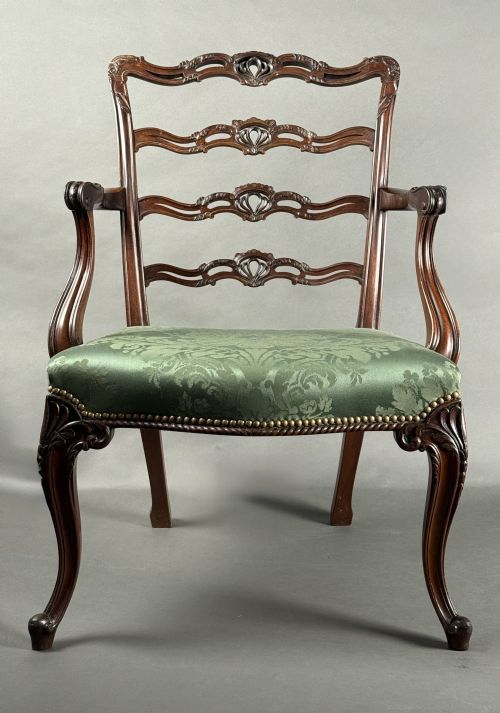
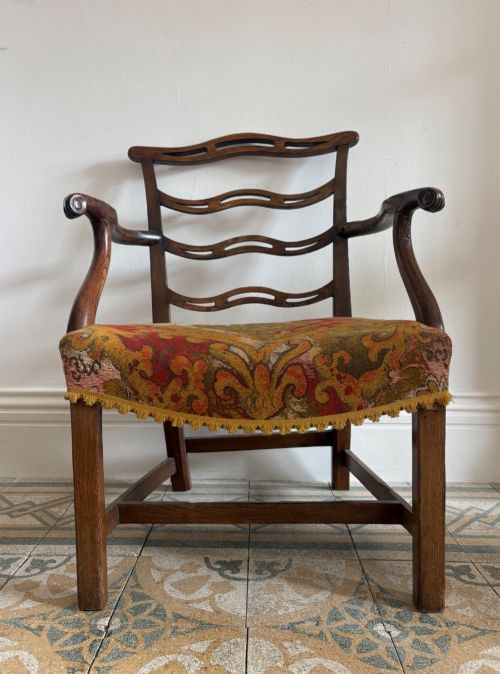
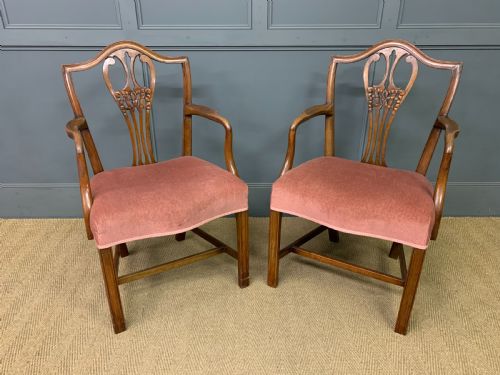
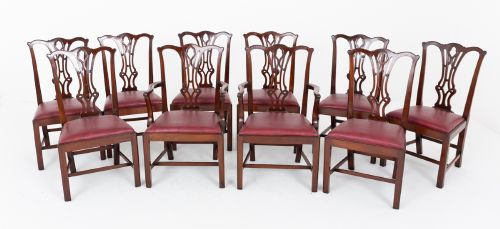
Georgian Chippendale Armchairs
Georgian Chippendale armchairs combine substantial timber frames with refined carving, offering a commanding presence and lasting comfort for any study or drawing room.
Georgian Chippendale Armchairs
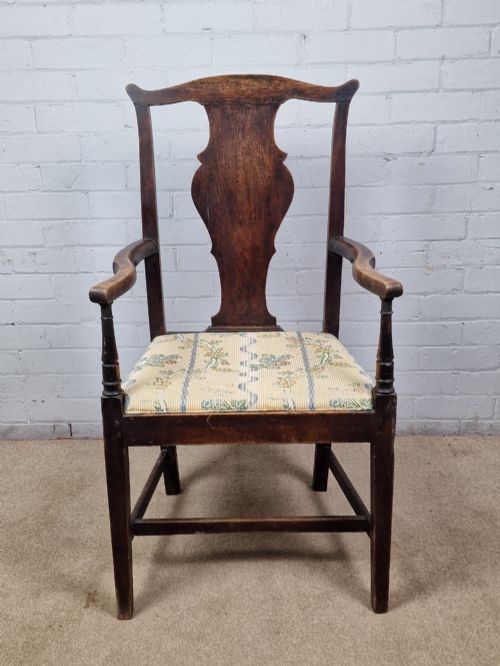
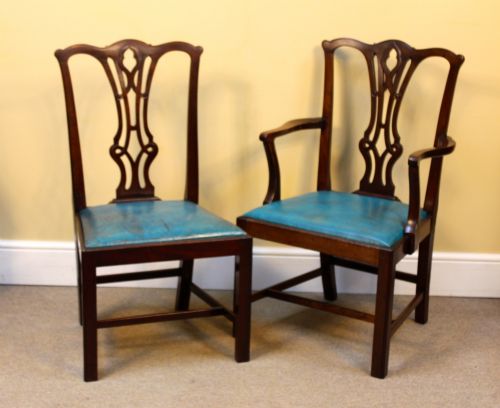
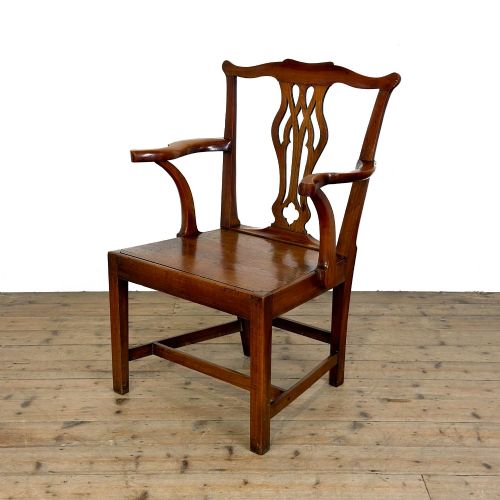
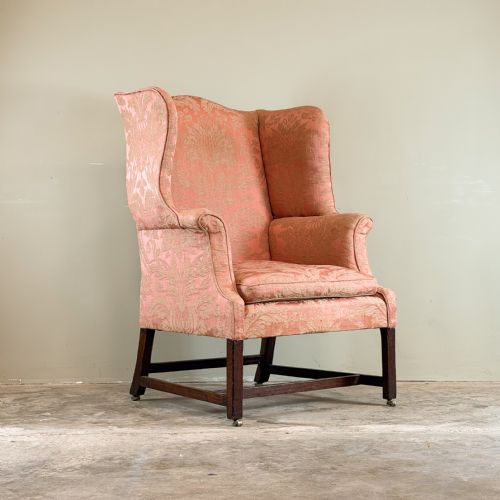
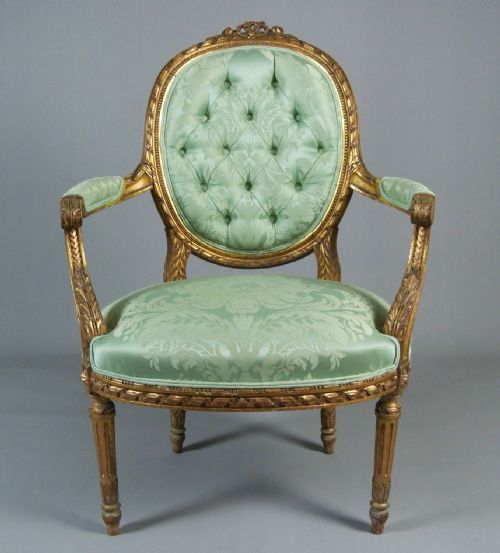
Georgian chippendale armchairs span the eighteenth century and later revival periods, bringing distinct historic character into a room. You will encounter library armchairs, desk chairs, and dining carvers bearing this designation.
The majority of pieces on this page originate from the Georgian era or reflect later Chippendale Revival movements. They appear in forms ranging from solid mahogany dining seats to generous upholstered library chairs.
How they were made
Makers shaped these seats primarily from solid timber, utilising dense mahogany, fruitwood, elm, and walnut for the structural frames. Artisans built the load-bearing rails and legs to withstand daily use while supporting elaborate carved details.
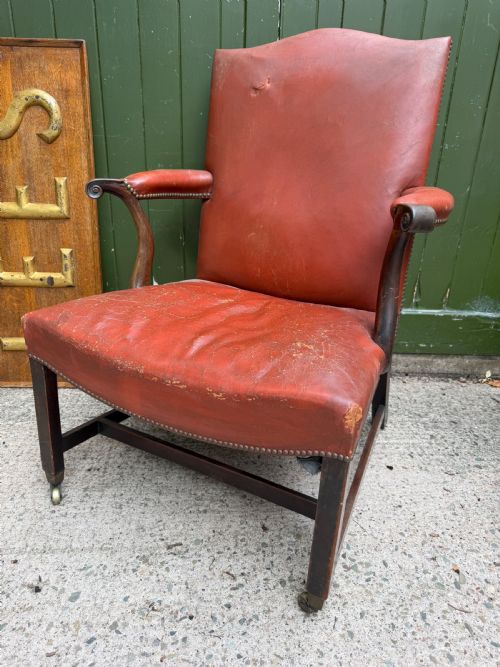
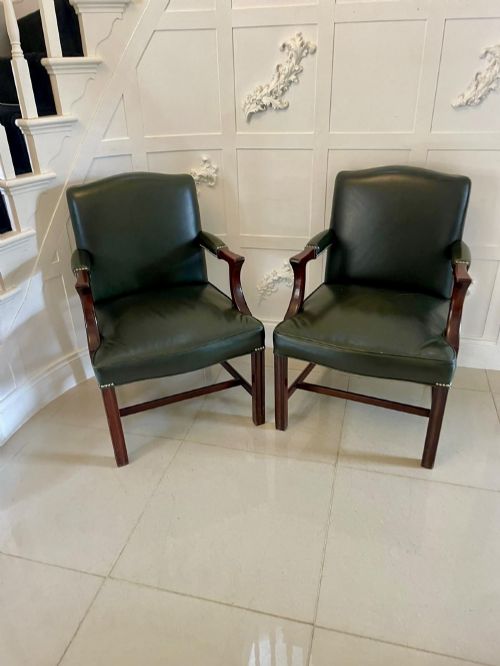
Upholstery techniques involved securing fabrics like leather, velvet, damask, and tapestry over supportive interior padding. Brass tacking often finished the edges of leather-bound library chairs and Gainsborough models.
Materials span native elm and fruitwood alongside imported mahogany, upholstered in period-appropriate leather, velvet, and tapestry.
What varies in quality
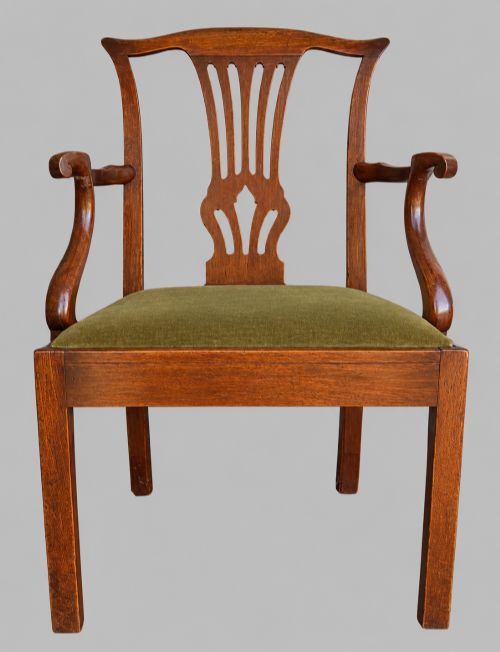
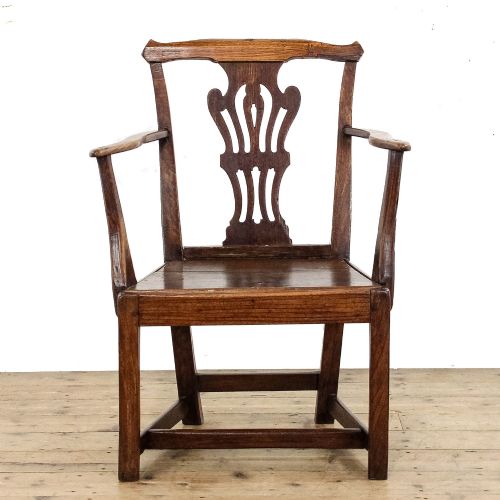
The crispness of the timber carving distinguishes finer examples from simpler provincial pieces. Deeply undercut blind fretwork and well-defined splats demonstrate superior hand-tooling by skilled cabinet-makers.
Proportion and timber selection dictate the standing of an armchair. Dense grain figures in the primary wood and harmonious scaling between the arms, legs, and back show intentional design rather than hurried production.
Thomas Chippendale
The Georgian Chippendale Armchairs Glossary
- Gainsborough armchair
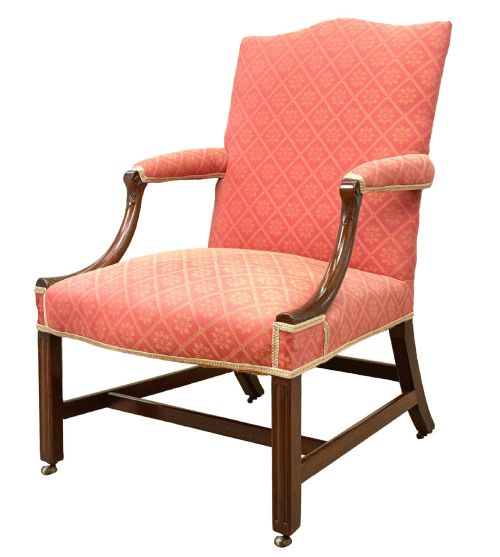
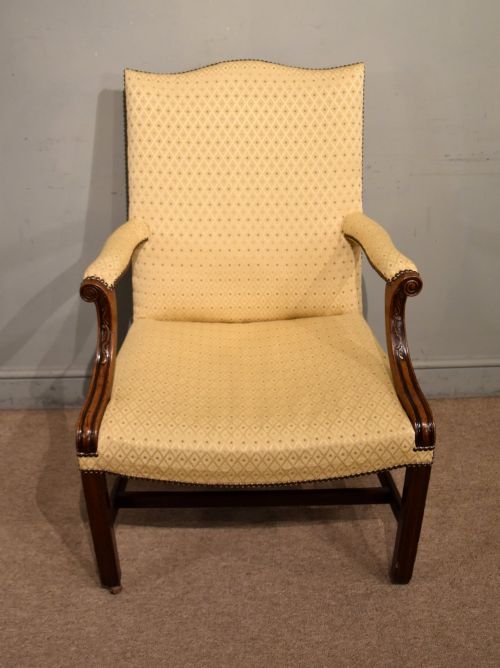
- A wide, upholstered seat with open padded arms, designed for sitting comfortably at a desk or in a library. These chairs typically feature substantial mahogany frames.
- Cockpen chair
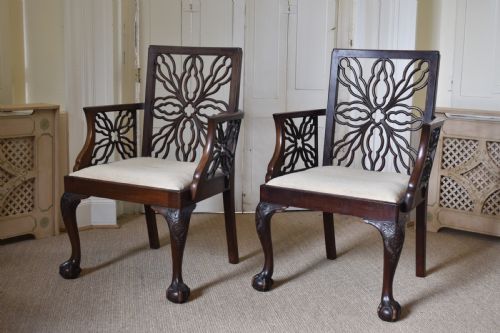
- A lattice-back seating form influenced by Chinese design principles, often constructed in mahogany. The geometric openwork creates a distinct patterned backrest.
- Blind fretwork
- Low-relief carved ornamentation applied to straight furniture legs or rails, resembling Chinese or Gothic fret patterns without piercing the wood completely.
- Elbow chair
- A traditional term for an armchair, particularly one used at a desk, dining table, or in a morning room. These provide arm supports while remaining compact enough for a table.
- Splat
- The vertical wooden strip down the centre of an open chair back. In these pieces, the splat is frequently pierced and intricately carved.
Georgian Chippendale Armchairs: Frequently Asked Questions
What is a Gainsborough armchair?
A Gainsborough armchair is a wide seat with open padded arms and a fully upholstered back, created for libraries and writing desks during the eighteenth century.
These pieces provide generous proportions and substantial timber frames designed for extended periods of reading or writing.
How do I spot a revival piece?
Revival chairs from later centuries often employ mechanical woodworking tools and feature standardised timber dimensions that differ from eighteenth-century tolerances.
Examining the construction methods underneath and inside the seat frame reveals the period of manufacture.
Are these chairs comfortable for daily use?
Many examples offer supportive upholstered seats and well-positioned armrests, though nineteenth-century and later revival models sometimes prioritize deep padding.
Library and desk variants provide sturdy support suited for long hours of seating.
What woods were used for these chairs?
Cabinet-makers relied primarily on dense mahogany, while regional workshops also utilised elm, fruitwood, and walnut for local commissions.
Timber choice often reflects the region of origin and the intended setting within a historic home.