



Georgian Ceramic Urn Vase
A georgian ceramic urn vase brings neoclassical grandeur to a room, offering sculptural form and hand-painted detail from the late eighteenth and early nineteenth centuries.
Georgian Ceramic Urn Vase
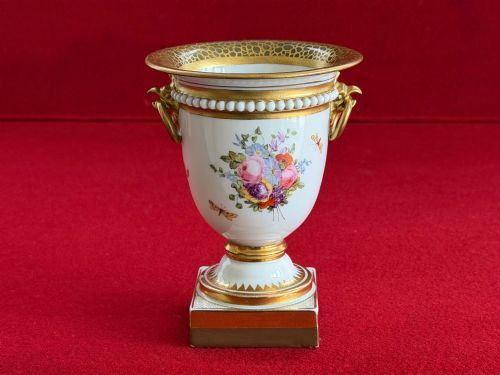
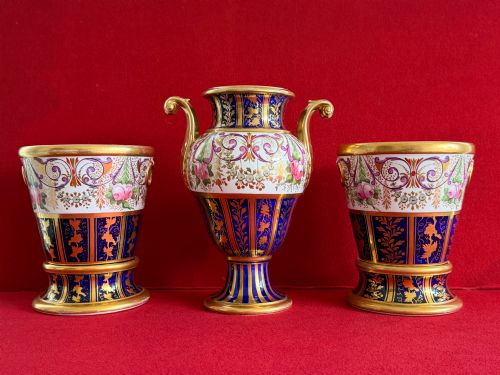
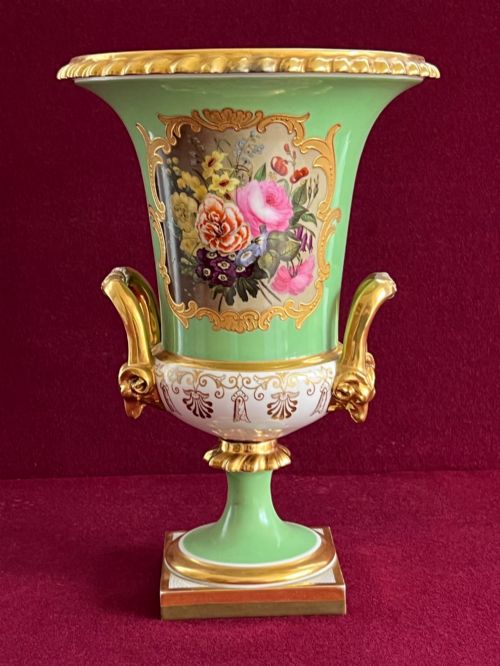
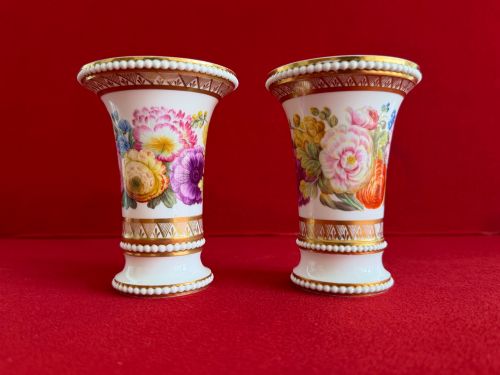
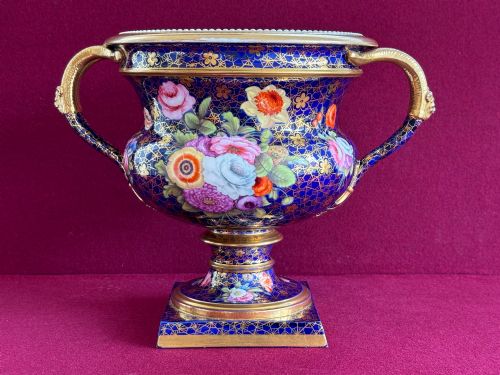
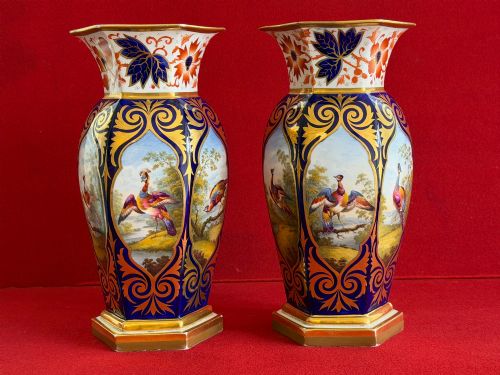
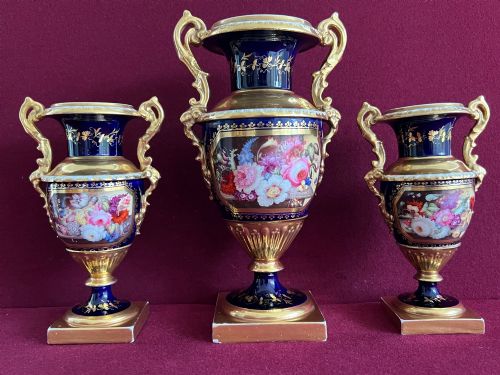
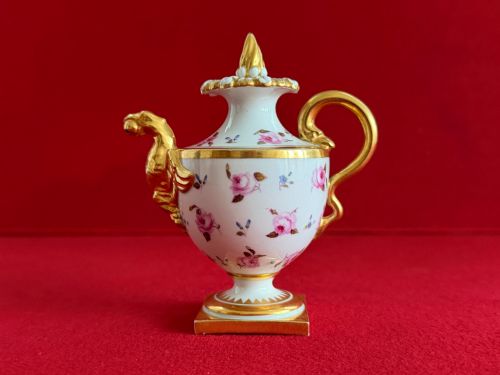
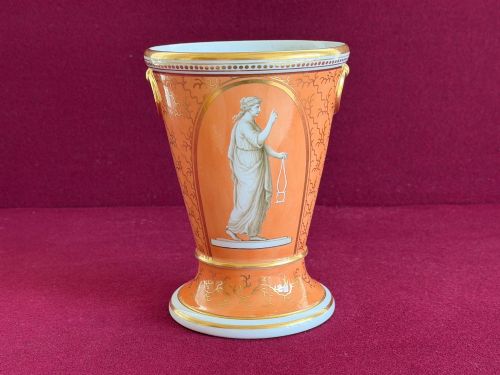
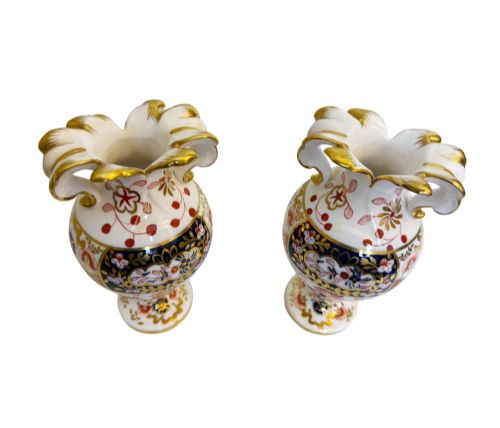
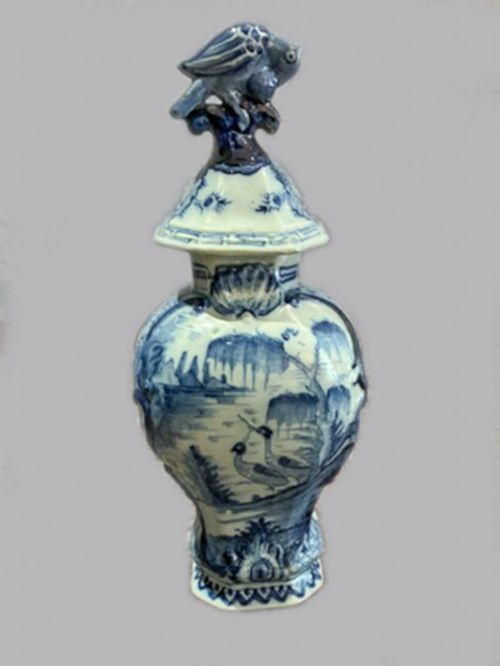
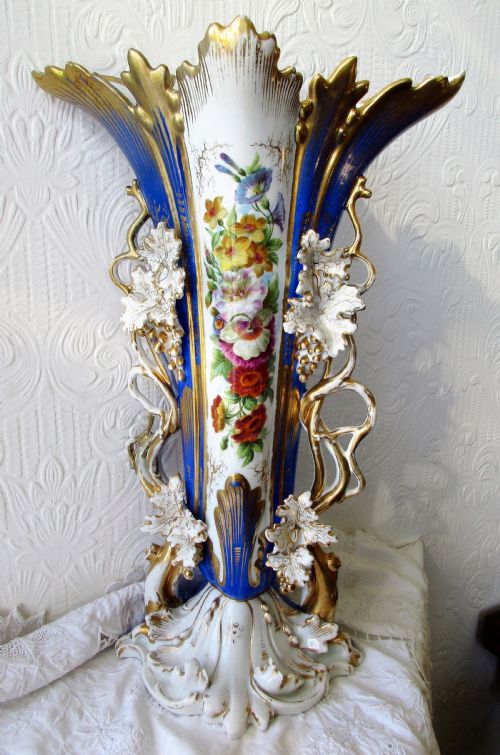
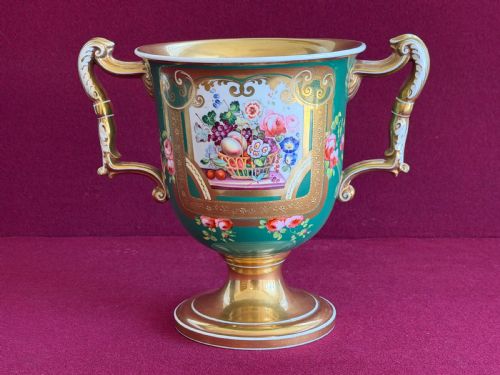
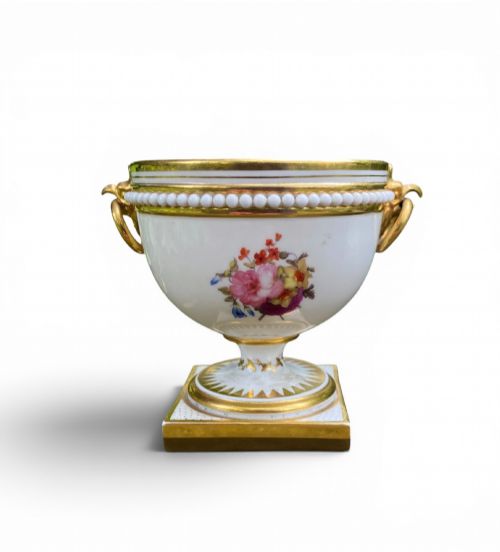
A georgian ceramic urn vase comprises classical vessel forms produced across the Georgian and Regency periods, spanning porcelain, ironstone, and tin-glazed earthenware. The selection on this page centres heavily on refined porcelain campana shapes, garnitures, and twin-handled urns originating from prominent English manufactories.
Makers such as Flight, Barr & Barr and Spode dominate the porcelain offerings, frequently employing neoclassical motifs, botanical painting, and gilding. Alongside these formal porcelain works, buyers encounter tin-glazed Delftware vessels and sturdy ironstone pieces decorated in blue transfer or Chinoiserie patterns.
Materials and production methods
Potters utilised fine porcelain, ironstone, and tin-glazed earthenware, shaping bodies on the wheel or in moulds to achieve classical urn and campana profiles. Gilding with gold leaf was applied to accentuate handles, rims, and footed bases.
Decoration relied on hand-painting by skilled ceramic artists using enamel colours, alongside transfer printing for complex patterns. Pieces were then fired in kilns to fix the glazes and metallic highlights onto the ceramic surface.
Georgian Ceramic Urn Vase Retail Price Guide 2026
Typical asking prices for georgian ceramic urn vase among the pieces listed under this phrase on Sellingantiques today, from the lower quarter to the upper quarter. They describe what is for sale here now, not the wider market.
Listings feature porcelain, ironstone, and tin-glazed earthenware shaped into campana vases, jardinieres, and garnitures.
Assessing quality in the range
Quality rests upon the crispness of the moulded form and the precision of the hand-painted enamels, where named artists or established factory standards elevate a piece significantly. Superior examples exhibit finely detailed botanical or landscape scenes that remain sharp and vibrant against the ceramic body.
The application of gold leaf and the preservation of original gilding and lids also dictate value. Pieces with intact handles, well-maintained enamels, and documented factory patterns stand apart from simpler or heavily worn domestic wares.
Flight Barr And Barr·Spode·Minton·H And R Daniel·Derby Porcelain·Miles Mason·Mason·Thomas Steel·Zachariah Boreman
The Georgian Ceramic Urn Vase Glossary
- Campana shape
- A bell-like vessel profile with an everted rim and a pedestal foot, typical of classical urns. This silhouette forms the structural basis for many Regency porcelain vases.
- Garniture
- A matched set of three or more decorative vases designed for display together on a mantelpiece. These sets often comprise a central urn flanked by smaller matching vessels.
- Ironstone
- A heavy, durable ceramic patented in the early nineteenth century as a robust alternative to porcelain. It readily accepts blue transfer printing and enamel decoration.
- Tin-glazed earthenware
- Pottery coated with a white tin-oxide glaze that provides an opaque surface for painted decoration. This technique is characteristic of eighteenth-century Delftware production.
- Spill vase
- A tall, narrow cylindrical vessel designed to hold wooden splints used for lighting candles or fires. These practical domestic items were frequently produced in fine porcelain.
Georgian Ceramic Urn Vase: Frequently Asked Questions
What is a campana shape?
A campana shape refers to an inverted bell profile resembling a flower, which became the defining silhouette for neoclassical urns during the Georgian and Regency eras.
Potters utilised this classical form to give decorative vases an architectural presence suitable for formal interior display.
How do I identify porcelain from ironstone?
Porcelain offers a translucent body with a refined, glassy feel, whereas ironstone is a heavy, opaque, and highly durable earthenware developed for everyday strength.
Ironstone pieces often feature thick bodies and bold transfer-printed or Chinoiserie designs rather than delicate translucent walls.
Were these urns used for flowers?
Many urns and jardinieres served practical functions for holding plants or cut flowers, while others acted purely as decorative mantel ornaments.
Specialised forms like rose water sprinklers and spill vases performed specific household duties tied to fragrance and firelighting.