




Regency Period Porcelain Vase
A regency period porcelain vase brings cabinet elegance to a room through crisp forms, rich enamels, and careful gilding.
Regency Period Porcelain Vase
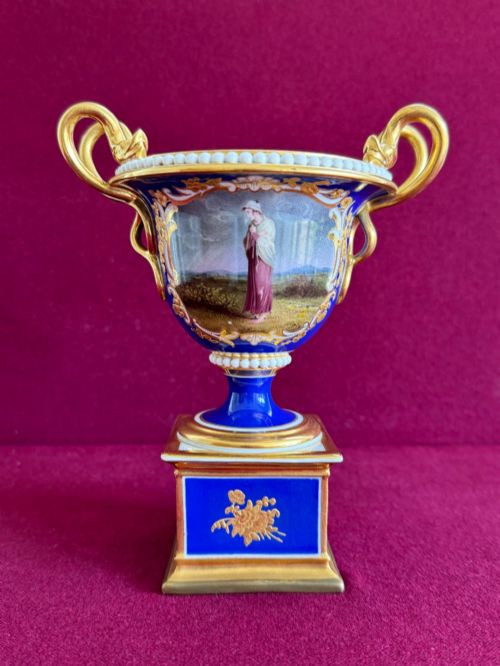
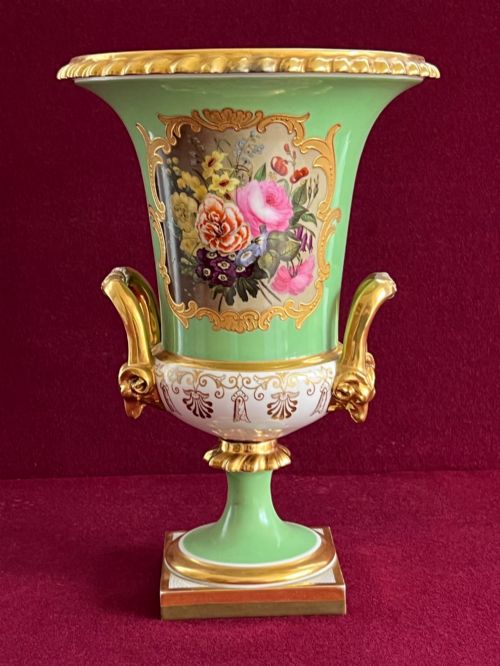
A regency period porcelain vase encompasses campana shapes, bottle forms, and jardinieres originating from the early nineteenth century. These vessels reflect the classical taste of the Georgian and Regency eras, executed in porcelain, bone china, and ironstone.
The pieces listed here frequently bear the marks of leading English manufactories such as Worcester, Derby, Spode, and Minton. Alongside English work, French production appears, demonstrating the international exchange of ceramic styles during the period.
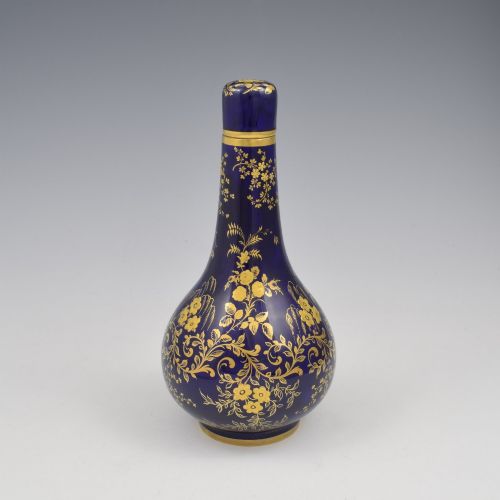
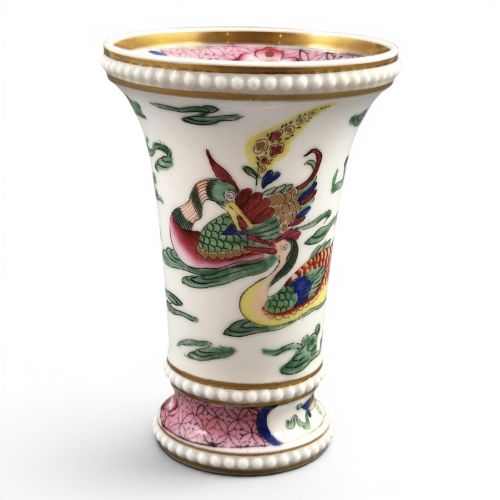
Forms vary from practical spill vases and rose water sprinklers to grand campana urns and decorative jardinieres. Many retain hand-painted decoration, floral motifs, or cobalt blue grounds enhanced with gold leaf.
How they were made
Potters formed these vessels using porcelain, bone china, or ironstone, shaping them on the wheel or casting them in moulds to achieve classical contours. Artisans then applied white or coloured glazes as a smooth ground for subsequent painting.
Decoration relied on hand-painted enamels, depicting naturalistic scenes, birds, and botanical patterns with fine brushwork. Guilders finished the pieces by applying gold leaf or gilt highlights, which were then fired to fix the metal to the ceramic surface.
Regency Period Porcelain Vase Retail Price Guide 2026
Typical asking prices for regency period porcelain vase among the pieces listed under this phrase on Sellingantiques today, from the lower quarter to the upper quarter. They describe what is for sale here now, not the wider market.
What varies in quality
The refinement of the painted decoration sets individual pieces apart, separating standard floral production from master work by named decorators. Crispness in the moulding of classical handles and campana rims also marks superior execution.
The richness and preservation of the gilding indicate the original cost and skill invested in the vessel. Well-preserved gold leaf and deep, even enamel grounds elevate the status of a piece within its period.
Flight Barr and Barr·Barr Flight and Barr·Derby Porcelain·Spode·Minton·Mason s Ironstone
The Regency Period Porcelain Vase Glossary
- Campana
- A bell-shaped vessel with a flared rim and pedestal foot, typical of classical antiquity and revived in Regency design.
- Jardiniere
- An ornamental pot or stand designed to hold growing plants or flowers, often ceramic and finished with handles.
- Spill vase
- A small, slender cylindrical vessel used to hold wooden spills for lighting fires or candles.
- Ironstone
- A patented ceramic body developed in the nineteenth century, known for its dense, durable, and semi-vitrified character.
- Gilt
- A thin layer of gold applied to the surface of porcelain or bronze to provide decorative metallic highlights.
Regency Period Porcelain Vase: Frequently Asked Questions
How do I care for antique porcelain?
Antique porcelain requires gentle handling and should be washed by hand in lukewarm water using mild soap when necessary. Avoid harsh scrubbers and commercial chemical cleaners to protect delicate enamels and gilding.
Keep pieces away from direct sunlight and areas subject to sudden temperature changes to preserve the glaze.
How are Regency and Georgian styles different?
Georgian style spans a broader period encompassing various classical and rococo revivals through the eighteenth and early nineteenth centuries. Regency style specifically reflects the taste of the early nineteenth century, marked by strict classical austerity.
Porcelain from the Regency era often draws direct inspiration from Greek and Roman archetypes.
Were these vases used for flowers?
Many vessels, such as jardinieres and rose water sprinklers, were designed specifically to hold water and botanical arrangements. Other forms, like decorative bottle vases, served purely as ornamental cabinet pieces.
Using antique vessels for live plants requires caution to prevent moisture damage to old ceramic bodies.