


Georgian Carved Writing Desk
A georgian carved writing desk brings solid timber work surfaces and period drawers into daily use.
Georgian Carved Writing Desk
Buyers seeking a georgian carved writing desk encounter pieces shaped by centuries of domestic use, ranging from formal pedestal forms to simpler writing tables. The selection spans authentic items from the eighteenth and nineteenth centuries alongside later revival pieces produced in the twentieth century.
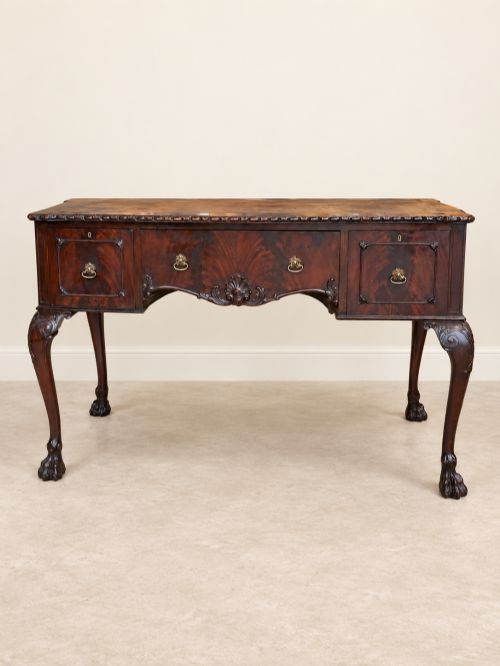
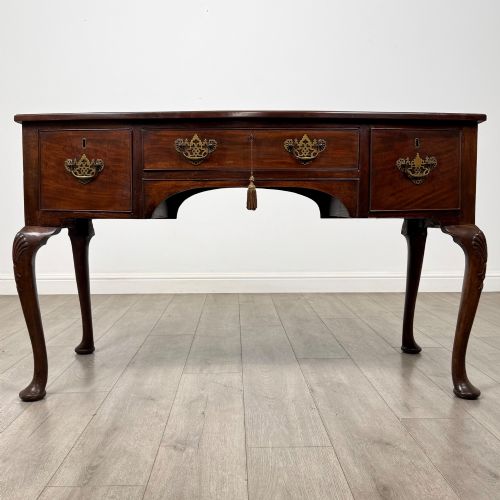
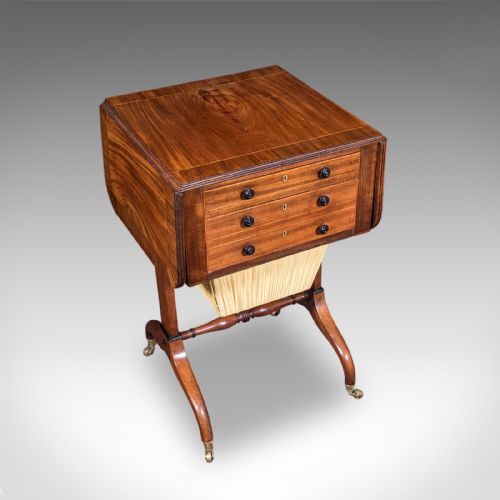
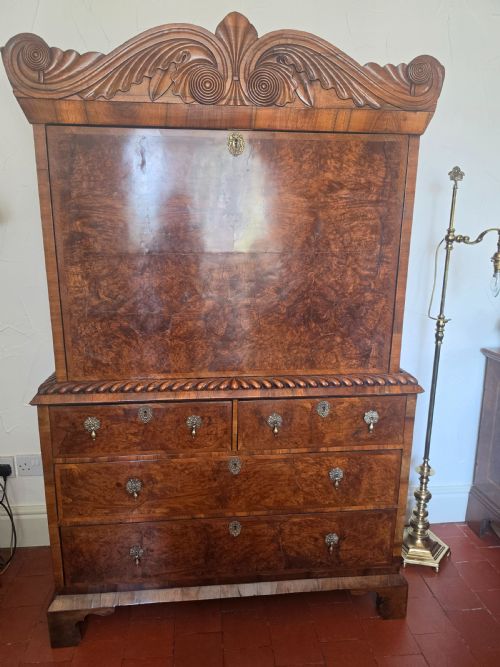
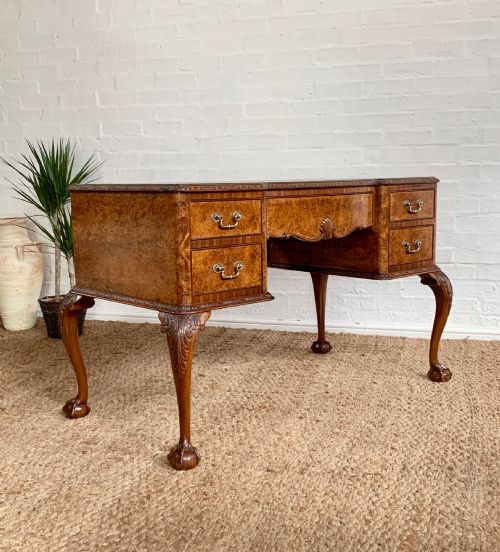
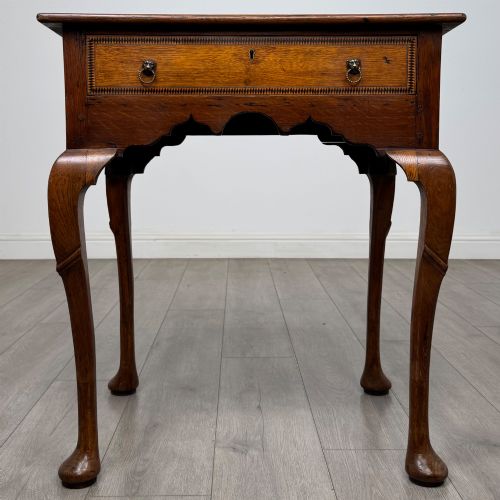
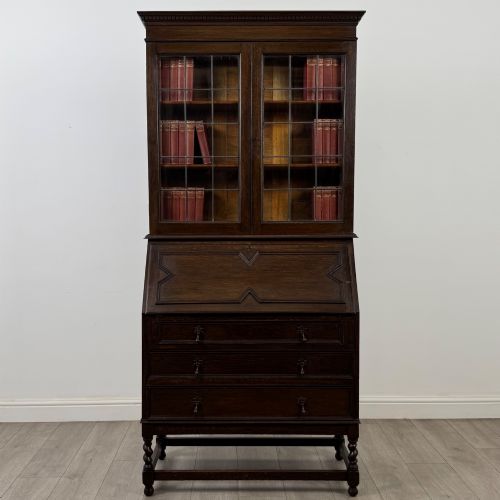
Most examples materialise as mahogany or oak furniture designed for study and correspondence, including kneehole desks, lowboys, and bureau bookcases. Walnut also appears frequently across the listings alongside specific regional variants like Welsh side tables.
Beyond standard writing desks, the category encompasses related forms such as library tables, writing slopes, and side tables that served similar domestic functions in period interiors.
How they were made
Construction relies heavily on dense hardwoods like mahogany, walnut, and oak, often finished with burr walnut veneers or flame mahogany surfaces. These timbers provide the structural stability required for heavy daily tasks.
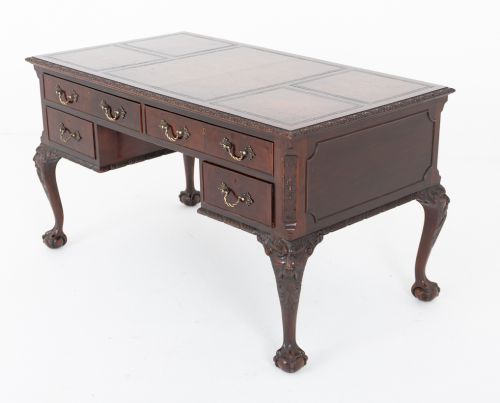
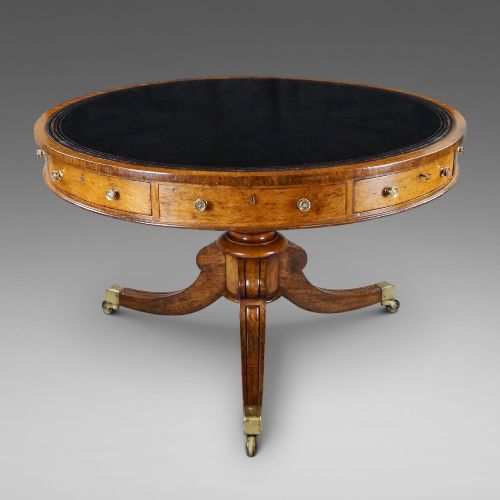
Secondary materials such as leather inserts provide durable writing surfaces, while brass hardware secures drawers and hinges. Joinery techniques reflect traditional cabinetmaking standards appropriate to each period.
Listings feature woods including mahogany, walnut, burr walnut, and oak across Georgian, Regency, and twentieth century revival periods.
What varies in quality
Quality differences emerge in the selection of timber veneers and the crispness of carved details. Superior examples exhibit carefully matched grain patterns and precise execution in secondary woods.
The integration of original brass fittings and leather inserts distinguishes better preserved pieces from those requiring extensive intervention over time.
The Georgian Carved Writing Desk Glossary
- Kneehole desk
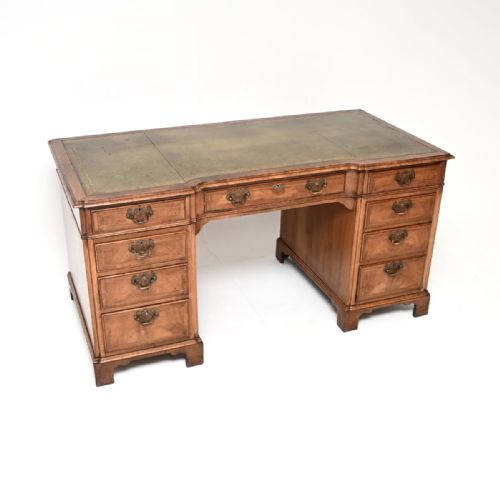
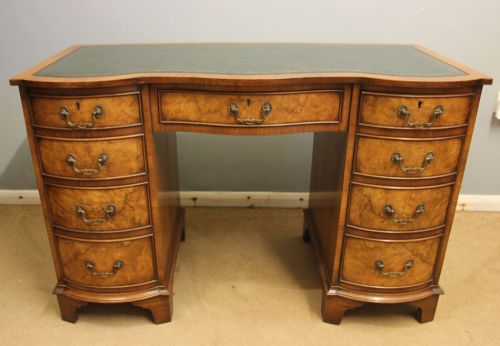
- A compact desk featuring a central recess for the user's legs flanked by banks of small drawers. This form became popular during the walnut and mahogany periods.
- Lowboy
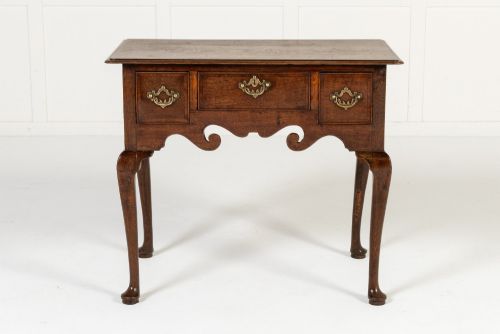
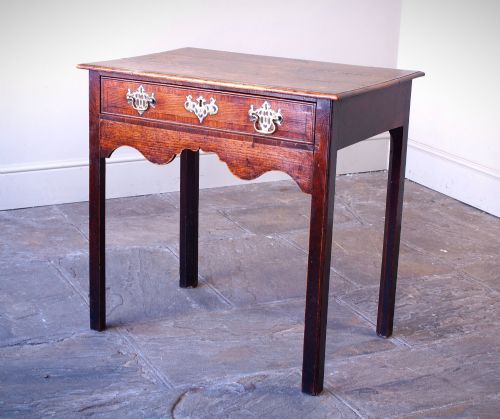
- A small table with one or more drawers, commonly constructed in oak during the eighteenth century. These pieces often function as writing surfaces or dressing tables.
- Pedestal desk
- A heavy freestanding desk comprising two independent drawer pedestals supporting a wide top. They frequently incorporate tooled leather writing surfaces.
- Writing slope
- A portable or table-top box with an angled lid designed to hold paper and provide a flat surface for correspondence. They appear in both oak and mahogany.
- Escritoire
- A tall writing cabinet featuring a fall-front door that conceals an arrangement of interior compartments and small drawers.
Georgian Carved Writing Desk: Frequently Asked Questions
How do I date a desk?
Dating relies on timber selection, structural joinery, and the style of hardware present on the drawers. Early pieces often utilise solid oak or walnut, whereas later nineteenth and twentieth century examples favour mahogany and specific revival motifs.
Secondary woods and construction methods inside the drawer carcases provide further clues to the decade of manufacture. Comparing these elements against known historical periods confirms the age of the piece.
Are these desks practical today?
Most antique writing desks fit easily into modern studies or living spaces as functional writing surfaces. Their standard proportions accommodate laptops and contemporary stationery without dominating a room.
Drawer configurations offer practical storage for household paperwork and small accessories. Leather inserts provide a stable, durable surface for everyday correspondence.
What is a kneehole desk?
A kneehole desk is a formal pedestal form featuring a central recess for the seated user. Stacks of small drawers flank this opening on both sides.
This layout allows for efficient organisation of documents while maintaining a compact footprint. They appear in walnut and mahogany across various periods.
How do I care for leather tops?
Leather writing surfaces require gentle cleaning with a damp cloth followed by occasional conditioning to prevent drying. Avoid harsh chemical cleaners that can strip the original tooling and colour.
Keeping the surface clear of direct sunlight preserves the tone of the leather. Proper maintenance ensures the material remains flexible for daily writing tasks.