


George III Bedside Cupboard
A george iii bedside cupboard brings eighteenth-century proportion and fine timber into a bedroom as a practical night stand.
George III Bedside Cupboard
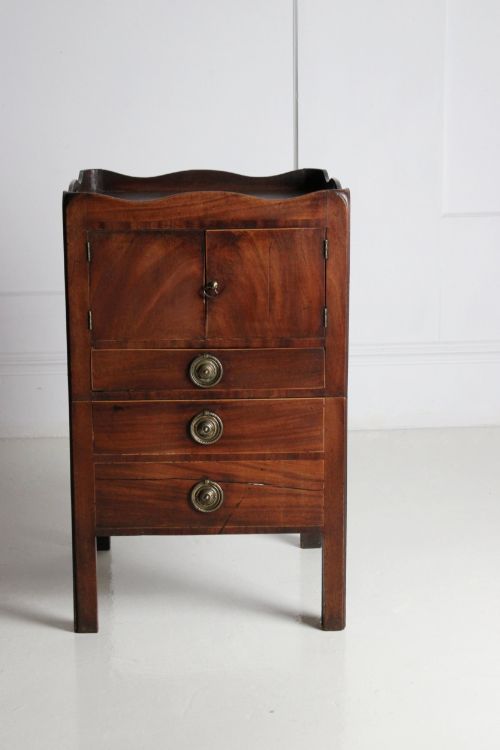
A george iii bedside cupboard is a compact piece intended for the bedroom, appearing in the evidence as cabinets, commodes, nightstands, and pot cupboards. These pieces date principally from the Georgian period and the eighteenth century, with occasional later interpretations recorded.
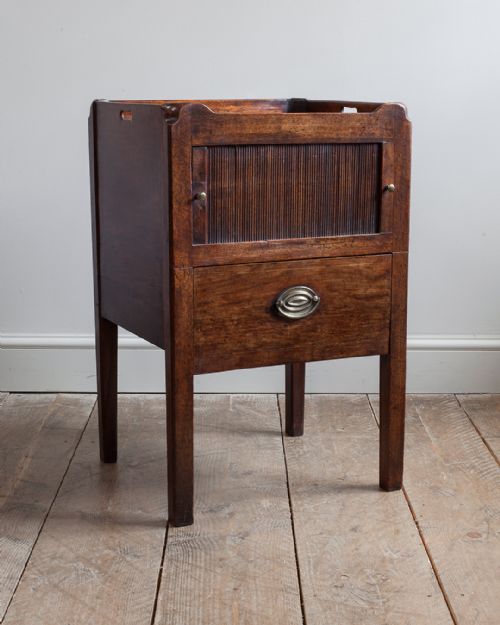
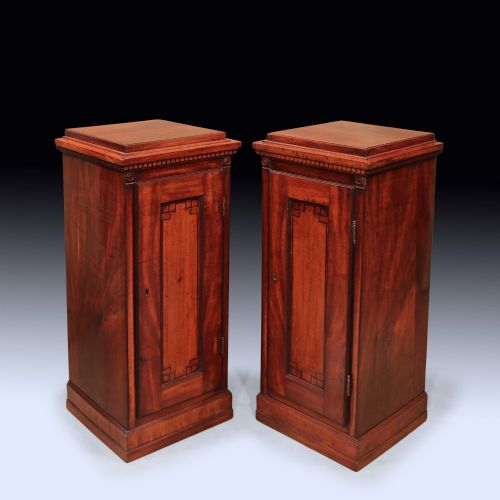
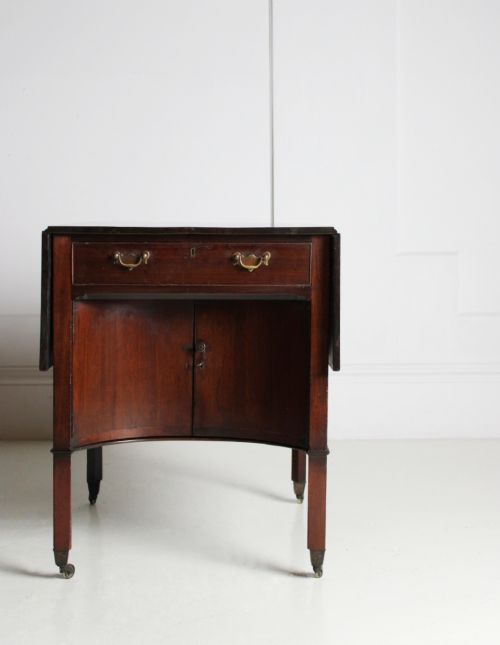
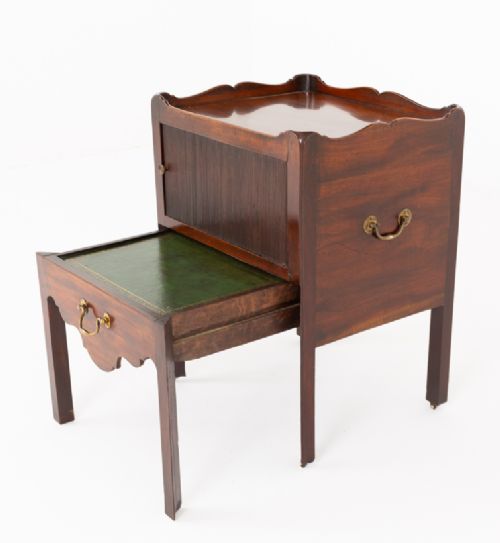
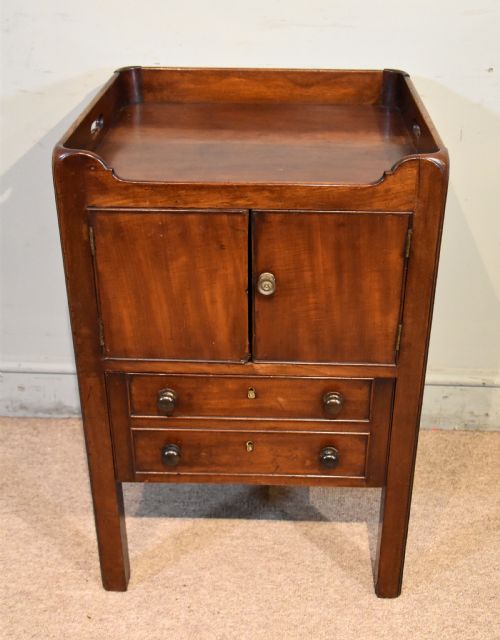
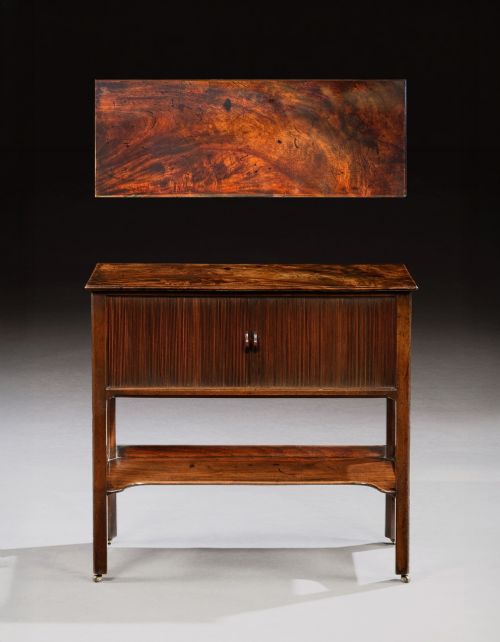
The most common form met on this page is the single or paired bedside cabinet in mahogany, sometimes constructed with a tray top or a tambour front. Makers of the period adapted the form into serpentine, bow-front, and pedestal shapes to suit the bedchambers of the elite.
The evidence shows that these items share space with related forms such as writing desks, side tables, and console side cabinets. Buyers seeking this phrase encounter functional storage units designed to conceal a chamber pot or hold night-time essentials.
Materials and Construction
Mahogany dominates the evidence as the primary timber, valued for its rich grain and structural stability. Workshops applied veneer over secondary woods and utilised satinwood, boxwood, and boxwood inlay for decorative contrast.
Joinery techniques included the incorporation of flexible tambour shutters made from narrow slats of wood glued to canvas backing. Brass fittings, including drop handles, provided functional hardware for drawers and doors.
Listings demonstrate that mahogany is the dominant timber, accompanied by satinwood and boxwood inlay across Georgian and Regency periods.
Distinctions in Execution
The hierarchy of quality rests on the ambition of the outline and the crispness of the cabinet work. Straight-sided cupboards represent the standard domestic tier, whilst serpentine fronts, concave curves, and tambour doors require advanced carpentry.
Refinement appears in the selection of figured mahogany veneers and the integration of delicate stringing in boxwood or satinwood. Subtle architectural details and well-executed tray tops separate standard production from superior examples.
Gillows
The George III Bedside Cupboard Glossary
- Tray top
- A raised rim around the upper surface of a table or cabinet designed to prevent objects from rolling off. This feature is frequently seen on eighteenth-century commodes.
- Tambour
- A flexible shutter formed of narrow vertical strips of wood attached to canvas, allowing curved cupboard fronts to slide open smoothly. It demands precise workshop execution.
- Commode
- A term used in the period for a decorative low cabinet or chest of drawers. In bedroom furniture, it often denotes a piece designed to house a chamber pot.
- Serpentine
- A front profile curving outward in the centre and inward at the sides, creating a wave-like shape. It represents a more complex form of cabinet-making.
- Boxwood inlay
- Narrow lines or decorative motifs of pale boxwood set flush into the darker mahogany surface. This technique highlights the borders and panels of the cabinet.
George III Bedside Cupboard: Frequently Asked Questions
What was a george iii bedside cupboard used for?
These cabinets served the eighteenth-century bedchamber by providing discreet storage for a chamber pot behind a lower door or cupboard. They also functioned as night stands to hold a candlestick, pocket watch, and night-time necessities.
Over time, the practical requirement for housing a pot faded, and these compact pieces transitioned into general bedside tables for modern bedrooms.
How do I identify a tambour front?
A tambour door consists of narrow vertical wooden laths glued to a flexible fabric backing that slides horizontally along a grooved track. This clever mechanism allows access to a curved cabinet without swing clearance for doors.
Examples with tambour fronts are typically associated with higher-quality eighteenth-century craftsmanship and command attention for their smooth operation.
Are pairs difficult to find?
Matching pairs of eighteenth-century bedside furniture are scarce because domestic pieces were often made individually or separated over centuries of use. Many matched pairs seen today are assembled later from single survivors of similar proportions and timber.
When authentic pairs appear together in the listings, they represent a matched set that has remained united since the Georgian era.
What is the difference between a commode and a nightstand?
In eighteenth-century terminology, a commode generally referred to a fine low cabinet with doors or drawers, whereas a nightstand or pot cupboard specifically denoted a bedside piece. In modern usage, these terms overlap considerably in the listings.
Both forms utilise the same compact dimensions and premium mahogany timbers suited to fashionable bedchambers.