
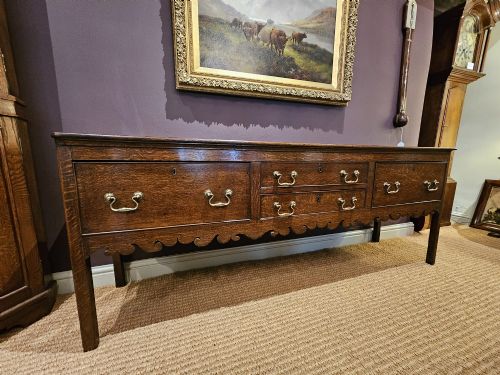
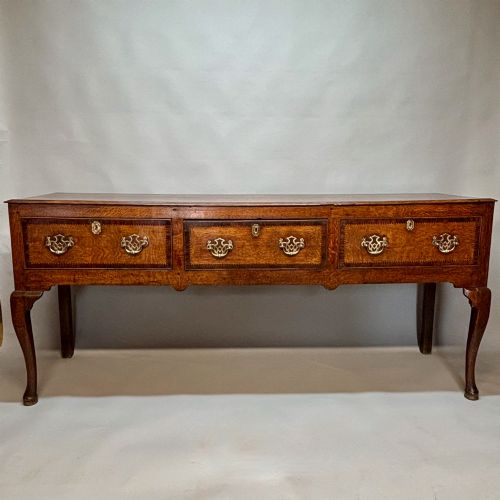
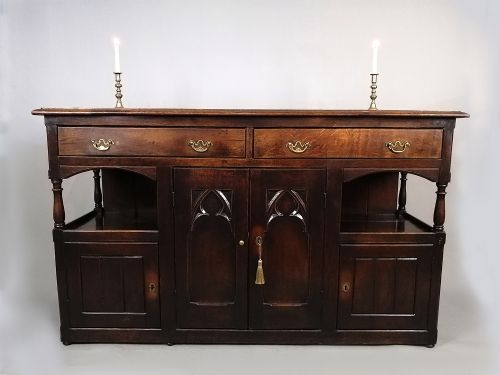
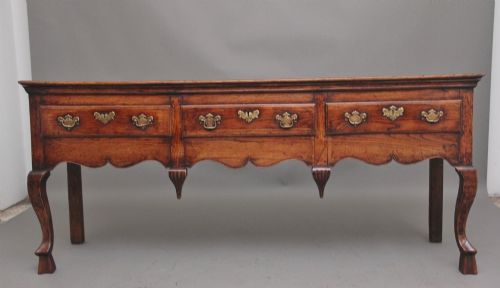
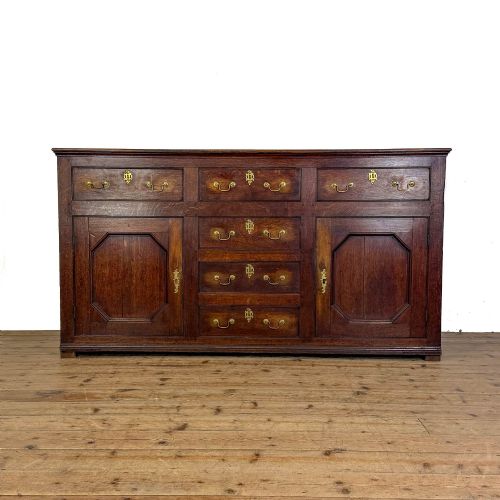
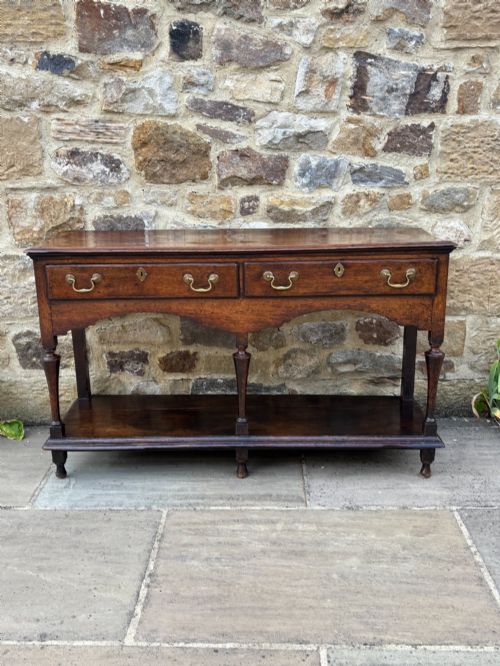
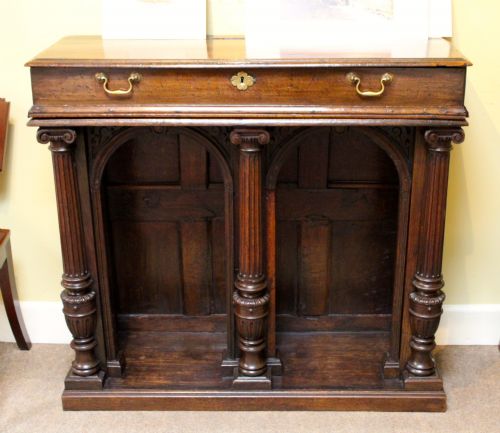

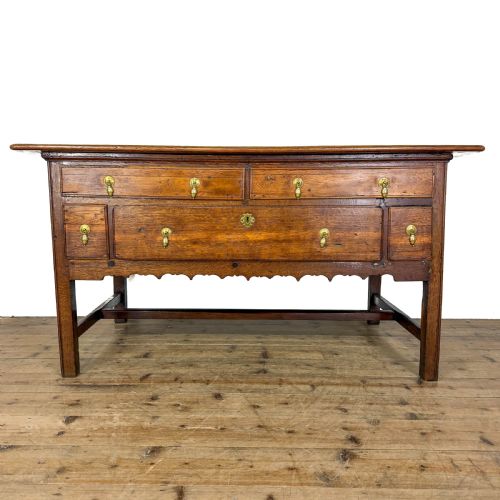
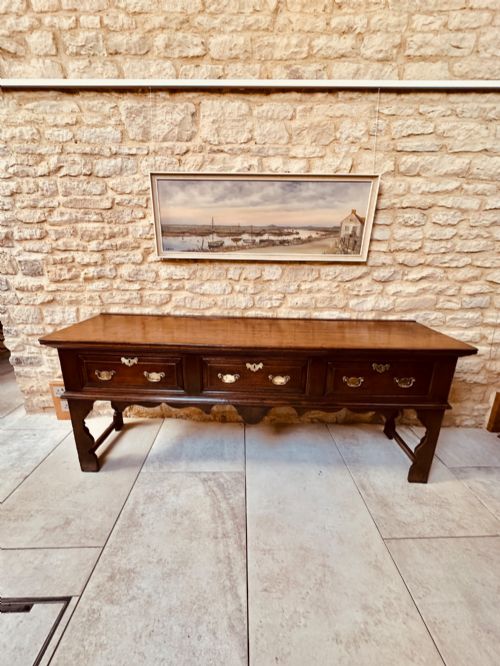


Georgian Carved Oak Credenza
These georgian carved oak credenza examples are sturdy timber storage pieces built to last centuries, prized for honest joinery and rich grain.
Georgian Carved Oak Credenza
Buyers searching for a georgian carved oak credenza typically encounter robust dresser bases, low dressers, and sideboards originating from the eighteenth and nineteenth centuries. These forms reflect English country and Georgian traditions, functioning originally as practical farmhouse or townhouse utility furniture.
The pieces appearing on this page span several decades, featuring periods such as Georgian, Regency, and eighteenth century designations. Most examples present as heavy wooden serving tables, side cabinets, and dresser bases rather than formal urban parlour cabinets.
How they were made
Construction relies heavily on solid oak timber, sometimes incorporating figured elements like pollard oak and burr oak for decorative contrast. Secondary metals such as brass and iron appear in structural hardware, handles, and hinges.
Joinery techniques focus on sturdy panel-and-frame construction designed to withstand daily domestic use. Carved details are executed directly into the dense wood grain by hand.
Georgian Carved Oak Credenza Retail Price Guide 2026
Typical asking prices for georgian carved oak credenza among the pieces listed under this phrase on Sellingantiques today, from the lower quarter to the upper quarter. They describe what is for sale here now, not the wider market.
Some sturdy tables survive with distinct knife-scrape marks on top, recording centuries of kitchen suppers.
What varies in quality
The refinement of the carving separates standard utilitarian furniture from more ambitious regional pieces. Crisp execution in floral or geometric motifs indicates superior workshop output.
The choice of timber creates visual distinction, where burr or pollard oak veneers provide richer figuring than plain straight-grained boards. Surface patination achieved through generations of polishing also dictates visual appeal.
The Georgian Carved Oak Credenza Glossary
- Dresser base
- The lower section of a kitchen or dining dresser, constructed as a freestanding sideboard with drawers and cupboards. This form provided essential workspace and storage in older homes.
- Burr oak
- A timber growth formation showing swirling, knotty grain patterns used selectively for decorative drawer fronts and cabinet panels. It adds texture and visual depth to plain furniture surfaces.
- Blind silhouette
- A decorative cut-out shape applied to furniture legs or apron rails to create visual lightness without piercing the wood completely. This detail appears frequently on mid-eighteenth-century pieces.
- Breakfront
- A cabinet or sideboard front where the central section projects forward from the flanking wings. This architectural arrangement creates shadow and depth across the facade.
Georgian Carved Oak Credenza: Frequently Asked Questions
What is a dresser base?
A dresser base is a heavy wooden sideboard featuring drawers or cupboards along the lower section, designed for serving food and storing kitchenware.
These pieces served as central work surfaces in traditional domestic spaces before fitted kitchens became standard.
How do I care for oak furniture?
Keep wooden furniture away from direct heat sources and sudden humidity changes to prevent the timber from splitting.
Apply natural beeswax periodically to nourish the surface and maintain a soft, protective sheen.
Are these pieces English?
The majority of these items originate from English regional workshops, reflecting local cabinet-making traditions and native timber usage.
Styles often correspond to specific geographic regions like Lancashire or country districts.
What is pollard oak?
Pollard oak comes from trees that were cut back near the main trunk to encourage dense, textured branch growth.
This pruning method produces tightly patterned wood grain favoured for decorative cabinet panels.