


Solid Oak Server Table
A solid oak server table brings honest weight and rich timber grain to a room, offering sturdy utility that outlasts modern substitutes.
Solid Oak Server Table
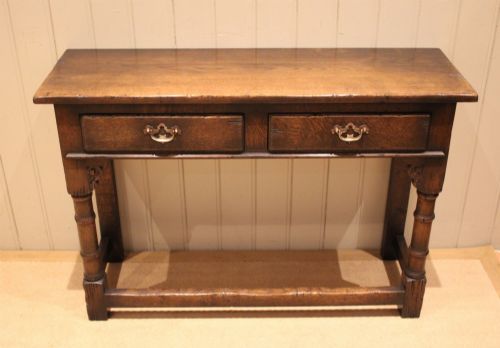
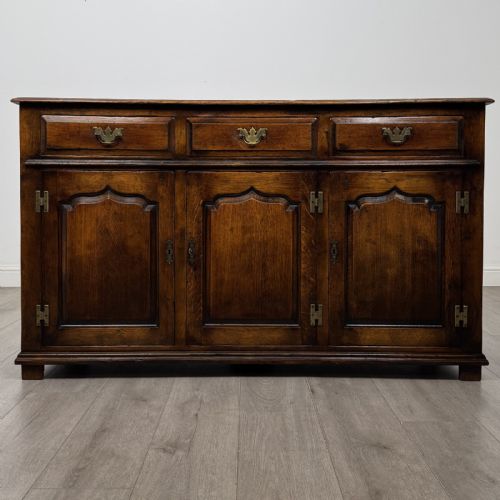
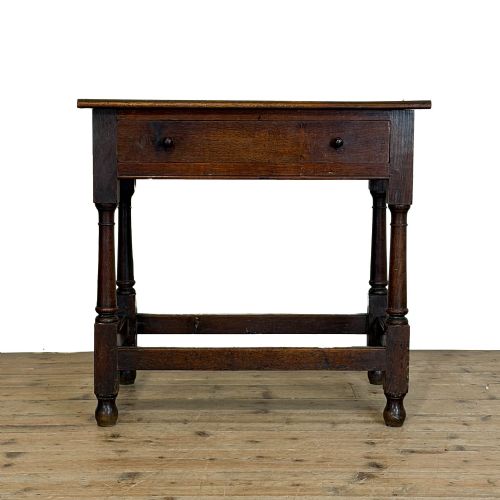
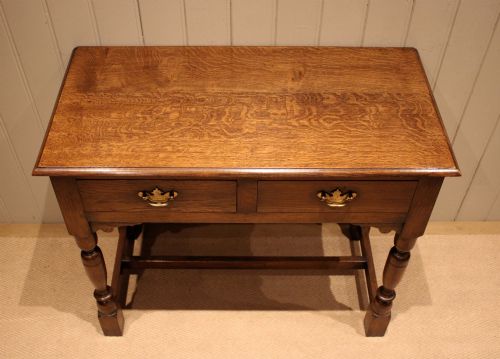
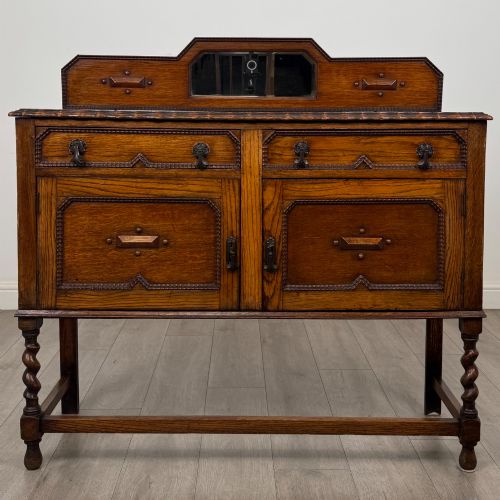
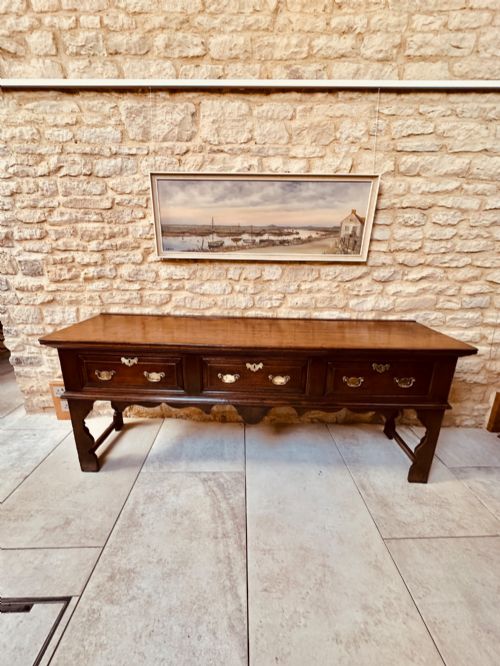
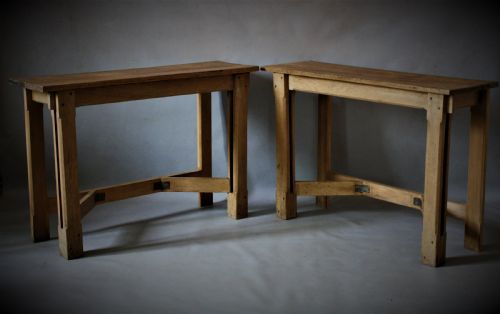
A solid oak server table spans several centuries of British craftsmanship, taking the form of sideboards, dresser bases, console tables, and serving tables. Buyers seeking a solid oak server table will encounter pieces ranging from early seventeenth-century vernacular forms to Arts and Crafts interpretations and Edwardian expressions.
The practical function remains rooted in surface utility and sturdy storage, manifesting as low dresser bases with drawers or upright sideboards. Many examples display regional characteristics, including Cotswold School pieces and English Country House designs.
Earlier iterations from the seventeenth and eighteenth centuries present heavy timber construction with pegged joints, while later nineteenth and twentieth-century pieces adopt cleaner lines or revival styles like Jacobean and Georgian.
Materials and construction methods
The primary material across all listed items is oak, frequently supported by brass, iron, glass, and other metals used for handles, hinges, and structural reinforcement. Timber selection relies heavily on quarter-sawn boards that reveal distinct medullary rays.
Construction techniques depend upon the period, employing traditional mortise and tenon joinery secured with wooden pins in older examples, alongside machine-planed boards and dovetailed drawer construction in later Victorian and Edwardian pieces.
Listings span multiple eras from the seventeenth century through the Edwardian period, uniting styles such as Jacobean, Arts and Crafts, and Georgian.
Assessing quality and character
Quality reveals itself in the integrity of the timber selection, the crispness of hand-carved details, and the survival of original brass or iron hardware. Superior examples maintain their structural rigidity without excessive timber shrinkage or inappropriate modern replacements.
The finesse of the joinery and the depth of the patina accumulated through generations of use distinguish exceptional pieces from simpler utilitarian items.
The Solid Oak Server Table Glossary
- Dresser base
- A low wooden sideboard fitted with drawers and sometimes a lower shelf, historically used for food preparation and serving in large kitchens.
- Jacobean Revival
- A nineteenth and twentieth-century style imitating the ornate, sturdy carved aesthetic of the early seventeenth century.
- Arts and Crafts
- A design movement prioritising traditional craftsmanship, simple forms, and visible construction methods over machine-made ornamentation.
- Quarter-sawn
- A method of milling timber that cuts perpendicular to the growth rings, producing stable boards with pronounced grain patterns.
Solid Oak Server Table: Frequently Asked Questions
What is a solid oak server table used for today?
These tables function well as dining room servers, hallway consoles, or living room sideboards where durable surface space is required.
Their substantial timber construction allows them to support heavy decorative objects, lamps, or serving dishes during meals.
How do I care for antique oak furniture?
Maintain the timber by keeping it away from direct heat sources and sudden humidity changes that cause wood to split.
Apply natural beeswax occasionally to nourish the grain and protect the aged surface without building up synthetic residues.
How can I tell a seventeenth-century piece from a later revival?
Early pieces exhibit hand-cut tool marks, pegged joinery, and natural timber movement consistent with age rather than machine precision.
Revival furniture from the Victorian or Edwardian eras often shows standardised dimensions and modern mechanical fixings alongside historical stylistic motifs.
Will a heavy oak server fit in a modern hallway?
Many sideboard and console formats come in modest proportions or shallow depths designed specifically for narrower spaces.
Checking the listed dimensions against your room layout ensures the piece provides utility without blocking movement.