
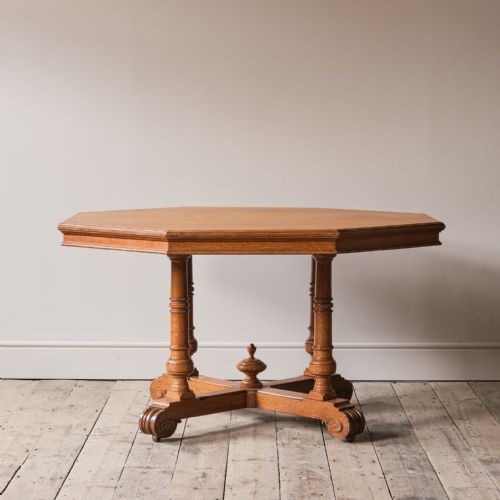
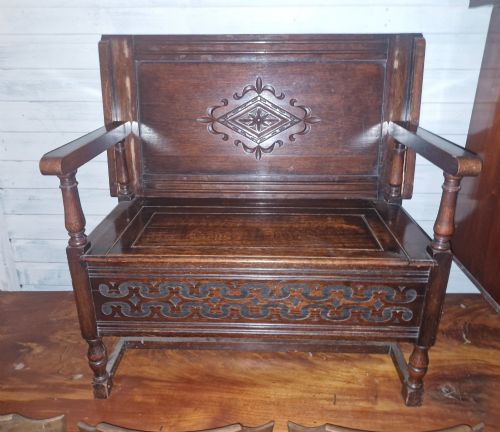
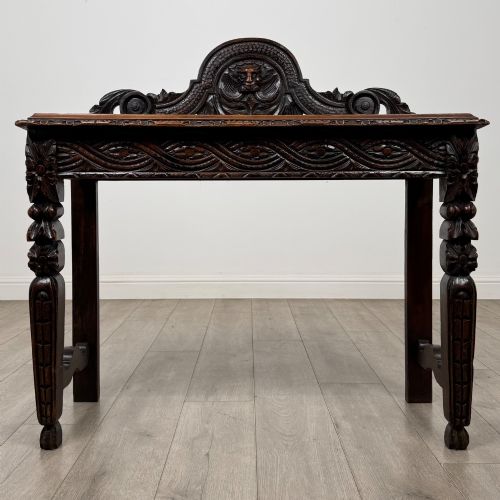
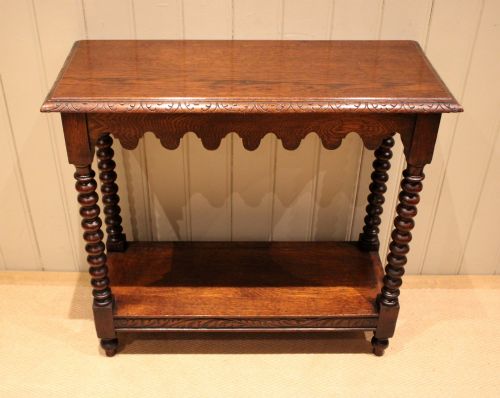
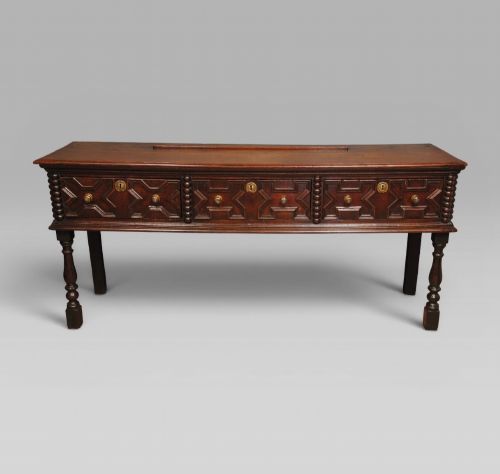
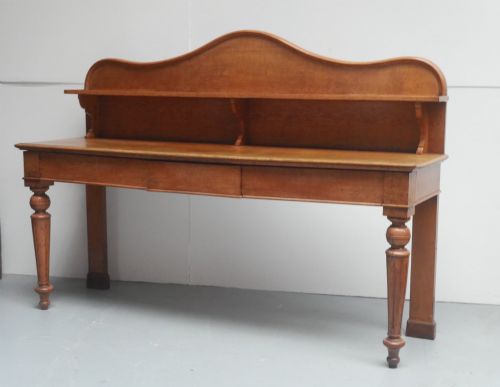
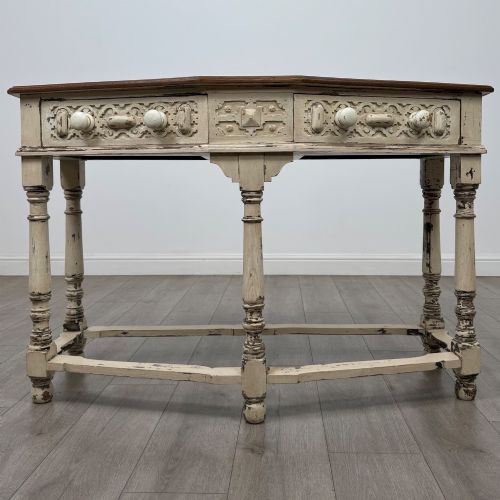
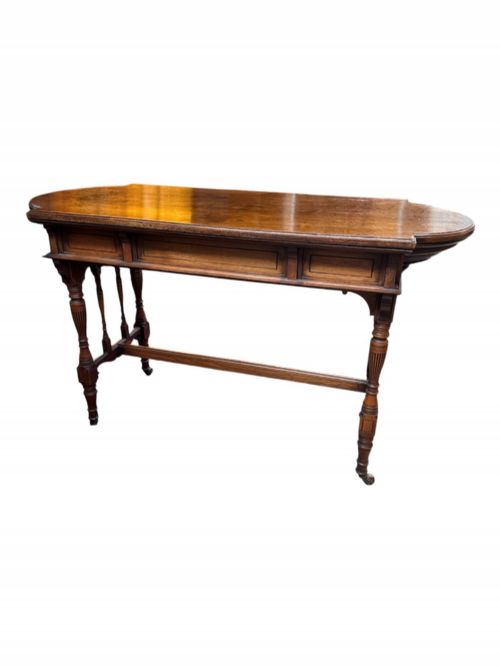

Carved Oak Hallway Table
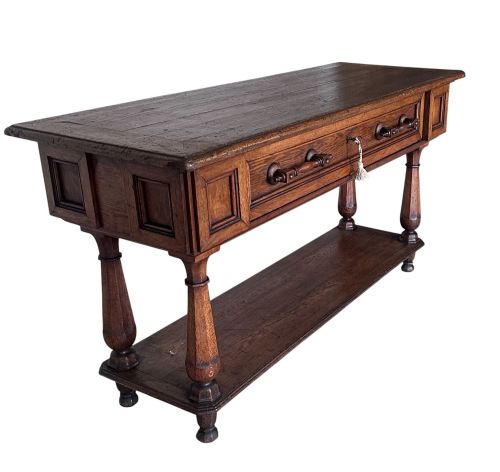
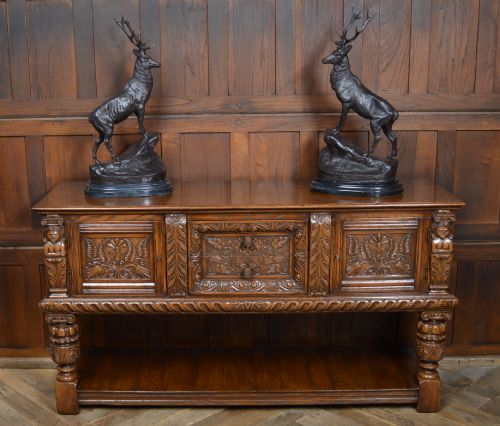
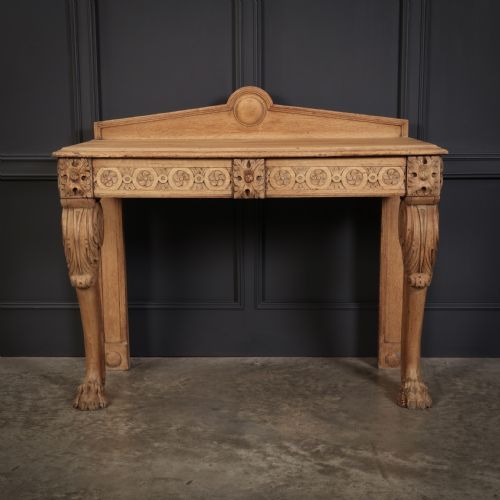
These heavy, figured pieces of a carved oak hallway table provide a practical anchor for an entrance, bringing rich grain and solid construction to daily comings and goings.
Carved Oak Hallway Table
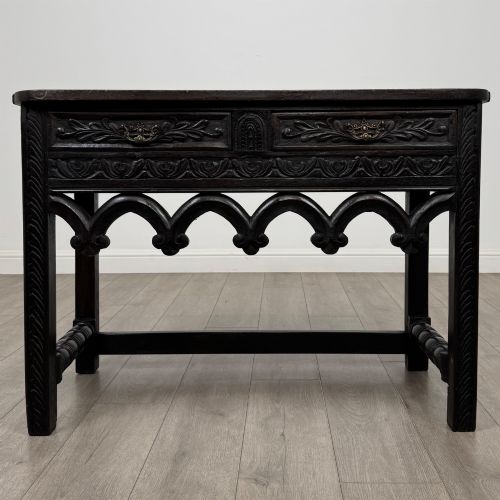
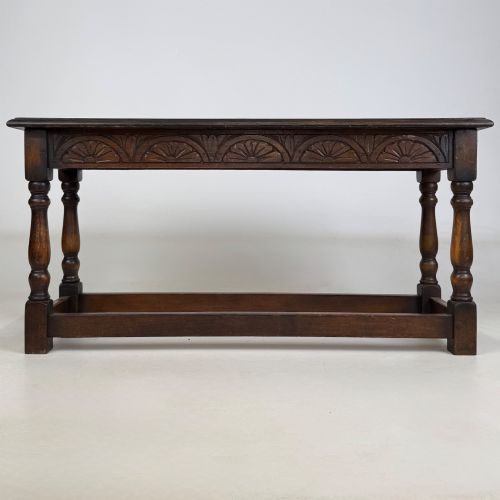
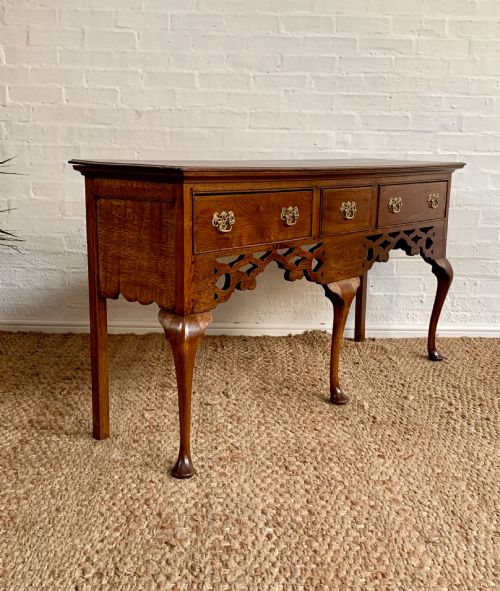
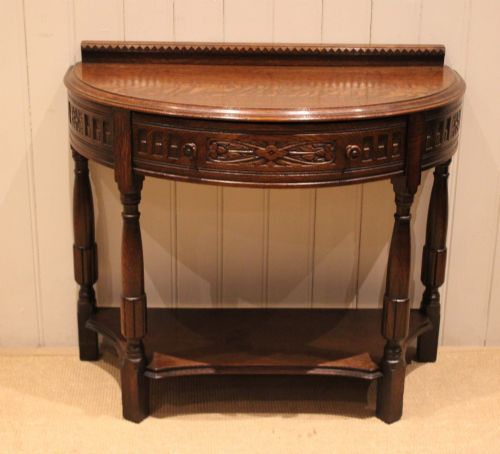
A carved oak hallway table takes many forms across this selection, appearing as console tables, side tables, serving tables, and benches spanning centuries of domestic life. You encounter pieces built for practical utility in halls, ranging from narrow console tables to heavy dresser bases and monks benches.
The periods represented stretch from the 17th century through the Victorian era and into the early 20th century, showing how cabinetmakers adapted traditional forms. Vernacular country styles sit alongside revival pieces influenced by Gothic, Jacobean, and French provincial tastes.
The most frequent variations on this page combine structural surfaces with carved decoration, utilising the natural density of timber. Whether finding a demi-lune table or a panelled hall seat, these surfaces offer enduring utility for modern spaces.
How they were made
Construction relies heavily on solid oak timber, chosen for its strength and prominent grain patterns, occasionally paired with marble tops, brass fittings, and iron accents. Joinery methods involve traditional framing and panel construction designed to support heavy daily use in entranceways.
Carving defines the ornamentation, utilising chip carving, linenfold, and figural motifs such as the green man across drawer fronts and aprons. Surface finishes vary from darkened patinated wax to bleached oak treatments, reflecting the period of manufacture and subsequent care.
Materials extend beyond traditional timber to incorporate marble, brass, iron, and painted wood across various table tops and stands.
What varies in quality
The distinction between ordinary and exceptional examples rests in the depth and crispness of the timber carving and the integrity of the original joints. Superior pieces exhibit hand-cut mouldings and harmonious proportions that suit narrow spaces without sacrificing structural rigidity.
Timber selection and surface patination dictate visual success, with quarter-sawn oak showing desirable medullary rays that lesser boards lack. Retaining original hardware and untouched finishes separates a piece of true character from heavily restored alternatives.
The Carved Oak Hallway Table Glossary
- Console table
- A table designed to stand against a wall, frequently supported by brackets or legs at the front. These tables provide a slim profile suited for narrow corridors.
- Dresser base
- A low sideboard fitted with drawers and occasionally cupboards below a solid top. This form provides substantial storage within domestic settings.
- Monks bench
- A convertible piece of furniture functioning as a table with a hinged back that tilts to form a seat. It serves multiple purposes in compact spaces.
- Quarter-sawn
- A method of cutting logs that exposes prominent growth rings and silver grain figures. This technique produces stable boards resistant to warping.
- Green man
- A sculptural architectural ornament depicting a face carved with leaves and vines. This motif appears frequently in Gothic revival woodwork.
Carved Oak Hallway Table: Frequently Asked Questions
Where should I place a console table?
These narrow tables suit entrance halls, corridors, and living room perimeters where floor space is at a premium. They provide a convenient surface for post, keys, and decorative lamps.
Positioning them against a solid wall ensures stability, particularly for designs with slender legs or marble tops that benefit from additional support.
How do I clean solid oak furniture?
Dust surfaces regularly with a soft, dry cloth to prevent dirt accumulation within carved recesses. Avoid silicone-based sprays that can build up and dull the timber.
Apply a traditional beeswax polish sparingly once or twice a year to nourish the grain and maintain a natural lustre on the wood.
What is a monks bench used for?
A monks bench functions as both a seating bench and a table by pivoting the upper backrest over the arms. This dual purpose made it ideal for smaller rooms where space was limited.
In daily use, it offers concealed storage beneath the seat while providing an occasional surface for writing or dining.
How can I date an oak table?
Examine the construction marks, tool traces on the underside, and the style of the carving to determine the likely era. 17th-century pieces often display pegged mortise and tenon joints with hand-planed panels.
Later Victorian and Edwardian revivals frequently incorporate machine-sawn timber and softer secondary woods behind the primary oak facades.