


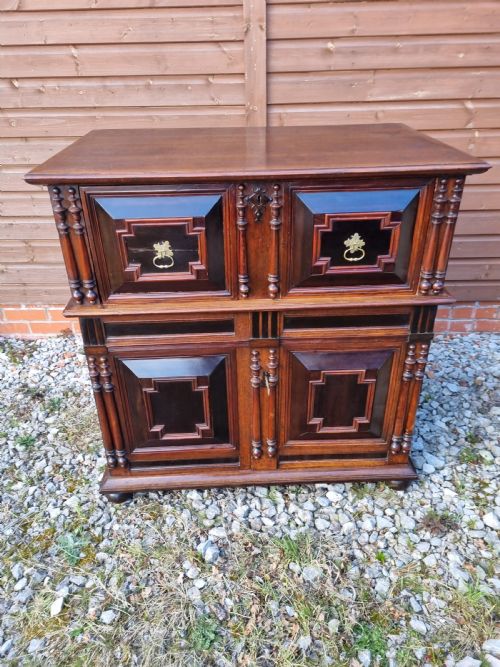
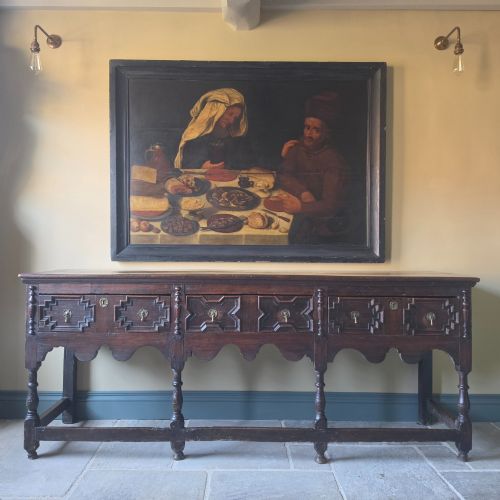
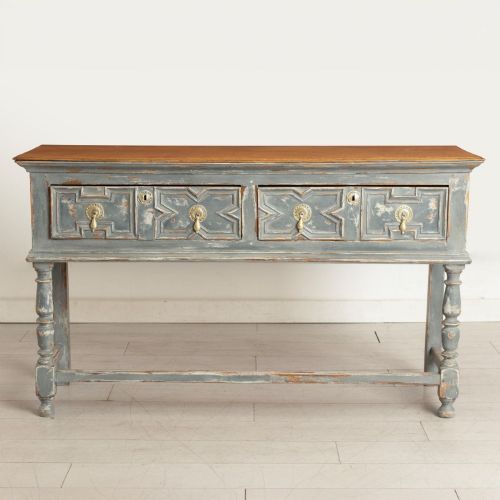
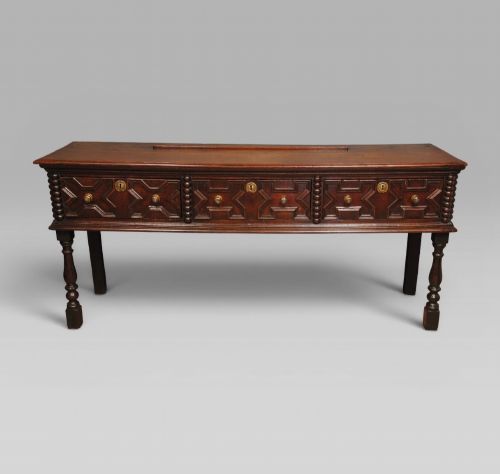
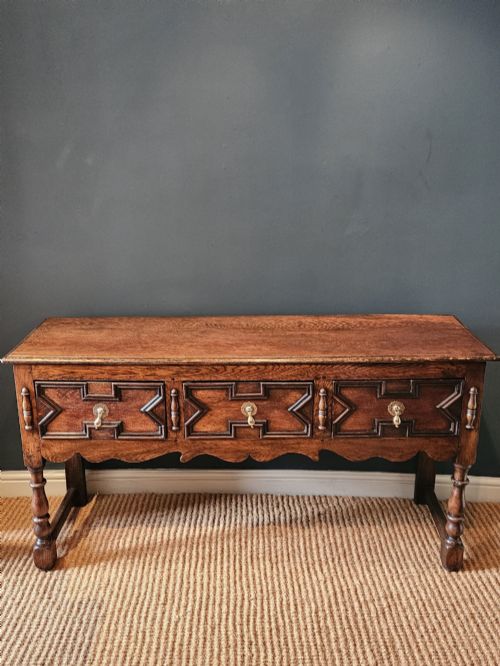
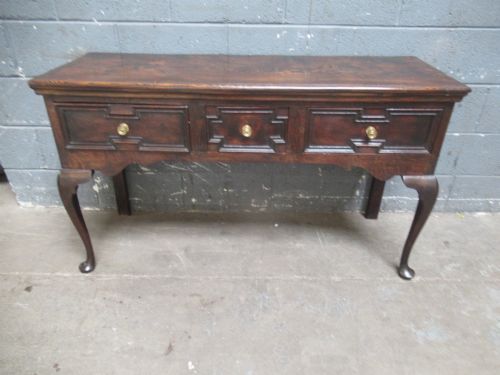


Geometric Moulded Oak Sideboard
A geometric moulded oak sideboard offers robust storage built from durable timbers, bringing centuries of texture and historic craftsmanship into a room.
Geometric Moulded Oak Sideboard
Most entries function as servers, low dressers, or drawer bases designed to anchor a dining room or hallway. The assortment balances genuine period survivals with later interpretations built in historic styles.
Materials and construction methods
Makers built these pieces primarily from solid oak, supplementing the primary timber with contrasting woods like ebony, sycamore, snakewood, and fruitwood for decorative effect. Brass and iron hardware such as handles and hinges completed the structure.
Carpenters applied geometric moulding directly onto drawer fronts and cupboards to create shadow and relief. Skilled hands shaped the wood using period joinery techniques, embedding decorative inlays and panel details into the carcase.
Geometric Moulded Oak Sideboard Retail Price Guide 2026
Typical asking prices for geometric moulded oak sideboard among the pieces listed under this phrase on Sellingantiques today, from the lower quarter to the upper quarter. They describe what is for sale here now, not the wider market.
Some dressers wear their centuries proudly, hiding stubborn seventeenth-century drawer locks that have refused to turn since the reign of Charles the Second.
Distinctions in quality
Superior examples display crisp, deeply cut geometric mouldings and precise contrasting wood inlays that remain intact across the drawer fronts and doors. The integrity of the original oak structure and the harmony of secondary timbers dictate the standing of a piece.
Variations arise between authentic seventeenth-century survivors and twentieth-century revival interpretations built to replicate earlier aesthetics. Pieces retaining their original brass or iron hardware and uncompromised timber surfaces command greater interest from collectors.
The Geometric Moulded Oak Sideboard Glossary
- Geometric moulding
- Raised wooden profiles applied in repeating angular patterns to drawer fronts and doors. This technique defines seventeenth-century case furniture by adding architectural depth.
- Dresser base
- A low wooden sideboard fitted with drawers or cupboards, historically used for food preparation and storage. These items form the core of early oak offerings.
- Jacobean style
- An English design aesthetic spanning the early seventeenth century characterised by solid proportions and panelled construction. Later revivals recreate these heavy, rectilinear forms.
- Snakewood
- A dense, heavily figured exotic timber utilised for contrasting inlay and decorative banding. Artisans prized it for distinctive dark markings.
- Server
- A side table or low cabinet utilised for presenting food and storing dining utensils. These pieces share similar proportions with low dresser bases.
Geometric Moulded Oak Sideboard: Frequently Asked Questions
How do I date a piece?
Dating relies on examining the construction methods, tool marks, and timber shrinkage visible throughout the carcase. Seventeenth-century examples show hand-riven boards and early joinery techniques.
Later revival items from the nineteen hundreds utilise machine-sawn timber and replicate historic styles while maintaining cleaner, more uniform surfaces.
Where should I place this furniture?
These low cabinets suit dining rooms, hallways, and living spaces where sturdy surface area and enclosed storage are required. Their heavy proportions anchor a room effectively.
Keep them away from direct heat sources and strong sunlight to protect the aged oak and delicate decorative inlays.
What woods are used besides oak?
Makers incorporated ebony, sycamore, fruitwood, and snakewood alongside the primary oak structure. These secondary timbers provide striking contrast on moulded drawer fronts.
Hardware components typically consist of brass or iron fixtures fitted during construction or added during later periods.