




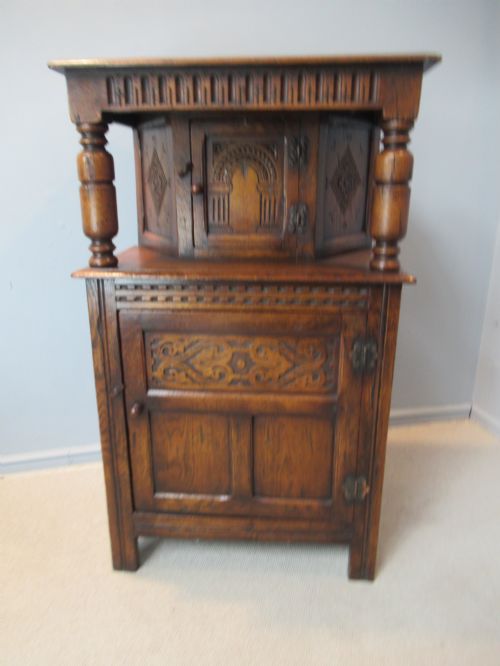
Jacobean Revival Buffet
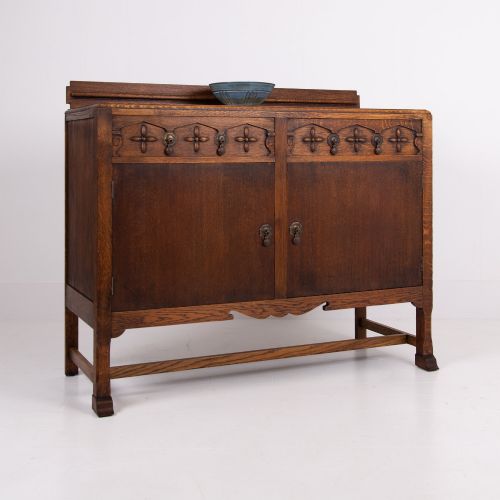
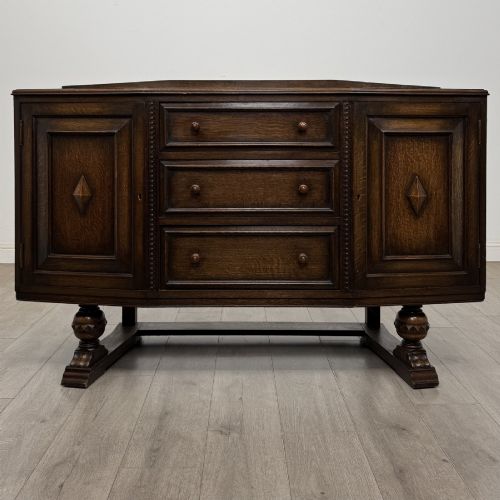
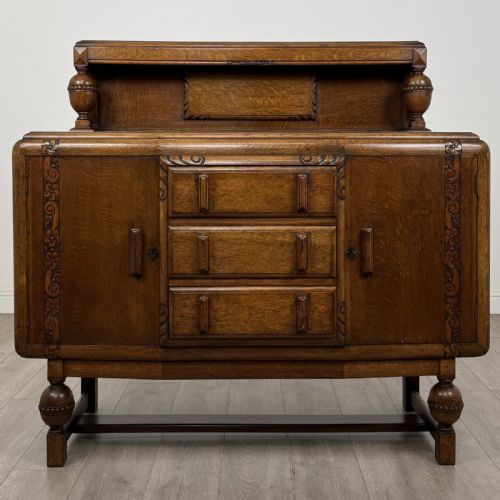
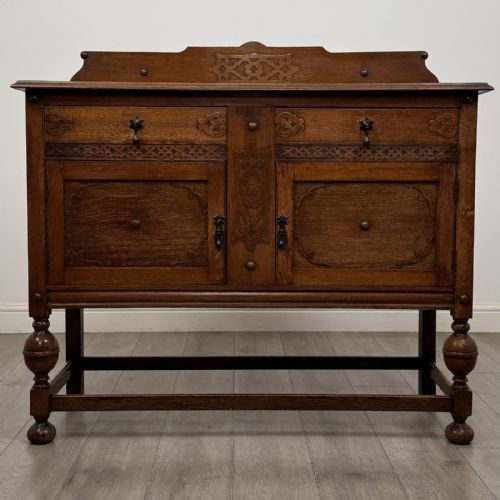
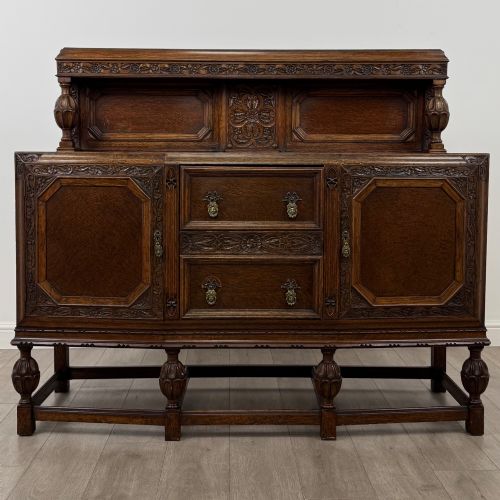
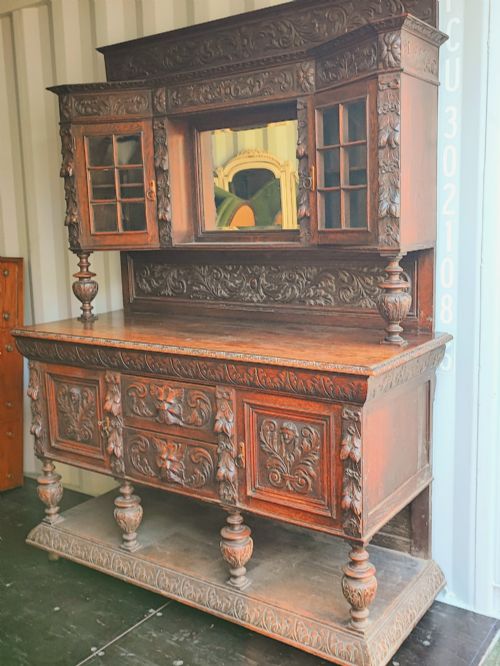
These heavy, timber-framed pieces known as a jacobean revival buffet bring seventeenth-century gravity and carved presence into a modern dining room.
Jacobean Revival Buffet
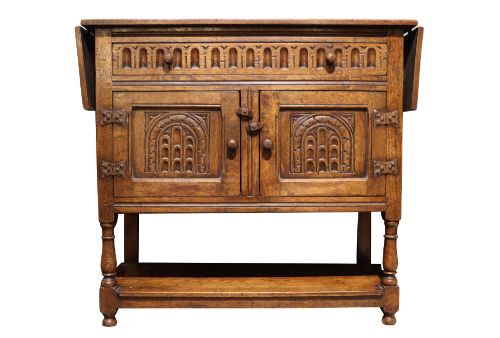
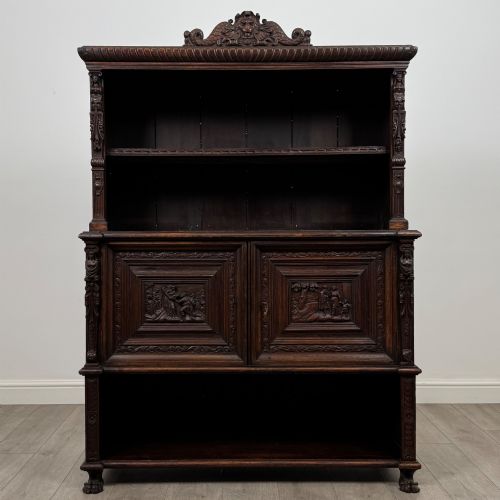
A jacobean revival buffet brings together sturdy timbers, deep carving and utilitarian storage to form the anchor of a dining room. Most examples on this page date from the Victorian, Edwardian and early twentieth-century periods, channeling an earlier aesthetic through the craftsmanship of later decades.
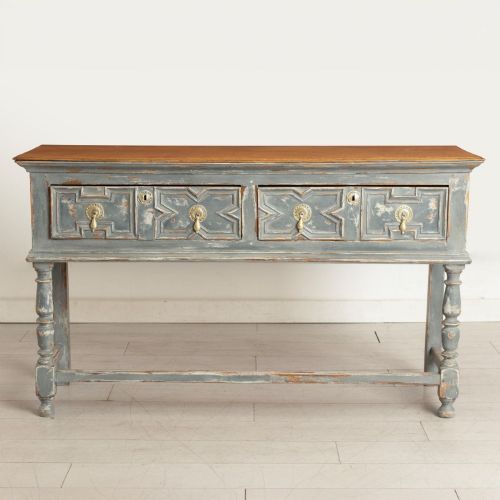
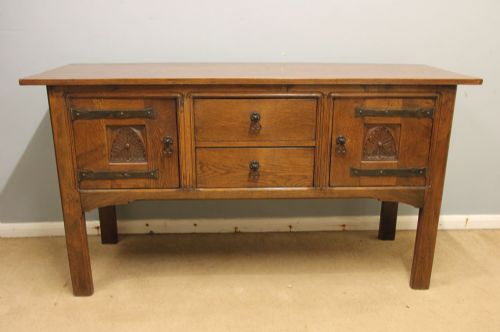
The form appears across various iterations including sideboards, dresser bases, court cupboards and side cabinets. These pieces serve principally to store tableware and display serving dishes upon their substantial top surfaces.
What varies in quality
The distinction between standard and superior pieces rests on the depth and crispness of the hand-carving. Shallow, mechanical incision lacks the dramatic shadow and relief found in finer examples.
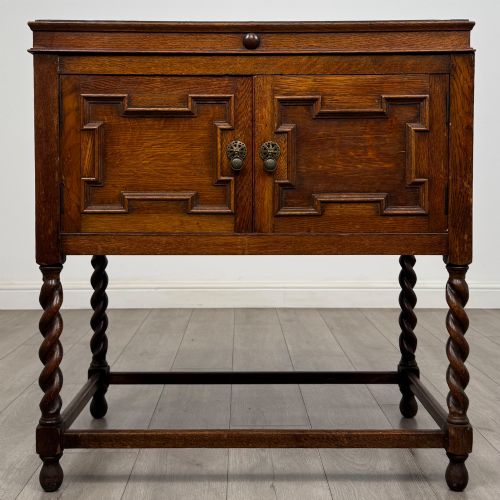
Construction heft and timber selection dictate overall longevity. Dense, golden oak frames with integrated stretcher bases and robust brass face handles outlast lighter, less substantial builds.
Jacobean Revival Buffet Retail Price Guide 2026
Typical asking prices for jacobean revival buffet among the pieces listed under this phrase on Sellingantiques today, from the lower quarter to the upper quarter. They describe what is for sale here now, not the wider market.
Several pieces feature secret compartments hidden behind heavily carved panels, built originally to keep family silver safe from light-fingered guests.
Maple and Co
The Jacobean Revival Buffet Glossary
- Court cupboard
- A heavy, enclosed storage piece featuring an upper section recessed above a broader lower base. These items provide generous capacity for household linens and crockery.
- Barley-twist
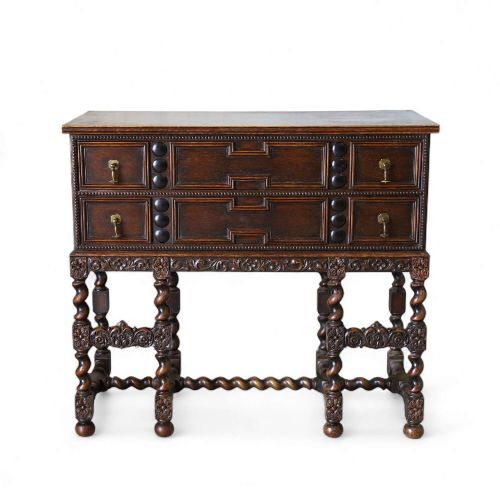
- A decorative turning technique resembling a twisted rope, commonly utilised on the legs and upright supports of these sideboards. This ornamental detail lends vertical rhythm to otherwise heavy rectangular forms.
- Dresser base
- A low sideboard fitted with drawers and frequently a pot board or lower shelf. They evolved from practical kitchen furniture into formal dining room sideboards during the revival periods.
- Stretcher base
- Horizontal wooden bracing connecting the lower legs of a cupboard to add structural stability. This framework prevents the heavy timber frame from sagging over time.
- Marquetry inlay
- The art of applying small pieces of contrasting veneer to form decorative patterns on the wood surface. This technique highlights focal points like cabinet doors and drawer fronts.
Jacobean Revival Buffet: Frequently Asked Questions
What is a jacobean revival buffet?
A jacobean revival buffet is a heavy wooden storage piece modeled on seventeenth-century English furniture styles. Makers during the Victorian and Edwardian eras produced these items to serve dining rooms needing substantial sideboard capacity.
These forms incorporate traditional elements like carved panels, barley-twist legs and dark oak finishes. They provide deep drawers and cupboards for storing tableware while offering a flat top surface for serving.
How do I date a revival sideboard?
Dating these pieces relies on examining the timber preparation, hardware types and secondary woods used inside the drawers. Sideboards on this page typically originate from the nineteenth and early twentieth centuries.
Stylistic hints also help determine age, as Edwardian versions often feature lighter golden oak and brass face handles. Victorian examples tend toward darker finishes, profuse carving and heavier architectural proportions.
Where should I place a court cupboard?
Court cupboards suit dining rooms, large hallways or living spaces where their heavy proportions can anchor the room. Their enclosed shelves provide concealed storage for dining accessories.
Ensure the room has sufficient floor space, as these robust oak units project significantly from the wall. Pairing them with a simple dining table balances the heavy ornamentation.
How do I care for antique oak furniture?
Maintaining antique oak requires keeping the timber away from direct heat sources and sudden humidity changes. Regular dusting with a dry, soft cloth preserves the natural grain without building up heavy wax residues.
Applying a traditional beeswax polish occasionally feeds the wood and maintains its natural lustre. Avoid using liquid silicones or modern chemical sprays that can damage historic finishes.