




English Oak Server Table
An english oak server table brings honest grain and sturdy joinery into a room, serving as a practical surface rooted in centuries of craftsmanship.
English Oak Server Table
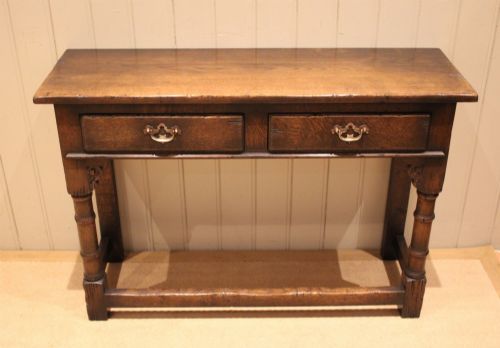
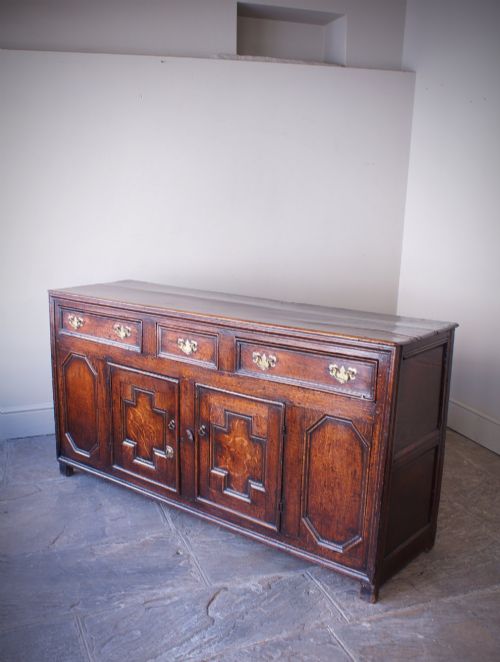
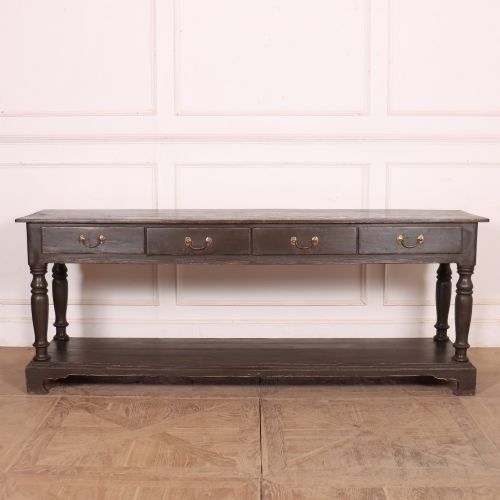
An english oak server table encompasses heavy timber forms designed for domestic utility, most commonly appearing as sturdy dresser bases and side tables. These items emerge primarily from the seventeenth, eighteenth, and nineteenth centuries, spanning Georgian elegance and heavier revival styles.
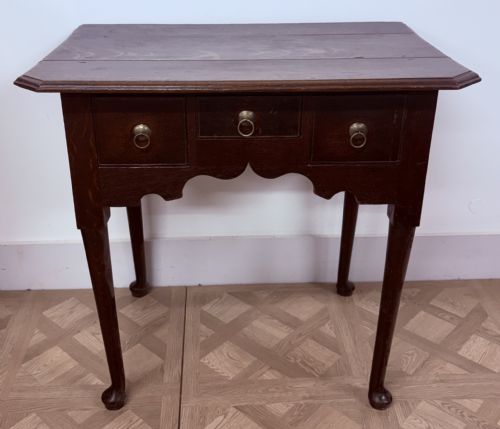
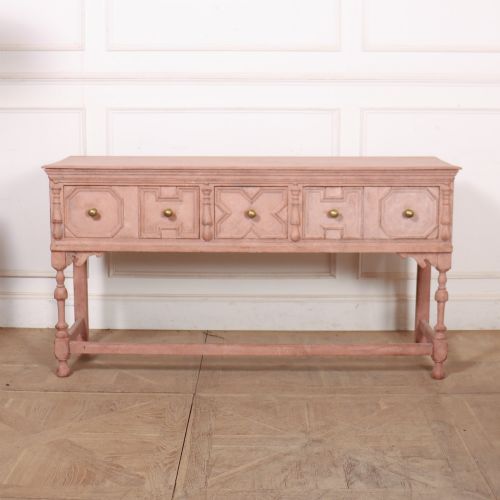
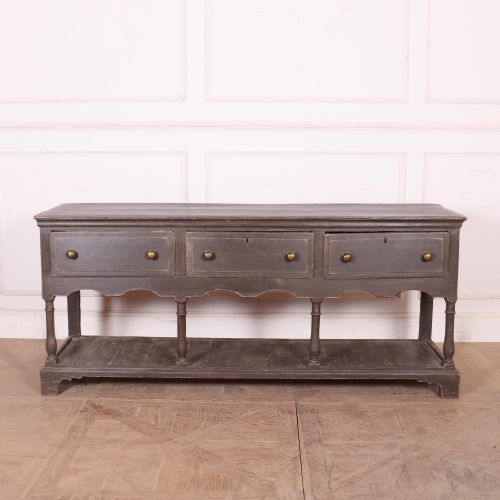
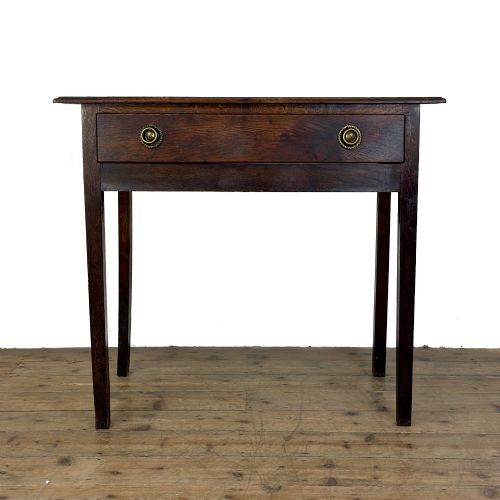
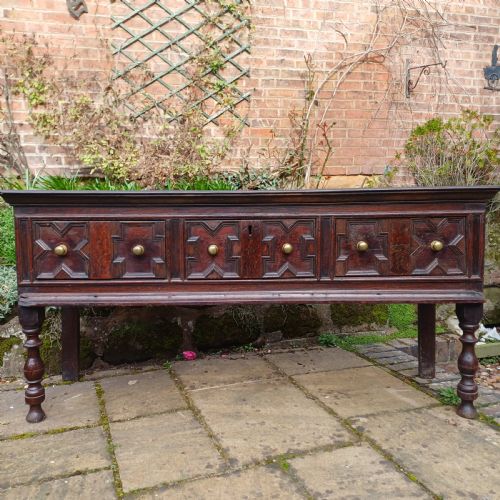
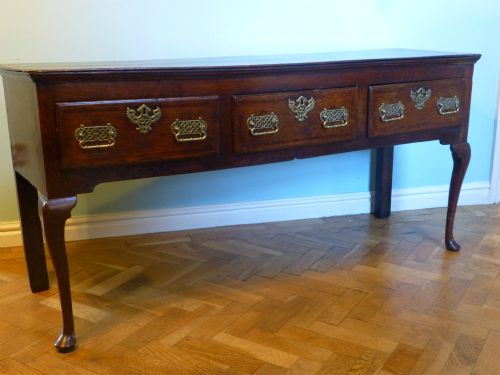
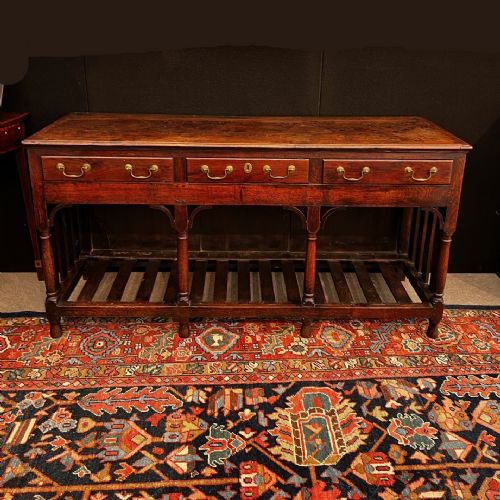
The selection frequently includes potboard dresser bases, lowboys, and sideboards featuring drawers and lower shelves. Pieces range from unadorned country furniture to surfaces detailed with geometric mouldings and cabriole legs.
What varies in quality
The integrity of the original timber and the depth of natural patina dictate the standing of each piece. Tables retaining their early boards, original hardware, and uncompromised structural frames hold greater distinction.
Refinishing work, later timber replacements, and the execution of carved details or geometric mouldings establish the difference between honest country workshop output and heavily altered examples.
Listings feature oak material predominantly, paired with occasional brass, iron, and painted timber finishes across seventeenth to nineteenth-century periods.
The English Oak Server Table Glossary
- Potboard dresser base
- A low sideboard featuring an open lower shelf traditionally used for storing pottery and kitchen utensils. This lower tier sits a few inches off the floor on short feet or stiles.
- Lowboy
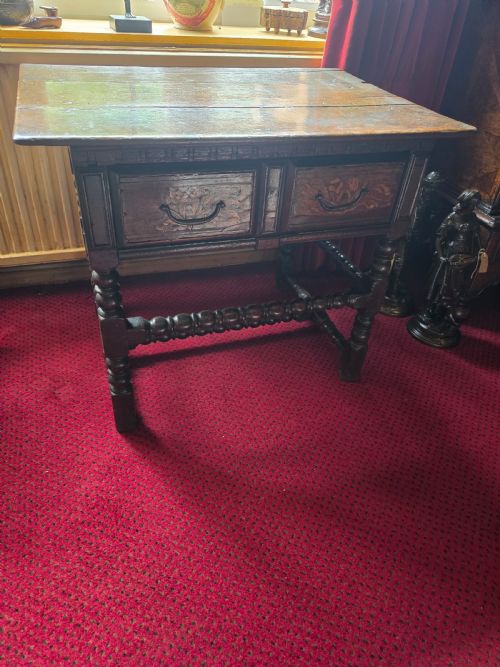
- A small side table equipped with one or more drawers, standing on relatively tall legs. These tables served various dressing and serving functions in domestic rooms.
- Dumb waiter
- A tiered serving table designed to hold dishes and utensils beside a dining table. Examples often feature stacked shelves or revolving trays.
- Geometric moulding
- Raised wooden profiling applied to drawer fronts in symmetrical patterns, characteristic of seventeenth-century joinery. This technique created depth and shadow on flat surfaces.
- Cabriole leg
- A furniture leg that curves out in a convex arc and tapers inward in a concave arc, ending in a pad or foot. The design gained popularity during the early eighteenth century.
English Oak Server Table: Frequently Asked Questions
How were server tables used?
These tables functioned primarily as practical surfaces in kitchens and dining rooms for food preparation and serving dishes.
Lower shelves and drawers held pots, pans, and tableware, keeping essential items close at hand during busy household routines.
Where should I place one?
An oak server table suits dining rooms, hallways, or living spaces as a sideboard or console surface.
The sturdy timber and low profile anchor a room without dominating the surrounding floor space.
How do I care for the wood?
Maintain the surface by dusting with a dry cloth and applying natural beeswax occasionally to nourish the historic grain.
Avoid placing timber furniture near direct heat sources or in damp environments to prevent wood movement.
How can I tell the period?
Examine the construction methods, handle types, and leg styles to determine the era of manufacture.
Seventeenth-century pieces display heavier mouldings and turned legs, while Georgian examples often feature cleaner lines and cabriole supports.