
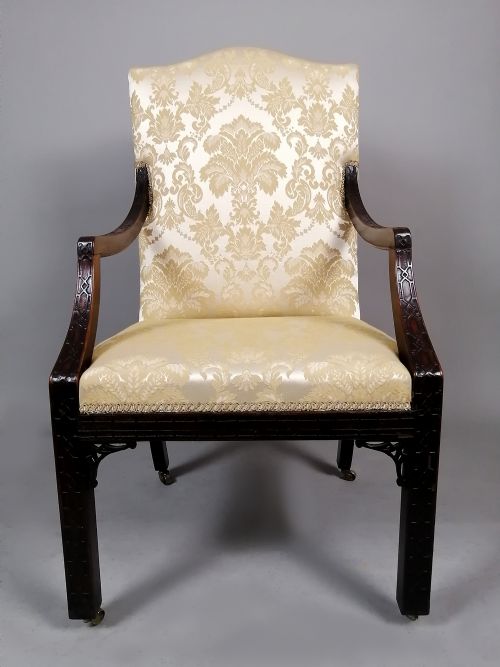
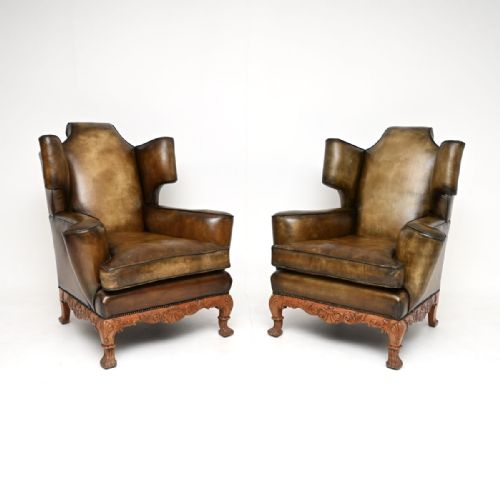
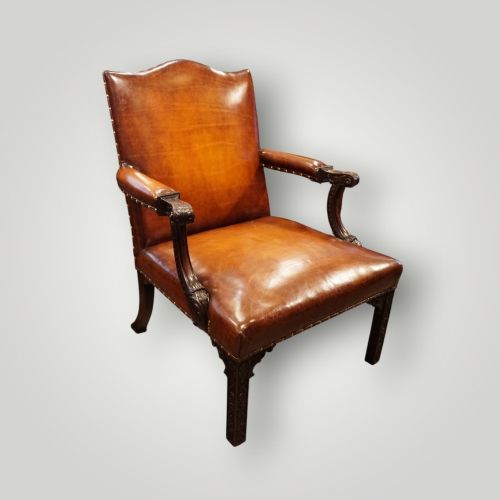
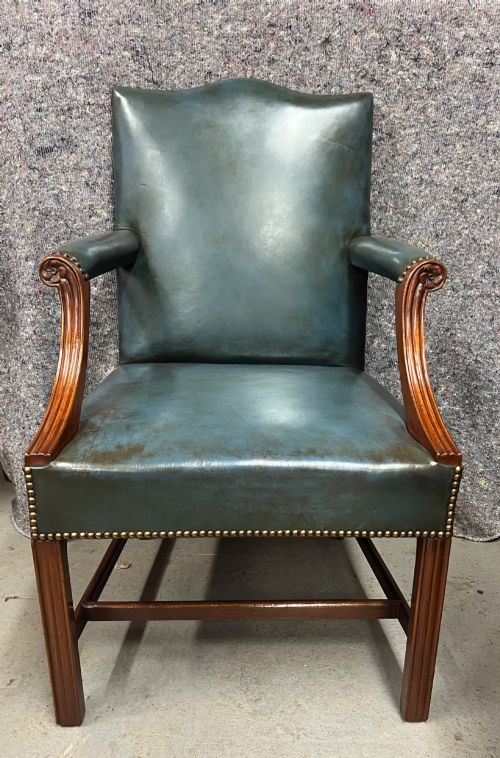
Georgian Carved Library Chair
A georgian carved library chair offers sturdy seating for study and reading, built from solid timber with upholstered comfort.
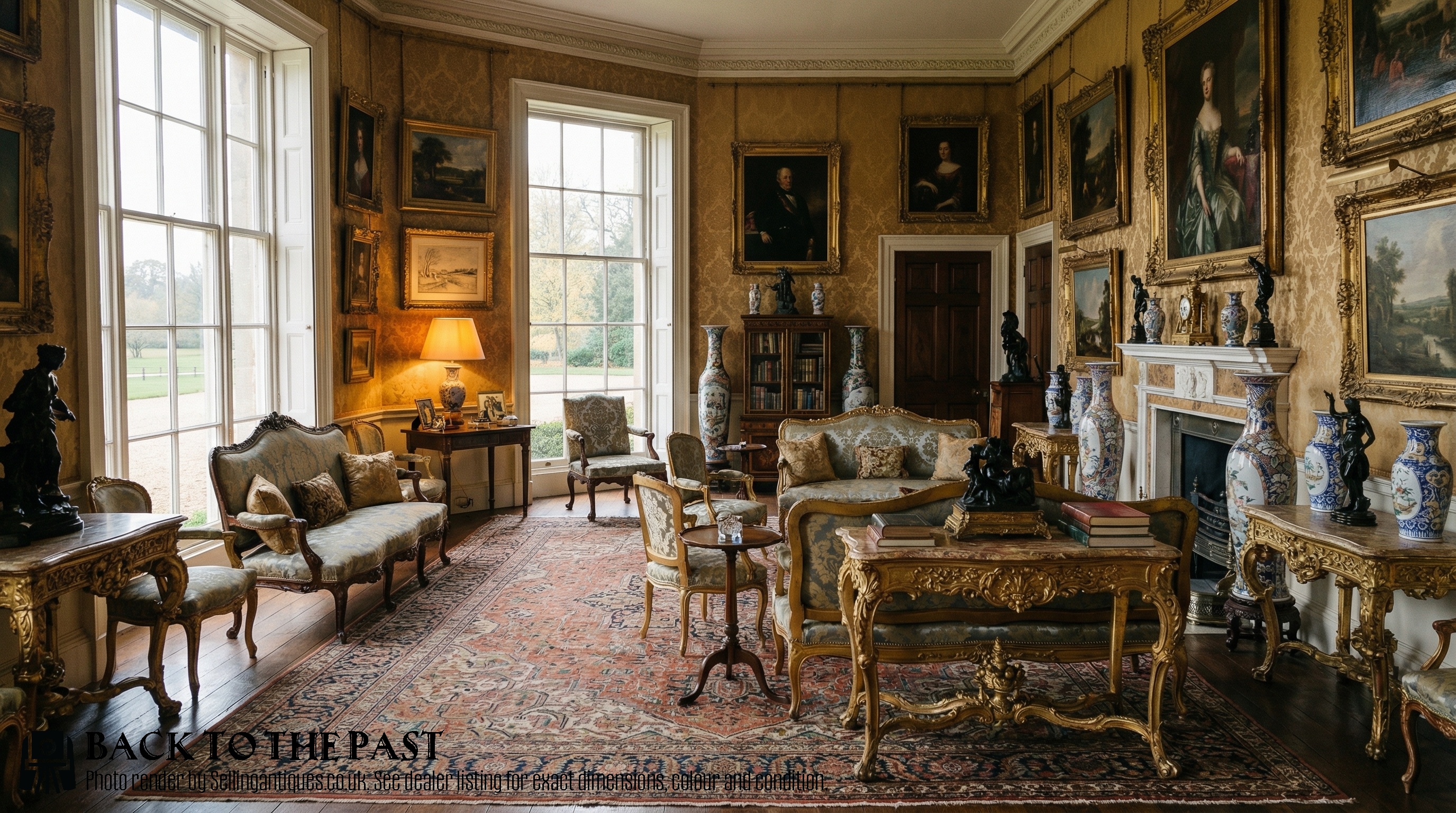
Georgian Carved Library Chair
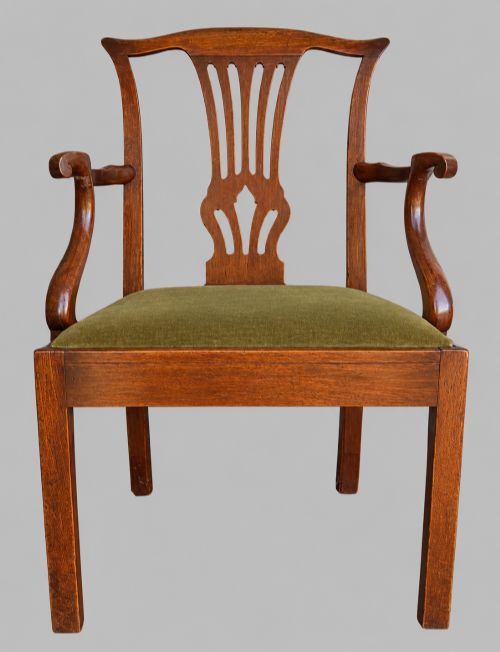
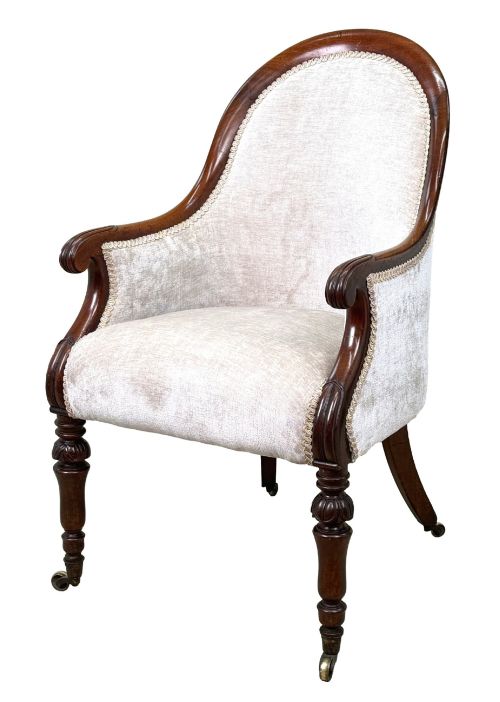
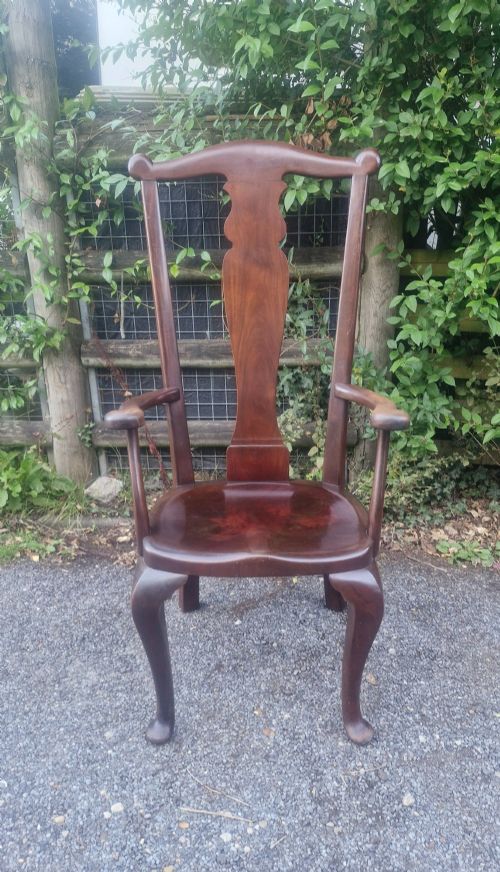
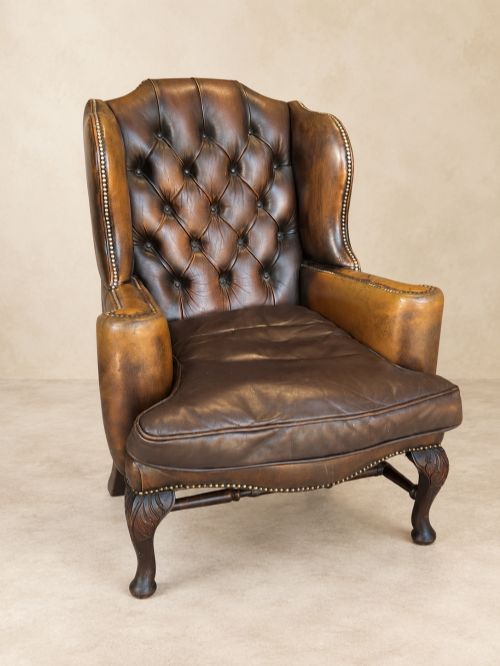
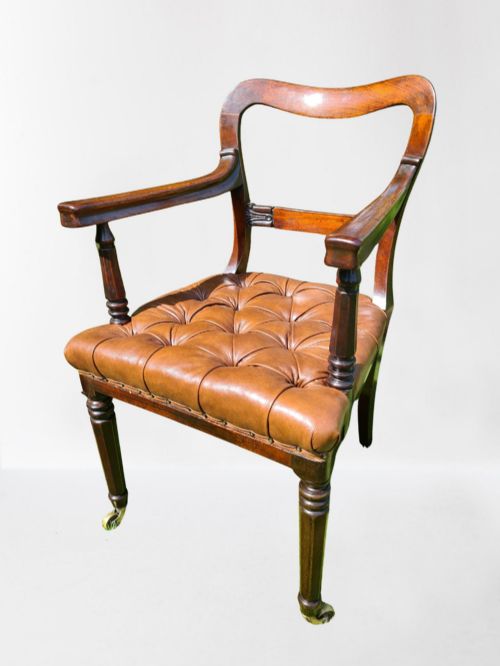
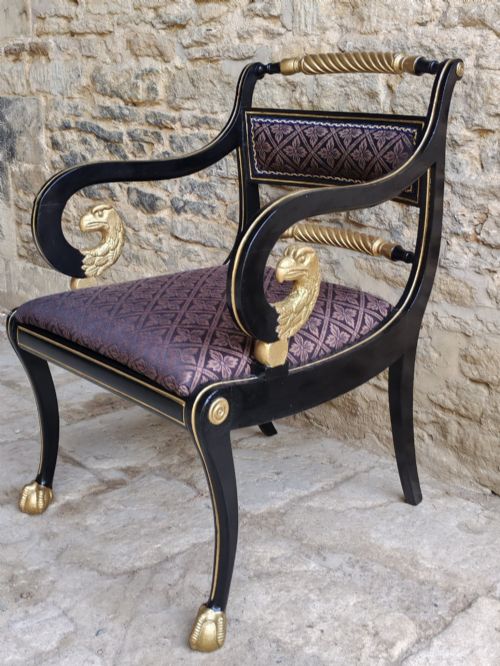
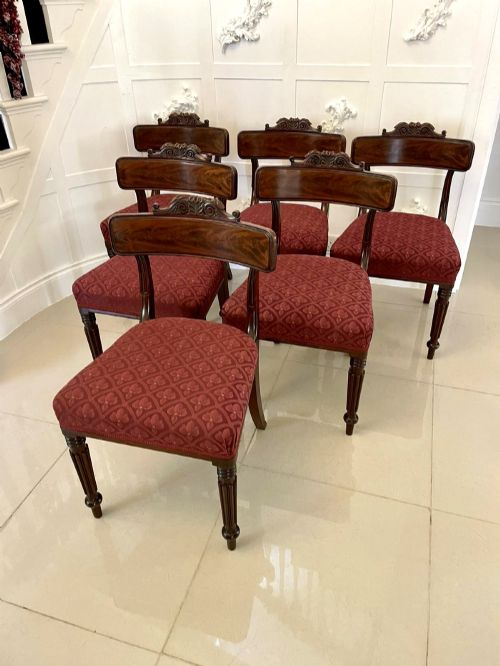
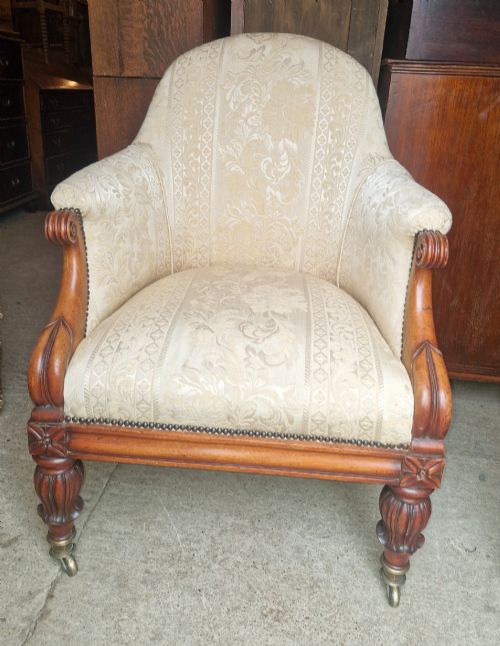
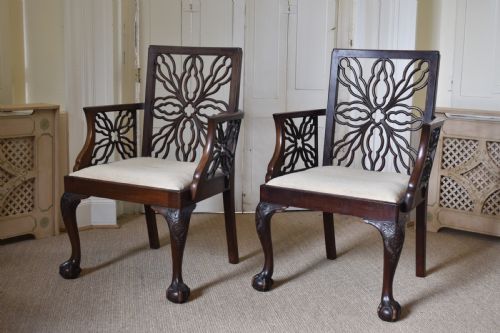
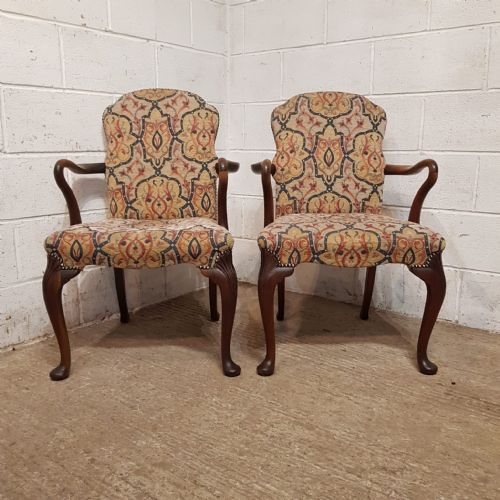
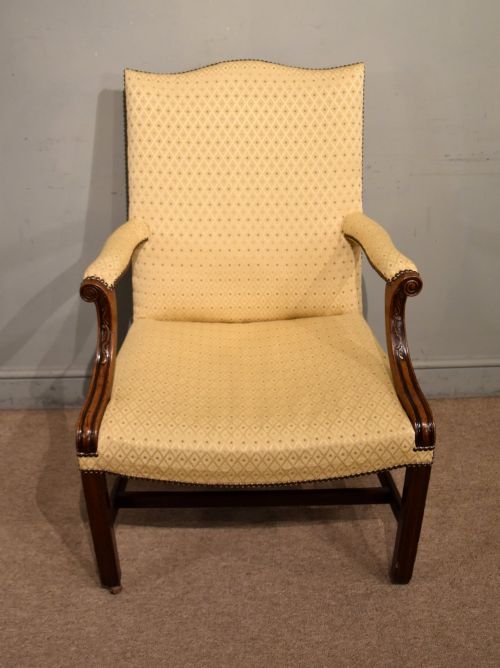
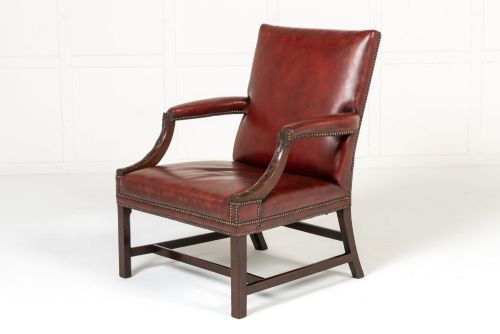
A georgian carved library chair combines functional seating with period woodworking, spanning George II, George III, and Regency eras alongside later revival pieces. These forms include open armchairs, Gainsborough chairs, tub armchairs, and desk chairs designed for study spaces and reading rooms.
The materials recorded in these listings rely heavily on mahogany, walnut, and rosewood, paired with leather, fabric, velvet, and cane upholstery. Brass accents and carved wooden frames define the primary construction across the centuries.
Design and Execution
The distinction between standard seating and superior library chairs rests on the depth of hand-carving and the choice of primary timber. Dense mahogany and figured walnut with crisp, intricate blind carving represent the higher tier of production.
Proportion and structural integrity separate robust period examples from later interpretations. Original upholstery materials like hand-dyed hide or cane work add further distinction to the finished piece.
Drunkards chairs appear among the selections, built with unusually shaped arms to accommodate eighteenth-century gentlemanly indulgence.
Gillows
The Georgian Carved Library Chair Glossary
- Gainsborough chair
- A wide-seated, upholstered armchair with open padded arms, originating in the mid-eighteenth century for writing tables and libraries.
- Bergère
- An enclosed armchair with stuffed upholstery and cane panels set into the wooden frame.
- Chippendale style
- Furniture designs influenced by Thomas Chippendale, characterised by carved ribbon-back motifs, cabriole legs, and Chinese or Gothic fretwork.
- Blind carving
- Carved ornament applied directly to a flat surface in low relief, often seen on eighteenth-century chair rails.
- Cabriole leg
- A furniture leg that curves outward at the knee and tapers inward to an ankle or foot, common on Georgian seating.
Georgian Carved Library Chair: Frequently Asked Questions
How do I identify a genuine period chair?
Examine the timber grain, tool marks, and joinery methods beneath the upholstery or along the frame. Period pieces display timber shrinkage and construction traits consistent with eighteenth and nineteenth-century workshops.
Compare the carving sharpness and proportion against known examples from the same stylistic era. Secondary woods inside the frame also help confirm the age of the piece.
Where should I place a library chair?
These chairs suit studies, home offices, and reading corners where their supportive backs and arms serve daily use. Pair them with a partner desk or keep them near bookshelves.
Keep them away from direct heat sources and strong sunlight to protect leather, cane, and timber surfaces from drying out.
How do I care for leather and wood finishes?
Clean wooden frames with a dry cloth and apply occasional wax polish to maintain the finish. Leather upholstery benefits from specialist conditioner to prevent cracking.
Avoid harsh chemical cleaners that strip the original patina from antique timber and aged hides.