



George II Open Armchair
A george ii open armchair brings architectural proportion and sturdy seating to a room, whether an 18th-century original or a later revival.
George II Open Armchair
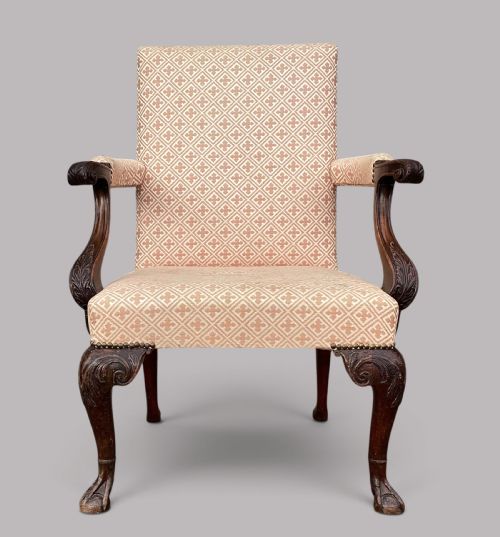
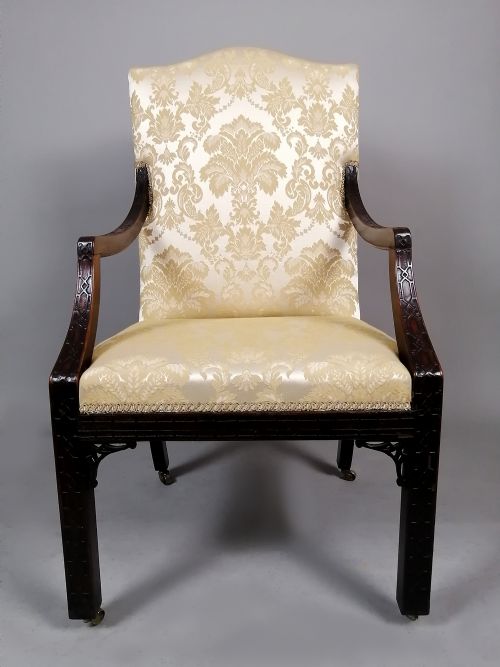
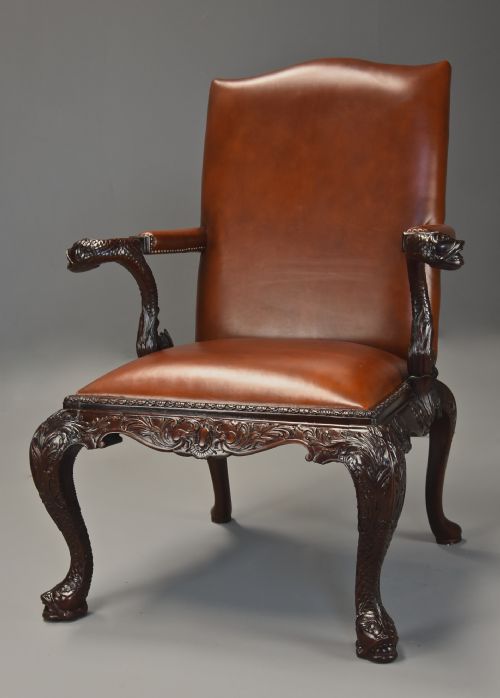
A george ii open armchair is a substantial seat designed for the library or parlour, featuring upholstered panels and open wooden arms. The form includes distinct types such as the fully upholstered Gainsborough chair and the carved library chair.
Most examples encountered on this page date either from the 18th century or from revival periods in the 19th and early 20th centuries. These later interpretations often emulate the carved mahogany and walnut frames of the Georgian era.
Makers produced these chairs in various scales, from standard library proportions to child's chairs and grander sets. Variations span straightforward mahogany frames to elaborate Chinese Chippendale designs with intricate carving.
Judging quality and execution
The distinction between ordinary and superior pieces rests on the crispness of the hand carving along the arms, rails, and knees. Sharp, deep profiling indicates a skilled hand, whereas softened details suggest mass production or heavy wear.
Proportion and stance dictate the visual success of the chair, with well-balanced arm supports and raked legs creating a stable silhouette. The choice of timber grain and the integration of the upholstery influence the overall presence of the piece.
George II Open Armchair Retail Price Guide 2026
Typical asking prices for george ii open armchair among the pieces listed under this phrase on Sellingantiques today, from the lower quarter to the upper quarter. They describe what is for sale here now, not the wider market.
The George II Open Armchair Glossary
- Gainsborough chair
- A low-backed, fully upholstered open armchair with padded armrests, designed for writing desks and libraries. This form typically stands on four legs connected by stretchers.
- Library chair
- A heavy, generous armchair built for reading rooms, often featuring substantial mahogany frames and upholstered seat backs. They prioritise comfort and durable construction.
- Chippendale revival
- A late 19th or early 20th-century movement recreating mid-18th-century furniture designs. These pieces borrow heavily from Chinese and Gothic motifs popularised in the Georgian period.
- Carver
- A traditional term for an armchair, often used to distinguish a larger dining or desk chair from smaller side chairs. They frequently match a set of simpler chairs.
- Damask
- A reversible figured fabric traditionally woven from silk, wool, or linen, used for rich upholstery. Its patterned surface catches the light differently depending on the weave.
George II Open Armchair: Frequently Asked Questions
How can I tell an 18th-century piece from a revival copy?
Eighteenth-century chairs display genuine timber shrinkage, hand-cut joinery, and wear patterns consistent with extended use over centuries.
Revival pieces from the Victorian or Edwardian eras often reveal machine-tooled elements, tighter uniform timbers, and modern hardware beneath the upholstery.
Are these chairs comfortable for daily seating?
These seats were originally built for upright posture during reading or writing, offering firm support rather than deep lounging comfort.
Modern users often find the generous seat proportions suitable for everyday use, provided the internal webbing and padding are well maintained.
How do I care for the leather or fabric upholstery?
Leather upholstery benefits from periodic conditioning to prevent drying and cracking, keeping the surface supple under normal room conditions.
Fabric and damask panels require gentle vacuuming with a soft brush attachment to remove dust without snagging the woven threads.