


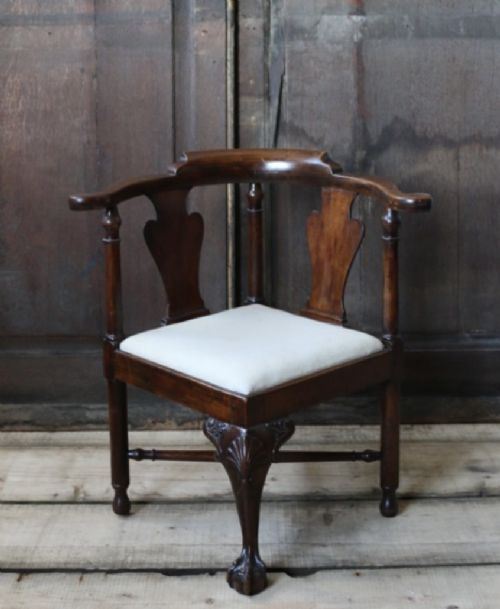


George II Carved Armchair
A george ii carved armchair brings substance and robust proportions to a room, whether an 18th-century original or a later revival.
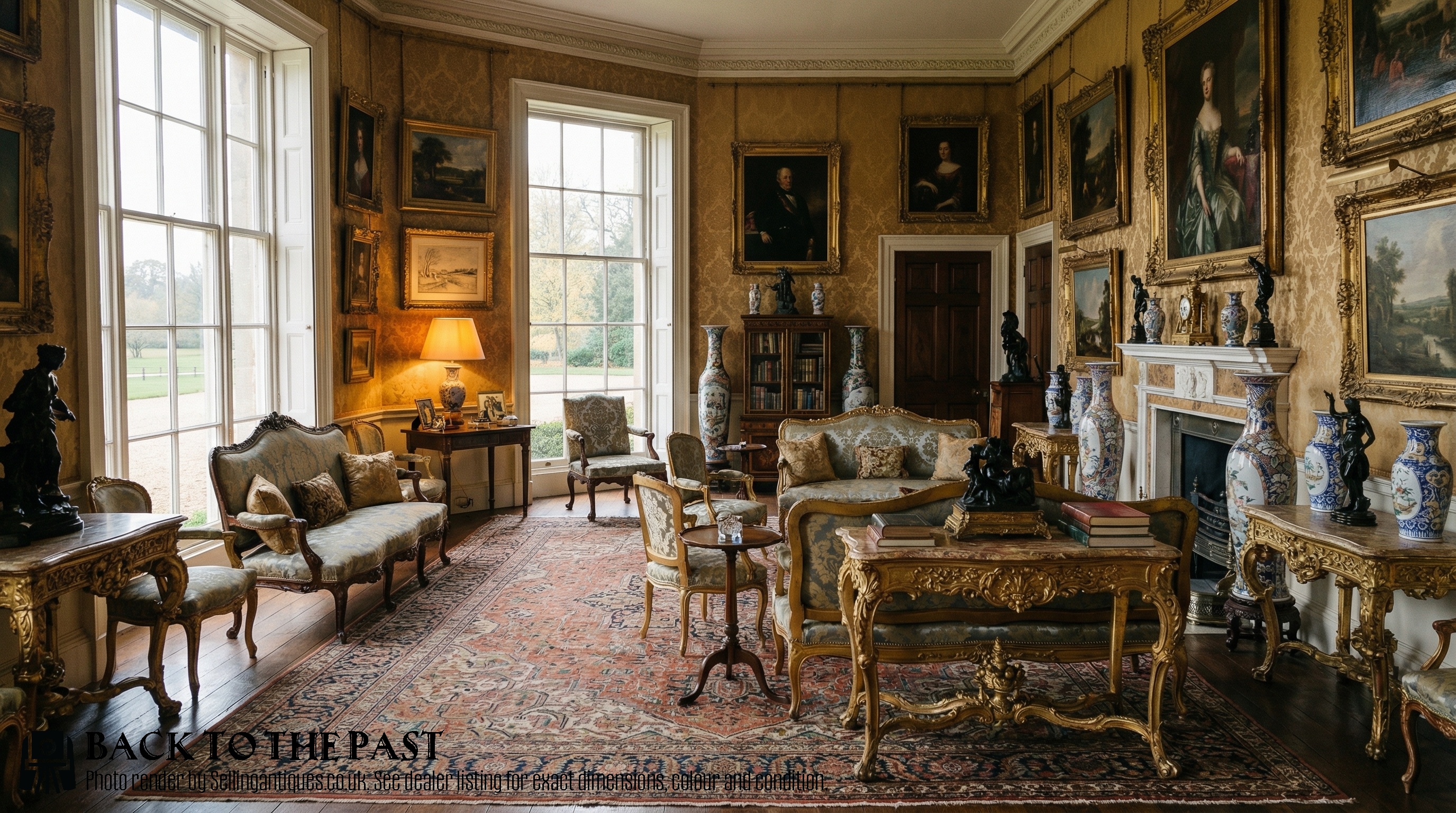
George II Carved Armchair
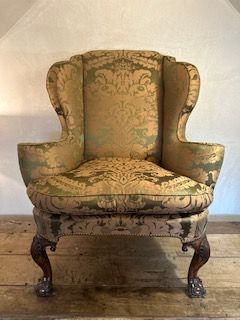
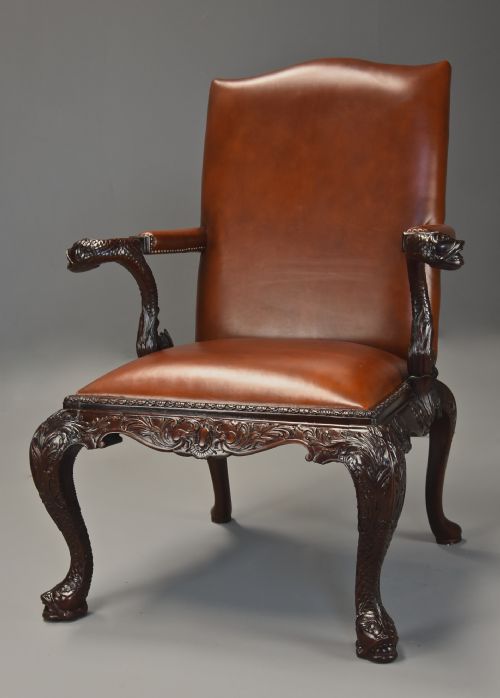
A george ii carved armchair is a seating form defined by substantial timber frames, scrollwork, and cabriole legs ending in pad or claw-and-ball feet. Buyers encounter both 18th-century pieces and later revival versions produced through the Victorian era and into the 20th century.
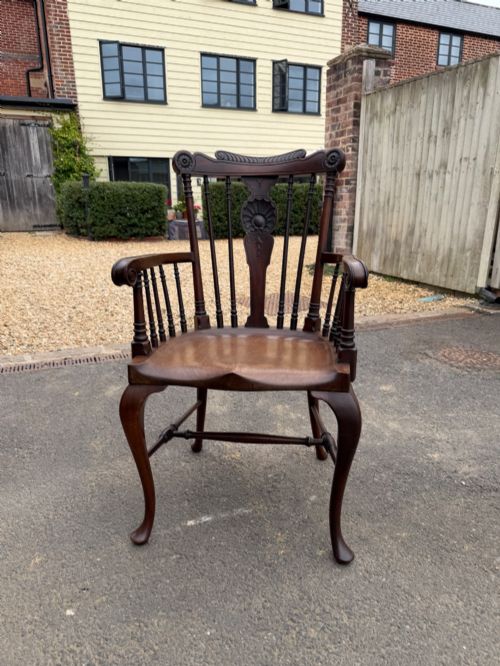
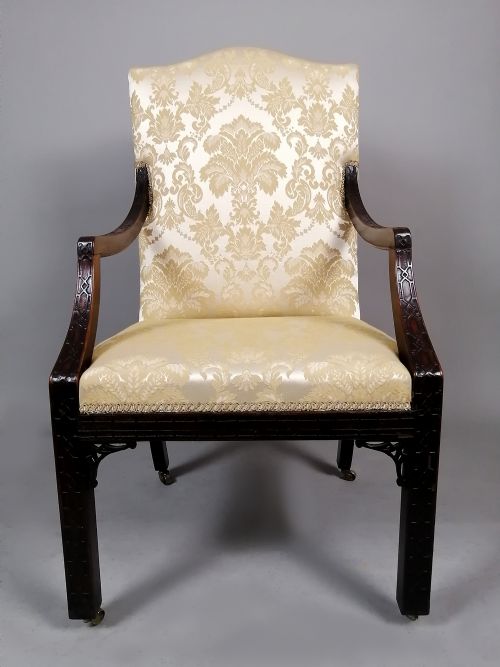
The selection spans various seating types, including library chairs, wing armchairs, and dining chairs constructed in walnut and mahogany. Many pieces on this page reflect the George II style or Chinese Chippendale influence, employing upholstery in velvet, damask, and leather.
How They Were Made
Frames rely primarily on solid mahogany and walnut, selected for grain density and structural strength to support deep carving on the knees, arms, and crest rails. Joinery involves traditional mortise and tenon methods, often reinforced with corner blocks in the seat frame.
Upholstered elements use textiles such as damask, velvet, tapestry, and leather, secured over webbing and stuffing with brass tacks. Carved details are executed directly into the solid timber frame rather than applied as separate mouldings.
Several armchairs on this page were built small enough for children, proving that even in the Georgian era, miniature status symbols were essential.
What Varies in Quality
The crispness of the hand-carved detail separates standard production from superior examples, with finer chairs showing deep undercut relief on acanthus leaves and shell motifs. Timber selection also dictates grade, where dense, well-figured mahogany or richly grained walnut elevates the piece.
Proportion and stance define the visual success of the chair, particularly the sweep of the arm supports and the balance of the cabriole leg. Original 18th-century examples command interest through historical age, whereas revival pieces depend entirely on the fidelity of the cabinetmaker's interpretation.
Robert Strahan Dublin·Gillows
The George II Carved Armchair Glossary
- Cabriole leg
- A furniture leg that curves out at the knee and tapers inward to an ankle, mimicking an animal's limb. This form is typical of mid-18th-century seating design.
- Wing armchair
- An upholstered seat with side panels designed to shield the occupant from draughts. The wings extend from the upholstered back down to the armrests.
- Claw-and-ball foot
- A furniture foot carved to resemble a bird's talon clutching a ball. It frequently terminates the bottom of a cabriole leg on high-status chairs.
George II Carved Armchair: Frequently Asked Questions
How do I spot a George II original?
Authentic 18th-century pieces display period-appropriate timber shrinkage, hand-cut joinery, and wear patterns consistent with age. Closer inspection of the underside often reveals the structural methods of the period.
Revival pieces, by contrast, frequently utilise machine-cut elements or timber preparation techniques typical of the 19th or 20th century.
What is a Gainsborough chair used for?
These open-armed chairs served originally in libraries, studies, and drawing rooms as comfortable seating for reading or writing. Their generous seat proportions accommodated the voluminous clothing styles of the period.
Today, they function effectively as desk chairs or occasional seating in living spaces.
Are walnut and mahogany chairs from the same time?
Walnut was the dominant timber for high-end British seating earlier in the 18th century, before mahogany superseded it around the middle of the century. Revival makers utilised both woods depending on the specific historic style they copied.
Consequently, walnut and mahogany versions appear across different centuries on this page.
How should I care for antique upholstery?
Protect antique textiles and leather from direct sunlight to prevent fading and drying of the material. Regular gentle vacuuming with a soft brush attachment removes surface dust without stressing the fabric.
Professional conservation cleaning is recommended for delicate silks, damasks, and tapestries.