
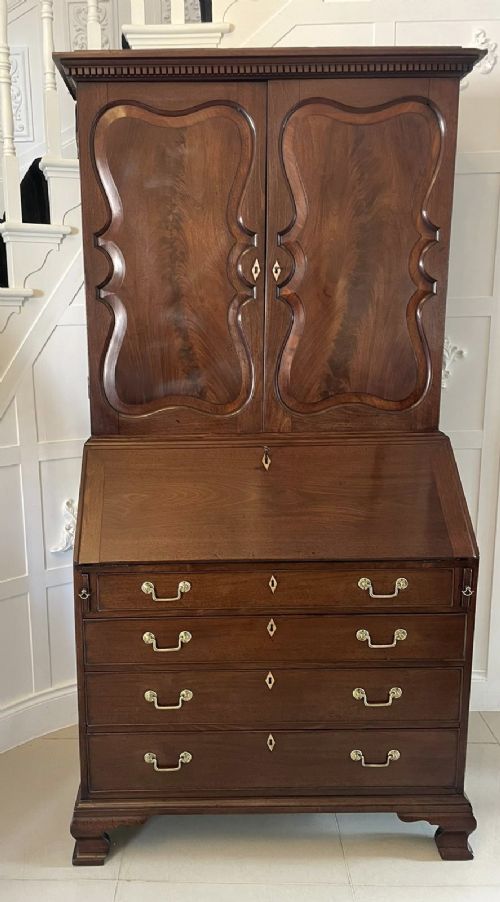
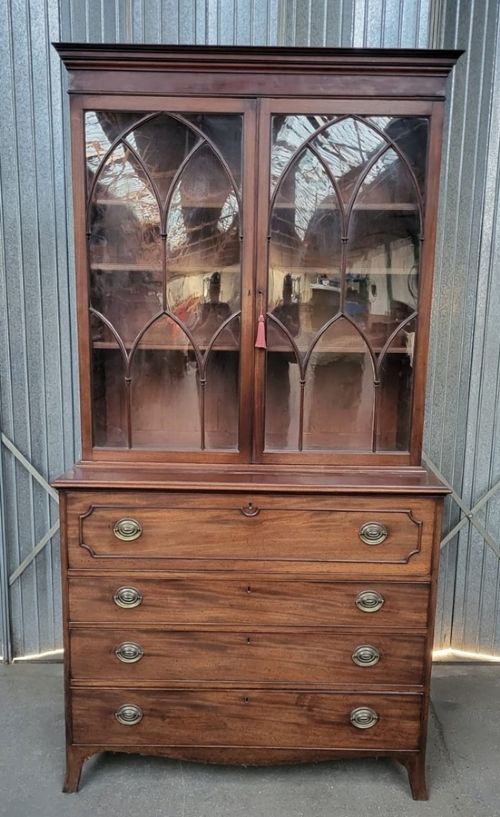
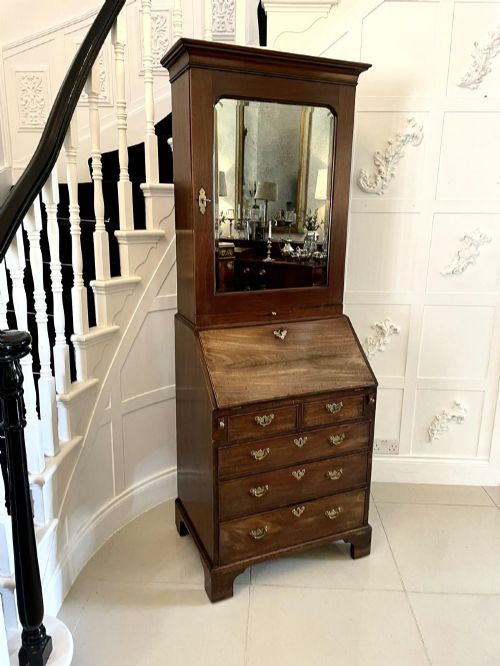
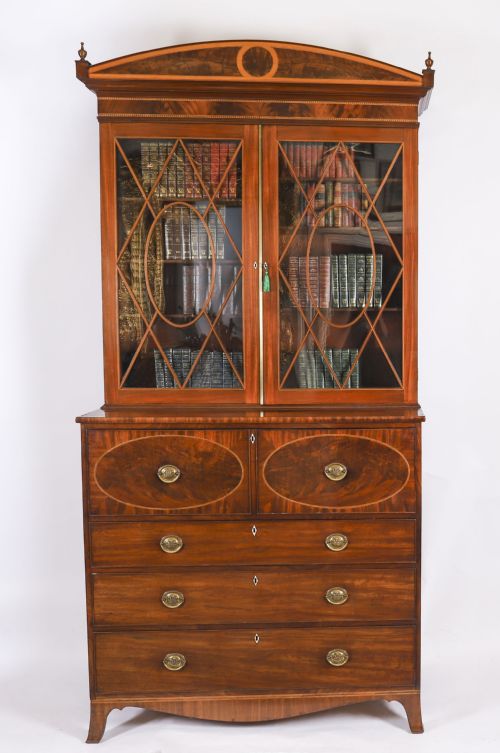

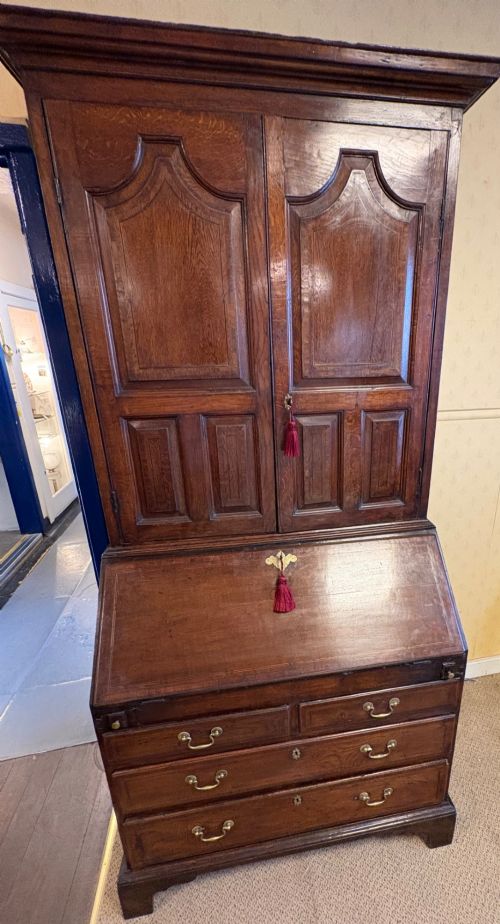
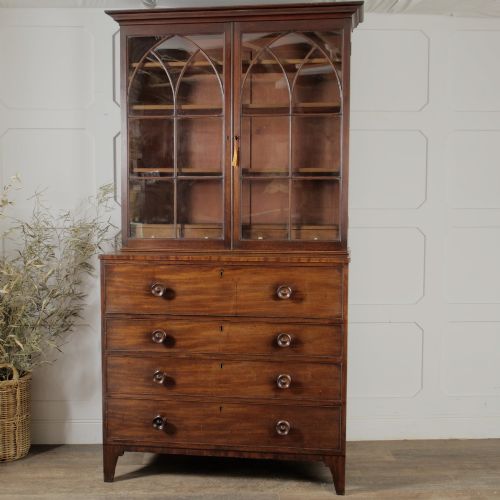
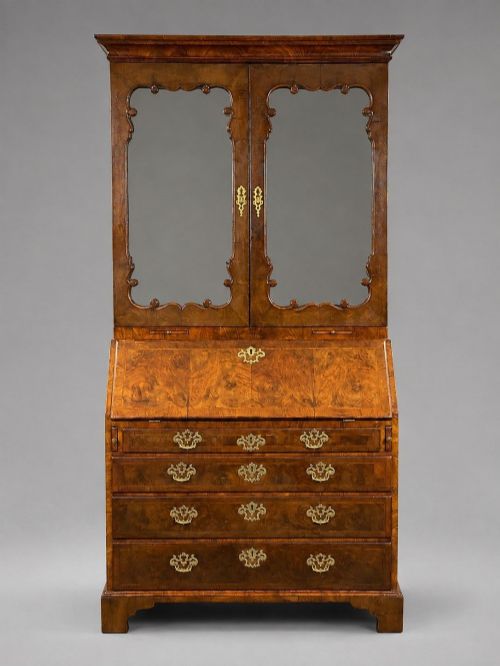
Georgian Bureau with Bookcase
A georgian bureau with bookcase combines a fitted writing drop-front with upper shelving, offering substantial architectural presence and practical storage for papers and books.
Georgian Bureau with Bookcase
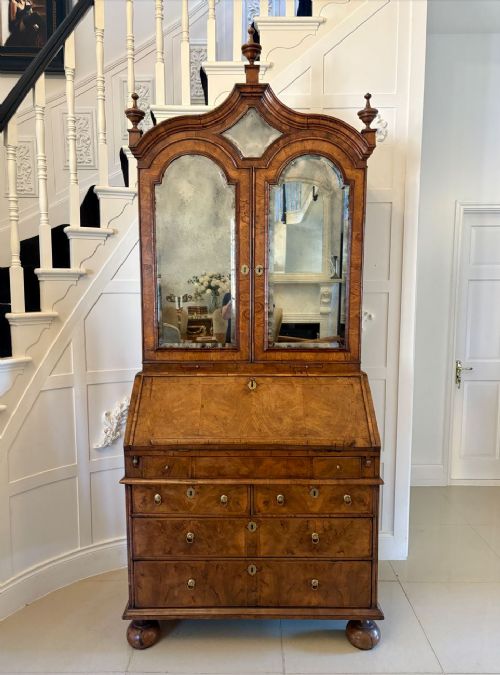
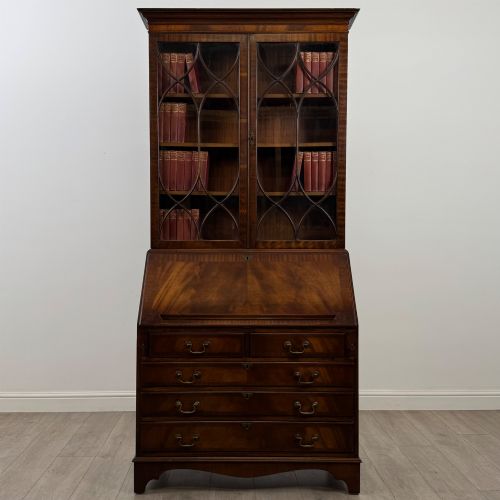
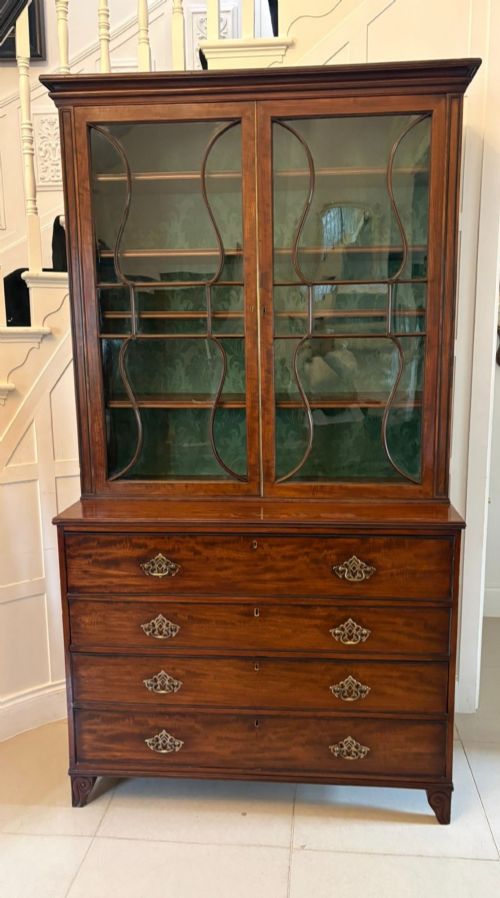
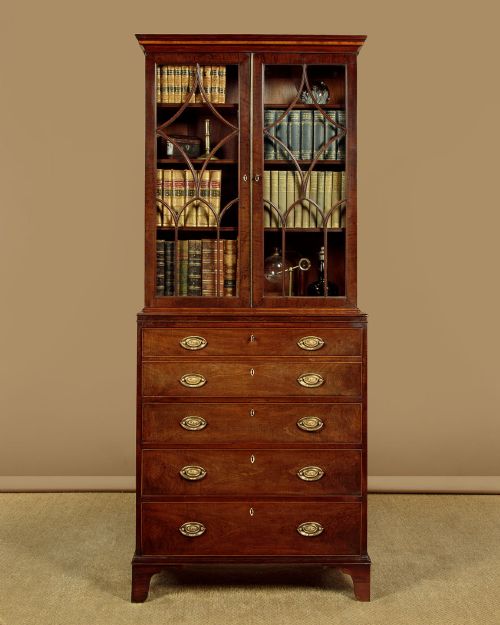
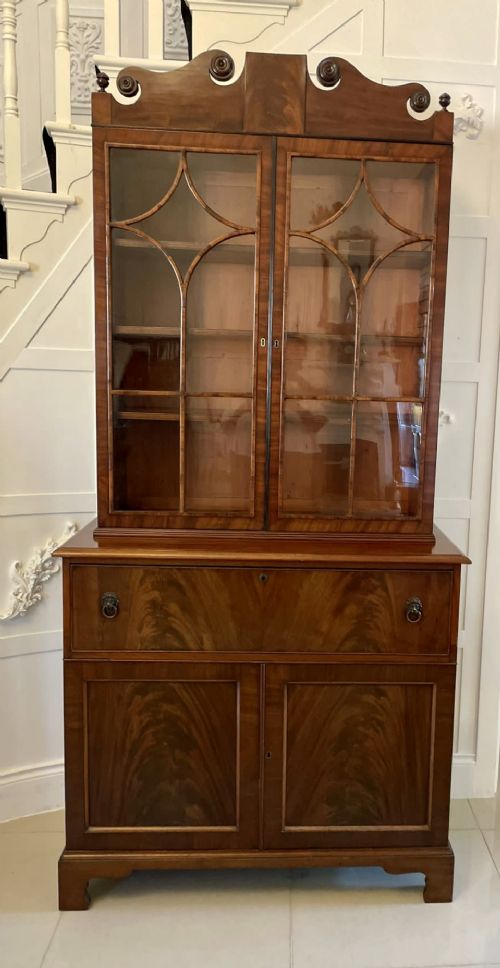
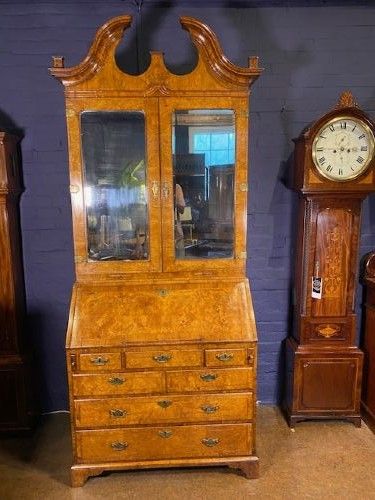
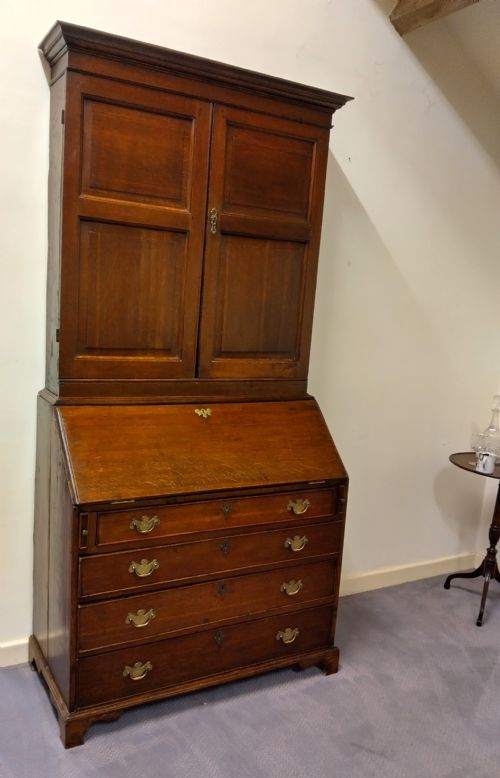
A georgian bureau with bookcase spans the eighteenth and nineteenth centuries, appearing across periods from Queen Anne and George I through to Regency and William IV. These pieces combine a lower writing cabinet featuring a fall-front or secretaire drawer with an upper glazed or panelled book cabinet.
Most examples met on this page are constructed in mahogany or walnut, with occasional pieces in oak, burr walnut, satinwood, and rosewood. Formats range from tall architectural compositions to smaller country house pieces and cylinder secretaire cabinets.
Materials and construction
Cabinet makers utilised dense native and imported timbers, notably figured mahogany and richly grained walnut, often enhanced by crossbanding and inlay. Secondary timbers such as oak support internal compartments and drawer linings.
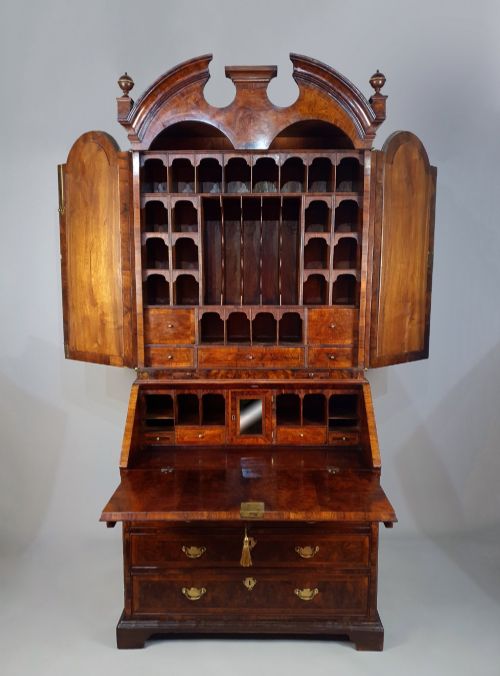
Upper sections typically feature glazed doors with timber astragals framing glass panes, while lower sections rely on dovetailed drawer construction and hinged fall-fronts that reveal stepped or fitted internal drawers and pigeonholes.
Several examples hide secret compartments and concealed drawers behind false panels, designed for safely stowing valuables away from prying eyes.
Distinguishing quality and proportion
The sophistication of the internal fitting dictates much of the distinction, separating standard utility pieces from those with complex stepped drawers, secret compartments, and pigeonholes. Timber selection also defines the tier, with highly figured veneers, burr walnut, and matched grain patterns indicating superior workshop output.
Proportion and architectural detailing govern the visual success of the piece, from the execution of classical cornices and glazed door tracery down to original brass hardware and foot configurations.
Tudor and Burrey
The Georgian Bureau with Bookcase Glossary
- Bureau bookcase
- A cabinet combining a sloping writing flap or pull-out secretaire drawer with upper shelving enclosed by doors. These dual-purpose items served as both libraries and private writing desks.
- Secretaire
- A piece of furniture containing a drawer that pulls out and drops down to reveal a writing surface and small internal drawers. This mechanism conceals the desk function behind the appearance of a standard drawer.
- Fall-front
- A hinged writing flap that opens downward to provide a horizontal desk surface. It supports the weight of writing when open and secures internal compartments when closed.
- Astragal
- A small moulded bar or strip framing the glass panes within cabinet doors. These wooden dividers form geometric patterns across the upper bookcase glazing.
- Crossbanding
- A border of veneer applied to the edges of furniture panels with the grain running perpendicular to the main surface. This technique frames the primary timber with a contrasting directional grain.
Georgian Bureau with Bookcase: Frequently Asked Questions
What is the difference between a bureau and a secretaire bookcase?
A traditional bureau uses a sloping diagonal fall-front that opens to reveal internal compartments. A secretaire bookcase employs a horizontal drawer that pulls out and drops down to serve the same writing function while maintaining a chest-of-drawers aesthetic on the exterior.
Both forms incorporate upper shelving for books, but the internal mechanism of the writing section distinguishes how the timber face opens.
How do I date a georgian bureau bookcase?
Dating relies upon timber choices, hardware, and architectural styling shifts across reigns from Queen Anne to William IV. Earlier eighteenth-century pieces often feature walnut or oak with herring-bone inlay, while later eighteenth and nineteenth-century examples lean toward figured mahogany and satinwood.
Construction methods inside the drawers, such as hand-cut dovetails and secondary wood choices, further anchor the piece to a specific decade or monarchical period.
Where were these pieces used in a home?
These multifunctional items originated in principal rooms such as libraries, studies, and formal parlours where correspondence and book collections were maintained. They provided secure storage for ledgers and personal papers alongside display space for bound volumes.
Their substantial height and dual storage capabilities made them central architectural fixtures within country houses and town residences alike.
How do I care for antique mahogany and walnut?
Maintenance requires stable indoor humidity levels away from direct heat sources and sunlight to prevent timber warping and veneer lifting. Regular dusting with a dry, soft cloth preserves the polish without introducing moisture or silicone build-up.
Occasional application of appropriate wax feeds the grain and maintains the historical patina accumulated over centuries of use.