

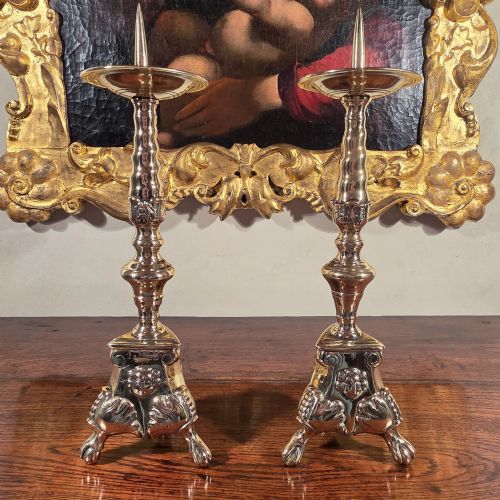


Georgian Brass Table Lighting
These Georgian brass table lighting pieces bring functional period illumination into modern rooms through robust cast metal and classic forms.
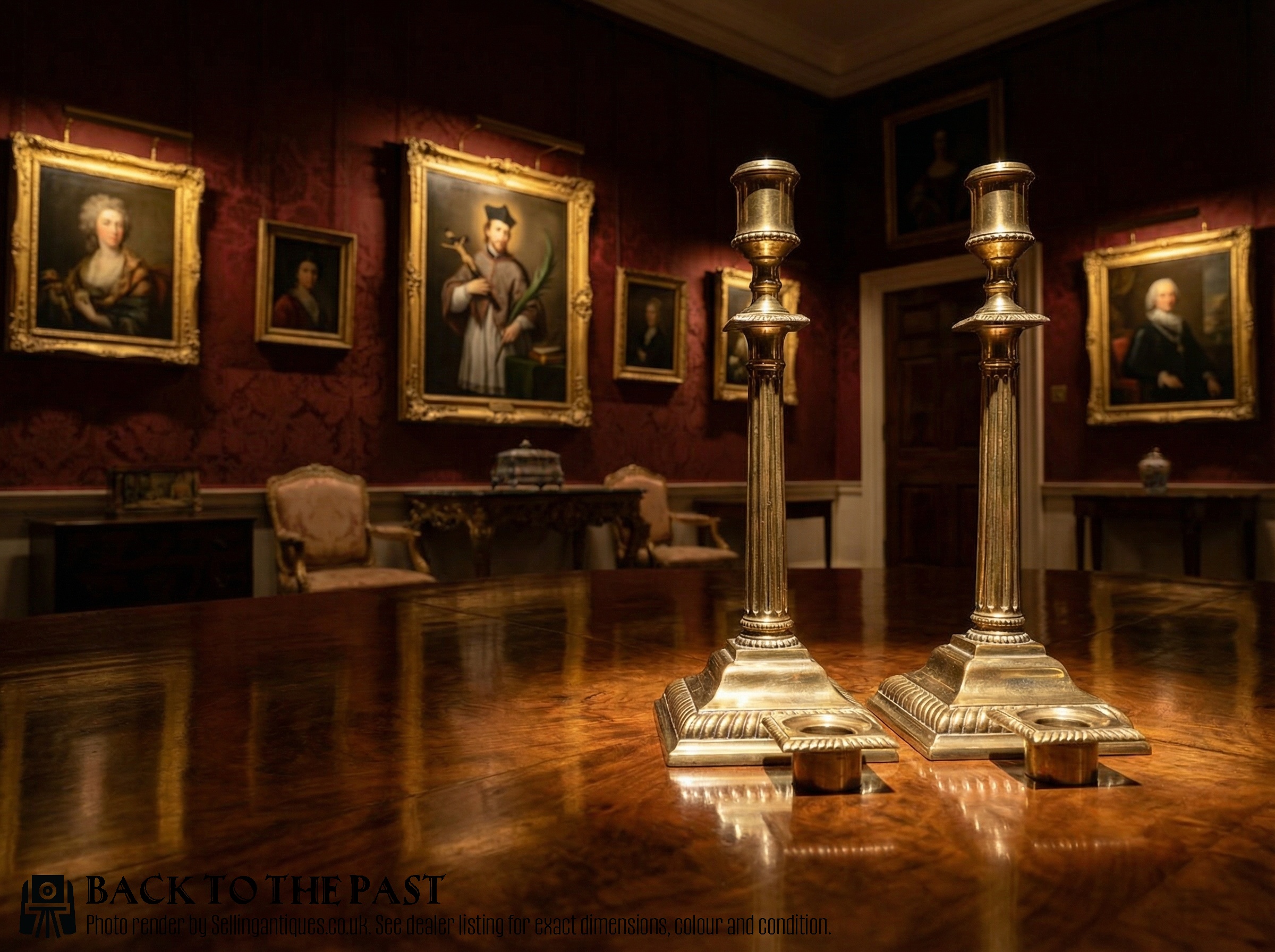
Georgian Brass Table Lighting
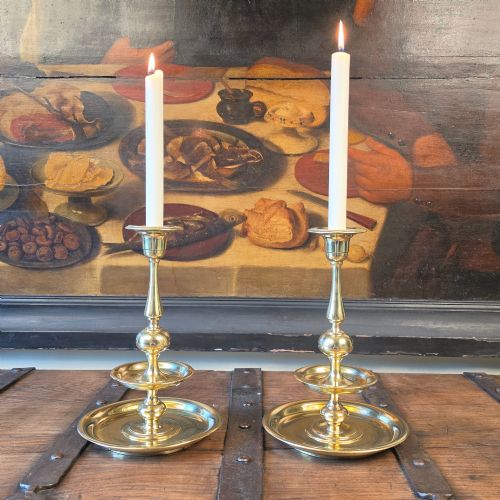
When you search for georgian brass table lighting, you encounter utilitarian and decorative objects designed to hold candles or burn oil upon surfaces. The selection relies heavily on candlesticks, column lamps, and occasional lustres spanning the eighteenth and nineteenth centuries.
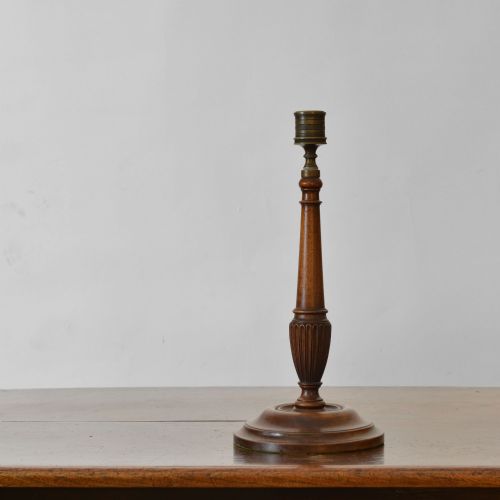
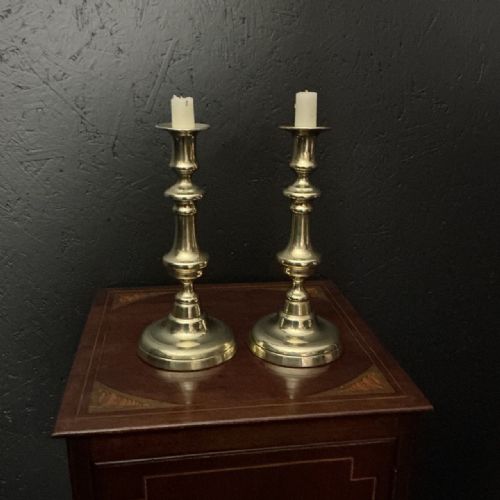
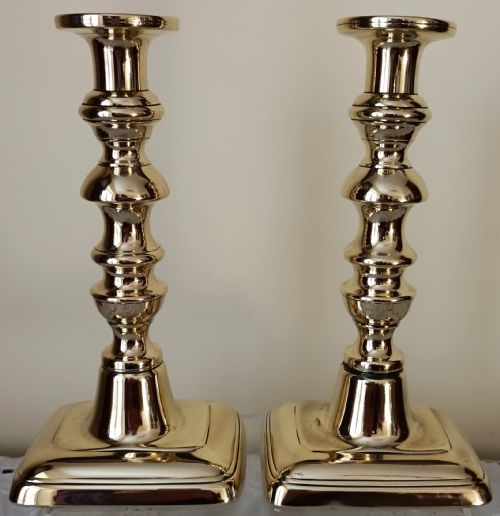
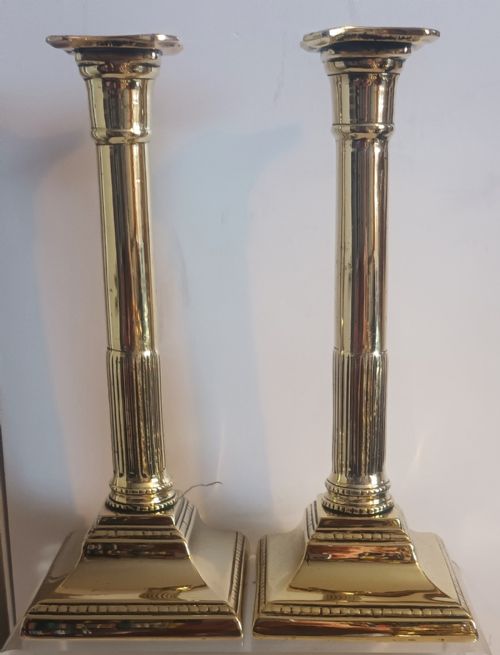
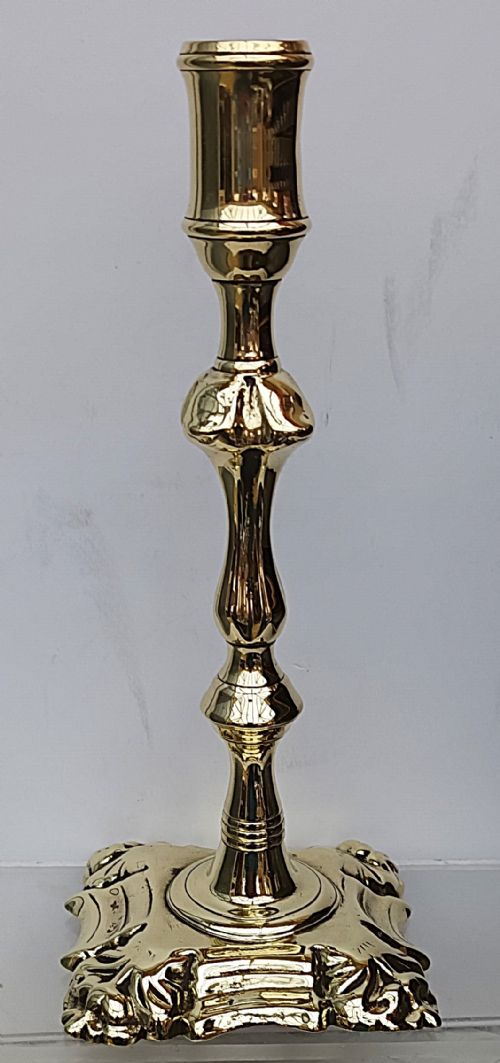
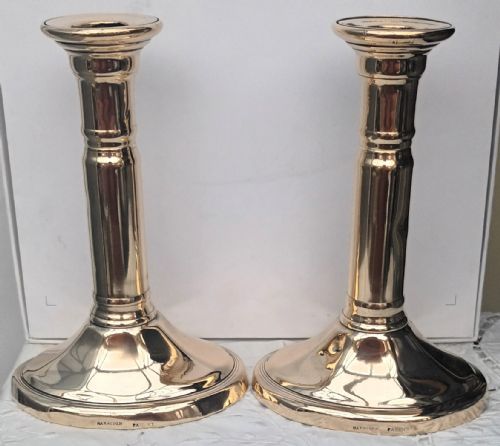
Most examples appear in pairs, dominated by brass construction alongside occasional bronze, ormolu, and mahogany pairings. The forms stretch from early hexagonal bases and seamed ejector models to telescopic designs and later column lamps.
Origins trace through English workshops with periods spanning Queen Anne, George II, Regency, and Victorian eras. These items served domestic illumination before electricity transformed interior spaces.
How they were made
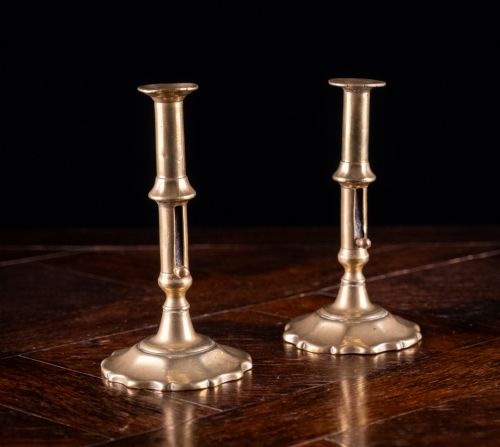
Maker methods relied on casting brass in sections, joining components through threading, soldering, or seaming techniques. Seamed ejector candlesticks utilised folded sheet metal joined down a vertical seam, while heavier examples emerged from sand casting.
Finishes combined natural patination with polished or gilt surfaces on bronze and ormolu variants. Manufacturers incorporated iron or wood within bases for stability, occasionally mounting lamps onto mahogany plinths.
Form variations range from petal base candlesticks and hexagonal sockets to telescopic mechanisms and column lamps.
What varies in quality
Distinction across these objects rests in the crispness of casting detail and the integrity of original construction. Heavy gauge metalwork and well-defined mouldings separate superior examples from simpler production pieces.
Proportion and matching symmetry dictate value when dealing with pairs. The presence of functional mechanical parts, such as telescopic actions or ejector mechanisms, demands precise engineering that survives intact on finer specimens.
J.T. & Co·Harrison Patent·Messenger
The Georgian Brass Table Lighting Glossary
- Ejector candlestick
- A candlestick fitted with an internal sliding mechanism to push out exhausted candle stubs. This innovation simplifies clearing residual wax from the socket.
- Pricket candlestick
- A candlestick featuring a sharp central spike rather than a hollow socket to secure the candle. Such designs frequently appear in ecclesiastical or formal dining contexts.
- Paktong
- A copper-nickel-zinc alloy resembling silver, utilised in eighteenth-century metalwork for bright, durable candlesticks. This material provides a distinct pale metallic tone.
- Ormolu
- Gilded bronze applied to decorative mounts and lighting fixtures during the eighteenth and nineteenth centuries. The technique involves bonding gold amalgam to a bronze base.
- Lustre
- A table ornament hung with cut glass pendants designed to reflect candlelight. These items sit alongside standard candlesticks on furniture surfaces.
Georgian Brass Table Lighting: Frequently Asked Questions
How do I date brass candlesticks?
Dating relies on observing base shapes, manufacturing marks, and column profiles. Early eighteenth-century pieces often feature broad petal bases and solid cast construction, whereas later nineteenth-century examples display more uniform turned columns and patent mechanisms.
Material composition also guides identification. The transition from heavy sand-cast brass to lighter machine-turned brass helps establish the chronological window of manufacture.
What is a telescopic candlestick?
A telescopic candlestick incorporates an adjustable stem that extends upward to raise the flame height. These clever mechanical pieces often bear patent stamps from makers who innovated domestic lighting.
Users adjusted the height depending on reading needs or room illumination requirements. The internal sliding tubes require careful handling to preserve their original friction fit.
Can I convert these to electric lamps?
Conversion is possible, but many collectors prefer retaining original candle sockets to preserve historical integrity. Wiring an antique candlestick usually requires professional intervention to run cords safely without damaging the metal.
Some period pieces arrived as oil or bronze column lamps originally, making them simpler to adapt for modern electricity. Reversible wiring methods ensure the base remains unaltered.
How do I clean antique brass?
Cleaning antique brass requires minimal intervention to preserve the historic surface patella and dark oxidation built up over centuries. Gentle dusting with a soft cloth removes everyday debris safely.
Harsh chemical polishes strip away the aged finish that collectors value. Warm water and mild soap suffice for removing heavy wax accumulation from sockets.