

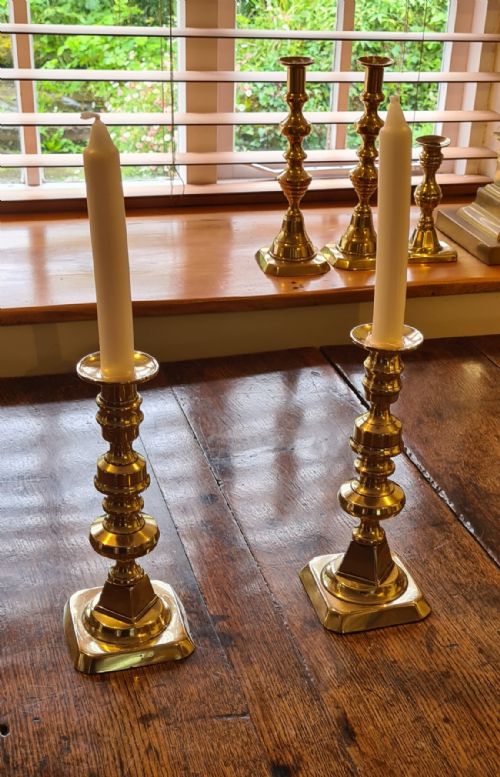
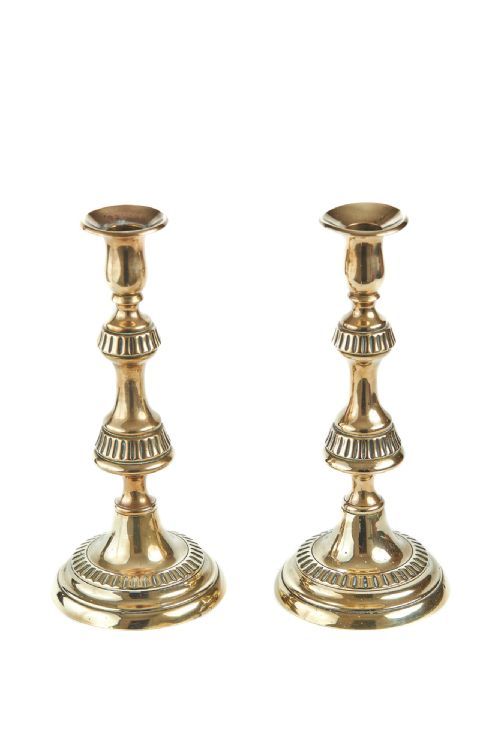
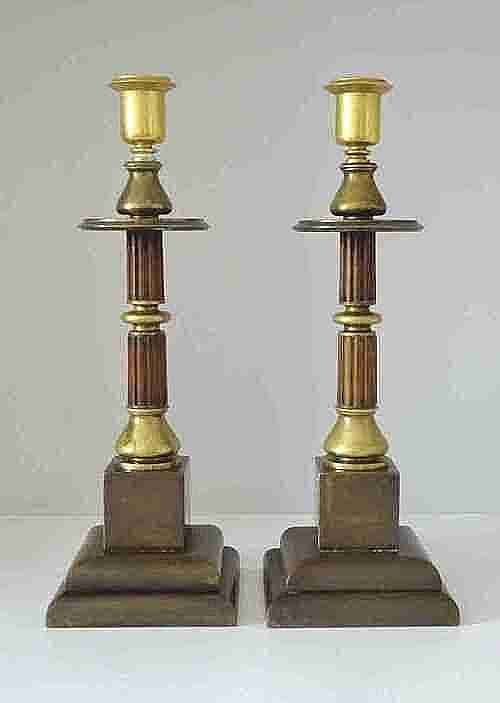


Classic Brass Candle Stands
Classic brass candle stands bring warm metallic lustre and period proportion to a room, offering enduring utility across Georgian, Victorian, and Edwardian designs.
Classic Brass Candle Stands
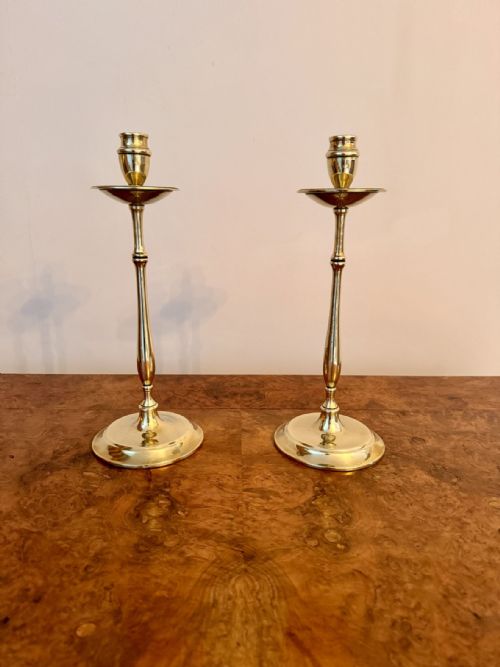
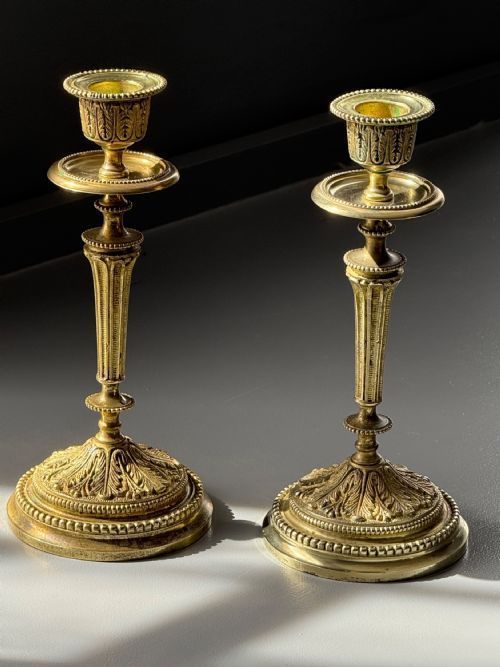
Classic brass candle stands primarily encompass antique candlesticks and occasional floor lamps designed for illumination. These pieces range from Georgianpetal-based examples to ornate Victorian pairs and later Edwardian forms.
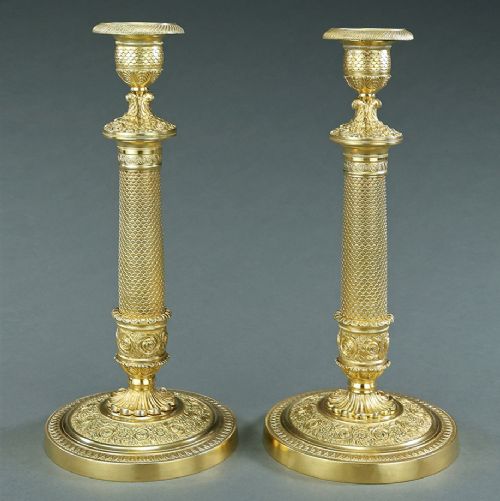
The selection frequently highlights pairs featuring seamed construction, twist stems, or adjustable mechanisms. Buyers encounter materials spanning standard brass alongside gilt bronze, ormolu, and paktong.
Origin and period shape the primary categories available, with eighteenth and nineteenth century specimens dominating the inventory. Traditional styling and Louis XVI influences appear across the surviving lighting items.
Materials and construction methods
Construction relies heavily on brass and related metal alloys such as paktong, bronze, and gilt bronze. Metal components are often cast and turned, with seamed manufacturing techniques evident in eighteenth-century examples.
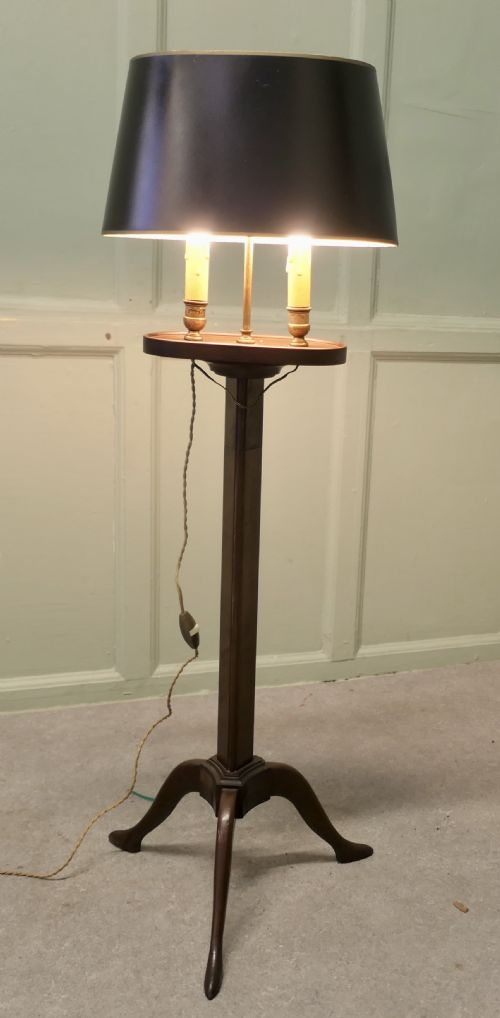
Selected pieces incorporate secondary materials including mahogany and painted metal bases. Ormolu accents further embellish specific items styled after Louis XVI aesthetics.
Object forms span standard table candlesticks, floor lamps, and adjustable twin candle designs.
Assessing quality in metal lighting
Quality separates simple utility wares from superior decorative objects through precision of casting and crispness of turned detail. Crisp petal bases and clean twist stems indicate higher execution standards.
The integrity of original components, such as ejector mechanisms and fitted bases, dictates the desirability of a pair. Finer specimens retain balanced proportions and unpolished patination across the metal surface.
The Classic Brass Candle Stands Glossary
- Ejector
- A mechanical slide or internal stem used in candlesticks to push out the remaining stub of a wax candle. This clever device is commonly found in eighteenth and nineteenth century brass lighting.
- Paktong
- A copper, nickel, and zinc alloy resembling silver, utilised for high-end eighteenth century candlesticks. It provides a bright, silvery finish that patinates differently from standard brass.
- Ormolu
- Finely ground high-carat gold applied to a bronze base, frequently seen in French-influenced luxury lighting. The technique yields a rich, golden decorative surface.
- Petal base
- A foot design moulded in the curved, overlapping shape of flower petals. This decorative form is characteristic of Georgian brass candlesticks.
Classic Brass Candle Stands: Frequently Asked Questions
How do I date an old brass candlestick?
Dating relies on manufacturing techniques, base shapes, and stem profiles. Eighteenth century examples often feature seamed shafts and petal bases, whilst Victorian pieces tend toward heavier ornamentation or twist stems.
Material variations, such as the use of paktong or gilt bronze, also help anchor a piece to a specific century or stylistic movement.
What is an ejector candlestick?
An ejector candlestick contains an internal mechanism designed to lift out spent wax remnants easily. These practical devices were especially popular during the eighteenth and nineteenth centuries.
Collectors value them for their mechanical ingenuity and complete working parts.
Where should I place these candle stands?
These metal stands suit mantelpieces, sideboards, and dining tables where their metallic sheen enhances the interior. Tall twist stems or floor lamp variants work well to fill vertical space in a traditional room.
Placement should protect surrounding surfaces from wax drips while showcasing the period silhouette.
Are pairs more desirable?
Matched pairs command greater interest for symmetrical placement on furniture and architectural mantels. Most surviving antique specimens are found and kept together as matching pairs.
Single items still appeal for accent lighting or integration into eclectic table arrangements.